
Lithium-Ion Battery: How It Works and How to Make It Last
- 0 views
- 0 likes
- 0 comments
- All languages combined
 +97
Sign in and earn +97 points by reading this
Read to the end, wait a few seconds, then tap the claim button below.
In short
A lithium-ion battery stores energy by moving lithium ions between a graphite anode and a metal-oxide cathode through an electrolyte [1]. It slowly loses capacity with time, heat, a high state of charge and heavy cycling [3]. Use the right charger, stop using a swollen or hot battery, and recycle it instead of binning it [5][8].
Key takeaways
- A lithium-ion battery has four key parts: a cathode, an anode, a separator and an electrolyte; lithium ions shuttle between the two electrodes [1].
- The technology won the 2019 Nobel Prize in Chemistry for John Goodenough, Stanley Whittingham and Akira Yoshino, and reached the market in 1991 [2].
- Capacity fades with age and use; NREL research links faster fade to high temperature, a high average state of charge, deep cycling and fast charging in the cold [3][4].
- A battery that swells, smells, gets very hot, makes popping sounds or changes colour should no longer be used [5].
- Charge with the supplied or manufacturer-recommended charger, stay nearby, and do not charge e-bikes or scooters while asleep [6][7].
- Used lithium-ion batteries belong at a battery recycler or hazardous waste point, never in household trash or recycling bins; tape the terminals first [8].
On this page 12 sections
- What is a lithium-ion battery?
- How does a lithium-ion battery work?
- Who invented the lithium-ion battery?
- Why do lithium-ion batteries lose capacity over time?
- Is it bad to charge a lithium-ion battery to 100%?
- Are lithium-ion batteries dangerous?
- How do you charge lithium-ion batteries safely?
- How should old or damaged lithium-ion batteries be disposed of?
- Common mistakes
- Frequently asked questions
- Glossary
- Sources
What is a lithium-ion battery?
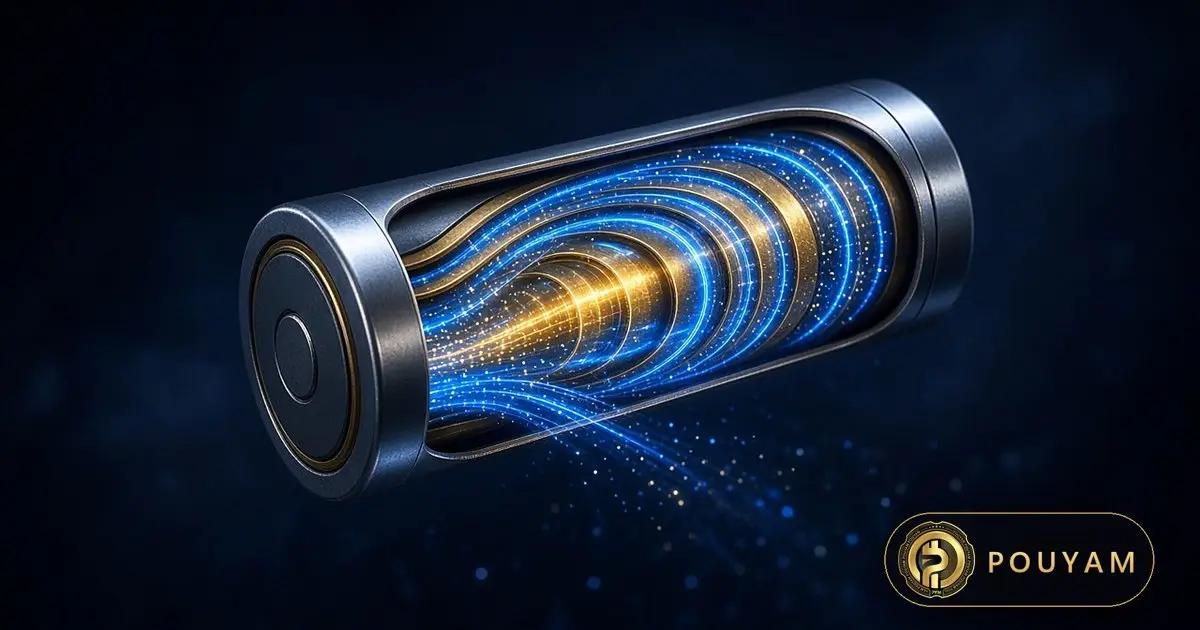
A lithium-ion battery is a rechargeable battery that stores chemical energy and releases it as electricity by moving lithium ions back and forth between two electrodes [1].
It powers most phones, laptops, power tools, e-bikes and electric cars. The Royal Swedish Academy of Sciences describes it as a “lightweight, rechargeable and powerful” battery used in everything from mobile phones to laptops and electric vehicles, and able to store large amounts of energy from solar and wind power [2].
The main reason it took over is energy density. The US Environmental Protection Agency (EPA) explains that energy density is the amount of energy a system stores in a given space, and that lithium batteries can be smaller and lighter than other types while holding the same amount of energy [8].
The name is easy to confuse with another battery. The EPA separates two kinds that consumers handle [8]:
- Lithium-ion (rechargeable): found in phones, laptops, tablets, power tools and toys.
- Lithium metal (single-use): non-rechargeable cells used in cameras, watches, remote controls and smoke detectors; look for the word “lithium” on the label.
How does a lithium-ion battery work?
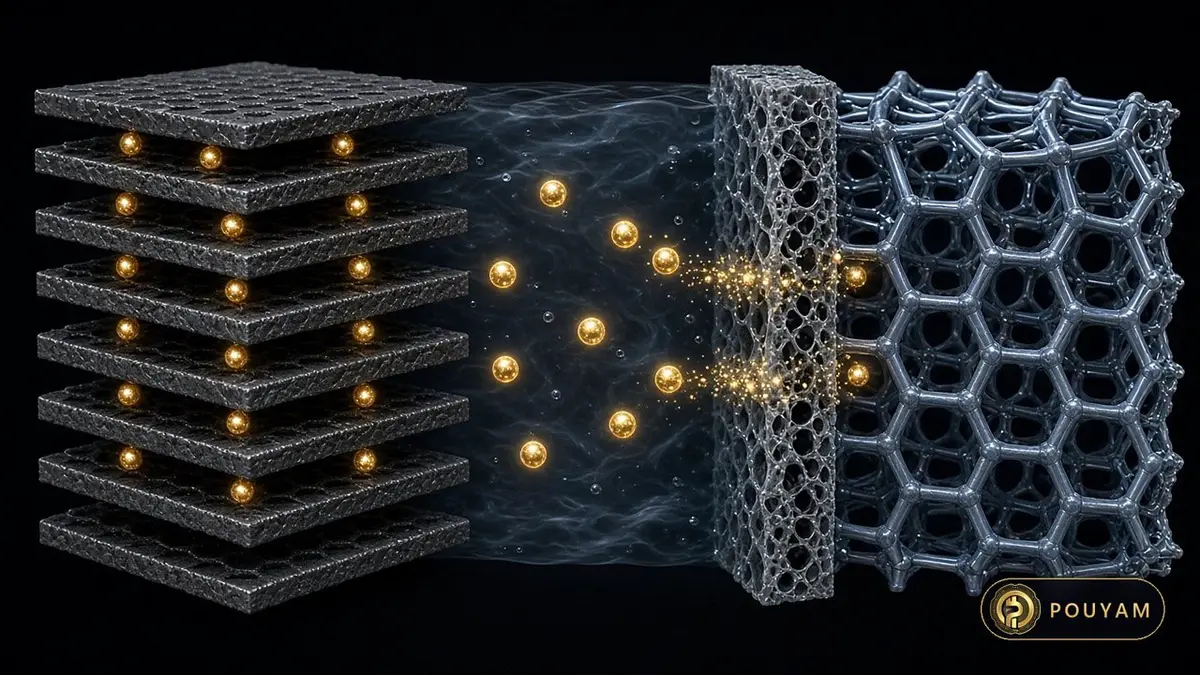
Lithium ions move through the electrolyte from the anode to the cathode when the battery powers a device, and they are pushed back from the cathode to the anode when it charges [1].
Argonne National Laboratory, a US Department of Energy laboratory, describes four key parts [1]:
- Cathode (the positive side): in phone batteries, typically made of nickel, manganese and cobalt oxides.
- Anode (the negative side): commonly graphite, the same material found in many pencils.
- Separator: a thin layer that stops the anode and cathode from touching.
- Electrolyte: a chemical solution that lets lithium ions move between the electrodes.
Both electrodes store lithium. When you switch on a device, positively charged lithium ions travel through the electrolyte from the anode to the cathode. Chemical reactions release electrons, which flow through the device as electric current [1]. When you plug the device in, the charger forces the process into reverse and the ions move back to the anode [1].
The key idea, which the Nobel committee highlighted, is that the electrodes are not used up. Lithium-ion batteries are “not based upon chemical reactions that break down the electrodes, but upon lithium ions flowing back and forth between the anode and cathode” [2]. Because this shuttle can be repeated hundreds of times, the battery is rechargeable [1][2].
Who invented the lithium-ion battery?
Three scientists shared the 2019 Nobel Prize in Chemistry for developing the lithium-ion battery: M. Stanley Whittingham, John B. Goodenough and Akira Yoshino [2].
During the 1970s oil crisis, Whittingham built a cathode from titanium disulphide, a material with molecular spaces that can house lithium ions [2]. His anode was partly metallic lithium, which gave the battery a high voltage but made it too reactive and explosive to be practical [2].
Goodenough predicted that a metal oxide would work better than a metal sulphide. In 1980 he showed that cobalt oxide holding lithium ions could produce as much as 4 volts [2].
Yoshino then removed the most dangerous part. In 1985 he built the first commercially viable lithium-ion battery, replacing reactive lithium metal in the anode with petroleum coke, a carbon material that can also hold lithium ions [2]. The result was light, hard-wearing and could be charged hundreds of times before its performance declined [2]. Lithium-ion batteries entered the market in 1991 [2].
Why do lithium-ion batteries lose capacity over time?
Lithium-ion batteries lose capacity because small side reactions slowly use up lithium and damage the electrodes, both while the battery sits unused and while it is charged and discharged [3].
Researchers at the US National Renewable Energy Laboratory (NREL) split ageing into two kinds [3]:
- Calendar ageing happens with time alone, even if the battery is not used. It speeds up when the battery spends a lot of time at high temperature and a high state of charge.
- Cycle ageing comes from charging and discharging. It is worse with deep cycles at high temperature, and with fast charging at low temperature.
NREL lists the physical processes behind this fade, including growth and damage of the solid-electrolyte interphase (a thin film on the anode), cracking of electrode particles, breakdown of the electrolyte, gas generation and lithium plating, in which lithium metal deposits on the anode instead of slipping into it [3].
A later NREL study of large commercial cells confirmed that degradation is sensitive to temperature and varies widely between products [4].
A common end-of-life measure in NREL’s battery testing is 80% of the original capacity remaining [4]. A battery at that point still works, but runs for less time per charge.
Is it bad to charge a lithium-ion battery to 100%?
Charging to 100% is not dangerous with a working battery and charger, but keeping a battery at a high charge for long periods, especially when it is warm, makes it age faster [3].
NREL’s battery-life research lists the conditions that stretch calendar life: a low average state of charge, a lower maximum charge, delayed or slow charging, and temperatures near room temperature [3]. The conditions that shorten it are the opposite: high temperature, a high average state of charge and deep discharges [3]. That is why many phones, laptops and electric cars offer settings that stop charging below full, or wait until shortly before you unplug to finish the last part of the charge.
In practice, a few habits follow from that research:
- Keep it cool. Do not leave devices in hot cars or in direct sun, especially while charging [3][5].
- Avoid sitting at full charge for days. If a device will be plugged in for long periods, use a charge limit if it has one [3].
- Avoid deep discharges when you can. Shallow top-ups age cells less than repeated runs from full to empty [3].
- Be gentle in the cold. Fast charging at low temperature is linked to lithium plating [3].
- Store half-charged and cool if a battery will sit unused for months [3].
Full charges are fine when you need the range; the gain comes from avoiding heat and long periods at 100% as a routine. For chargers and cables, our guide USB-C Explained: Cables, Charging Speeds and EU Rule explains how charging speeds and cable ratings work.
Portable gear such as satellite kits and power banks follows the same rules; see Starlink Mini 2: Price, Battery and Preorder Status for one example.
Are lithium-ion batteries dangerous?
Lithium-ion batteries are safe in normal use, but a damaged, overheated, overcharged or defective battery can go into thermal runaway, overheating rapidly and catching fire [5][9].
The US National Fire Protection Association (NFPA) explains why: these batteries store a lot of energy in a small space, and when that energy is released in an uncontrolled way it produces heat that can turn internal components into flammable and toxic gases [5].
The US Federal Aviation Administration (FAA) notes that all lithium-ion batteries are capable of thermal runaway, which can occur without warning if a battery is damaged, overheated, exposed to water, overcharged or improperly packed, and can also happen because of manufacturing defects [9].
The NFPA lists the main causes of fires [5]:
- Physical damage, such as a battery that is crushed, punctured or exposed to water.
- Electrical damage, such as overcharging or using charging equipment not designed for the battery.
- Exposure to extreme temperatures.
- Product defects.
Warning signs. Stop using a device if its battery shows an unusual odour, excessive heat, popping sounds, swelling or a change in colour [5]. The US Consumer Product Safety Commission (CPSC) asks people to report problems with e-bike and other micromobility batteries on SaferProducts.gov [7]. If a battery is smoking or burning, get away from it and call the fire service.
E-bikes, e-scooters and hoverboards deserve extra care: the CPSC lists fires among the top hazards in deaths linked to these products, after crashes [6].
How do you charge lithium-ion batteries safely?
Use the charger that came with the device or one the manufacturer recommends, stay nearby while it charges, unplug it when it is full and never charge a damaged battery [5][6][7].
Safety advice from the CPSC and NFPA overlaps closely:
- Use compatible equipment. Only use the supplied charger or one recommended by the manufacturer [5][7].
- Buy tested batteries. Choose batteries listed by a nationally recognised testing laboratory and labelled accordingly [5].
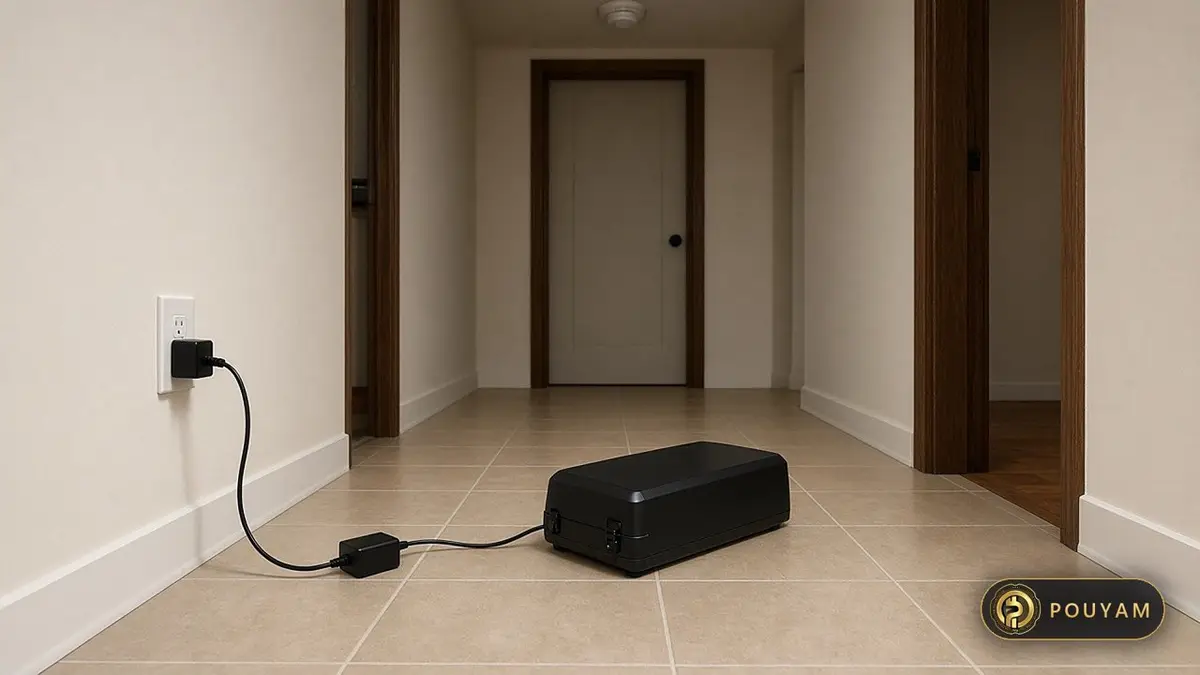
- Stay present. The CPSC says to be present when charging micromobility products and never charge them while sleeping or away from home, because it has seen many fatal home fires start at night during charging [7].
- Unplug when done. Follow the maker’s charging instructions and stop charging once the battery is full [5][6].
- Choose the place. For e-bikes, e-scooters and electric vehicles, the NFPA says the safest place to charge is outdoors, away from buildings and out of direct sunlight [5].
- No modified packs. Never use a battery pack that has been modified or rebuilt by unqualified people, or one made with repurposed or used cells; use only replacement packs the manufacturer approves [6][7].
Never charge a battery that has been under water; the NFPA advises moving it outside in a non-combustible container and asking the fire department or manufacturer what to do [5].
How should old or damaged lithium-ion batteries be disposed of?
Take used lithium-ion batteries, and devices that contain them, to a battery recycler, a participating retailer or a household hazardous waste collection point; never put them in household trash or recycling bins [8].
The EPA gives two reasons. First, a battery thrown away with ordinary waste can be crushed or damaged in a collection truck or sorting machine and start a fire [8]. Second, the batteries contain cobalt, graphite and lithium, which the US treats as critical minerals, so landfilling them wastes resources that are hard to replace [8].
Before you drop them off, the EPA recommends [8]:
- Placing each battery, or each device with a battery, in its own plastic bag.
- Covering the terminals with non-conductive tape, such as electrical tape.
- Contacting the manufacturer for handling advice if the battery is damaged.
- Remembering that even “dead” batteries can hold enough energy to cause injuries or fires.
Electronics can go to certified electronics recyclers or retailer take-back schemes; large packs, such as electric car batteries, go back through the dealer, installer or manufacturer [8].
For recalled products, follow the disposal instructions in the recall notice [7].
Travelling with batteries. Under US FAA rules, spare lithium-ion batteries and power banks must go in carry-on bags, generally up to 100 watt-hours each; 101 to 160 Wh needs airline approval, with at most two spares [9]. Watt-hours are volts multiplied by amp-hours [9].

| Part | Common material | What it does |
|---|---|---|
| Cathode (positive) | Nickel, manganese and cobalt oxides | Stores lithium; receives ions when the battery is in use |
| Anode (negative) | Graphite | Stores lithium; receives ions when the battery charges |
| Separator | Thin porous layer | Stops the electrodes from touching |
| Electrolyte | Lithium salt solution | Carries lithium ions between the electrodes |
| Year | Step | Who |
|---|---|---|
| 1970s | Titanium disulphide cathode, just over 2 volts | Stanley Whittingham |
| 1980 | Cobalt oxide cathode, as much as 4 volts | John Goodenough |
| 1985 | First commercially viable lithium-ion battery with a carbon anode | Akira Yoshino |
| 1991 | Lithium-ion batteries enter the market | Commercial manufacturers |
| 2019 | Nobel Prize in Chemistry | All three scientists |
| Speeds up ageing | Slows ageing |
|---|---|
| High temperature | Temperatures near room temperature |
| Long periods at a high state of charge | A lower average and maximum charge |
| Deep discharges | Shallow cycles |
| Fast charging in the cold | Delayed or slower charging |
| Many cycles per day | Fewer cycles per day |
Common mistakes
Throwing a dead battery or old phone in the trash.
Fix: Take it to a battery recycler or hazardous waste point; even used batteries can start fires [8].
Charging an e-bike overnight in a hallway.
Fix: Charge while you are present and awake, away from exits, ideally outdoors [5][7].
Using any cheap charger that fits.
Fix: Use the supplied or manufacturer-recommended charger [5][7].
Keeping a swollen battery in use.
Fix: Swelling is a warning sign; stop using it and contact the manufacturer [5][8].
Leaving a device at 100% in a hot place for days.
Fix: Heat plus a high state of charge speeds ageing; keep it cool and use a charge limit if available [3].
Frequently asked questions
How does a lithium-ion battery work?
Lithium ions move through the electrolyte from the graphite anode to the metal-oxide cathode during use, and back again during charging, while electrons flow through the device [1].
Why do lithium-ion batteries lose capacity over time?
Side reactions slowly consume lithium and damage the electrodes; heat, a high state of charge, deep cycles and cold fast charging speed this up [3].
Is it bad to charge to 100%?
An occasional full charge is fine. Spending long periods at 100%, especially when warm, speeds ageing, so charge limits help devices that stay plugged in [3].
How should damaged or old lithium-ion batteries be disposed of?
Bag each one, tape the terminals and take it to a battery recycler, retailer take-back point or hazardous waste site, not the trash [8].
What are the warning signs of a failing battery?
An unusual smell, excessive heat, popping sounds, swelling or a change in colour [5].
Can you put water on a lithium-ion battery fire?
The NFPA says water works on lithium-ion battery fires because the cells contain a lithium salt electrolyte, not pure lithium metal; call the fire service [5].
Can I take a power bank on a plane?
Yes, in carry-on bags only; under US FAA rules most spare batteries are limited to 100 Wh each [9].
Glossary
- Anode
- The negative electrode, commonly graphite, which stores lithium when the battery is charged [1].
- Cathode
- The positive electrode, often a metal oxide, which receives lithium ions during use [1].
- Electrolyte
- The chemical solution that lets lithium ions move between the electrodes [1].
- Separator
- A thin layer that keeps the anode and cathode from touching [1].
- State of charge
- How full a battery is, as a percentage of its current capacity [3].
- Thermal runaway
- A rapid, self-sustaining rise in temperature that can lead to fire or explosion [9].
- Watt-hour (Wh)
- A unit of stored energy; volts multiplied by amp-hours [9].
Sources
- Science 101: Batteries Argonne National Laboratory (US Department of Energy)
- Press release: The Nobel Prize in Chemistry 2019 The Royal Swedish Academy of Sciences · 2019-10-09
- Optimizing Battery Usage and Management for Long Life National Renewable Energy Laboratory (Smith, Shi, Wood, Pesaran) · 2016-06-16
- Experimental Aging and Lifetime Prediction in Grid Applications for Large-Format Commercial Li-Ion Batteries National Renewable Energy Laboratory (Gasper et al.)
- Lithium-Ion Battery Safety National Fire Protection Association
- E-Scooter, E-Bike and Hoverboard Injuries and Deaths Are on the Rise US Consumer Product Safety Commission · 2022-10-11
- Micromobility: E-Bikes, E-Scooters and Hoverboards US Consumer Product Safety Commission
- Used Lithium-Ion Batteries US Environmental Protection Agency · 2026-03-20
- PackSafe: Lithium Batteries US Federal Aviation Administration




Comments
Top comments