
How Does Memory Work? How the Brain Stores and Recalls
- 0 views
- 0 likes
- 0 comments
- All languages combined
 +99
Sign in and earn +99 points by reading this
Read to the end, wait a few seconds, then tap the claim button below.
In short
Memory works by changing the strength and shape of connections, called synapses, between nerve cells [1][4]. The brain has several memory systems: working memory holds a few items for seconds, while long-term memory stores facts, events and skills [2]. The hippocampus helps form new memories of facts and events, which are gradually reorganised into the wider cortex over time [1][3].
Key takeaways
- Memory is not one thing: the main split is between working memory, which holds a small amount of information in mind, and long-term memory [2].
- Long-term memory divides into declarative memory for facts and events and nondeclarative memory for skills, habits, priming and simple conditioning [2].
- Short-term memory at the level of the synapse involves modifying existing proteins; long-term memory also needs new proteins that change the shape and function of synapses [4].
- The hippocampus acts as a memory indexer, sending memories to the right part of the cortex for long-term storage and retrieving them when needed [1].
- New memories become more stable through consolidation, a process that runs from hours to weeks or longer and is helped by sleep [3][8].
- Forgetting is fastest soon after learning and then slows down, a pattern first measured by Hermann Ebbinghaus in 1880 and replicated in 2015 [5].
- Some forgetfulness is a normal part of ageing; memory problems that affect daily life should be checked by a doctor [6][7].
On this page 12 sections
- How does memory work in the brain?
- What are the main types of memory?
- What is the difference between short-term and long-term memory?
- What is the role of the hippocampus in memory?
- How are memories stored long term?
- Why do we forget?
- Is forgetfulness normal or a sign of dementia?
- How can you help your memory work better?
- Common mistakes
- Frequently asked questions
- Glossary
- Sources
How does memory work in the brain?
Memory works by changing the connections between nerve cells: learning strengthens or reshapes synapses, and those changes let the brain store and later recall information [1][4].
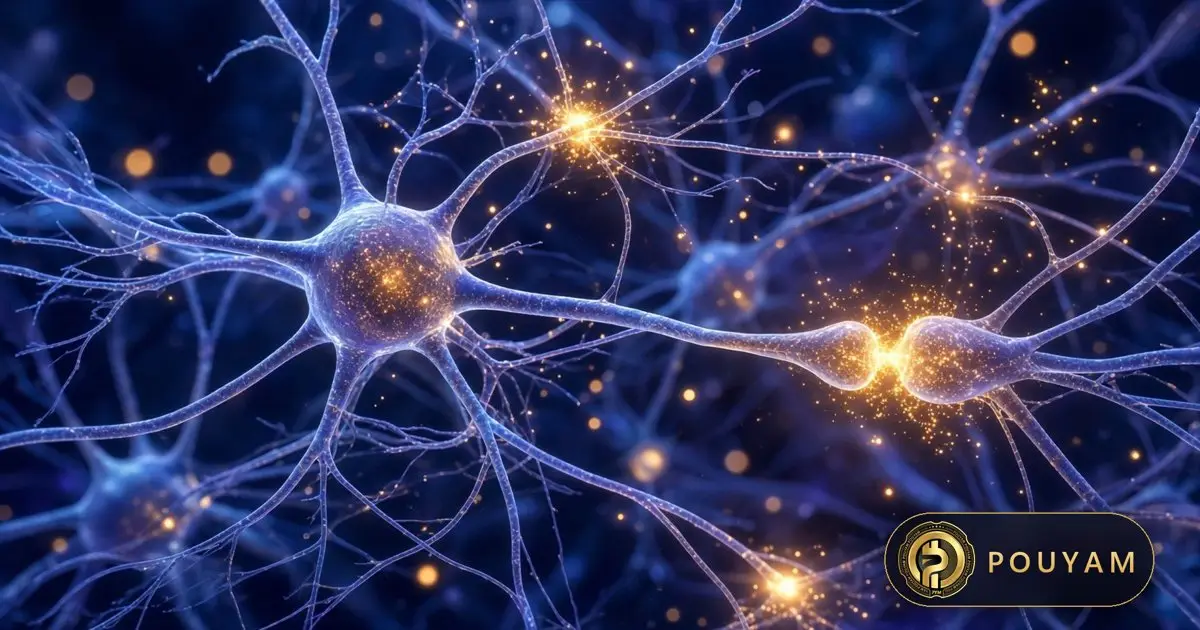
The human brain has more than a hundred billion nerve cells, or neurons, each of which can form thousands of contacts with other neurons [4]. These contact points are called synapses. When a signal reaches the end of a neuron, it releases chemical messengers called neurotransmitters, which cross the synapse and change the properties of the next cell [1]. The US National Institute of Neurological Disorders and Stroke (NINDS) notes that all sensations, movements, thoughts, memories and feelings are the result of signals passing through neurons [1].
The key idea is that synapses can change. The 2000 Nobel Prize in Physiology or Medicine was shared by Eric Kandel, who showed in the sea slug Aplysia that changes in how efficiently synapses work are central to learning and memory [4]. A memory is not stored in one place like a file; it is held in a pattern of strengthened connections across groups of neurons.
Scientists usually describe memory as three linked steps:
- Encoding: taking in information and turning it into a form the brain can store.
- Storage: keeping that information over time, first in a fragile state and later in a more stable one [3].
- Retrieval: bringing the information back to mind when it is needed, a job in which the hippocampus plays a central part [1].
Different kinds of memory use different brain systems, including the hippocampus, the amygdala, the striatum, the cerebellum and the neocortex [2]. That is why someone can lose the ability to form new memories of events while still learning new skills.
What are the main types of memory?
The main division is between working memory and long-term memory; long-term memory splits into declarative memory for facts and events and nondeclarative memory for skills and habits [2].
In a widely cited review, neuroscientists Larry Squire and Adam Dede describe several memory systems, each with its own purpose and brain anatomy, which operate independently and in parallel [2].
Declarative memory, sometimes called explicit memory, is what most people mean by “memory”: things you can consciously recall [2]. It has two parts. Semantic memory holds facts about the world, such as the capital of a country. Episodic memory lets you re-experience a specific event in its time and place, such as your last birthday [2]. Declarative memory depends on the hippocampus and nearby areas of the medial temporal lobe; episodic memory also draws on the frontal lobes [2].
Nondeclarative memory, or implicit memory, shows up in performance rather than conscious recollection [2]. It includes:
- skills and habits, such as riding a bike, which depend on the striatum;
- priming, the improved ability to recognise or name something after a recent encounter with it;
- simple conditioning, including emotional learning such as fear, in which the amygdala plays a key role, and learned movements supported by the cerebellum [1][2].
The systems can record the same event in different ways. Squire and Dede give the example of a child knocked over by a large dog: the adult may consciously remember the event, or may simply have a fear of large dogs without remembering why [2].
What is the difference between short-term and long-term memory?
Short-term or working memory holds a small amount of information in mind for immediate use, while long-term memory stores information for hours to many years; at the cellular level, long-term memory needs new proteins and lasting changes to synapses [2][4].
Working memory is the ability to keep a limited amount of information in mind to support tasks such as reasoning and learning [2]. In brain science the term has largely replaced “short-term memory” [2]. Its capacity is small: even healthy young adults can typically hold only three to four simple visual objects in working memory at once [2]. NINDS notes that the frontal lobes act as short-term storage sites, letting you keep one idea in mind while considering others [1].
Long-term memory takes over when working memory is overloaded or attention moves elsewhere [2]. Squire and Dede note that working memory cannot be defined by a fixed time: even a few seconds after hearing a list of 10 words, recall depends partly on long-term memory because working memory capacity has been exceeded [2].
Kandel’s work showed a difference at the level of the synapse too. A weak stimulus produces short-term memory by adding phosphate groups to existing proteins, which makes the synapse release more neurotransmitter [4]. A stronger, longer-lasting stimulus produces long-term memory: signals reach the cell nucleus, new proteins are made, and the shape and function of the synapse change [4].
The table below sums up the differences.
What is the role of the hippocampus in memory?
The hippocampus is essential for forming new memories of facts and events; it acts as an indexer that links the pieces of an experience and helps store and retrieve them [1][2].
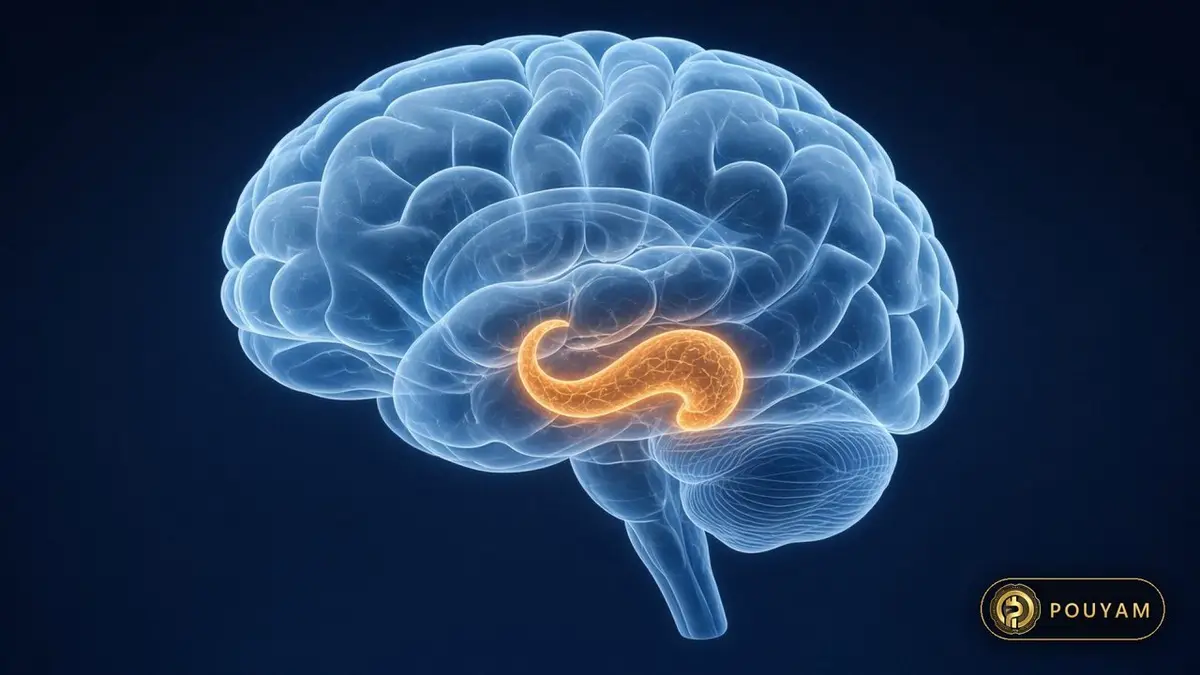
The hippocampus is a small curved structure deep in each temporal lobe. NINDS describes it as a “memory indexer” that sends memories to the appropriate part of the cerebral hemispheres for long-term storage and retrieves them when necessary [1]. The underside of each temporal lobe plays a crucial role in forming and retrieving memories [1].
Much of what is known comes from a patient known as H.M. He had surgery that removed much of the hippocampus and nearby tissue on both sides of his brain to relieve severe epilepsy [2]. Afterwards he had profound memory impairment that affected all kinds of material, including scenes, words and faces [2]. Yet he could learn a new hand-eye skill, mirror drawing, over 3 days, while having no memory of having practised it before [2]. That finding showed that memory is not a single entity [2].
Later research found that the hippocampus works with neighbouring areas of the parahippocampal gyrus. The perirhinal cortex is involved in remembering objects, the parahippocampal cortex in remembering scenes, and the hippocampus in forming associations between them [2].
The amygdala, next to the hippocampus, adds emotional weight. Because of the amygdala, emotionally arousing events are typically remembered better than neutral ones, an effect linked to the release of stress hormones [2].
How are memories stored long term?
Memories are stabilised through consolidation: synapses are strengthened within hours, and over longer periods the hippocampus helps reorganise the memory in the neocortex until it no longer depends on the hippocampus [3].
Memory consolidation is the process by which a temporary, fragile memory becomes more stable and long-lasting [3]. The idea was first proposed in 1900 by the researchers Müller and Pilzecker to explain why newly learned material is vulnerable to interference for a while after learning [3].
Researchers now describe two kinds of consolidation [3]:
- Synaptic consolidation happens within hours of learning and involves events such as protein synthesis that stabilise changes at the synapse.
- Systems consolidation is slower. A new conscious memory at first depends on information stored in both the hippocampus and the neocortex; over time the hippocampus guides the reorganisation of the neocortex until the memory becomes independent of the hippocampus.
Evidence comes from people with hippocampal damage, who often lose memories formed in the recent past but keep older ones [3]. In one early study of patients, this temporally limited memory loss reached back 1 to 3 years [3]. In monkeys, one learning task showed this pattern over a period of 12 weeks [3].
Sleep appears to help. One proposed mechanism is “neural replay”, in which patterns of hippocampal activity from learning recur spontaneously, especially during non-REM sleep [3]. NINDS states that without sleep you cannot form or maintain the pathways in your brain that let you learn and create new memories [8].

Why do we forget?
Forgetting is a normal part of how memory works: most is lost soon after learning, memories that are not yet consolidated are vulnerable to interference, and the brain keeps what is emotional or repeated more readily [3][5].
The first person to measure forgetting was the German psychologist Hermann Ebbinghaus, who in 1880 and 1885 learned lists of nonsense syllables and timed how long it took to relearn them after different delays [5]. A 2015 replication published in PLOS ONE confirmed his famous forgetting curve [5]. In Ebbinghaus’s data, the time saved when relearning fell from about 58% after 20 minutes to about 34% after 1 day and 21% after 31 days [5]. Forgetting is steep at first and then levels off.
Several factors shape what is lost:
- Interference: newly learned material can be disrupted by other learning soon afterwards, which is why consolidation was proposed in the first place [3].
- Emotion: emotionally arousing events are usually remembered better than neutral ones because of the amygdala [2].
- Sleep: since a classic 1924 study, research has repeatedly found that sleep after learning helps recall [5].
- Age: the US National Institute on Aging (NIA) says some people notice that, as they get older, they do not remember information as well or recall it as quickly [6].
The NIA also lists factors that can cause memory problems, including head injury, thyroid, kidney or liver problems, medication side effects, depression and anxiety, alcohol or drug misuse, sleep problems and low levels of nutrients such as vitamin B12 [6]. The NHS adds stress as a common, treatable cause [7].
Is forgetfulness normal or a sign of dementia?
Occasional forgetfulness is a normal part of ageing; memory problems that make everyday tasks hard, or that keep getting worse, should be checked by a doctor [6][7].
The NIA explains that occasionally misplacing things or forgetting to pay a bill is usually a sign of mild forgetfulness, not a serious memory problem [6]. Serious memory problems make it hard to do everyday things such as driving, using the phone and finding the way home [6].
Dementia is not a normal part of ageing [6]. It involves losing thinking, remembering, learning and reasoning abilities to the point that they interfere with daily life, and memory loss is not its only sign [6]. Some older adults have mild cognitive impairment, meaning more memory or thinking problems than others their age, while still managing their day-to-day tasks [6].
The NHS advises seeing a GP if memory problems are affecting your day-to-day life, or if you are worried about an older relative who is becoming increasingly forgetful [7]. It is often nothing serious, but treatment may work better if started early, and the NHS advises not trying to self-diagnose the cause [7]. A GP may ask questions, refer you to a memory specialist or arrange scans [7]. For how new blood tests may help detect Alzheimer’s disease, see our guide Alzheimer's Blood Test Approved in Japan: What pTau217 Shows.
The table below, based on NIA examples, shows typical differences.
How can you help your memory work better?
Good sleep, routines, memory aids and staying mentally and socially active all help memory work at its best [6][8].
The NIA suggests these habits for dealing with everyday forgetfulness [6]:
- Learn a new skill.
- Follow a daily routine.
- Plan tasks, make to-do lists and use memory tools such as calendars and notes.
- Put your wallet or purse, keys, phone and glasses in the same place each day.
- Stay involved in activities that help both mind and body, such as volunteering.
- Spend time with friends and family.
Sleep deserves a special mention. Adults spend about one-third of their time asleep, and NINDS says sleep is as essential to survival as food and water; lack of sleep makes it harder to concentrate and to form new memories [8].
Understanding how memory works also explains some useful study habits. Because forgetting is fastest soon after learning, reviewing material again later takes less time than the first round of learning, the “savings” Ebbinghaus measured [5]. And because emotion and meaning strengthen memories, linking new facts to things you already care about can help [2].
Many people turn to puzzles and brain-training apps. For what the research shows, see our guide Chess and Brain Games: What Research Says About Benefits.
This guide explains how memory works based on published research and public health sources; it is not medical advice. If you are worried about your memory or someone else’s, talk to a doctor.

| Memory system | What it holds | Example | Key brain areas |
|---|---|---|---|
| Working memory | A few items held in mind for immediate use | Remembering a code while you type it | Frontal lobes |
| Episodic (declarative) | Personal events in time and place | Your last birthday | Hippocampus, medial temporal lobe, frontal lobes |
| Semantic (declarative) | Facts and knowledge | The capital of a country | Hippocampus, medial temporal lobe, neocortex |
| Skills and habits (nondeclarative) | How to do things | Riding a bike | Striatum, cerebellum |
| Priming (nondeclarative) | Easier processing of things seen recently | Naming an object faster the second time | Neocortex |
| Emotional conditioning (nondeclarative) | Learned emotional responses | Fear of a dog that once knocked you over | Amygdala |
| Working (short-term) memory | Long-term memory | |
|---|---|---|
| Capacity | Small; about 3 to 4 simple visual objects | Much larger |
| Duration | While the information is kept in mind | Hours to many years |
| Main use | Reasoning, following a conversation, doing sums | Facts, events, skills, habits |
| Synapse change (Kandel) | Existing proteins modified | New proteins made; synapse shape and function change |
| Normal ageing | Possible sign of dementia |
|---|---|
| Making a bad decision once in a while | Making poor judgments and decisions a lot of the time |
| Missing a monthly payment | Problems taking care of monthly bills |
| Forgetting which day it is and remembering it later | Losing track of the date or time of year |
| Sometimes forgetting which word to use | Trouble having a conversation |
| Losing things from time to time | Misplacing things often and being unable to find them |
Common mistakes
Thinking memory is stored in one place in the brain.
Fix: Different memory systems use different areas, including the hippocampus, amygdala, striatum, cerebellum and neocortex [2].
Believing memories are fixed once formed.
Fix: New memories are fragile and are stabilised over time through consolidation [3].
Assuming all forgetting is a sign of illness.
Fix: Occasional forgetfulness is a normal part of ageing [6].
Treating short-term memory as unlimited.
Fix: Working memory holds only about 3 to 4 simple visual objects at once [2].
Skimping on sleep before or after learning.
Fix: Sleep helps form and maintain the brain pathways needed for new memories [8].
Trying to self-diagnose memory loss.
Fix: The NHS advises seeing a GP if memory problems affect daily life [7].
Frequently asked questions
How does memory work in the brain?
Learning changes the strength and shape of synapses between neurons, and different brain systems handle different kinds of memory [1][2][4].
What is the difference between short-term and long-term memory?
Working (short-term) memory holds a few items for immediate use; long-term memory stores information for much longer and needs new proteins at the synapse [2][4].
What is the role of the hippocampus?
It helps form new memories of facts and events and acts as an indexer that sends memories for storage and retrieves them [1][2].
Why do we forget?
Most forgetting happens soon after learning; unconsolidated memories are vulnerable to interference, and ageing, stress and poor sleep can add to it [3][5][6].
Does sleep help memory?
Yes. Sleep supports the brain pathways that create new memories, and replay during sleep may help consolidation [3][8].
Is forgetting things normal as you get older?
Mild forgetfulness is often a normal part of ageing; problems that affect daily life should be checked [6][7].
Who discovered how memories are stored in synapses?
Eric Kandel, who shared the 2000 Nobel Prize in Physiology or Medicine for work on how synapses change during learning [4].
Glossary
- Neuron
- A nerve cell that carries signals in the brain [1].
- Synapse
- The contact point where a signal passes from one neuron to another [1].
- Working memory
- The ability to hold a small amount of information in mind for immediate use [2].
- Declarative memory
- Conscious memory for facts (semantic) and events (episodic) [2].
- Nondeclarative memory
- Unconscious memory shown through skills, habits, priming and conditioning [2].
- Hippocampus
- A structure in the temporal lobe that helps form and retrieve memories [1].
- Consolidation
- The process that turns a fragile new memory into a stable one [3].
- Forgetting curve
- The pattern of rapid early forgetting that then levels off [5].
Sources
- Brain Basics: Know Your Brain National Institute of Neurological Disorders and Stroke (NIH) · 2025-02-25
- Conscious and Unconscious Memory Systems (Squire L.R., Dede A.J.O.) Cold Spring Harbor Perspectives in Biology
- Memory Consolidation (Squire L.R., Genzel L., Wixted J.T., Morris R.G.) Cold Spring Harbor Perspectives in Biology
- The Nobel Prize in Physiology or Medicine 2000: press release Nobel Assembly at Karolinska Institutet · 2000-10-09
- Replication and Analysis of Ebbinghaus’ Forgetting Curve (Murre J.M.J., Dros J.) PLOS ONE · 2015-07-06
- Memory Problems, Forgetfulness, and Aging National Institute on Aging (NIH) · 2026-07-16
- Memory loss (amnesia) NHS · 2023-10-09
- Brain Basics: Understanding Sleep National Institute of Neurological Disorders and Stroke (NIH) · 2025-02-25




Comments
Top comments