



🔸 After the war, is Iran’s middle class being pushed into poverty?
🔻A report by Danial Babayani
For Mina, a homemaker living in Tehran, the war is no longer measured by aerial strikes or carefully worded military statements. Her yardstick is what has been removed from her family’s table, one after another.
She tells Deutsche Welle: “Since the war began last year, we’ve gotten poorer every single day. I honestly can’t remember the last time we bought red meat. We were buying chicken in its place, but now even chicken has become a luxury item. We don’t think about savings anymore. We’re just thinking about how to pay the rent and buy food.”
The International Monetary Fund has predicted that Iran’s economy will shrink by 5.4% this year and that inflation will reach about 69%. The World Bank has also warned that the war, reduced trade, and the continued persistence of uncertainty have put heavy pressure on Iran’s economy.
Ahmad Alavi, an economist and researcher based in Sweden, believes the war did not create an economic crisis in Iran, but that it greatly exacerbated it.
He tells Deutsche Welle: “Iran entered this confrontation under conditions in which inflation was already above 40%, the value of the national currency was declining, there was a chronic budget deficit, and the country had been under sanctions for years.”
Economic pressure is not limited to households. Iran’s private sector is also grappling with its consequences.
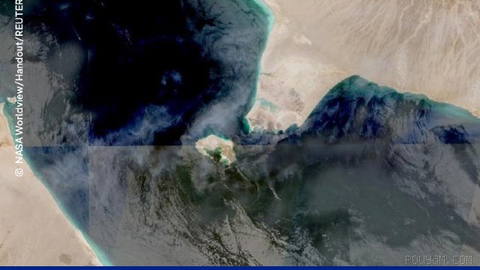
Mortaza, an Iranian trader living in Gorgan, says that after transportation became more difficult through the Strait of Hormuz, the region’s trade routes changed quickly.
He tells Deutsche Welle: “China very quickly filled part of the gap left by suppliers to Dubai. Unlike the Gulf countries, China can also ship goods via rail lines through Central Asia, allowing it to avoid many risks and maritime transport delays.”


Comments
Top comments