
What Is Cholesterol? HDL, LDL and What Numbers Mean
- 0 views
- 0 likes
- 0 comments
- All languages combined
 +97
Sign in and earn +97 points by reading this
Read to the end, wait a few seconds, then tap the claim button below.
In short
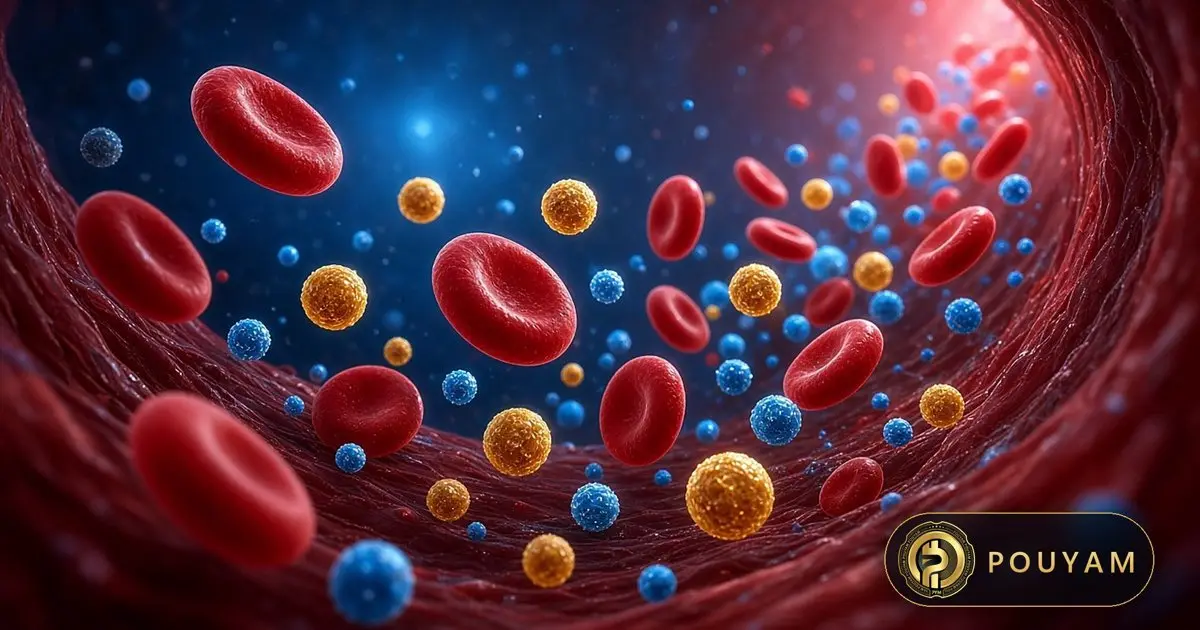
Cholesterol is a waxy, fat-like substance that the body needs to build cells and make hormones, vitamin D and bile [1][7]. It travels in the blood inside lipoproteins: LDL can build up as plaque in arteries, while HDL carries cholesterol back to the liver [1]. High cholesterol has no symptoms, so only a blood test shows it [3][4].
Key takeaways
- Cholesterol is a waxy, fat-like substance made by the liver; the body makes all it needs and uses it for hormones, vitamin D and digesting fats [2][7].
- LDL, often called “bad” cholesterol, can build up as plaque in artery walls; HDL, often called “good” cholesterol, carries cholesterol back to the liver [1][7].
- High cholesterol usually causes no symptoms; a blood test called a lipid panel or lipid profile is the only way to know [3][4].
- The US CDC gives levels in mg/dL and the NHS gives them in mmol/L; what counts as a good level for you depends on your overall heart risk [2][5].
- Diet high in saturated fat, inactivity, smoking, excess weight, alcohol, age and family genes all affect cholesterol [4][6][7].
- Raised cholesterol increases the risk of heart disease and stroke; WHO estimated it causes 2.6 million deaths a year worldwide [8].
- Lifestyle changes help, and some people also need medicine; treatment decisions are made with a health professional [3][4][6].
On this page 12 sections
- What is cholesterol?
- What is the difference between HDL and LDL cholesterol?
- What are normal cholesterol levels in mg/dL and mmol/L?
- How is cholesterol tested, and how often?
- Why is high cholesterol bad for you?
- What causes high cholesterol?
- Does cholesterol in food raise blood cholesterol?
- How can you lower cholesterol?
- Common mistakes
- Frequently asked questions
- Glossary
- Sources
What is cholesterol?
Cholesterol is a waxy, fat-like substance found in all the cells of the body; the body needs it to make hormones, vitamin D and substances that help digest food, and the liver makes all the cholesterol the body needs [2][7].
The US National Heart, Lung, and Blood Institute (NHLBI) describes cholesterol as something your body needs for good health, “but in the right amounts” [1]. Problems start when too much of it circulates in the blood.
There are two sources. The liver makes cholesterol, and some comes from food. The US Centers for Disease Control and Prevention (CDC) says dietary cholesterol is found in animal foods, including meat, seafood, poultry, eggs and dairy products [2]. Plant foods contain no cholesterol.
Because cholesterol is a fat, it cannot dissolve in blood on its own. It travels inside tiny particles called lipoproteins, made of fats and proteins [1][7]. The type of lipoprotein carrying it, mainly LDL or HDL, decides whether it is more likely to build up in arteries or be removed [1].
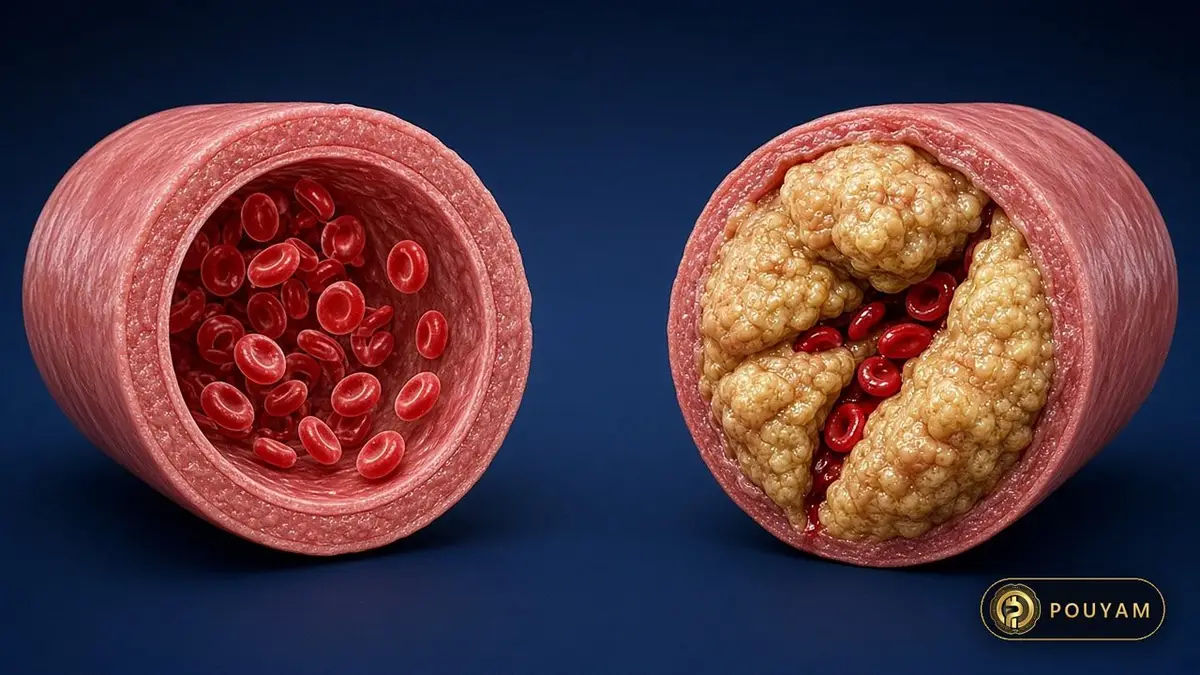
When too much cholesterol is in the blood, it can combine with other substances to form plaque, which sticks to artery walls. That build-up is called atherosclerosis and can lead to coronary artery disease, in which the arteries feeding the heart narrow or become blocked [7].
What is the difference between HDL and LDL cholesterol?
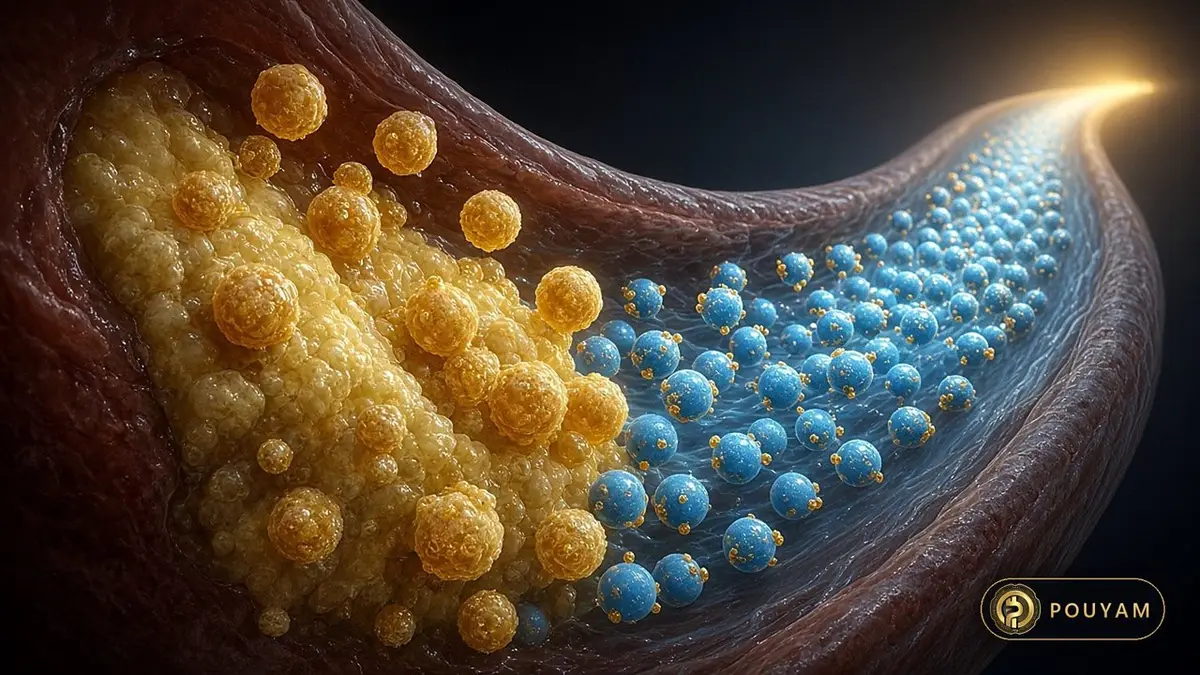
LDL (low-density lipoprotein) carries cholesterol to the body’s tissues and, at high levels, leads to plaque in the arteries; HDL (high-density lipoprotein) carries cholesterol from other parts of the body back to the liver, which removes it [1][7].
That is why LDL is often called “bad” cholesterol and HDL “good” cholesterol [1]. The CDC says high LDL levels can lead to plaque build-up in your arteries and result in heart disease or stroke, while high HDL levels can lower your risk of heart disease and stroke [2].
MedlinePlus adds a third lipoprotein, VLDL (very low-density lipoprotein). Some people also call it “bad”, because it contributes to plaque too, but VLDL mainly carries triglycerides while LDL mainly carries cholesterol [7].
Triglycerides are a different type of fat in the blood that the body uses for energy. A cholesterol test usually measures them as well. The CDC notes that high triglycerides combined with either low HDL or high LDL can increase the risk of heart attack and stroke [2][3].
The NHS reports results slightly differently. Alongside total cholesterol and HDL, it uses non-HDL cholesterol, which is total cholesterol minus HDL and counts all the “bad” types together [5].
The “good” and “bad” labels are shorthand. What matters for health is the overall pattern of your numbers combined with other risk factors, which is how doctors use them [3][5].
What are normal cholesterol levels in mg/dL and mmol/L?
For healthy adults, the NHS guide is total cholesterol below 5 mmol/L, non-HDL below 4 mmol/L and HDL above 1.0 mmol/L for men or above 1.2 mmol/L for women; the CDC lists optimal total cholesterol at about 150 mg/dL and says above 200 mg/dL may be considered high [2][5].
Two units are in use. The United States reports cholesterol in milligrams per decilitre (mg/dL) [2]. The UK and many other countries use millimoles per litre (mmol/L) [5]. To convert cholesterol values, 1 mmol/L is about 38.7 mg/dL; for triglycerides, 1 mmol/L is about 88.6 mg/dL.
The CDC’s optimal levels are: total cholesterol about 150 mg/dL, LDL about 100 mg/dL, HDL at least 40 mg/dL in men and 50 mg/dL in women, and triglycerides less than 150 mg/dL [2]. A total cholesterol above 200 mg/dL may be considered high in both adults and children [2].
WHO, in its global estimates, defined raised total cholesterol as 5.0 mmol/L (190 mg/dL) or higher [8].
These figures are guides for healthy adults, not personal targets. The NHS says a good target level for you depends on your age, any health conditions and your risk of cardiovascular disease, and that illness, some medicines or a recent pregnancy can shift your results [5]. It also says that eating before the test does not make much difference to these levels [5], while the CDC says you may need to fast for 8 to 12 hours, so ask how to prepare [3].
How is cholesterol tested, and how often?
Cholesterol is measured with a simple blood test called a lipid panel or lipid profile; the CDC says most healthy adults should be checked every 4 to 6 years, and more often if they have heart disease, diabetes or a family history of high cholesterol [3].
The test usually reports LDL, HDL, triglycerides and total cholesterol [3]. Some tests give only total cholesterol; the NHS suggests asking your doctor or nurse whether you can get HDL and non-HDL results too [5].
The CDC also says cholesterol should be checked early in life: children at least once between ages 9 and 11, and adolescents again between 17 and 21, with more frequent checks for children with obesity or diabetes [3]. From 2017 to 2020, 86.4 million US adults aged 20 or older had high or borderline high cholesterol, and about 1 in 5 adolescents had an unhealthy cholesterol measurement from 2009 to 2016 [3].
Doctors rarely look at cholesterol alone. In the UK, a GP combines your levels with age, blood pressure and health conditions to estimate your risk of a heart or circulation problem over the next 10 years, often as a QRISK score [5]. In the US, the CDC describes doctors weighing family history, age, sex, smoking, blood pressure and other conditions, and sometimes ordering a coronary artery calcium scan [3].
Why is high cholesterol bad for you?
Too much cholesterol in the blood can build up as plaque in artery walls, narrowing them and reducing blood flow, which raises the risk of heart attack and stroke; it usually causes no symptoms while this happens [2][4].
The CDC explains that as plaque builds up over time, the insides of the arteries narrow. When blood flow to the heart is blocked, it can cause chest pain (angina) or a heart attack [2]. The NHLBI adds that plaque can lead to a heart attack, stroke or other health problems [1].
The NHS says high cholesterol does not usually cause symptoms and can only be found with a blood test [4]. The CDC makes the same point: because high cholesterol has no symptoms, many people do not know their levels are high [3].
At a global level, WHO estimated in its Global Status Report on Noncommunicable Diseases that raised cholesterol causes 2.6 million deaths a year, 4.5% of all deaths, and that about a third of ischaemic heart disease worldwide is attributable to high cholesterol [8]. In 2008, it estimated that 39% of adults worldwide had raised total cholesterol [8].
Cholesterol is one of several risk factors that act together. High blood pressure, smoking and diabetes all add to the risk, which is why doctors assess them together [3][5].
What causes high cholesterol?
The most common causes are lifestyle factors such as a diet high in saturated fat, little physical activity, smoking, excess weight and alcohol, but age, sex, ethnicity and inherited genes also play a large part [4][7].
MedlinePlus says the most common cause is an unhealthy lifestyle: eating a lot of saturated fat, found in red meat, full-fat dairy, some baked goods and many fried and processed foods, raises LDL; little physical activity lowers HDL; and smoking lowers HDL and raises LDL [7].
The NHS lists who is more likely to have high cholesterol: people over 50, men, women after the menopause, and people of South Asian or sub-Saharan African origin [4]. Being overweight and drinking alcohol also contribute [4]. The CDC adds that conditions such as type 2 diabetes and obesity raise the risk [2].
Genes matter. The NHLBI says the genes you inherit and your lifestyle habits both play a major role in your cholesterol levels [1]. Some families have an inherited condition called familial hypercholesterolaemia, in which high cholesterol starts at a young age [4].
A specific inherited particle, lipoprotein(a), is another genetically determined risk factor that researchers are studying; our guide Lp(a) HORIZON Trial: Pelacarsen Did Not Cut Heart Events explains what one large trial found.
Does cholesterol in food raise blood cholesterol?
Food cholesterol is only part of the picture: the body makes all the cholesterol it needs, the CDC advises eating as little dietary cholesterol as possible, and the NHS focuses on cutting saturated fat, which raises LDL [2][6][7].
The CDC says your body makes all the blood cholesterol it needs and that experts recommend people eat as little dietary cholesterol as possible [2]. It adds that strong evidence links eating patterns with less dietary cholesterol to a lower risk of cardiovascular disease [2].
In practice, foods high in cholesterol, such as fatty meat and full-fat dairy, are often also high in saturated fat, which MedlinePlus says raises LDL cholesterol [7]. That is why NHS advice centres on fat type. It suggests eating less fatty meat, sausages, butter, lard, ghee, cream, cheese, cakes and biscuits and foods with coconut or palm oil, and more oily fish, olive and rapeseed oils, wholegrains, nuts, seeds, fruit and vegetables [6].
Eggs are a common question. The CDC lists eggs among the animal foods that contain dietary cholesterol [2], and MedlinePlus names egg yolks [7]. How much they matter for a particular person is a question for a doctor or dietitian, especially for anyone already told their cholesterol is high.
How can you lower cholesterol?
The NHS recommends eating less saturated fat, exercising more, stopping smoking and cutting down on alcohol; some people also need medicine, and that decision is made with a doctor based on overall risk [4][6].
The NHS lists these steps [6]:
- Eat less fatty food, especially food with saturated fat, and choose foods with unsaturated fat instead.
- Exercise more: at least 150 minutes of moderate-intensity or 75 minutes of vigorous-intensity activity a week, such as brisk walking, swimming or cycling.
- Stop smoking, which raises cholesterol and the risk of heart attack and stroke.
- Cut down on alcohol, keeping to no more than 14 units a week on a regular basis.
For some people, lifestyle changes are not enough. The NHLBI says getting cholesterol into a healthy range may need heart-healthy lifestyle changes or medicines [1], and the CDC says treatment decisions should be made in collaboration with a health care professional [3]. Medicine choices, including statins, depend on each person’s overall risk and are outside the scope of this guide.
Research on cholesterol treatment continues, including in older adults; our guide Stopping Statins After 70: What the STREAM Trial Found summarises one trial on that question.
This guide is general information, not medical advice. If you have questions about your own results, ask your doctor or nurse.

| Measure | CDC (mg/dL) | Approx. mmol/L | NHS healthy level (mmol/L) |
|---|---|---|---|
| Total cholesterol | About 150 optimal; above 200 may be high | About 3.9; above 5.2 | Below 5 |
| LDL (“bad”) | About 100 optimal | About 2.6 | Not listed separately |
| Non-HDL | Not listed | — | Below 4 |
| HDL (“good”), men | At least 40 | About 1.0 | Above 1.0 |
| HDL (“good”), women | At least 50 | About 1.3 | Above 1.2 |
| Triglycerides | Less than 150 | About 1.7 | Not listed on this page |
| Group | When to check |
|---|---|
| Most healthy adults | Every 4 to 6 years |
| Adults with heart disease, diabetes or a family history of high cholesterol | More often |
| Children | At least once between ages 9 and 11 |
| Adolescents | Between ages 17 and 21 |
| Children with obesity or diabetes | May need more frequent checks |
Common mistakes
Thinking all cholesterol is bad.
Fix: The body needs cholesterol, and HDL helps remove it from the blood [1][7].
Waiting for symptoms before getting tested.
Fix: High cholesterol usually has no symptoms; only a blood test shows it [3][4].
Comparing a mmol/L result with a mg/dL chart.
Fix: Check the unit: 1 mmol/L of cholesterol is about 38.7 mg/dL [2][5].
Treating a chart value as a personal target.
Fix: Good levels depend on age, health conditions and overall heart risk [5].
Assuming thin or young people cannot have high cholesterol.
Fix: Genes play a major role, and familial hypercholesterolaemia starts young [1][4].
Frequently asked questions
What is cholesterol in a blood test?
A lipid panel measures total cholesterol, LDL, HDL and triglycerides; the NHS also reports non-HDL [3][5].
What is the difference between HDL and LDL?
LDL can build up as plaque in arteries; HDL carries cholesterol back to the liver for removal [1][7].
What is a normal cholesterol level?
The NHS guide for healthy adults is total cholesterol below 5 mmol/L; the CDC lists about 150 mg/dL as optimal [2][5].
Is cholesterol in food the same as cholesterol in blood?
No. The liver makes blood cholesterol; food cholesterol comes from animal products and is one influence among several [2][7].
How often should cholesterol be checked?
The CDC says every 4 to 6 years for most healthy adults, more often with certain risk factors [3].
Glossary
- Lipoprotein
- A particle of fat and protein that carries cholesterol in the blood [1].
- LDL
- Low-density lipoprotein, often called “bad” cholesterol [1].
- HDL
- High-density lipoprotein, often called “good” cholesterol [1].
- Triglycerides
- A type of blood fat the body uses for energy [2].
- Atherosclerosis
- Build-up of plaque in artery walls [7].
- Familial hypercholesterolaemia
- An inherited condition causing high cholesterol from a young age [4].
Sources
- Blood Cholesterol: What Is Blood Cholesterol? National Heart, Lung, and Blood Institute (NIH) · 2024-04-17
- About Cholesterol US Centers for Disease Control and Prevention · 2024-05-15
- Testing for Cholesterol US Centers for Disease Control and Prevention
- What is high cholesterol? NHS · 2026-03-13
- Cholesterol levels NHS · 2026-03-13
- How to lower your cholesterol NHS · 2026-03-13
- Cholesterol MedlinePlus, National Library of Medicine (NIH) · 2025-03-18
- Global status report on noncommunicable diseases 2010 World Health Organization




Comments
Top comments