
Normal Blood Pressure by Age: Ranges and Readings
- 0 views
- 0 likes
- 0 comments
- All languages combined
 +99
Sign in and earn +99 points by reading this
Read to the end, wait a few seconds, then tap the claim button below.
In short
For adults of every age, US guidelines call a reading below 120/80 mm Hg normal [1][2]. The target does not rise with age, but blood pressure usually does: high blood pressure affects 23.4% of US adults aged 18–39 and 71.6% of those 60 and older [7]. Children are judged against percentiles for age, sex and height [10].
Key takeaways
- Normal adult blood pressure is less than 120 systolic and less than 80 diastolic (120/80 mm Hg), whatever your age [1][2].
- US guidelines call 120–129/under 80 elevated, 130–139 or 80–89 stage 1 hypertension and 140/90 or higher stage 2; the 2025 AHA/ACC guideline kept these cut-offs [1][8].
- WHO and the NHS diagnose hypertension from 140/90 mm Hg in a clinic, and the NHS uses 135/85 for home readings [3][4].
- Blood pressure tends to rise with age as arteries stiffen; in the US, 71.6% of adults aged 60 and older have hypertension [1][7].
- Children under 13 are compared with others of the same age, sex and height; from 13, the adult-style cut-offs apply [10][11].
- A reading below 90/60 mm Hg counts as low blood pressure, which only matters if it causes symptoms such as dizziness or fainting [5].
- Most high blood pressure has no symptoms, so measuring it, correctly and more than once, is the only way to know [2][6].
On this page 12 sections
- What is a normal blood pressure reading?
- What do the top and bottom numbers mean?
- What is normal blood pressure by age?
- What is normal blood pressure for children and teenagers?
- Why do US, UK, European and WHO thresholds differ?
- What counts as high, very high and low blood pressure?
- How should you measure blood pressure at home?
- When should you get your blood pressure checked?
- Common mistakes
- Frequently asked questions
- Glossary
- Sources
What is a normal blood pressure reading?
For an adult, a normal blood pressure is a top number below 120 and a bottom number below 80, written as under 120/80 mm Hg [1][2].
The American Heart Association (AHA) and the US Centers for Disease Control and Prevention (CDC) use the same set of categories, taken from the guideline written by the American College of Cardiology (ACC) and the AHA [1][2]. A reading counts as normal only when both numbers are in the normal range. If either number is higher, the reading moves into a higher category.
The categories are: normal (under 120 and under 80), elevated (120–129 and under 80), stage 1 hypertension (130–139 or 80–89), stage 2 hypertension (140 or higher, or 90 or higher) and severe hypertension (higher than 180 and/or higher than 120) [1]. The AHA adds a separate warning level: a reading above 180/120 together with symptoms such as chest pain, shortness of breath, numbness, weakness, a change in vision or difficulty speaking is a hypertensive emergency that needs emergency help [1].
These cut-offs are not new. In August 2025 the AHA, the ACC and 11 partner organisations published a guideline that replaced the 2017 version, and they kept the same blood pressure criteria [8]. What changed was mostly how doctors estimate overall heart risk and decide on treatment, not where normal ends [8].
One reading is never the whole story. Blood pressure changes through the day with activity, stress, food and drink, so a diagnosis is based on several readings, often taken on more than one visit and sometimes at home [2][6].
What do the top and bottom numbers mean?
The top number (systolic) is the pressure in your arteries when the heart beats; the bottom number (diastolic) is the pressure while the heart rests between beats [1][4].
Blood pressure is the force of blood pushing against the walls of the arteries as the heart pumps [2]. It is measured in millimetres of mercury (mm Hg), a unit that comes from the old mercury columns once used in every clinic [6]. A reading of 118/76 mm Hg means a systolic pressure of 118 and a diastolic pressure of 76.
- Systolic (top number): the highest pressure, reached each time the heart contracts and pushes blood out [1][4].
- Diastolic (bottom number): the lowest pressure, reached while the heart muscle relaxes and refills [1][4].
Which number matters more? Either a high systolic or a high diastolic reading can lead to a diagnosis of high blood pressure [1]. The AHA notes that for people over 50 the systolic number tells more about the risk of heart disease, because systolic pressure usually climbs with age as large arteries become stiffer and plaque builds up [1].
High blood pressure matters because the extra force strains the heart and blood vessels over many years. The CDC lists heart attack, heart failure, stroke and chronic kidney disease among the conditions it raises the risk of, and links high blood pressure in midlife with a higher risk of dementia later [2]. WHO calls hypertension a major cause of premature death worldwide [3].
What is normal blood pressure by age?
For adults, the definition of normal does not change with age: it stays below 120/80 mm Hg at 25, 50 or 80 [1][2]. What changes is how many people go above it.
Many charts online list a different “normal” for each decade, such as 130 or 140 systolic for older adults. The main guidelines do not work that way. The AHA, CDC and the 2025 AHA/ACC guideline use one set of adult categories for everyone aged 18 and over [1][2][8]. A higher reading in an older person is common, but common is not the same as normal.
US survey data show how strongly blood pressure tracks age. In the National Health and Nutrition Examination Survey for August 2021 to August 2023, 47.7% of US adults had hypertension [7]. The share rose from 23.4% at ages 18–39 to 52.5% at 40–59 and 71.6% at 60 and older [7]. Men had higher rates than women in the younger groups (30.0% compared with 16.4% at 18–39), but at 60 and older the difference between men and women was not significant [7].
Why does pressure rise? With age, large arteries lose some of their stretch, plaque builds up and heart and blood vessel diseases become more frequent, all of which push systolic pressure up [1]. WHO lists older age, genetics, overweight, physical inactivity, a high-salt diet and heavy drinking among the main risk factors [3].
Age does shape treatment goals. The European Society of Cardiology (ESC) 2024 guideline, for example, recommends a treated systolic target of 120–129 mm Hg for most adults, including non-frail people under 85, but allows a more lenient target for people aged 85 and over or those with frailty [9]. Those are decisions for a doctor and patient, not a different definition of normal. For one example of how targets are studied, see our guide Blood Pressure Target in Diabetes: No Clear Gain Below 120.

What is normal blood pressure for children and teenagers?
Children under 13 have no single normal number: their readings are compared with healthy children of the same age, sex and height, and below the 90th percentile counts as normal [10][11]. From age 13, the adult categories apply [10].
A child’s blood pressure rises naturally as the child grows, so a reading that is fine for a tall 12-year-old could be high for a small 5-year-old. That is why the American Academy of Pediatrics (AAP) 2017 guideline, endorsed by the AHA, uses percentile tables built from normal-weight children [10]. Mayo Clinic explains that high blood pressure in children is a reading at or above the 95th percentile for children of the same sex, age and height [11].
The AAP categories for children aged 1 to under 13 are [10]:
- Normal: below the 90th percentile.
- Elevated: from the 90th to below the 95th percentile, or from 120/80 mm Hg to below the 95th percentile, whichever is lower.
- Stage 1 hypertension: from the 95th percentile to below the 95th percentile plus 12 mm Hg, or 130/80 to 139/89, whichever is lower.
- Stage 2 hypertension: the 95th percentile plus 12 mm Hg or more, or 140/90 or more, whichever is lower.
For teenagers aged 13 and older the AAP uses the adult-style numbers: normal is below 120/80, elevated 120–129/under 80, stage 1 130/80 to 139/89 and stage 2 140/90 or higher [10]. The guideline says a diagnosis of hypertension in a child needs readings at or above the 95th percentile at three different visits [10].
Mayo Clinic adds that the younger the child, the more likely high blood pressure has a specific medical cause, while older children can develop it for the same reasons as adults, such as excess weight, poor diet and lack of exercise [11]. Parents who want their child’s percentile should ask the child’s doctor, who has the height-based tables.
Why do US, UK, European and WHO thresholds differ?
US guidelines label hypertension from 130/80 mm Hg, while WHO, the NHS and the ESC diagnose it from 140/90; all agree that lower readings carry less risk [1][3][4][9].
Different expert groups weigh the same evidence in slightly different ways, so the same reading can carry a different label depending on where you live.
- United States (AHA/ACC): normal under 120/80; elevated 120–129/under 80; stage 1 from 130/80; stage 2 from 140/90 [1][8]. Hypertension therefore starts at 130/80, a threshold the 2017 guideline introduced and the 2025 guideline kept [8].
- WHO: hypertension is diagnosed when readings on two different days are 140 mm Hg or more systolic and/or 90 mm Hg or more diastolic [3].
- NHS (UK): blood pressure is usually considered high at 140/90 or more when checked by a health professional, or 135/85 or more when checked at home [4].
- Europe (ESC 2024): three groups: non-elevated (under 120/70), elevated (120–139/70–89) and hypertension (140/90 or more) [9]. People in the elevated group get a heart-risk assessment before any treatment decision [9].
The differences are about labels and when to act, not about biology. A reading of 134/84 is stage 1 hypertension in the US, elevated in Europe and below the NHS clinic threshold, yet all three systems treat it as a reason to look at lifestyle and overall risk [1][4][9]. If you read a chart from another country, check which system it uses before comparing your own numbers.
Home readings tend to be a little lower than clinic readings, which is why the NHS uses 135/85 rather than 140/90 for readings taken at home [4]. The CDC notes that as many as 1 in 3 people with a high reading at the doctor’s office may have normal readings outside it, an effect called white coat syndrome [6].
What counts as high, very high and low blood pressure?
High blood pressure is a reading that stays at or above 130/80 (US) or 140/90 (WHO, NHS); above 180/120 is severe; below 90/60 is low [1][3][4][5].
High. High blood pressure usually causes no symptoms, so many people do not know they have it [2]. WHO estimates that 1.4 billion adults aged 30–79 had hypertension in 2024, about a third of that age group, and that some 600 million of them (44%) were unaware of it [3]. The CDC lists behaviours that raise the risk, such as a diet high in sodium and low in potassium, too little physical activity, drinking too much alcohol and using tobacco, alongside age, family history, diabetes and obesity [2].
Very high. When a reading is above 180/120 mm Hg, the AHA advises waiting 1 minute and measuring again [1]. If it is still that high and there are no symptoms, contact a healthcare professional; if there are symptoms such as chest pain, shortness of breath, back pain, numbness, weakness, a change in vision or difficulty speaking, call emergency services [1]. WHO lists severe headaches, chest pain, dizziness, difficulty breathing, nausea, blurred vision, confusion and nosebleeds among possible symptoms of very high pressure [3].
Low. The NHS defines low blood pressure (hypotension) as a reading below 90/60 mm Hg [5]. It does not always cause symptoms, and many healthy people simply run low; it may need attention when it causes dizziness, light-headedness, blurred vision or fainting [5]. Only a doctor can confirm whether blood pressure is too high or too low for you [1].
Questions about what to do about a high reading, including medicines, belong with your own doctor or pharmacist, who can look at your full health picture. For background on one newer stroke-prevention medicine, see our guide Asundexian FDA Approval: Sunharbo Stroke Pill Explained.
How should you measure blood pressure at home?
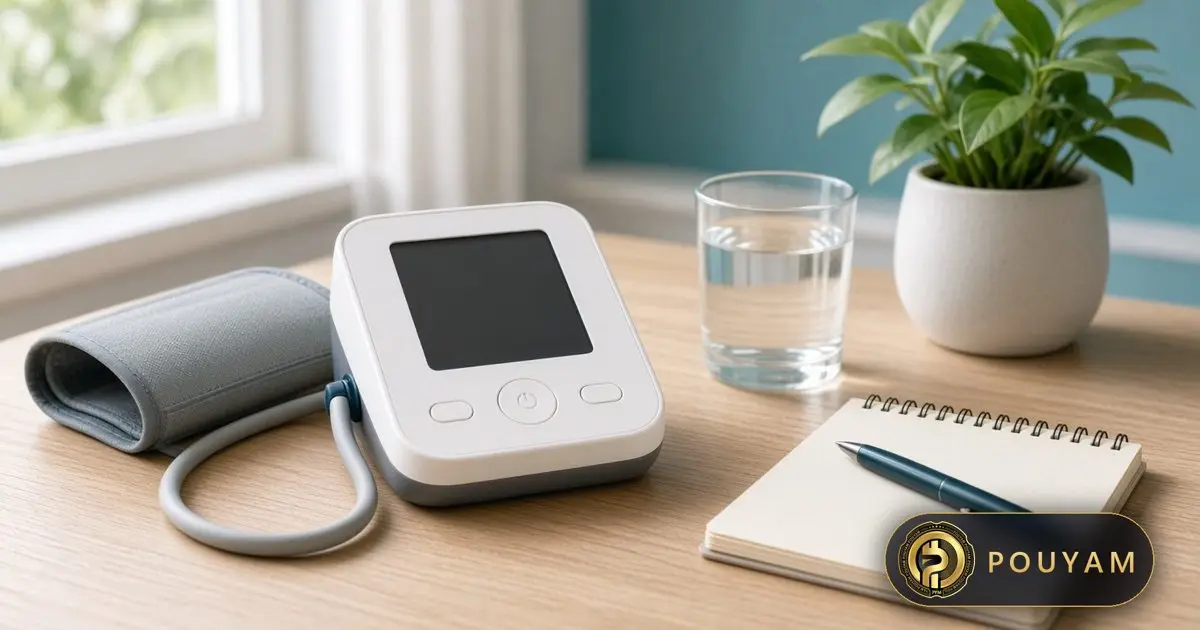
Use a validated upper-arm monitor, sit quietly for 5 minutes with your back supported and feet flat, rest your arm at chest height and take at least two readings 1 to 2 minutes apart [6].
Home measurement helps doctors confirm a diagnosis and avoid the white coat effect [2][6]. The CDC and NHS give similar steps [4][6]:
- Prepare. Do not eat or drink anything for 30 minutes before the reading, and avoid smoking, alcohol, caffeine and exercise in that time; empty your bladder first [6].
- Sit correctly. Sit in a chair with your back supported for at least 5 minutes, both feet flat on the floor and legs uncrossed [6].
- Position the cuff. Put the cuff on your bare upper arm so it fits snugly, and rest the arm on a table with the cuff at chest height [6]. An arm hanging down or crossed legs can push the reading up [6].
- Stay still and quiet. Do not talk during the reading [6].
- Repeat. Take at least two readings 1 or 2 minutes apart [6]. The NHS suggests waiting 1 minute between readings, usually twice a day, morning and evening, for as many days as your doctor asks [4].
- Write it down. Keep a log with the date, time and both numbers, measured at the same time each day [6].
Many pharmacies in England offer free checks for people aged 40 or over, and a clinic visit uses the same cuff method [4]. If you are asked to wear a 24-hour monitor, it records readings through a normal day and night [4].

When should you get your blood pressure checked?
Have it checked regularly as an adult, and more often if you are 40 or over or have risk factors, because measuring is the only way to find high blood pressure [2][4].
The NHS says checks are particularly important if you are aged 40 or over, are from a Black or South Asian background, have close relatives with high blood pressure, smoke, drink too much alcohol or caffeine, eat too much salt or are living with obesity [4]. Blood pressure is also checked routinely during pregnancy as part of antenatal care [4].
WHO stresses that while people can measure their own pressure with automated devices, an evaluation by a health professional is important for assessing risk and related conditions [3]. The US National Heart, Lung, and Blood Institute notes that controlling high blood pressure can help prevent or delay problems such as kidney disease, heart attack, heart failure and stroke [12].
A single high number is not a diagnosis, and a single normal number is not a guarantee. What matters is the pattern over time, measured the right way. This guide explains the published categories; it is not medical advice, so talk to a doctor or nurse about your own readings.
| Category | Top number (systolic, mm Hg) | Link | Bottom number (diastolic, mm Hg) |
|---|---|---|---|
| Normal | Less than 120 | and | Less than 80 |
| Elevated | 120–129 | and | Less than 80 |
| Stage 1 hypertension | 130–139 | or | 80–89 |
| Stage 2 hypertension | 140 or higher | or | 90 or higher |
| Severe hypertension | Higher than 180 | and/or | Higher than 120 |
| Age group | What counts as normal | Share of US adults with hypertension |
|---|---|---|
| Children 1 to under 13 | Below the 90th percentile for age, sex and height | Not covered by this survey |
| Teenagers 13–17 | Below 120/80 mm Hg | Not covered by this survey |
| Adults 18–39 | Below 120/80 mm Hg | 23.4% |
| Adults 40–59 | Below 120/80 mm Hg | 52.5% |
| Adults 60 and older | Below 120/80 mm Hg | 71.6% |
| All adults 18 and older | Below 120/80 mm Hg | 47.7% |
| Guideline | Normal or non-elevated | Hypertension starts at |
|---|---|---|
| AHA/ACC (US, 2025) | Under 120/80 | 130/80 (stage 1) |
| WHO | Not defined as a band | 140/90 on two different days |
| NHS (UK) | Not defined as a band | 140/90 in clinic; 135/85 at home |
| ESC (Europe, 2024) | Under 120/70 | 140/90 |
Common mistakes
Believing normal blood pressure rises with age, such as “100 plus your age”.
Fix: Adult guidelines use the same normal range, under 120/80, at every age [1][2].
Judging yourself on one reading.
Fix: Blood pressure varies through the day; diagnosis uses several readings, often at home and on more than one visit [2][6].
Measuring right after coffee, a cigarette or a walk.
Fix: Wait 30 minutes after caffeine, smoking, alcohol, food or exercise [6].
Letting the arm hang or crossing your legs.
Fix: Rest the arm on a table at chest height and keep both feet flat [6].
Comparing a child’s reading with adult numbers.
Fix: Children under 13 are judged by percentiles for age, sex and height [10][11].
Assuming you would feel high blood pressure.
Frequently asked questions
What is normal blood pressure by age and gender?
For adults of any age and either sex, normal is below 120/80 mm Hg [1][2]. Rates of hypertension differ: in the US, men aged 18–39 have higher rates than women, but the gap is not significant at 60 and older [7].
What is normal blood pressure for children?
Below the 90th percentile for the child’s age, sex and height for ages 1 to under 13, and below 120/80 from 13 [10].
What counts as high blood pressure?
In the US, 130/80 mm Hg or higher; WHO and the NHS diagnose hypertension at 140/90 or higher in a clinic, and the NHS uses 135/85 at home [1][3][4].
How should you measure blood pressure at home?
Sit with your back supported and feet flat for 5 minutes, rest the cuffed bare arm at chest height, stay quiet and take two readings 1 to 2 minutes apart [6].
Is 130/80 high blood pressure?
Under US guidelines, 130/80 is stage 1 hypertension; under WHO, NHS and ESC thresholds it is below the 140/90 diagnosis line [1][3][4][9].
What blood pressure is too low?
The NHS defines low blood pressure as below 90/60 mm Hg; it matters mainly when it causes symptoms such as dizziness or fainting [5].
When is blood pressure an emergency?
A reading above 180/120 with symptoms such as chest pain, shortness of breath, weakness or difficulty speaking needs emergency help [1].
Glossary
- Systolic pressure
- The top number: the pressure in the arteries when the heart beats [1].
- Diastolic pressure
- The bottom number: the pressure in the arteries between heartbeats [1].
- mm Hg
- Millimetres of mercury, the unit used for blood pressure [6].
- Hypertension
- Blood pressure that stays too high; the threshold is 130/80 in the US and 140/90 for WHO [1][3].
- Hypotension
- Low blood pressure, below 90/60 mm Hg in NHS guidance [5].
- White coat syndrome
- A reading that is high in a clinic but normal elsewhere [6].
- Percentile
- A child’s position compared with healthy children of the same age, sex and height [10].
Sources
- Understanding Blood Pressure Readings American Heart Association · 2025-08-14
- About High Blood Pressure US Centers for Disease Control and Prevention · 2026-10-13
- Hypertension (fact sheet) World Health Organization
- Blood pressure test NHS · 2025-11-25
- Low blood pressure (hypotension) NHS · 2023-07-11
- Measuring Your Blood Pressure US Centers for Disease Control and Prevention · 2026-10-13
- Hypertension Prevalence, Awareness, Treatment, and Control Among Adults Age 18 and Older: United States, August 2021–August 2023 (NCHS Data Brief No. 511) CDC National Center for Health Statistics
- New High Blood Pressure Guideline Emphasizes Prevention, Early Treatment to Reduce CVD Risk American College of Cardiology · 2025-08-14
- 2024 ESC Guidelines for the management of elevated blood pressure and hypertension European Society of Cardiology, European Heart Journal · 2024-08-30
- Clinical Practice Guideline for Screening and Management of High Blood Pressure in Children and Adolescents American Academy of Pediatrics, Pediatrics
- High blood pressure in children: Symptoms and causes Mayo Clinic · 2021-07-30
- High Blood Pressure: What Is High Blood Pressure? US National Heart, Lung, and Blood Institute (NIH) · 2024-04-25




Comments
Top comments