
State of the Climate 2026: What WMO's COP31 Report Says
- 0 views
- 0 likes
- 0 comments
- All languages combined
In short
The WMO State of the Climate Update 2026, released on 9 November 2026 at COP31 in Antalya, says 2026 will be one of the four warmest years on record, with January to September about 1.47 °C above pre-industrial levels, record sea level and ocean heat, and a very strong El Niño raising risks into 2027 [1][2].
Key takeaways
- January to September 2026 averaged 1.47 °C ± 0.13 °C above the 1850–1900 average, based on nine datasets [1].
- The past 12 years were individually the warmest on record, and 2023 to 2026 are the top four [1].
- El Niño has intensified since August and is expected to be the strongest on record by December [1][2].
- Sea level and ocean heat content are at record highs; 2026 is on track for a tenth straight year of record ocean warmth [1][2].
- Glaciers lost more than 400 gigatons of ice in 2025, about 1 mm of sea-level rise [1].
- Countries reporting multi-hazard early warning systems rose from 56 in 2015 to 136 in 2025 [1][5].
- The final State of the Global Climate 2026 report is due in March 2027 [1].
On this page 11 sections
- What does the State of the Climate 2026 report say?
- How warm is 2026 compared with other years?
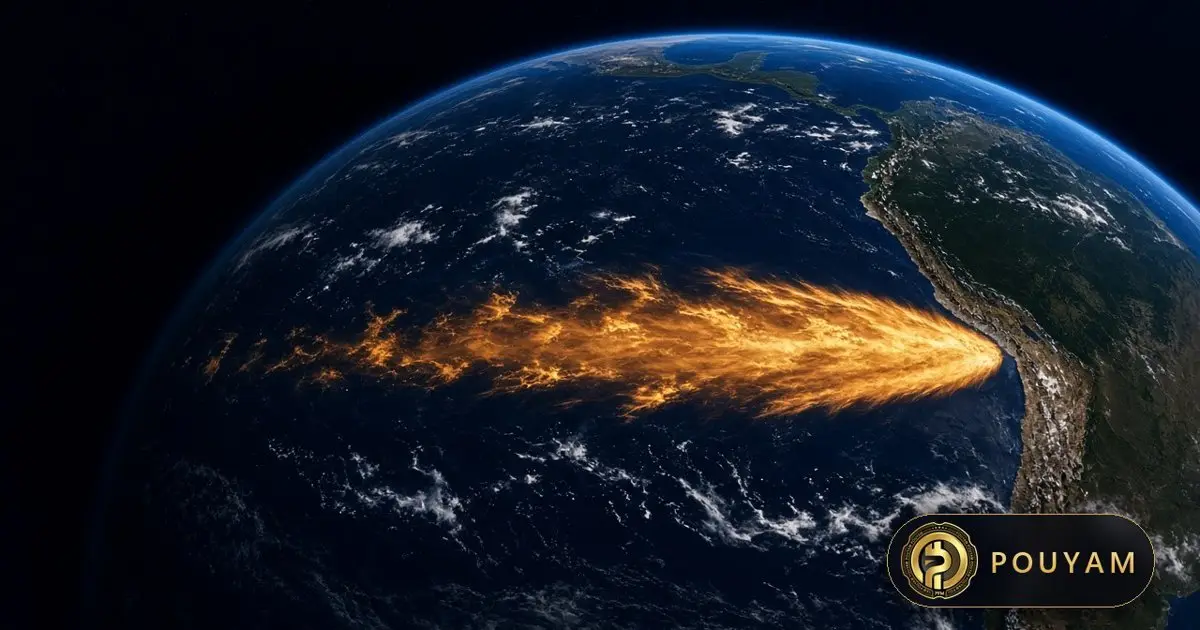
- Why is El Niño making 2026 so extreme?
- How high are greenhouse gases, ocean heat and sea level?
- What is happening to glaciers and sea ice?
- What did extreme weather cost in 2026?
- What happens next after the COP31 report?
- Common mistakes
- Frequently asked questions
- Glossary
- Sources
What does the State of the Climate 2026 report say?
The World Meteorological Organization (WMO) says 2026 will be one of the four warmest years on record, with record ocean heat and sea level and a very strong El Niño set to bring more heat and extreme weather well into 2027 [1][2]. The State of the Climate Update 2026 was released on 9 November 2026, the first day of the UN climate conference COP31 in Antalya, Türkiye [1][2].
WMO's five key messages are [1][2]:
- 2026 will be one of four warmest years on record;
- El Niño turns up the heat and multiplies risks;
- sea level and ocean heat are at record high levels;
- extreme weather has massive economic and human cost;
- forecasts and warnings, underpinned by sustained observations, are vital.
"El Niño and indeed the state of the global climate in 2026 gives new meaning to the phrase off the charts," said WMO Secretary-General Celeste Saulo [1]. The update uses data up to September where available, so WMO notes it does not reflect the most recent impacts of El Niño [1][2].
How warm is 2026 compared with other years?
January to September 2026 averaged about 1.47 °C above the 1850–1900 pre-industrial baseline, with an uncertainty of ±0.13 °C [1]. That is comparable to the full-year averages for 2025 (1.43 °C) and 2023 (1.46 °C), and below the 2024 record of 1.55 °C [1].
WMO bases the figure on nine internationally recognised datasets: Berkeley Earth, CMA-GMST, CMST, DCENT-I, ERA5, GISTEMP, HadCRUT5, JRA-3Q and NOAAGlobalTemp [1]. The past 12 years (2015–2026) are each among the warmest on record, and the past four, 2023 to 2026, are the top four [1][2].
The final 2026 number is likely to be higher than the nine-month average. La Niña cooled the start of the year, but El Niño reversed that, and WMO says El Niño typically adds around 0.1 °C to 0.2 °C to annual global temperatures [1]. Saulo said El Niño usually has its greatest impact in the year after it develops, "why we should therefore prepare for another record-breaking year in 2027" [5].
Separately, the Copernicus Climate Change Service reported that October 2026 was the warmest October on record, 1.75 °C above pre-industrial, and that 2026 is virtually certain to be the second calendar year above 1.5 °C, as summarised by the Royal Meteorological Society [4][6]. That is a single-month figure, so it is not directly comparable with WMO's January to September average from nine datasets.
Why is El Niño making 2026 so extreme?
Because it releases heat stored in an ocean that is already the warmest ever measured [1]. "El Niño doesn't add new heat to the planet. It releases heat from the ocean, which is the warmest ever measured. There is simply more heat available to release," Saulo said [1][3].
WMO says El Niño has been intensifying since August and is expected to be the strongest on record by December, continuing into early 2027 [1]. In her press conference statement, Saulo explained that WMO declares an El Niño when tropical Pacific sea surface temperatures are 0.5 °C above average, and that between November 2026 and January 2027 it may be nearly four times that level [5].
El Niño also tends to push greenhouse gas concentrations up, as WMO notes in the same report [1]. For a full explanation of this year's event and what it means for winter weather, see El Niño 2026: How Strong It Is and What It Means for Winter.
How high are greenhouse gases, ocean heat and sea level?
All three are at record levels, WMO says [1].
- Greenhouse gases: carbon dioxide reached about 426.8 parts per million in 2025, up 53% from around 278 ppm in 1750. Methane reached 1,948 parts per billion (up 167%) and nitrous oxide 339.1 ppb (up 26%). Stations such as Mauna Loa in Hawaii and Kennaook/Cape Grim in Australia show a continued rise in 2026 [1].
- Energy imbalance: the rate at which Earth accumulates heat reached its highest value since monitoring began in 1960 in 2025, and preliminary January–July 2026 values suggest another record [1].
- Ocean heat: the upper 2,000 metres held the most heat on record in 2025 and kept rising in 2026. The ocean absorbs about 90% of the excess heat [1].
- Sea level: global mean sea level hit a record high in 2026, with June, July and August the highest since satellite altimetry began in 1993 [1][2]. Saulo said this raises risks for 900 million people on low-lying coasts [5].
WMO says ocean warming is projected to continue for hundreds to thousands of years [1][3].

What is happening to glaciers and sea ice?
Glaciers lost more than 400 gigatons of ice in 2025, equal to about 1 mm of global sea-level rise, and both polar sea ice maximums in 2026 were among the lowest on record [1].
WMO says that annual glacier loss would have filled five Olympic swimming pools every second of the year, and 2025 was the fourth year in a row in which all 19 glaciated regions lost ice [1]. In 2026, Antarctic sea ice reached its third-lowest annual maximum in the satellite era since 1979, and the Arctic maximum was the lowest or second lowest [1].
Fresh water on land is also falling. Water stored in groundwater, soil, rivers, reservoirs, glaciers and snow has declined globally since 2014; in 2025, 42% of the assessed area had below-normal storage, against a long-term average of 25% [1].
Mountain hazards are a growing concern. WMO highlights a Himalayan glacier collapse and flash flood in late August 2026 that killed more than 1,300 people and badly hit Nepal's economy [1][3].

What did extreme weather cost in 2026?
Tens of thousands of lives and major economic damage, according to WMO's preliminary estimates [1][5].
- Europe: heatwaves, drought and wildfires led to more than 30,000 excess deaths, with national temperature records in at least eight countries [1]. UN News reports about 16,000 excess deaths during the 22–28 June heatwave alone [3].
- India: an estimated 146.5 million people were exposed to extreme heat in an April heatwave; UN News says temperatures hit 47 °C [1][3].
- Nepal: more than 1,300 deaths from the August glacier collapse and flash flood [1].
- Elsewhere: tropical cyclones caused deaths in many countries, and Saulo pointed to floods in parts of South America and Africa and drought in Asia, the Pacific and Central America as COP31 opened [1][5].
Health: WMO says the World Health Organization has, for the first time, classified the anticipated health impacts of El Niño as a health emergency, citing heat illness, smoke, malnutrition and water- and vector-borne diseases such as cholera, malaria and dengue [1][3]. This is not medical advice; follow your national health authority's heat and disease guidance.

What happens next after the COP31 report?
WMO will publish the final State of the Global Climate 2026 report in March 2027 [1], and Saulo is asking COP31 for decisions that deliver funding and for sustained observations from every part of the world [5].
There is some progress to report: the number of countries with multi-hazard early warning systems rose from 56 in 2015 to 136 in 2025 [1][5]. "We cannot afford to fly blind," Saulo said, urging sustained observations from every part of the world [5].
UN Secretary-General António Guterres said: "We have entered a new age of climate extremes. A supersized El Niño is colliding with a planet already superheated by manmade climate change," and called on leaders to cut emissions faster and deliver finance to vulnerable countries [1][3].
WMO has also launched a beta interactive platform to explore the data behind the report [1]. For another climate indicator released this season, see Ozone Hole 2026: How Big It Got and Is It Healing?
| Indicator | Latest value | Source |
|---|---|---|
| Global temperature, Jan–Sep 2026 | 1.47 °C ± 0.13 °C above 1850–1900 | WMO [1] |
| Record year so far | 2024 at 1.55 °C | WMO [1] |
| Carbon dioxide (2025) | About 426.8 ppm, +53% since 1750 | WMO [1] |
| Methane (2025) | 1,948 ppb, +167% since 1750 | WMO [1] |
| Nitrous oxide (2025) | 339.1 ppb, +26% since 1750 | WMO [1] |
| Ocean heat | Record in 2025, still rising in 2026 | WMO [1] |
| Sea level | Record high in 2026 | WMO [1][2] |
| Glacier loss (2025) | More than 400 gigatons, about 1 mm sea-level rise | WMO [1] |
| Antarctic sea ice maximum (2026) | Third lowest since 1979 | WMO [1] |
| Early warning systems | 136 countries in 2025, up from 56 in 2015 | WMO [1] |
Common mistakes
Saying 2026 is confirmed as the warmest year ever.
Fix: WMO says it will be one of the four warmest; 2024 holds the record at 1.55 °C so far [1].
Treating 1.47 °C as the final 2026 figure.
Fix: It covers January to September; WMO says the full-year figure is likely to be higher [1].
Blaming all the heat on El Niño.
Fix: WMO says El Niño releases heat from an ocean that is already the warmest ever measured, while greenhouse gases trap unprecedented amounts of heat [1].
Quoting the update as the final report.
Fix: The final State of the Global Climate 2026 report comes in March 2027 [1].
Frequently asked questions
What does the State of the Climate 2026 report say?
2026 will be one of the four warmest years, with record ocean heat and sea level and a very strong El Niño [1][2].
How warm is 2026 compared with other years?
January to September was 1.47 °C above pre-industrial, versus 1.55 °C for record year 2024 [1].
Why is El Niño making 2026 so extreme?
It releases heat from an ocean that is already the warmest ever measured [1].
How high are greenhouse gases, ocean heat and sea level?
All are at record levels; CO2 was about 426.8 ppm in 2025 [1].
What is happening to glaciers and sea ice?
Glaciers lost over 400 gigatons in 2025; Antarctic sea ice had its third-lowest maximum in 2026 [1].
When is the final State of the Global Climate 2026 report?
March 2027 [1].
Glossary
- WMO
- The World Meteorological Organization, the UN agency for weather, climate and water.
- COP31
- The 2026 UN Climate Change Conference, held in Antalya, Türkiye.
- Pre-industrial baseline
- The 1850–1900 average temperature used to measure global warming.
- El Niño
- A periodic warming of the tropical Pacific that raises global temperatures.
- Earth's energy imbalance
- The difference between energy Earth receives from the Sun and energy it sends back to space.
Sources
- State of the climate in 2026 gives new meaning to phrase "off the charts" World Meteorological Organization · 2026-11-09
- State of the Climate Update for COP31 World Meteorological Organization · 2026-11-09
- 'Exceptional' extreme temperatures to continue into next year, UN reports UN News · 2026-11-09
- COP31 begins: Latest climate science highlights the urgency of action Royal Meteorological Society · 2026-11-09
- COP31 - State of Climate Update 2026 press conference statement World Meteorological Organization · 2026-11-09
- Copernicus: Warmest October on record with 2026 virtually certain to exceed 1.5°C Copernicus Climate Change Service · 2026-11-06




Comments
Top comments