
M87 Black Hole Image Confirmed: What the New Study Shows
- 1 views
- 0 likes
- 0 comments
- All languages combined
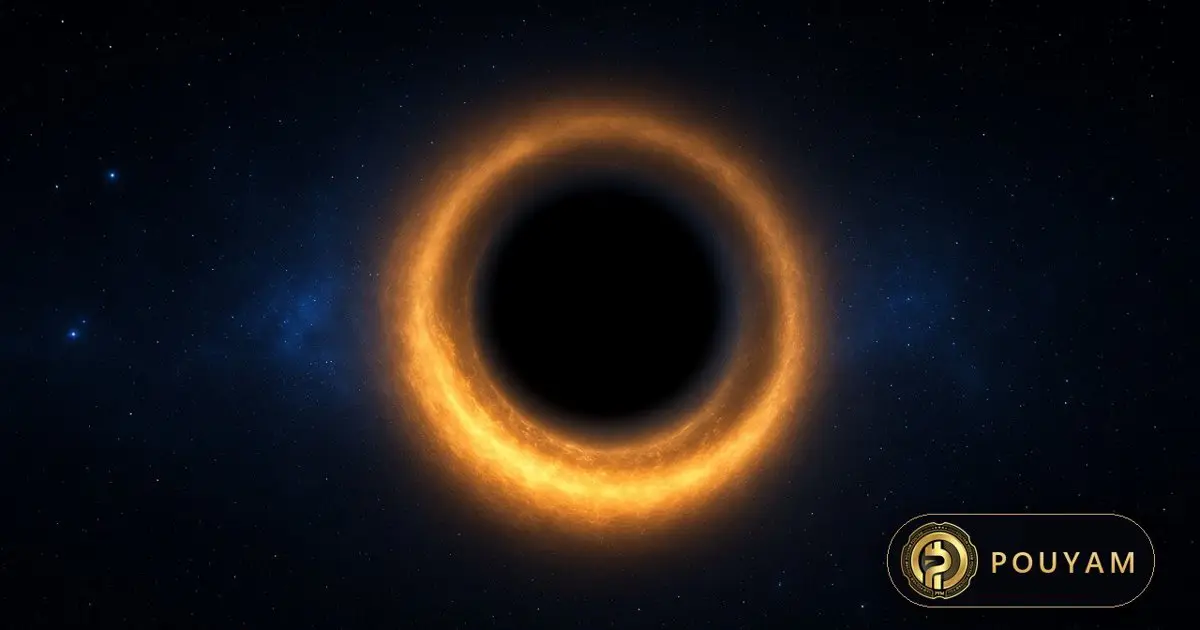
In short
On 11 November 2026, a study in Nature independently confirmed the ring in the famous 2019 image of the M87 black hole: a four-person CSIRO team re-analysed the Event Horizon Telescope data with a new method and recovered a ring 42.2 microarcseconds across, implying about 6.5 billion solar masses [1][2].
Key takeaways
- The Nature paper, published 11 November 2026, reports a ring-like shadow around M87* with an angular diameter of 42.2 ± 1.5 microarcseconds [1].
- That size implies a black hole mass of 6.5 ± 0.5 billion Suns, matching the figure announced with the 2019 image [1][6].
- The method, called GenDIReCT, uses closure invariants, data combinations that cancel calibration errors, and an AI model trained on images unrelated to astronomy [1][2].
- It recovered the ring in Event Horizon Telescope data from 2017, 2018 and 2021 [1].
- The EHT Collaboration's director, Laurent Loinard, welcomed the result as independent validation [2].
- The study does not measure the black hole's spin [1].
On this page 11 sections
- Was the M87 black hole image confirmed?
- Why did scientists doubt the M87 black hole image?
- How did the new study check the M87 image?
- How big is the M87 black hole?
- What data did the study use?
- Does this prove general relativity?
- What comes next for black hole imaging?
- Common mistakes
- Frequently asked questions
- Glossary
- Sources
Was the M87 black hole image confirmed?
Yes. A study published in Nature on 11 November 2026 independently reproduced the ring-shaped shadow first shown in the Event Horizon Telescope's 2019 image of the black hole in galaxy M87 [1][2]. The authors, from CSIRO, Australia's national science agency, write that their method "unequivocally" reproduces a ring-like morphology [1].
The team, Samuel Lai, Nithyanandan Thyagarajan, Ivy Wong and Foivos Diakogiannis, applied a new imaging method to the publicly available EHT measurements [1][3]. "When we applied it to the original Event Horizon Telescope dataset, we found a black hole almost identical in size and shape as the historic EHT image," Lai said, adding: "Importantly, our model had no idea what a black hole looked like" [2].
Lai calls it "the first truly independent validation of the EHT image" [2]. CSIRO says the findings strengthen confidence that the ring is a genuine astrophysical feature rather than an artefact of image reconstruction [2][3].
The contrast in scale is striking. The 2019 image was the work of hundreds of scientists; ESO said at the time that the EHT collaboration involved more than 200 researchers [2][6]. The check came from a group of four. Lai is a postdoctoral fellow at CSIRO in Western Australia, The Register reports [5], and the paper was published as open access, so anyone can read it [1].
Why did scientists doubt the M87 black hole image?
Because turning EHT data into a picture requires heavy processing, and different processing choices gave different results [1][4]. The Nature paper notes that various analysis and imaging approaches produced divergent views of M87*'s fine details, and that some external analyses even challenged its basic ring-like shape [1].
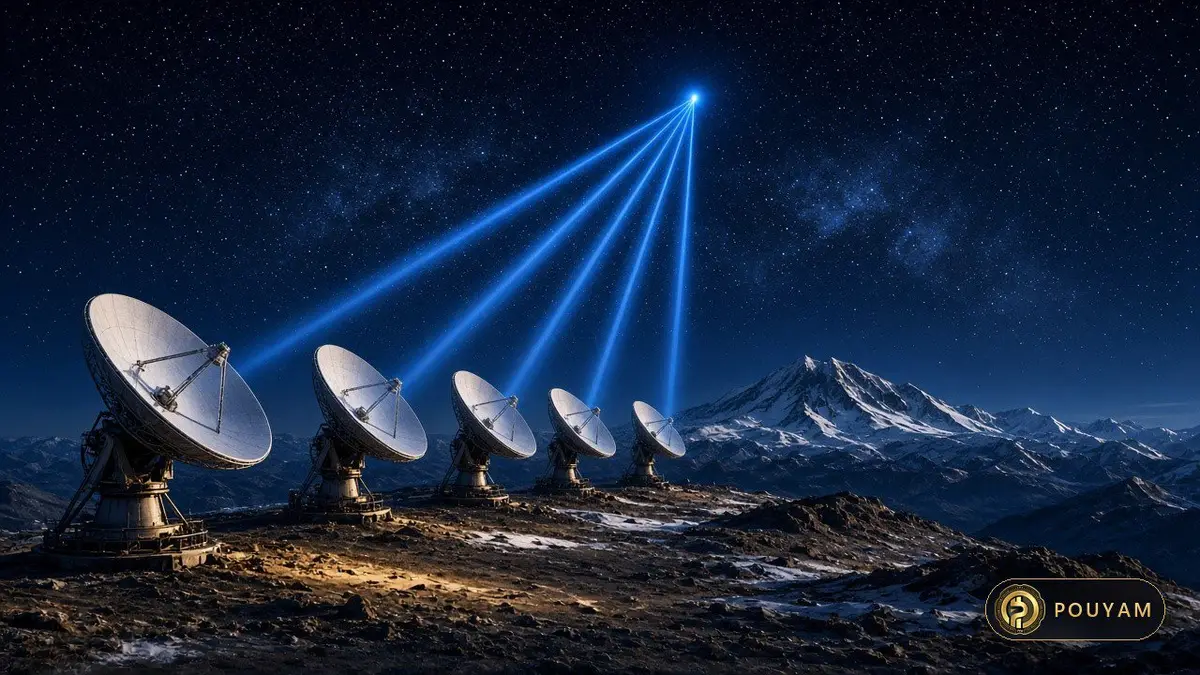
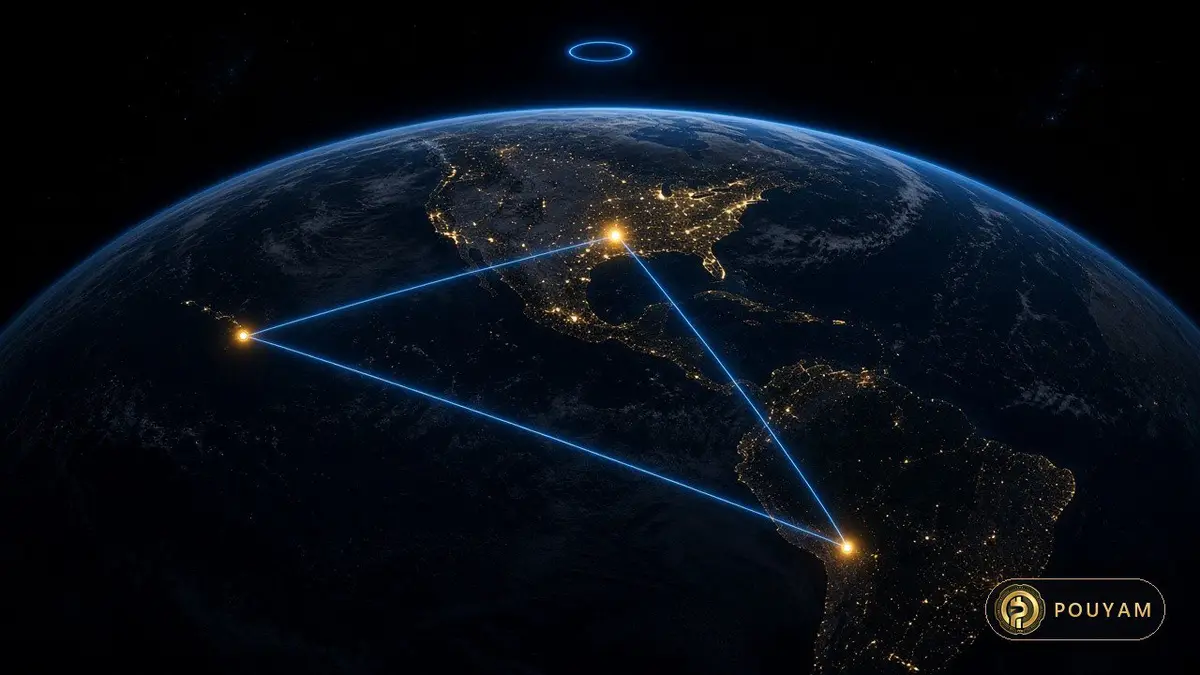
The root problem is sparse data. The EHT links radio dishes across the globe to mimic a telescope the size of Earth, a technique called very long baseline interferometry [2][6]. But with only a handful of stations, the measurements leave large gaps, so image reconstruction is "an inadequately constrained problem" and sensitive to calibration, algorithms and settings, the authors write [1].
New Scientist reports that most re-analyses produced similar rings, but one published in 2022 found no ring at all [4]. "It is like standing in your backyard and trying to take a photo of a doughnut on the Moon," Lai said of the challenge [2].
How did the new study check the M87 image?
It rebuilt the image from scratch using only measurements that cancel out instrument errors, and an AI model that had never seen a black hole [1][2]. The approach in brief:
- Use triplets, not pairs: standard analysis combines data from pairs of telescopes. The CSIRO method combines sets of three, which eliminates those errors, Thyagarajan explained [2][4]; the paper says the resulting measurements carry "pure morphological information" free of calibration effects [1].
- Closure invariants: the paper calls these calibration-independent measurements "closure invariants", a unified version of the closure phases and amplitudes radio astronomers already use [1].
- Generative AI with no black-hole training: the algorithm, GenDIReCT, is a latent diffusion model that the paper describes as trained on images unrelated to astronomy [1][4]. The Methods say the training set was augmented CIFAR-10 natural images plus simple geometric shapes, including rings and crescents; the authors report that training without the shapes made no notable difference [1].
- Cross-check: the team also fitted simple geometric shapes to the same data, measuring a mean diameter of 42.3 ± 1.1 microarcseconds, compatible with the 42.2 ± 1.5 from the images [1].
Diakogiannis credited Lai with making part of the AI "learn while reconstructing each image", guided by the telescope measurements for that specific observation [2].
How big is the M87 black hole?
The new study implies a mass of 6.5 ± 0.5 billion times the Sun, from a ring 42.2 ± 1.5 microarcseconds wide [1]. That matches the 6.5 billion solar masses given when the first image was published on 10 April 2019 [6].
What is the ring, exactly? The Nature paper describes it as gravitationally lensed and redshifted emission from emission around the central supermassive black hole, with a dark central shadow [1]. ESO described the shadow in 2019 as caused by the gravitational bending and capture of light by the event horizon [6]. Its size depends mainly on the black hole's mass and distance, which is how a measured angle becomes a mass estimate, "assuming nominal scaling parameters" in the authors' words [1].
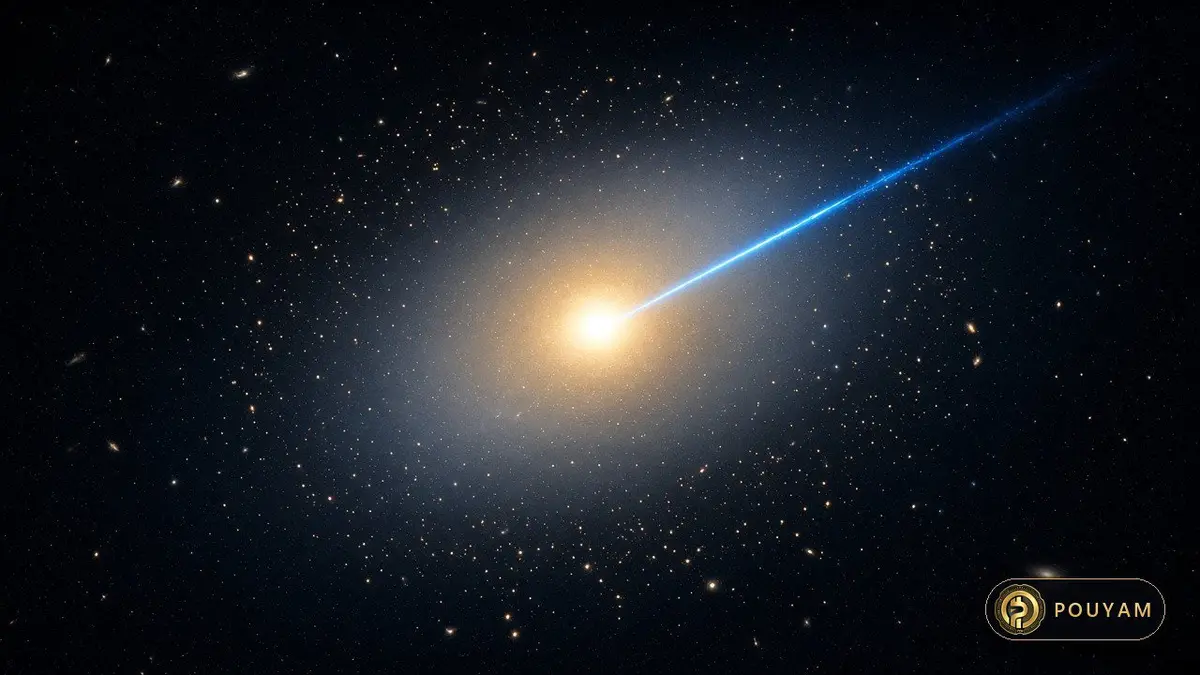
A microarcsecond is a millionth of an arcsecond, an extremely small angle. The black hole sits 55 million light-years away, at the centre of Messier 87, a massive galaxy in the Virgo cluster [6]. The paper gives the distance as 16.8 megaparsecs [1].
The ring appears brighter towards the south or southwest, and the best match to synthetic images from simulations is an inclination of about 20 degrees from the approaching jet, which the paper calls generally consistent with the 17.2 ± 3.3 degrees from earlier 43 GHz radio observations [1]. The authors report that the ring's orientation shifted anticlockwise between 2017 and 2018, which they attribute to turbulent accretion, though they say the 2017 trend may partly reflect sparse coverage on 5 and 6 April [1].
What the study does not do: it does not constrain how fast the black hole spins. The paper says the best image matches favour a non-zero spin, consistent with previous EHT analyses, but not its magnitude [1].
What data did the study use?
Public EHT measurements at a wavelength of 1.3 millimetres from three years of observations: 2017, 2018 and 2021 [1].
The 2017 campaign, which produced the famous image, had four observing days (5, 6, 10 and 11 April). For 2018 and 2021, there were two each [1]. The team highlights the best-quality day from each year, 11 April 2017, 21 April 2018 and 18 April 2021, and reports that all of them give a compact ring on a scale of about 40 microarcseconds [1].
For comparison, the team also reproduced a reference reconstruction for the EHT Collaboration using the public eht-imaging pipeline [1]. The original 2017 observations used eight telescopes at high-altitude sites including volcanoes in Hawaii and Mexico, and each telescope produced roughly 350 terabytes of data per day [6]. The Register notes the 2019 measurements came from eight telescopes at sites including Chile, the US and Antarctica [5].
Using several years matters: a processing artefact would be unlikely to appear identically in independent datasets, and EHT director Laurent Loinard pointed out that GenDIReCT "recovers the ring structure of M87* across several years" [2].
Does this prove general relativity?
It strengthens one important piece of evidence; it does not prove a theory on its own [1][4]. The ring is light bent and redshifted by the black hole's gravity, as general relativity predicts [1]. When the first image was released, Heino Falcke, chair of the EHT Science Council, said in ESO's release that the shadow was "something predicted by Einstein's general relativity that we've never seen before" [6].
New Scientist describes the new result as a key confirmation that general relativity describes the space-time around a black hole accurately [4]. The Nature paper is more measured: it confirms the ring and its size, and compares the images with simulations of hot, magnetised gas around a black hole to estimate the viewing angle [1].
Science advances partly through checks like this, made by small, independent teams. Loinard said: "Independent validation is at the heart of the scientific process, and it is especially valuable for results as novel as those of the Event Horizon Telescope" [2]. For another example of new methods being tested on old questions, see Coldest Temperature Ever: 10 Picokelvin in Space Explained, and Euclid Telescope Data Release: What ESA's New Map Shows.
What comes next for black hole imaging?
CSIRO says the method could be applied beyond astronomy, while the EHT Collaboration sees it as a tool for the whole community [2][3].
- Other targets: the paper says GenDIReCT has also been tested on EHT data of the active galaxies 3C 279 and Centaurus A, and on synthetic data for the EHT and ngEHT arrays [1].
- Beyond astronomy: Thyagarajan says the technique could help improve medical imaging and earthquake mapping; these are potential uses, not demonstrated ones [2][3].
- A wider toolkit: Loinard said studies like this "enrich the toolkit available to the whole community" [2].
Be wary of AI claims in coverage. AI here helps reconstruct an image from real measurements; it did not invent the black hole. How to Tell if an Image or Video Is AI-Generated: Signs, Tools and Limits explains how to spot genuinely fake images. Ivy Wong said the project "began with a conversation between office colleagues" [2].
| Measure | 2019 EHT announcement | 2026 Nature study (CSIRO) | Source |
|---|---|---|---|
| Ring / shadow | Ring-like shadow | Ring-like shadow, "unequivocally" reproduced | ESO [6]; Nature [1] |
| Angular diameter | Not stated in the ESO release | 42.2 ± 1.5 microarcseconds | Nature [1] |
| Mass | 6.5 billion Suns | 6.5 ± 0.5 billion Suns | ESO [6]; Nature [1] |
| Distance | 55 million light-years | 16.8 megaparsecs | ESO [6]; Nature [1] |
| Data years | 2017 | 2017, 2018, 2021 | ESO [6]; Nature [1] |
| Team size | More than 200 researchers | Four researchers | ESO [6]; CSIRO [2] |
| Spin | - | Not constrained | Nature [1] |
Common mistakes
Saying AI created a new photo of the black hole.
Fix: The AI reconstructed an image from the same real EHT measurements [1][2].
Claiming the EHT image had been proven wrong before.
Fix: Some analyses challenged the ring; most re-analyses found similar rings [1][4].
Saying this is a new observation.
Fix: It re-analyses public EHT data from 2017, 2018 and 2021 [1].
Stating the study measured the black hole's spin.
Fix: The paper says spin is not constrained [1].
Treating medical-imaging uses as proven.
Frequently asked questions
Was the M87 black hole image confirmed?
Yes. A Nature study on 11 November 2026 independently reproduced the ring using a different method [1][2].
Why did scientists doubt the M87 black hole image?
Sparse data made the result sensitive to processing; one 2022 analysis found no ring [1][4].
How did the new study check the M87 image?
With closure invariants from telescope triplets, which cancel calibration errors, and an AI trained on non-astronomy images [1][2].
How big is the M87 black hole?
About 6.5 billion solar masses, from a ring 42.2 microarcseconds wide, 55 million light-years away [1][6].
What data did the study use?
Public 1.3 mm EHT data from 2017, 2018 and 2021 [1].
Glossary
- M87*
- The supermassive black hole at the centre of the galaxy Messier 87.
- Event Horizon Telescope
- A global network of radio telescopes that work together as an Earth-sized virtual telescope.
- Very long baseline interferometry
- Combining signals from distant radio dishes to achieve very high resolution.
- Closure invariants
- Combinations of interferometer measurements that cancel telescope calibration errors.
- Microarcsecond
- One millionth of an arcsecond, a tiny angle on the sky.
Sources
- Independent interferometric observable confirms black hole shadow in M87* Nature · 2026-11-11
- New CSIRO technique confirms iconic black hole image CSIRO · 2026-11-12
- New technique confirms iconic black hole image Australia Telescope National Facility (CSIRO) · 2026-11-12
- Re-analysis of black hole data proves iconic ring shape really is there New Scientist · 2026-11-11
- Scientists check their work and confirm it with update on iconic black hole image The Register · 2026-11-11
- Astronomers Capture First Image of a Black Hole ESO · 2019-04-10



Comments
Top comments