
Leonid Meteor Shower 2026: Peak Night, Best Time and Where
- 2 views
- 0 likes
- 0 comments
- All languages combined
In short
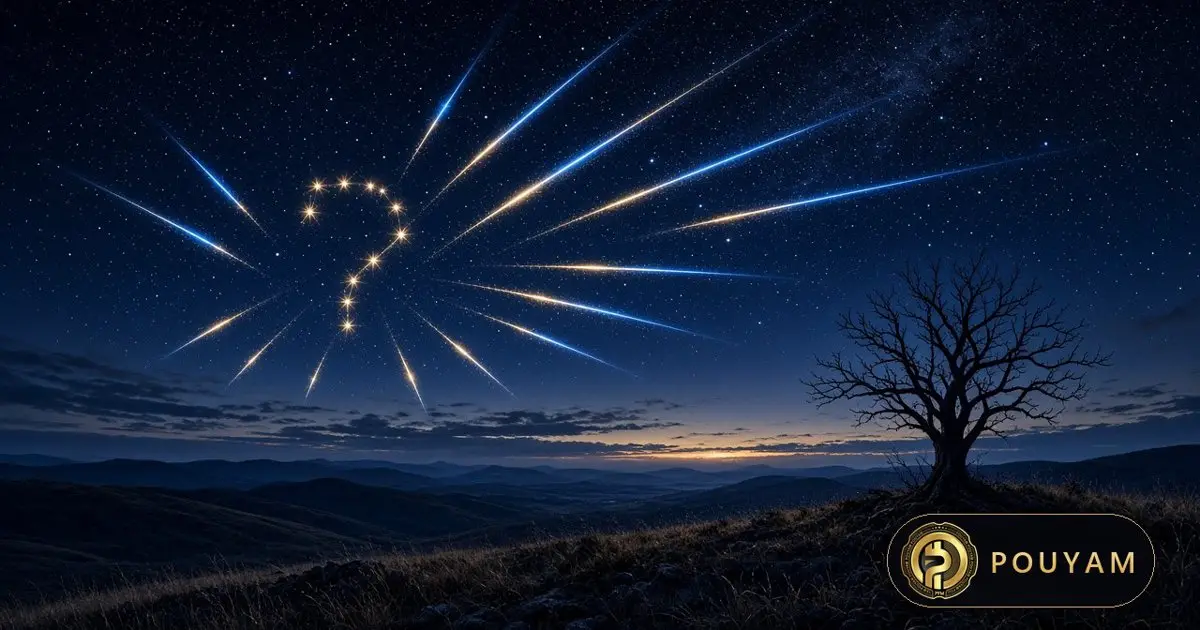
The Leonid meteor shower 2026 peaks on the night of 17 into 18 November, with the main maximum predicted at 23:45 UTC on 17 November [1][3]. Under dark skies, expect up to about 15 meteors an hour, best seen in the hours after the Moon has set (just before midnight in the UK) and before dawn [1][2][3].
Key takeaways
- The Leonids are active from 6 to 30 November 2026 and peak on the night of 17-18 November [1][3].
- The International Meteor Organization (IMO) predicts the regular maximum at 23:45 UTC on 17 November, with a zenithal hourly rate (ZHR) of about 15 [3].
- NASA says to look in the early hours after moonset; under ideal conditions about 15 meteors an hour are possible, but most people will see fewer [2].
- The Moon is waxing, near first quarter, and sets before midnight for UK observers, leaving the darkest hours free [1][3].
- No meteor storm is expected in 2026: model trails for this year are weak or low-level [3].
- Leonids are among the fastest meteors, hitting the atmosphere at about 71 km per second, and come from comet 55P/Tempel-Tuttle [3][4].
On this page 11 sections
- When is the Leonid meteor shower in 2026?
- What is the best time to see the Leonids?
- How many meteors per hour will the Leonids produce?
- Where should you look to see the Leonids?
- What causes the Leonid meteor shower?
- Will there be a Leonid meteor storm in 2026?
- What else is in the November 2026 night sky?
- Common mistakes
- Frequently asked questions
- Glossary
- Sources
When is the Leonid meteor shower in 2026?
The 2026 Leonids peak on the night of Tuesday 17 November into Wednesday 18 November [1][2]. The shower is active from 6 to 30 November, so a few Leonids can be seen on nights either side of the peak [1][3].
The International Meteor Organization (IMO), which publishes the standard annual meteor calendar, puts the regular Leonid maximum at 23:45 UTC on 17 November 2026 [3]. It also lists an alternative model by Maslov that places the peak earlier, around 16:00 UTC on 17 November, with a similar rate of about 15 [3]. The IMO's regular time and the Royal Observatory both point to the night of 17-18 November as the main night to plan around [1][3].
The Royal Observatory Greenwich says the maximum falls on the evening of 17 into the early hours of 18 November, and that the shower continues at a reduced rate for several days either side [1].
Not every source names the same night. NASA's Leonid page and the American Meteor Society (AMS) calendar list the peak night as 16-17 November [4][6], one night earlier than NASA's November sky guide, which recommends the early mornings of both 17 and 18 November [2]. The AMS lists the Moon as 39% illuminated and waxing crescent on its 16-17 November night [6].
What is the best time to see the Leonids?
The best window is from about midnight until dawn, after the Moon has set [1][2][4]. NASA's November 2026 sky guide recommends the early morning hours of 17 and 18 November "after the Moon sets" [2]. NASA's Leonid page adds that the shower is best viewed starting around midnight local time and lasts until dawn [4].
The timing is about geometry. The shower's radiant, the point in the sky the meteors appear to come from, lies in the constellation Leo [1][4]. The ZHR assumes the radiant is overhead [3], so rates are usually better later in the night, when Leo is higher; NASA advises starting around midnight local time [4].
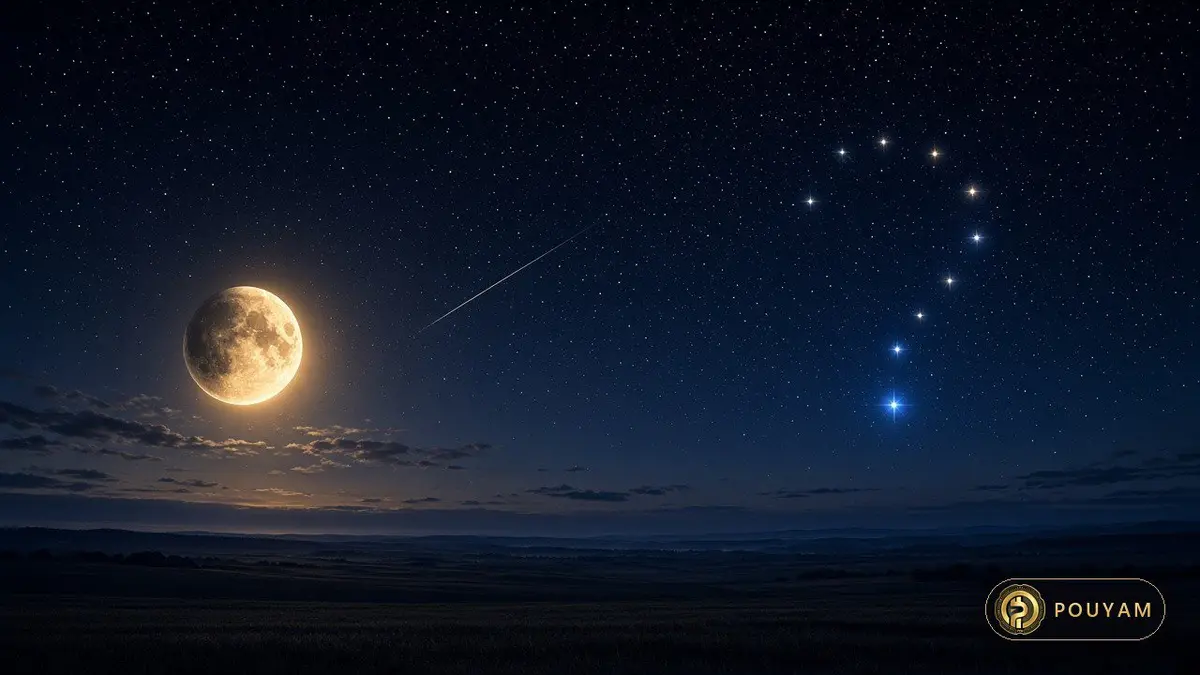
The Moon helps this year. The IMO notes it is near first quarter at the Leonid maximum, and its lunar table lists first quarter on 17 November [3]. The Royal Observatory says it will be waxing gibbous and will set just before midnight for UK observers, leaving the rest of the peak night free of moonlight [1]. Moonset times differ by location, so check a local almanac or astronomy app.
How many meteors per hour will the Leonids produce?
Expect up to about 15 meteors an hour in perfect conditions, and fewer in real life [2][3]. The IMO gives a zenithal hourly rate (ZHR) of about 15 for 2026 [3]. NASA says the shower "could produce around 15 meteors per hour, though most viewers will see fewer" [2].
The ZHR is a theoretical number: it assumes a perfectly dark sky and the radiant straight overhead [3]. Light pollution, haze, a low radiant or a narrow view of the sky all cut the number you actually see. NASA notes that in ordinary years Leonid rates are often as low as about three an hour [4].
What the Leonids lack in numbers they can make up in quality. NASA describes them as bright and sometimes colourful meteors, known for fireballs (very bright meteors) and Earth-grazers, long meteors that skim near the horizon [4]. The Royal Observatory calls them "fast bright meteors with fine trains" [1].
Where should you look to see the Leonids?
Look at a wide area of dark sky, not only at Leo: meteors can appear anywhere [1][4]. NASA says it is actually better to look away from the radiant, because meteors there appear longer; meteors seen near the radiant look short because of perspective, an effect called foreshortening [4].
- Get away from lights. Find a safe location away from street lights and other light pollution [1].
- Give your eyes time. NASA says your eyes adapt in under 30 minutes in the dark, and its November guide suggests about half an hour [2][4].
- Lie back and face east. NASA's advice is to lie flat with your feet toward the east and take in as much sky as possible [4].
- Skip the telescope. Meteors can be seen with the naked eye, so there is no need for binoculars or a telescope [1].
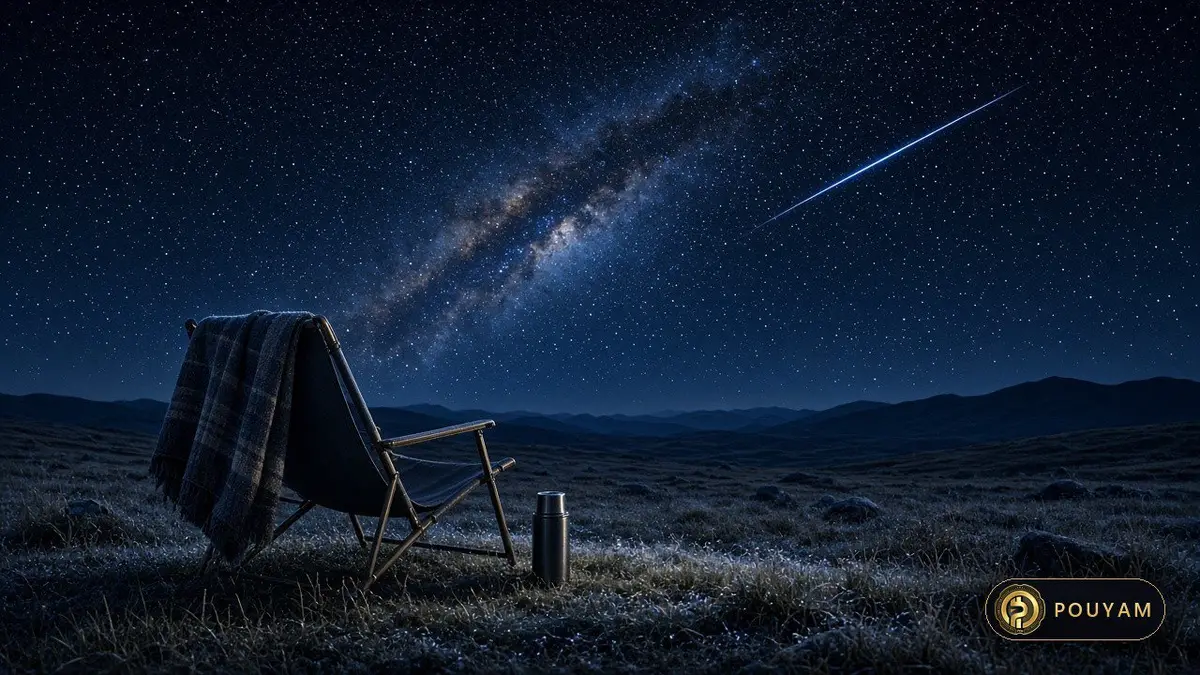
- Dress for the cold. The Royal Observatory suggests wrapping up warm and bringing a comfy chair, and NASA suggests a sleeping bag, blanket or lawn chair [1][4].
The Leonid radiant sits at a declination of about +22 degrees, north of the celestial equator [3].
What causes the Leonid meteor shower?
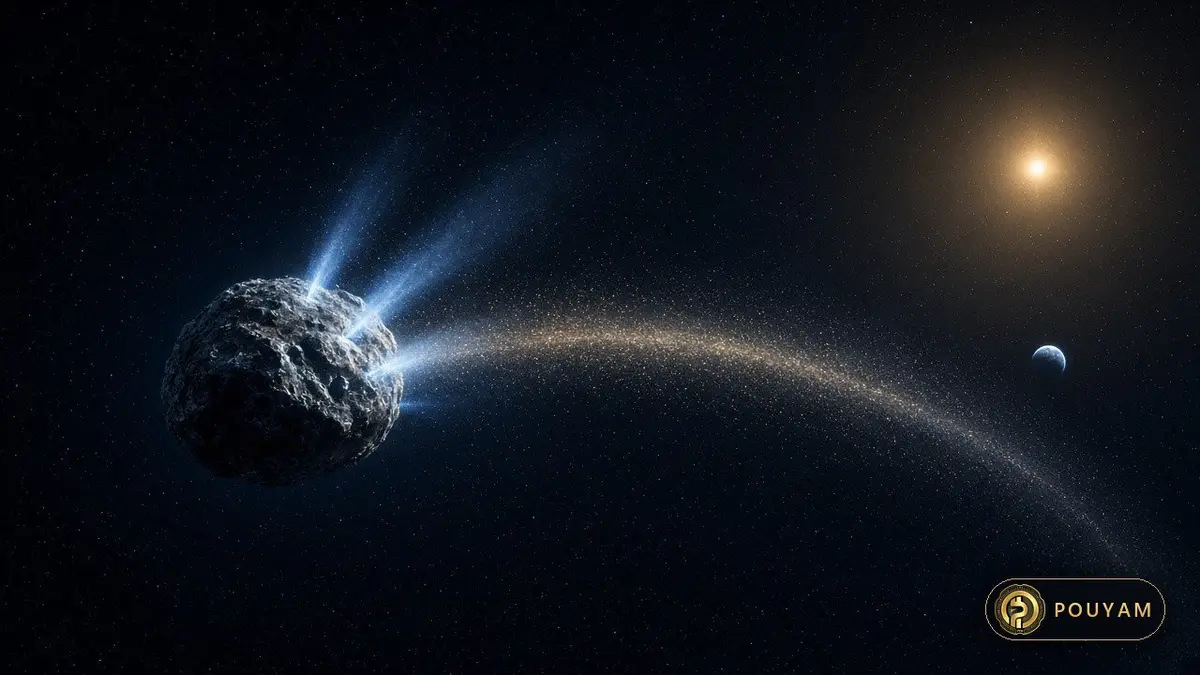
The Leonids are dust from comet 55P/Tempel-Tuttle burning up in Earth's atmosphere [1][4]. As the comet orbits the Sun, it sheds tiny particles that spread along its path; every November, Earth passes through that debris [4][5].
The particles are mostly very small. The Royal Observatory says a meteor can be caused by a particle as small as a grain of sand, entering the atmosphere at up to 70 km per second [1]. The IMO gives the Leonids' entry speed as 71 km per second [3], and NASA calls them some of the fastest meteors [4]. At that speed the particle heats the air around it until it glows, producing the streak of light.
Comet Tempel-Tuttle is small, with a nucleus about 3.6 km across, and takes about 33 years to orbit the Sun [5]. It was discovered independently by Ernst Tempel in 1865 and Horace Tuttle in 1866 [5]. Its last closest approach to the Sun was in 1998, and the next is due in 2031; the IMO gives 20 May 2031 [3][5].
Will there be a Leonid meteor storm in 2026?
No storm is expected. The IMO says model calculations for 2026 show encounters with dust trails of low densities [3]. The IMO lists several encounters with old trails between 17 and 19 November, labelled "weak" or "low level", and quotes modeller Vaubaillon's note that the 1800 dust trail reaches Earth but the number of meteoroids "will not be sufficient for a significant outburst" [3]. A second modeller, Sato, notes that lower ejection velocities "may imply a modest increase of meteor activity" [3].
Leonid storms are linked to the comet's returns, roughly every 33 years [1][4]. A storm means at least 1,000 meteors an hour, NASA says [4]. In 1966, viewers saw thousands of meteors per minute during a 15-minute period [4]. The Royal Observatory lists storms in 1799, 1833, 1866, 1966 and 1999-2001, and estimates the 1833 storm at around 100,000 meteors an hour [1]. NASA dates the last Leonid storm to 2002 [4]; sources differ slightly on whether the last strong display counts as 2001 or 2002.
The comet's next perihelion is due on 20 May 2031 [3].
What else is in the November 2026 night sky?
The Leonids are one of several sky events in November 2026 [2]. NASA's sky guide lists:
- Around 12 November: the Northern Taurids peaked, with only around five meteors an hour under ideal conditions and occasional bright fireballs [2].
- 15-16 November: Mars and Jupiter appear about 1.2 degrees apart in the south-east before sunrise [2].
- 17 November: NASA says Voyager 1 is reaching a milestone, becoming the first human-made object to travel one light-day from Earth [2].
- 24 November: a full supermoon, the first of three in a row [2].
| Item | 2026 value | Source |
|---|---|---|
| Active period | 6-30 November | IMO; Royal Observatory [1][3] |
| Peak night | 17-18 November (NASA's Leonid page and AMS list 16-17 November) | Royal Observatory; NASA; AMS [1][2][4][6] |
| Predicted maximum | 23:45 UTC, 17 November (alternative model: about 16:00 UTC) | IMO [3] |
| Zenithal hourly rate | About 15 | IMO; NASA [2][3] |
| Radiant | Leo; right ascension 152°, declination +22° | IMO [3] |
| Entry speed | 71 km/s | IMO; NASA [3][4] |
| Moon | Near first quarter, sets before midnight in the UK | IMO; Royal Observatory [1][3] |
| Parent comet | 55P/Tempel-Tuttle, next perihelion 20 May 2031 | IMO; NASA [3][5] |
| Place | Local time of 23:45 UTC | Suggested watching |
|---|---|---|
| London | 23:45, 17 Nov | Midnight to dawn, 18 Nov |
| Berlin, Paris, Madrid | 00:45, 18 Nov | Midnight to dawn, 18 Nov |
| Istanbul, Moscow | 02:45, 18 Nov | Midnight to dawn, 18 Nov |
| Tehran | 03:15, 18 Nov | Midnight to dawn, 18 Nov |
| New Delhi | 05:15, 18 Nov | Midnight to dawn, 18 Nov |
| Tokyo, Seoul | 08:45, 18 Nov (daylight) | After midnight on 17-18 and 18-19 Nov |
| New York | 18:45, 17 Nov (radiant not yet up) | Midnight to dawn, 18 Nov |
| Los Angeles | 15:45, 17 Nov (daylight) | Midnight to dawn, 18 Nov |
Common mistakes
Watching early in the evening.
Fix: NASA advises viewing from about midnight until dawn [4].
Expecting a storm with hundreds of meteors.
Fix: The IMO expects a ZHR of about 15 and only weak dust trails in 2026 [3].
Staring only at the constellation Leo.
Fix: Meteors appear across the sky; NASA says those away from the radiant look longer [4].
Using binoculars or a telescope.
Fix: Meteors can be seen with the naked eye; no binoculars or telescope are needed [1].
Giving up after a few minutes outside.
Fix: NASA says eyes adapt in under 30 minutes in the dark; its November guide suggests about half an hour [2][4].
Frequently asked questions
When is the Leonid meteor shower in 2026?
It is active from 6 to 30 November and peaks on the night of 17-18 November, with the IMO's predicted maximum at 23:45 UTC on 17 November [1][3]. NASA's Leonid page and the AMS list the peak night as 16-17 November [4][6].
What is the best time to see the Leonids?
From around midnight until dawn, after the Moon has set. NASA's November guide names the early mornings of 17 and 18 November, and the Royal Observatory puts the peak on the evening of 17 into the early hours of 18 November [1][2][4].
How many meteors per hour will the Leonids produce?
Up to about 15 an hour under ideal dark skies; most viewers will see fewer [2][3].
Where should I look for the Leonids?
Look at a wide stretch of dark sky; meteors appear anywhere and seem to come from Leo [1][4].
Will there be a Leonid meteor storm in 2026?
No storm is expected. The IMO's model calculations show only low-density dust trails, not enough for a significant outburst [3].
Glossary
- Radiant
- The point in the sky from which the meteors of a shower appear to come; for the Leonids, in Leo.
- Zenithal hourly rate (ZHR)
- The number of meteors one observer would see in an hour under perfectly dark skies with the radiant overhead.
- Meteor storm
- An outburst of at least 1,000 meteors an hour.
- Fireball
- An exceptionally bright meteor, brighter than magnitude -3.
- Perihelion
- The point in a comet's orbit when it is closest to the Sun.
Sources
- Leonid meteor shower 2026: when and where to see it in the UK Royal Observatory Greenwich
- What's Up: November 2026 Skywatching Tips from NASA NASA · 2026-11-02
- 2026 Meteor Shower Calendar International Meteor Organization
- Leonids NASA
- 55P/Tempel-Tuttle NASA
- Meteor Shower Calendar American Meteor Society


Comments
Top comments