
Is AI a Bubble? What the Data Says After the Selloff
- 16 views
- 0 likes
- 0 comments
- All languages combined
 +30

Sign in and earn +30 points by reading this
Read to the end, wait a few seconds, then tap the claim button below.
In short
There is no settled answer. Four of the largest US tech companies plan roughly $720 to 740 billion of 2026 capital spending, and three reported negative free cash flow [2][3][4][5]. Their AI-linked revenue is also growing fast [3][5]. The IMF and the Bank of England warn of correction risk, without calling it a bubble [6][7].
Key takeaways
- The question gained urgency after 5 November 2026, when the Nasdaq Composite fell 5.5%, its worst day since April 2025, on fears that the AI buildout would slow [1].
- Spending: 2026 capital expenditure guidance is $135-145 billion at Meta [2], $195-205 billion at Alphabet [3], about $170 billion at Microsoft [4] and about $220 billion at Amazon [5].
- Cash: Meta's free cash flow was negative $2.12 billion in the third quarter [2], Alphabet's negative $9.07 billion [3], and Amazon's negative $42.4 billion over 12 months [5].
- Revenue: Google Cloud revenue more than doubled to $30.7 billion [3], AWS grew 39% [5] and Microsoft's Azure grew 48% [4].
- The IMF lists an AI correction among three salient risks to financial stability [6]; the Bank of England says valuations remain high and a sharper repricing is possible [7]. Neither predicts one.
- This is general information, not financial advice. Figures are as of 13 November 2026.
On this page 11 sections
- Is AI a bubble?
- How much are tech companies spending on AI?
- Is AI making money yet?
- How is the AI buildout being financed?
- What do the IMF, central banks and economists say?
- What are the arguments for and against a bubble?
- What would show which side is right?
- Common mistakes
- Frequently asked questions
- Glossary
- Sources
Is AI a bubble?
Nobody can prove it either way in advance. A bubble is usually described as a period when asset prices rise far above what future earnings can justify, followed by a sharp fall. Whether today's prices are justified depends on profits that have not been earned yet, so the honest answer is a set of facts on both sides rather than a verdict.
The debate became louder after Thursday 5 November 2026. That day the Nasdaq Composite fell 5.5%, its worst day since April 2025, and Nvidia lost almost $450 billion in market value [1]. CNBC reported that rising interest rates, ballooning capital needs and the midterm election results had fed fears that wide parts of the market would be weighed down by too much debt and too little revenue [1]. The day itself is covered in a separate guide on why chip and AI stocks plunged on 5 November 2026.
This guide sets out the evidence in four parts: how much is being spent, how much revenue is coming in, how the spending is financed, and what official institutions and economists say. Each figure carries its source and date.
How much are tech companies spending on AI?
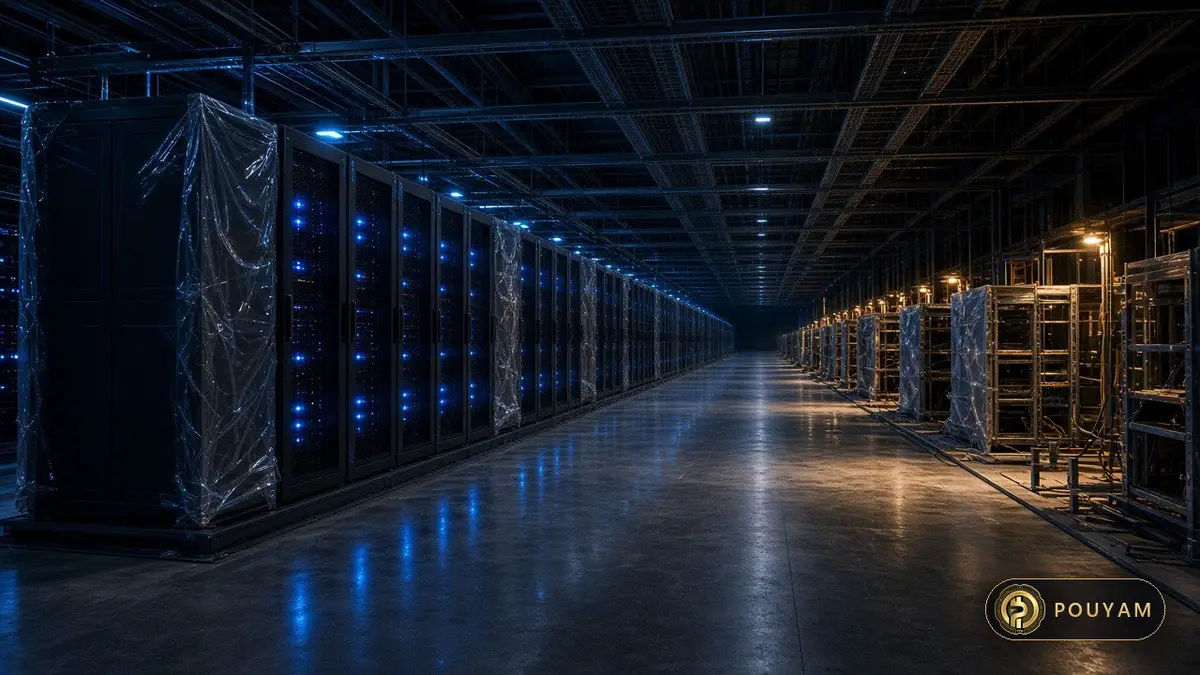
The largest spending comes from the companies that build and rent out data centres, often called hyperscalers. Their capital expenditure (capex), the money spent on buildings, servers, chips and networking, is the clearest measure of the AI buildout.
- Meta spent $34.91 billion in the third quarter of 2026, including principal payments on finance leases, and expects $135-145 billion for the full year [2].
- Alphabet (Google's parent) spent $51.36 billion in the quarter and kept its 2026 forecast of $195-205 billion; its finance chief said capex would increase significantly in 2027 [3].
- Microsoft reduced its capex forecast for the year to $170 billion from $175 billion; its finance chief said delays at outside chip-capacity providers would push some capacity into the first half of 2027 [4].
- Amazon spent $77.3 billion in the quarter, up from $35.1 billion a year earlier, and held its 2026 forecast at $220 billion, with its chief executive saying it would spend meaningfully more in 2027 [5].
Adding the four forecasts gives roughly $720 to 740 billion for 2026. That total is this guide's arithmetic; the companies define capex and their reporting periods differently (Meta, for example, includes finance-lease payments [2], and CNBC describes Microsoft's figure only as a forecast for the year [4]). CNBC reported that, as a group, hyperscaler capex is expected to top $1 trillion next year [4].
The spending also reaches other parts of the economy, a point covered in the guide on the RAM shortage: CNBC reported that the global memory shortage was jacking up prices, including for consumer devices [1].
Is AI making money yet?
Yes for some businesses, though not yet enough to cover the spending from operating cash alone. The revenue figures from the third quarter of 2026 are large and growing:
- Google Cloud, home to Alphabet's AI services for business, more than doubled its revenue to $30.7 billion, growth of 103% according to an analyst cited by CNBC [3]. Alphabet said its Gemini app had reached 1 billion users [3].
- Amazon Web Services revenue rose 39% to $45.98 billion, and Amazon's chief executive said he expects growth of over 40% in 2027 and 2028 [5].
- Microsoft's Azure cloud business grew 48%, and the company beat both earnings and revenue estimates [4].
- Meta grew revenue 26% to $64.60 billion and said its AI investments were already delivering substantial incremental advertising revenue [2].
Supporters of the AI boom point to these numbers: the spending is backed by companies with large existing profits. Microsoft's finance chief, for example, linked delayed capacity to delays at outside providers of graphics processors [4].
The other side is cash flow. Free cash flow is the cash a company generates from its operations after paying for capital spending. Meta's was negative $2.12 billion in the third quarter, against positive $10.63 billion a year earlier [2]. Alphabet reported negative free cash flow of $9.07 billion for the quarter [3]. Amazon's free cash flow was negative $42.4 billion over the trailing 12 months [5]. In plain terms, these companies are currently spending more on AI infrastructure than their businesses bring in, and and debt at Meta and Alphabet has risen sharply, as the next section shows.
Meta itself said its newer AI investments will take longer to generate returns than those in its core business [2]. That is the company's own statement of the timing risk.
How is the AI buildout being financed?
Increasingly through debt, which is one reason central banks are paying attention.
Alphabet's long-term debt rose to $125.1 billion from $21.6 billion a year earlier [3]. Meta's long-term debt was $80.92 billion at 30 September 2026, up from $58.74 billion at the end of 2025, and it raised $24.91 billion in new long-term debt in the first nine months of the year [2]. Meta also announced a new class of non-voting shares, effective January 2027, citing among other reasons the scale of investment required amid the AI transformation [2].
The Bank of England's Financial Policy Committee (FPC) recorded in September 2026 that Morgan Stanley estimated global AI-related debt issuance at around $450 billion by early September, more than double the total for all of 2025 [7]. It also cited a JP Morgan estimate that around $4.1 trillion of AI-related capex would be financed through debt between 2026 and 2030 [7].
What are circular financing claims?
Critics describe some AI deals as circular: a large company invests in or lends to a smaller AI firm, which then spends the money on the large company's chips or cloud services. Revenue on one side is then partly funded by the same group's own money. The IMF said such arrangements, together with rising leverage and concentrated exposures, could make any correction worse [6]. According to The Guardian's report on the IMF analysis, it identified $300 billion of transactions between hyperscalers and weaker AI firms over three years, supplemented by $650 billion of debt, in exchange for $1.4 trillion of future financial commitments [6].
These are claims and estimates about a structure, not findings of wrongdoing. The Bank of England used similar language, saying opacity and, at times, circular arrangements can complicate the assessment of risk and could amplify losses if expectations disappoint [7].
Smaller AI cloud companies, often called neoclouds, are more exposed. CNBC reported that they lack investment-grade credit ratings and that lenders were pulling back as interest rates rose; Gartner predicted that by 2030, 80% of neocloud companies will be absorbed or cease operations [4]. That is a forecast, not an outcome.

What do the IMF, central banks and economists say?
Official institutions have avoided the word bubble while describing the risks in detail.
- The International Monetary Fund, in its October 2026 Global Financial Stability Report, named an AI correction as one of three salient risks to stability, alongside rising government borrowing costs and a major cyberattack [6]. It warned that weaker or less durable investment and profitability in AI could trigger a correction in AI-related asset prices, and said there was growing evidence that AI may not require investment on the scale hyperscalers are undertaking [6].
- The Bank of England's FPC said in September 2026 that AI-related and semiconductor stocks fell sharply in July without spilling over to core markets, that valuations remained high and were underpinned by strong expectations of future earnings, and that a more significant shock to those expectations could trigger a sharper repricing [7].
- The US Federal Reserve's chair at the time, Jerome Powell, said at his 29 October 2025 press conference that the situation differed from the dot-com period because the most highly valued companies actually have earnings, business models and profits, whereas in the 1990s many were ideas rather than companies [8]. That remark is now more than a year old and predates the 2026 cash-flow figures.
- Economist Daron Acemoglu estimated in a 2024 paper that AI's effect on total factor productivity, a measure of overall economic efficiency, would be nontrivial but modest: no more than 0.66% over 10 years, and possibly less than 0.53% [9]. If productivity gains are smaller than markets expect, profits may be too.
The institutions differ in emphasis but agree on one point: the outcome depends on whether AI earnings and adoption meet the expectations built into prices. The Bank of England added that growth prospects and fiscal outlooks also depend in part on expectations of significant AI productivity gains [7].
What are the arguments for and against a bubble?
Both sides can cite real data. Summarised fairly:
Arguments that it is not a bubble, or not a typical one
- The biggest spenders have large existing businesses and growing revenue, unlike many dot-com firms, a contrast Powell drew in 2025 [8].
- Cloud revenue linked to AI is growing quickly: 103% at Google Cloud, 39% at AWS, 48% at Azure in the latest quarter [3][4][5].
- Microsoft's finance chief attributed delayed capacity to delays at outside providers of graphics processors [4], a supply-side constraint rather than a sign of weak demand.
Arguments that it may be a bubble, or carries bubble-like risks
- Free cash flow has turned negative at Meta, Alphabet and Amazon [2][3][5], and borrowing is rising quickly [3][7].
- The IMF sees growing evidence that AI may not need investment on this scale [6], and Acemoglu's estimate of productivity gains is modest [9].
- Concentration is high: the seven largest US tech stocks account for more than 35% of the S&P 500, up from 12% a decade ago, according to the Guardian's report of the IMF's figures [6].
- Circular financing and opacity make the true level of end demand harder to see, according to both the IMF and the Bank of England [6][7].
Neither list settles the question. A technology can be transformative and still be overvalued for a time; it can also justify high prices that look excessive in the moment.

What would show which side is right?
Several measurable signals will be published in the coming months, as of 13 November 2026:
- Fourth-quarter results from the hyperscalers, when Alphabet has said it will give further details of 2027 capex [3]; Amazon's chief executive has said it will spend meaningfully more in 2027 [5].
- Free cash flow trends: whether operating cash catches up with spending.
- Cloud and AI revenue growth against forecasts such as Amazon's expectation of over 40% AWS growth in 2027 [5].
- Credit markets: borrowing costs for neoclouds and the volume of AI-related debt, which the Bank of England is watching [7].
- Official assessments: the Bank of England's next Financial Stability Report and the IMF's next Global Financial Stability Report.
For longer-term questions about advanced AI itself, rather than its stock prices, see the guide Could Superhuman AI Be Dangerous? on this site.
This guide is general information, not financial or investment advice, and makes no prediction about markets.
| Company | Q3 2026 capex | 2026 capex guidance | Cloud or revenue growth | Free cash flow |
|---|---|---|---|---|
| Meta | $34.91B [2] | $135-145B [2] | Revenue +26% [2] | -$2.12B (quarter) [2] |
| Alphabet | $51.36B [3] | $195-205B [3] | Google Cloud +103% [3] | -$9.07B (quarter) [3] |
| Microsoft | Below analysts' estimates [4] | About $170B [4] | Azure +48% [4] | Not given in source |
| Amazon | $77.3B [5] | About $220B [5] | AWS +39% [5] | -$42.4B (trailing 12 months) [5] |
| Source | Date | Main point |
|---|---|---|
| IMF Global Financial Stability Report | October 2026 | AI correction is one of three salient risks; circular financing could amplify it [6] |
| Bank of England FPC | September 2026 | Valuations high; sharper repricing possible if earnings expectations are hit [7] |
| Jerome Powell, then Fed chair | 29 October 2025 | Unlike dot-com, leading firms have earnings and business models [8] |
| Daron Acemoglu (NBER paper) | 2024 | AI productivity gain of no more than 0.66% over 10 years [9] |
Common mistakes
Stating that AI is or is not a bubble as fact
Fix: No source cited here gives a verdict. The IMF and the Bank of England describe risks of a correction [6][7]; present both sides with data.
Adding up capex forecasts as if they were identical measures
Fix: Companies define capex differently; Meta includes finance-lease payments [2]. Label any total as approximate.
Treating circular financing as proven fraud
Fix: It describes a structure that can obscure end demand, according to the IMF and Bank of England [6][7]. It is not a finding of wrongdoing.
Quoting Powell's 2025 comment as a current Fed view
Fix: The remark dates from 29 October 2025 [8]. Give the date and note it predates the 2026 cash-flow figures.
Confusing revenue growth with profit
Fix: Cloud revenue is growing fast [3][5], but free cash flow turned negative at several companies because spending grew faster [2][3][5].
Frequently asked questions
Is the AI stock market a bubble in 2026?
No official body has said so. The IMF warns of correction risk from high valuations, debt and circular financing [6], and the Bank of England says a sharper repricing is possible [7]. Companies point to fast-growing AI revenue [2][3][5].
How much are Big Tech companies spending on AI in 2026?
Combined 2026 capex guidance at Meta, Alphabet, Microsoft and Amazon is roughly $720 to 740 billion, by adding their forecasts [2][3][4][5].
Why did free cash flow turn negative?
Capital spending rose faster than operating cash. Amazon attributed its shortfall mainly to purchases of property and equipment for AI [5]; Meta's quarterly capex of $33.94 billion in property purchases exceeded its operating cash flow of $32.79 billion [2].
What is circular financing in AI?
Deals in which a large AI company funds a smaller partner that then buys its products. The IMF says these arrangements could amplify a correction [6].
Is this like the dot-com bubble?
Powell argued in 2025 that today's leaders, unlike many 1990s firms, have earnings [8]. Critics note rising debt and negative free cash flow in 2026 [3][5]. The comparison remains disputed.
Should I sell AI stocks?
This guide does not give investment advice. It summarises evidence from filings and official institutions as of 13 November 2026.
Glossary
- Capital expenditure (capex)
- Money a company spends on long-lived assets such as data centres, servers and chips.
- Free cash flow
- Operating cash flow minus capital spending; Meta also subtracts finance-lease payments [2].
- Hyperscaler
- A very large cloud provider that builds and operates data centres at global scale.
- Neocloud
- A newer company that rents out AI computing capacity, often financed with debt [4].
- Total factor productivity
- A measure of how efficiently an economy turns labour and capital into output [9].
- Circular financing
- Arrangements where funding flows between related AI companies and back as purchases [6].
Sources
- AI meltdown: Nvidia and Qualcomm drop more than 9%, pushing Nasdaq to worst day since April 2025 CNBC · 2026-11-05
- Meta Reports Third Quarter 2026 Results Meta Platforms · 2026-10-21
- Alphabet sinks 10% as it holds 2026 capex unchanged, expects significant increase in 2027 CNBC · 2026-10-28
- AI buildout hits snag as Google and Microsoft put off raising capex forecasts CNBC · 2026-10-29
- Amazon posts negative free cash flow of $42.4 billion, holds 2026 capex unchanged CNBC · 2026-10-29
- Threat of AI share crash puts world financial stability at risk, says IMF The Guardian (reporting the IMF Global Financial Stability Report) · 2026-10-13
- Financial Policy Committee Record - September 2026 Bank of England · 2026-09-30
- Transcript of Chair Powell's Press Conference, October 29, 2025 Board of Governors of the Federal Reserve System · 2025-10-29
- The Simple Macroeconomics of AI (Working Paper 32487) National Bureau of Economic Research




Comments
Top comments