
Are Data Centers Raising Electricity Bills? What Data Shows
- 0 views
- 0 likes
- 0 comments
- All languages combined
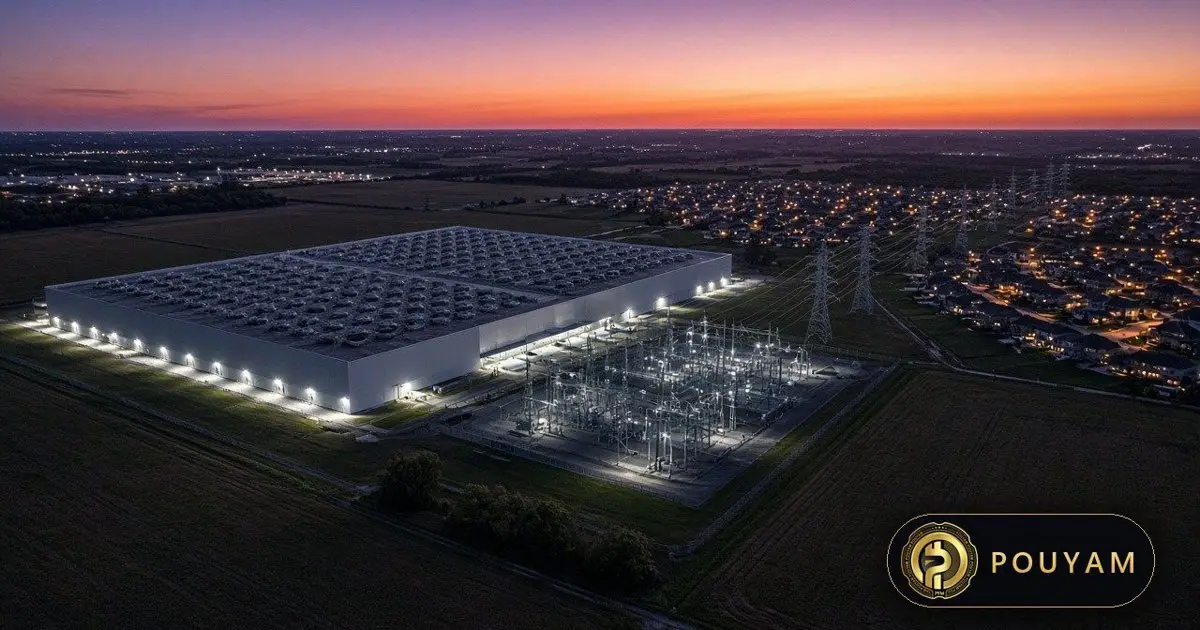
In short
As of 15 November 2026, data centers are raising some electricity bills, most clearly in the PJM grid region, but national research finds they explain only about 4% of recent residential price rises [6][7]. Average U.S. home prices are still forecast to climb about 5.4% this year, and public opposition is growing [1][4].
Key takeaways
- The EIA's November 2026 outlook puts the average U.S. home electricity price at 18.17 cents per kilowatt-hour in 2026, up from 17.24 cents in 2025 [4].
- At average use, that is about $1,925 a year, roughly $117 more than in 2025, based on EIA figures [4].
- In the PJM grid, data center demand raised the wholesale cost of power by $9.95 per megawatt-hour, or 9.8%, in the first nine months of 2026, the market monitor says [6].
- A study of 385 data centers found they accounted for about 4% of residential price increases from 2020 to 2025 nationally [7].
- In a July to August 2026 Pew survey, half of U.S. adults said data centers are mostly bad for home energy costs, up from 38% in January [1].
- Minneapolis approved data center limits 7-6 on 12 November 2026; a mayoral veto is possible before the moratorium ends on 21 November [3].
- Effects depend heavily on location: regions where demand outruns new supply face the biggest risk [6][8].
On this page 12 sections
- Are data centers raising electricity bills?
- What does the latest bill data show?
- How do data centers push up power prices?
- Why do some studies say the effect is small?
- Why are Americans turning against data centers?
- What did Minneapolis vote on data centers?
- How can you check what is driving your own bill?
- Will data centers make bills rise faster?
- Common mistakes
- Frequently asked questions
- Glossary
- Sources
Are data centers raising electricity bills?
In some places yes, but nationally they explain only a small part of the rise so far [6][7]. The clearest evidence of data centers pushing up costs comes from the PJM grid, which covers all or parts of 13 states and Washington, D.C., where the independent market monitor says data center demand has added billions of dollars to capacity costs that all customers pay [6]. Across the country, a November 2026 Harvard Business School summary of new research found that data centers accounted for about 4% of residential price increases between 2020 and 2025 [7].
Both things can be true at once. Home electricity prices are rising almost everywhere: the U.S. Energy Information Administration (EIA) expects the average residential price to reach 18.17 cents per kilowatt-hour in 2026, up from 17.24 cents in 2025, an increase of about 5.4% [4]. The researchers attribute most of the 2020 to 2025 increase to inflation, rising fuel costs and grid upgrades [7], and utilities also cite fuel costs and strengthening the grid against extreme weather [5]. Data centers are a growing extra pressure on top, strongest where many large sites connect to the same grid quickly [6].
So the honest answer depends on where you live. A household in Virginia, Maryland, Ohio or New Jersey can be more exposed than one in a region with spare capacity and few new large loads [2][6].
What does the latest bill data show?
The EIA's November 2026 Short-Term Energy Outlook shows residential prices still climbing in 2026 and 2027 [4]. Its forecast puts the average home price at 18.17 cents per kilowatt-hour this year and 18.68 cents in 2027, after 17.24 cents in 2025 [4]. Commercial prices, the category that includes data centers, are forecast at 14.01 cents this year [4].
To turn that into a bill, Pouyam Guides multiplied the EIA's average use per household by its average price. At 10,597 kilowatt-hours a year and 18.17 cents, the typical 2026 home spends about $1,925 a year on electricity, or roughly $160 a month, up from about $1,809 in 2025 [4]. That is an increase of around $117 a year for the average customer, before local differences.
The same outlook shows how fast demand from businesses is growing. It forecasts electricity sales of 1,557 billion kilowatt-hours to the commercial sector in 2026, slightly more than the 1,546 billion sold to homes [4]. In May the EIA had said commercial use would likely pass residential use in 2027 for the first time on record (the November table already shows commercial ahead in 2026), and that residential prices "have been growing in all regions of the United States" [5]. It expected the largest home price rises along the East Coast, with annual growth as high as 7% [5].
For a deeper look at why power supply has become the main limit on new computing, see the Pouyam guide AI Data Centers and Power: Why Electricity Is the Limit.
How do data centers push up power prices?
Mostly through shared grid costs: new power plants, transmission lines and the capacity payments that keep enough supply available [6][8]. A data center pays for the electricity it uses, but the extra demand can raise the price of power and grid upgrades for everyone on the same system.
The best-documented case is PJM's capacity market, an auction that pays power plants to be available years ahead. The market monitor's report for the first nine months of 2026 says the total wholesale cost of power in PJM rose 40.9%, from $79.19 to $111.61 per megawatt-hour [6]. It estimates that without data center demand in the capacity market, the cost would have been $101.66, so $9.95 per megawatt-hour, or 9.8%, came from data centers [6]. That figure does not include their effect on energy or transmission costs [6].
The monitor calls the resulting increase "irreversible", totalling $29.4 billion in capacity costs for all customers so far, and says the 2025/2026 to 2028/2029 capacity auctions were "not competitive, primarily as a result of the inclusion of forecast demand for data centers" [6]. It warns that the next auction, for 2029/2030 and due in December 2026, could add another $5 billion to $10 billion [6]. The monitor describes these as costs to all customers, so they can reach household bills over time [6].
Where load grows without new supply, prices rise. Where the extra demand helps pay for grid costs that already exist, prices can fall, which is why the national picture is more mixed [8].
Why do some studies say the effect is small?
Because most of the past five years' price increases came from other causes, and some extra demand can spread fixed costs more widely [7][8].
The working paper summarised by Harvard Business School, by Christian Kaps, Vishrut Rana and Serguei Netessine, studied 385 data centers and the 42 utilities serving them from 2020 to 2025 [7]. It found data centers contributed almost 16% of the price increase for industrial customers but about 4% for residential customers. At the average utility studied, data center additions raised home prices by about $1.70 per megawatt-hour, or less than a fifth of a cent per kilowatt-hour [7]. The authors wrote that "the prevailing discourse about data centers affecting electricity affordability is overstated" [7].
Earlier work by Lawrence Berkeley National Laboratory found that from 2019 to 2024, states with the highest load growth tended to see real prices fall, while states with shrinking demand saw them rise [8]. The lab noted an important limit: the effect was smaller and not statistically significant for residential prices alone, and it is unclear whether the pattern holds with much larger growth ahead [8].
The studies cover the past. The PJM figures show what happens when demand forecasts jump faster than new supply, and that is the direction many regions are now heading [6][7].
Why are Americans turning against data centers?
Rising bills are a big part of it, and opinion has shifted fast in 2026 [1][2]. In a Pew Research Center survey of 10,548 U.S. adults conducted from 20 July to 9 August 2026, 50% said data centers are mostly bad for home energy costs, up from 38% in January [1]. Majorities or near-majorities also said they are mostly bad for the environment (54%) and for nearby residents' quality of life (49%) [2].
Pew's 11 November 2026 summary adds more [2]:
- In a March survey, about two-thirds of people whose energy costs had gone up said data centers were a major or minor reason, though more (85%) blamed utility companies wanting to make more money.
- Six in ten said they would not be comfortable with a new data center in their area.
- In a survey from 28 September to 4 October 2026, 58% said they dislike political leaders who support building data centers nearby, against 9% who like them.
- In the 2026 midterm elections, people in at least 38 jurisdictions voted to limit or ban data centers.
The worry crosses party lines: Democrats and Republicans alike were more negative than positive about data centers' effect on home energy costs [2]. Pew reports more than 3,000 operating data centers in the U.S. as of February 2026, with at least 1,500 others in development [2].
What did Minneapolis vote on data centers?
On Thursday 12 November 2026, the Minneapolis City Council approved new data center rules by 7 votes to 6 [3]. The ordinance limits new data centers to existing buildings in two downtown zoning districts and requires council approval for each new one [3].
The case-by-case approval was added on the day of the vote and was the most disputed part. Supporters said it would allow an up-or-down vote on each project that evolves with the industry; opponents cited the risk that Mayor Jacob Frey would veto it [3]. Council members said Frey had told them he does not support case-by-case votes, and his office did not immediately comment [3].
The timing is tight. As of MPR News's report on 13 November, a temporary moratorium that blocks most new data centers in the city (with some downtown exceptions) was due to expire on 21 November, and the council planned to reconvene on 20 November to deal with a possible veto. Overriding a veto would need at least nine votes [3]. Some members who voted against argued that a few small data centers in empty downtown buildings could raise tax revenue that would otherwise fall on homeowners and renters [3].
Minneapolis is one example of a wider pattern: local governments are now writing rules on where data centers can go and how they connect to the grid, partly in response to bill worries [2][3].
How can you check what is driving your own bill?
Start with your bill and your utility's rate filings, not national headlines [4][6].
- Split the bill: most bills separate supply or generation charges from delivery or distribution charges. Data center effects in markets like PJM usually show up first in supply and capacity costs [6].
- Compare price, not just total: divide the energy charge by the kilowatt-hours used. A higher bill caused by a hot summer is different from a higher price per kilowatt-hour [4].
- Read the rate case: utilities must explain requested increases to the state utility commission. Filings list the reasons, such as fuel, storm repairs, transmission or new large customers.
- Check your grid region: if you live in a PJM state, capacity auction results feed into supply prices with a delay, so the December 2026 auction, which covers the 2029/2030 delivery year, will matter for bills later [6].
- Look for local rules: city and state decisions on data center siting and tariffs, like the Minneapolis vote, shape who pays for new grid work [3].
If bills are hard to manage, ask your utility about budget billing and energy assistance programmes. This guide does not give financial or legal advice on individual bills or contracts.
Will data centers make bills rise faster?
Possibly, in regions where demand outruns new supply, unless rules make large users pay more of their own costs [6][7]. The EIA already expects home prices to keep rising in 2027, to 18.68 cents per kilowatt-hour, with commercial demand growing faster than residential [4][5].
Several things will decide how much reaches households. In PJM, the December 2026 capacity auction and the regulator's response to proposals for handling large new loads are the next markers; the market monitor argues data centers should bring their own new generation [6]. The Harvard research suggests the type of operator and the utility's ability to serve big loads matter, with some third-party "colocation" centers raising consumer costs while centers built by the largest tech firms had not in the period studied [7].
Demand itself is still rising quickly. Pew, citing International Energy Agency data, says U.S. data centers used 183 terawatt-hours in 2024, more than 4% of national electricity use, and are projected to use 426 terawatt-hours in 2030 [2]. In Virginia they already used about 26% of the state's electricity supply in 2023 [2].
The picture for most households is therefore a modest data center effect today, a larger one in the busiest grid regions, and real uncertainty about the next few years that depends on policy choices now being made [6][7][8].
| Measure | Figure | Source |
|---|---|---|
| Average U.S. home price, 2026 forecast | 18.17 cents/kWh (17.24 in 2025) | EIA, November 2026 |
| Average U.S. home price, 2027 forecast | 18.68 cents/kWh | EIA, November 2026 |
| Typical annual home bill, 2026 | About $1,925 (about $1,809 in 2025) | Calculated from EIA data |
| PJM wholesale cost added by data centers | $9.95/MWh (9.8%), January to September 2026 | PJM market monitor |
| PJM capacity costs from data centers so far | $29.4 billion | PJM market monitor |
| Share of residential price rise from data centers, 2020-2025 | About 4% | Kaps, Rana and Netessine |
| Adults saying data centers are mostly bad for home energy costs | 50% (38% in January) | Pew Research Center |
Common mistakes
Blaming data centers for the whole rise in a power bill.
Fix: Nationally they explain about 4% of residential price increases from 2020 to 2025; inflation, fuel costs and grid upgrades drove most of it [7].
Assuming the effect is small everywhere.
Fix: In PJM the market monitor attributes $29.4 billion in capacity costs to data center demand [6].
Comparing bills without checking the price per kilowatt-hour.
Fix: Usage changes with weather; divide the energy charge by kilowatt-hours to see the real price trend [4].
Treating the Minneapolis vote as a final ban.
Fix: It limits locations and requires case-by-case approval, and it could still be vetoed [3].
Reading past studies as a guarantee for the future.
Fix: Researchers warn the pattern may change as demand grows much faster [7][8].
Frequently asked questions
Are data centers raising electricity bills?
In some regions, especially PJM, yes; nationally they explain about 4% of residential price increases from 2020 to 2025 [6][7].
How much is the average U.S. electricity bill in 2026?
Based on EIA figures, about $1,925 a year, or roughly $160 a month, at 18.17 cents per kilowatt-hour [4].
Why are prices in the PJM region rising so fast?
Capacity auctions that include forecast data center demand cleared at high prices, raising capacity costs for all customers [6].
What did Minneapolis decide about data centers?
On 12 November 2026 the council voted 7-6 to limit new data centers to existing downtown buildings and require case-by-case approval [3].
Do most Americans oppose data centers?
Pew found 60% would be uncomfortable with a new local data center and 50% see them as mostly bad for home energy costs [1][2].
Will bills keep rising?
The EIA expects home prices to rise again in 2027, to 18.68 cents per kilowatt-hour [4].
Glossary
- Kilowatt-hour (kWh)
- The unit on most power bills; one kilowatt of power used for one hour [4].
- Capacity market
- An auction that pays power plants to be available in future years so supply meets peak demand [6].
- PJM
- The grid operator serving all or parts of 13 states and Washington, D.C., and running their wholesale power markets [6].
- Rate case
- A utility's formal request to a state regulator to change the prices customers pay.
- Colocation data center
- A facility that rents space and power to many business customers rather than serving one owner [7].
Sources
- More Americans now say data centers are negative for the environment, energy costs and more Pew Research Center · 2026-09-22
- Key Facts About U.S. Data Centers Pew Research Center · 2026-11-11
- Minneapolis City Council approves new data center limits and regulations MPR News · 2026-11-13
- Short-Term Energy Outlook, November 2026, Table 7a: U.S. Electricity Industry Overview U.S. Energy Information Administration
- Commercial electricity use will likely surpass residential in 2027: EIA Utility Dive · 2026-05-15
- 2026 Quarterly State of the Market Report for PJM: January through September Monitoring Analytics (PJM Independent Market Monitor) · 2026-11-12
- Blaming Data Centers for Higher Electric Bills? It's Not That Simple Harvard Business School Working Knowledge · 2026-11-12
- State-Level Load Growth Has Reduced Average Retail Electricity Prices: Report American Public Power Association · 2025-11-04




Comments
Top comments