
Can AI Cure Cancer? What Anthropic's Biology Claim Means
- 2 views
- 0 likes
- 0 comments
- All languages combined
In short
As of 15 November 2026, no AI has cured cancer: Anthropic CEO Dario Amodei predicted cancer could be a relic of the past in under a decade, but the company's own drug work is early and mostly preclinical [1][2]. Lab results are promising, yet none has been tested in patients [1][5].
Key takeaways
- In an IPO roadshow video released on 10 November 2026, Dario Amodei said cancer, Alzheimer's, heart disease and mental illness "will be relics of the past in, I think, less than a decade" [2][3].
- That is a forecast, not a result: Anthropic's own 27 October 2026 update calls its drug research "still at an early stage" and "mostly preclinical" [1].
- The strongest cancer result so far is a lab one: a CAR-T design made with Claude Code was about 70% shorter and produced roughly 10 times as many receptors in tests [1].
- Anthropic's earliest stated timeline for any of its own drugs to enter human trials is late 2028, for a rare muscular dystrophy program, not cancer [1].
- Only 7.9% of drug candidates that entered Phase I trials in 2011-2020 reached approval, and only 5.3% in oncology, which is why experts doubt fast timelines [6].
- Physicians and the drug-discovery chemist Derek Lowe publicly rejected the decade claim, noting similar cancer-cure promises have failed since at least 2003 [2][5].
- None of the molecules described is an available treatment; anyone with cancer should keep relying on their own care team [1][7].
On this page 12 sections
- Can AI cure cancer?
- What did Anthropic's CEO claim about cancer?
- What has Anthropic actually achieved in biology?
- What did Anthropic not claim?
- Why are doctors and scientists skeptical?
- Where could AI really speed up cancer research?
- How should you read AI cancer-cure headlines?
- What happens next with AI drug discovery?
- Common mistakes
- Frequently asked questions
- Glossary
- Sources
Can AI cure cancer?
Not today, and nobody has shown that it will within a set number of years [1][5][6]. AI tools are now helping scientists design and test drug candidates faster, but no cancer treatment designed with AI has yet been proven in human trials by Anthropic or its partners [1].
Cancer is not one disease. The International Agency for Research on Cancer estimated 20 million new cancer cases and 9.7 million deaths worldwide in 2022, spread across many tumour types with different biology [7]. A cure for one leukaemia says little about pancreatic or brain cancer, which is why researchers talk about better treatments for specific cancers rather than a single cure.
What AI can realistically change is speed and cost in parts of the process: finding targets, designing molecules, analysing lab data and preparing trial paperwork [1]. What it cannot skip is testing in cells, animals and then people, where most candidates fail [6]. The fair answer to the headline question is: AI may help produce more and better cancer drugs, but a timeline for curing cancer is a prediction, not evidence.
What did Anthropic's CEO claim about cancer?
Dario Amodei predicted that cancer and several other major diseases would become "relics of the past" in less than a decade [2][3]. He said it in a 42-minute roadshow video released on Tuesday 10 November 2026 ahead of Anthropic's planned stock market listing [2].
The full line, as reported by Business Insider, was that "cancer, Alzheimer's, heart disease, mental illness — these will be relics of the past in, I think, less than a decade" [2]. He added that "if we do this right, we can create an age of miracles" [2][3]. The phrase "I think" matters: it is a personal forecast, not a company commitment or a scientific finding.
The idea is not new. In his October 2024 essay Machines of Loving Grace, Amodei argued that powerful AI could compress 50-100 years of biological progress into 5-10 years, and that reductions of 95% or more in cancer deaths and cases "seem possible" [4]. The essay set that clock running only after "powerful AI" exists, and it also warned that cancer "is likely the hardest of these diseases to fully destroy" [4]. The 2026 video turned that conditional argument into a shorter, flatter promise.
Because the remarks were part of a marketing push for an IPO, they are best read as a vision statement. Pouyam Guides does not offer investment advice on the listing.
What has Anthropic actually achieved in biology?
Anthropic's 27 October 2026 research update reports six drug-development partnerships and early lab results, mostly before any human testing [1]. The partners are BigHat Biosciences, Bristol Myers Squibb, Divergence Labs, Enveda, Generate Biomedicines and The Column Group [1].
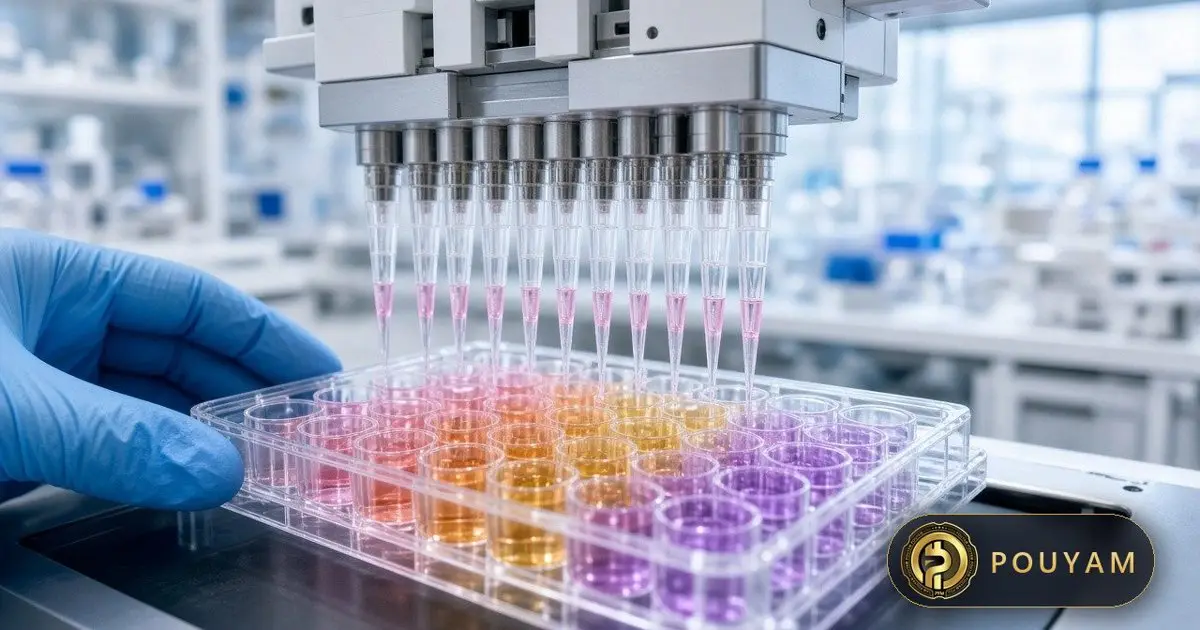
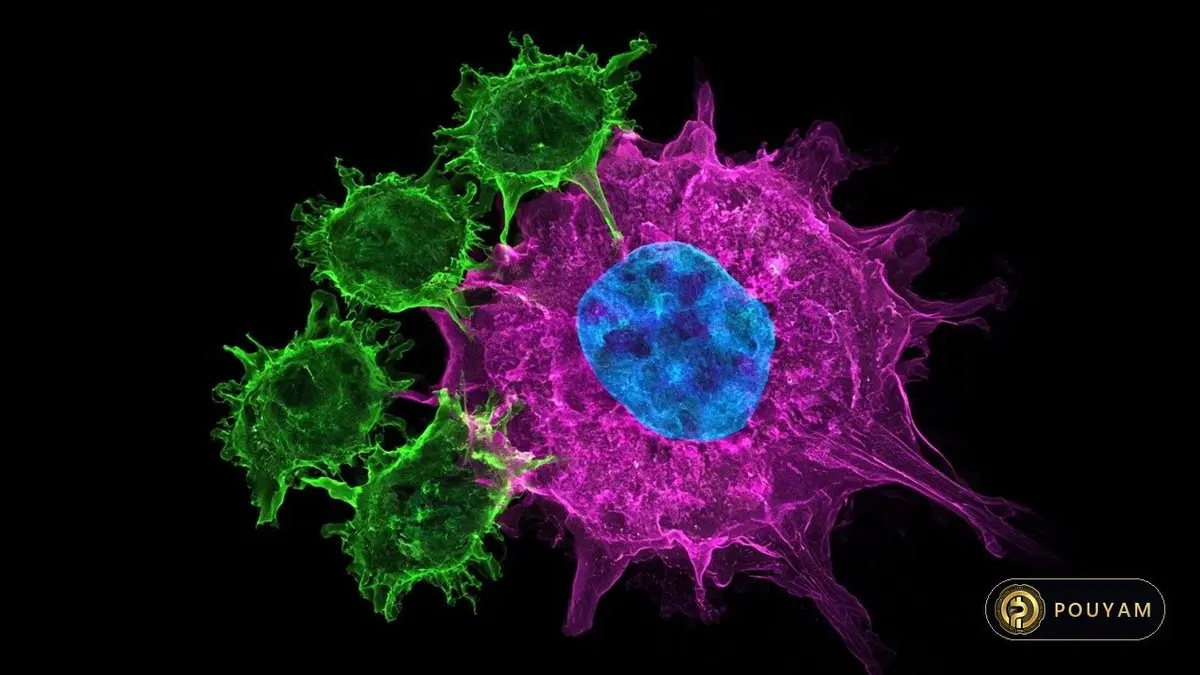
- Generate Biomedicines (cancer): six scientists used Claude Code to redesign part of the genetic instructions in CAR T-cell therapy. One design was about 70% shorter; in lab tests it produced roughly 10 times as many receptors, killed tumour cells more efficiently and stayed active longer. The goal is to adapt the therapy to solid tumours [1].
- BigHat Biosciences (antibodies): Claude proposed changes to two antibody fragments, one aimed at cancer cells, and the lab made and tested about 1,010 variants in about 10 weeks. The best versions bound more than 10 times more tightly, and the cancer-targeting lead stayed in solution 18°C higher [1].
- Divergence Labs (food allergies): Claude generated roughly 35,000 antibody designs in about a month; early tests found 3 designs that bind IgE and 20 that could dislodge it [1].
- Enveda (manufacturing paperwork): across 1,061 pages of records, Claude caught all 11 issues human reviewers found and flagged 7 more, cutting review time by 89% [1].
Anthropic also acquired Mithril Medicine, a one-person company working on rare muscular dystrophies, and says a drug could be ready for human trials "as soon as late 2028" if results hold [1]. These are real, specific gains, but they are gains in speed and design, measured in labs.
What did Anthropic not claim?
Anthropic's own research post does not say that Claude has cured cancer, produced an approved drug or shown benefit in patients [1]. Reading the company's words closely is the best guard against the headline version.
- No human results: the company says the work "is mostly preclinical", meaning the drugs are not yet being tested in humans [1].
- No cure claim for any project: it says it is "optimistic that some may result in effective new medicines" for food allergies, rare childhood diseases and several cancers. That is hope, stated as such [1].
- No date for cancer drugs: the only human-trial timeline it gives, late 2028, is for muscular dystrophy [1].
- Limits acknowledged: it says it is learning how Claude must improve "to realize AI's potential in medicine" and that bottlenecks are spread across the whole development process [1].
The gap, then, is between two kinds of statement from the same company: careful research reporting in October, and a sweeping CEO forecast in November [1][2]. Both are real; only the first is evidence.
Why are doctors and scientists skeptical?
Because drug development has hard steps that faster design cannot remove, and cancer-cure deadlines have a long record of being missed [5][6].
The best-known data come from a study of clinical development by the Biotechnology Innovation Organization and partners. Across 2011-2020, only 7.9% of drug candidates entering Phase I trials went on to approval. For cancer drugs the figure was 5.3%, the lowest of the major disease areas, and the average path from Phase I to approval took 10.5 years [6]. Even a perfect molecule designed today would need years of trials before patients could use it.
Derek Lowe, a drug-discovery chemist who writes the In the Pipeline blog for Science, called the statement "ridiculous and embarrassing" and listed earlier promises: a 2003 US goal to eliminate suffering and death from cancer by 2015, and a 2016 forecast of curing cancer within five to ten years [5]. Germany's former health minister Karl Lauterbach wrote that AI can "definitely" help, but that curing these diseases "in just 10 years" is impossible [2][8].
Amodei's own essay listed the same brakes: experiments that must run in sequence, a need for real-world data, and clinical-trial rules that set "an irreducible minimum" on how fast a cure can be completed [4].
Where could AI really speed up cancer research?
The evidence so far points to faster design and less paperwork, not to skipping trials [1][6].
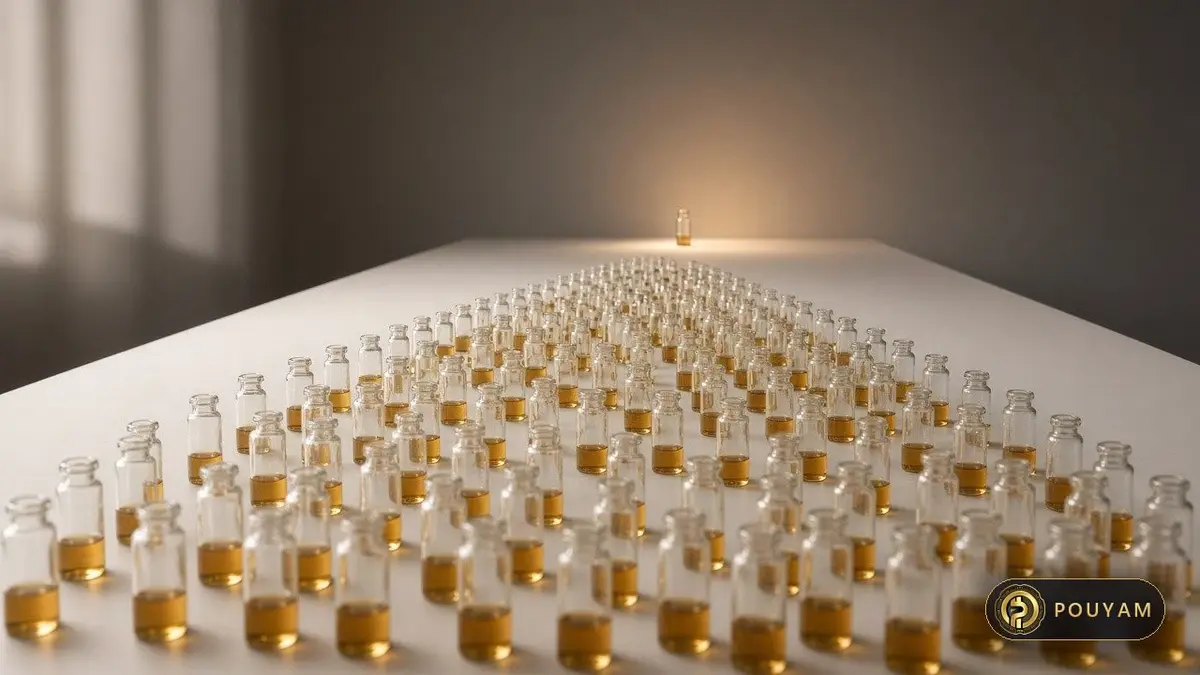
- Design and optimisation: testing about 1,010 antibody variants in 10 weeks shows how AI plus automated labs can shorten early work that used to take much longer [1].
- New treatment formats: the shorter CAR-T component is aimed at making room for extra instructions so the therapy can attack solid tumours [1].
- Regulatory documents: Enveda reported one regulatory draft written in four hours instead of about three months by hand [1].
- Trial planning: Bristol Myers Squibb is using Claude to assess early clinical-trial plans and their chance of success, with more work planned for 2027 [1].
Each of these could shave time off a drug's path, and many small gains can add up. But the 10.5-year average and the low success rates in oncology come mostly from trials themselves: whether a drug works and is safe in real people [6]. That is the step where AI's role is still smallest, which is why even optimistic researchers talk about better odds rather than guaranteed cures.
How should you read AI cancer-cure headlines?
Ask four questions before believing or sharing a claim that AI will cure a disease [1][5][6].
- Is it a result or a forecast? "Will be" and "I think" signal a prediction. Look for published data instead [2].
- Which stage? Computer designs, lab cells, animals and human trials are very different levels of proof; most of today's AI drug work is at the first two or three [1].
- Which cancer? A result in one tumour type does not carry over to others [7].
- Who is speaking, and why? A company presenting to investors has reasons to sound bold; independent scientists' reactions help balance it [2][5].
For anyone affected by cancer today, none of the molecules described here is available as a treatment. Questions about care belong with the treating medical team, and clinical-trial options are best discussed with them [1].
What happens next with AI drug discovery?
The next real test is whether these programs enter human trials and succeed there [1]. Anthropic says it plans to scale the work "substantially" and to extend Claude's role into clinical trials as programs advance [1].
Milestones to watch are concrete: Generate Biomedicines’ aim to adapt its shorter CAR-T design to solid tumours; Divergence combining its two antibody "arms" into one drug; the Bristol Myers Squibb trial-planning work in 2027; and the muscular dystrophy program's possible move to human trials as soon as late 2028 [1]. Each would be published evidence, unlike a forecast.
Judged that way, AI is a promising new tool for cancer research, already speeding up specific tasks. Whether cancer becomes a relic of the past in under a decade will be decided by trial results, not by roadshow statements [2][6].

| Item | What is shown | Stage |
|---|---|---|
| CEO forecast (10 November 2026) | Cancer a relic of the past in under a decade | Prediction |
| Generate Biomedicines CAR-T | About 70% shorter design; roughly 10x more receptors | Lab tests |
| BigHat Biosciences antibodies | About 1,010 variants in 10 weeks; more than 10x tighter binding | Lab tests |
| Divergence Labs allergy antibodies | About 35,000 designs; 3 and 20 early hits | Lab tests |
| Mithril Medicine (muscular dystrophy) | Promising results in mice | Human trials as soon as late 2028 |
| Industry benchmark (2011-2020) | 7.9% of Phase I drugs approved; 5.3% in oncology | Clinical data |
Common mistakes
Reporting that Anthropic has found a cure for cancer.
Fix: Its own update says the work is early and mostly preclinical; no drug has been tested in patients [1].
Treating the CEO's decade forecast as a company result.
Fix: It was a personal prediction in an IPO roadshow video, stated with "I think" [2].
Assuming lab results will hold in people.
Fix: Only 7.9% of Phase I candidates reached approval in 2011-2020, and 5.3% in oncology [6].
Talking about cancer as one disease.
Fix: There are many cancers with different biology; progress in one does not mean progress in all [7].
Changing or delaying treatment because of AI headlines.
Fix: None of these molecules is an available treatment; care decisions stay with the medical team [1].
Frequently asked questions
Can AI cure cancer?
Not yet; AI is helping design and test drug candidates faster, but no AI-designed cancer treatment from Anthropic or its partners has been proven in human trials [1].
What exactly did Dario Amodei say about cancer?
That cancer, Alzheimer's, heart disease and mental illness "will be relics of the past in, I think, less than a decade" [2].
Has Claude designed a cancer drug?
Claude helped design a shorter CAR-T component and improve a cancer-targeting antibody fragment, both so far tested only in the lab [1].
When could Anthropic's drugs reach human trials?
The only date given is as soon as late 2028, for a muscular dystrophy program [1].
Why do experts doubt the timeline?
Most drugs fail in trials, cancer drugs most of all, and the average path from Phase I to approval took 10.5 years [5][6].
Should patients wait for AI treatments?
No such treatments exist yet; questions about current care and clinical trials belong with the treating team [1].
Glossary
- Preclinical
- Research done in computers, cells or animals before a drug is tested in humans [1].
- CAR T-cell therapy
- A treatment that modifies a patient's immune cells so they recognise and attack cancer [1].
- Phase I trial
- The first test of a drug in people, mainly to check safety and dosing [6].
- Likelihood of approval
- The share of drug candidates at a given stage that are eventually approved [6].
- Antibody fragment
- A part of an antibody that can bind a target and may become a component of a drug [1].
Sources
- Early progress on accelerating drug development with Claude Anthropic · 2026-10-27
- Dario Amodei says AI will cure cancer and Alzheimer's in a decade. Doctors aren't buying it. Business Insider · 2026-11-11
- Dario Amodei says AI could make cancer, Alzheimer's relics of the past in less than a decade The Economic Times · 2026-11-11
- Machines of Loving Grace Dario Amodei
- Stop It. Just Stop It. (In the Pipeline) Science (AAAS) · 2026-11-13
- Clinical Development Success Rates and Contributing Factors 2011-2020 BIO, Informa Pharma Intelligence, QLS Advisors
- Global cancer burden growing, amidst mounting need for services International Agency for Research on Cancer · 2024-02-01
- Doctors push back on Amodei's claim AI will end cancer within a decade The Next Web · 2026-11-12


Comments
Top comments