
Euclid Telescope Data Release: What ESA's New Map Shows
- 1 views
- 0 likes
- 0 comments
- All languages combined
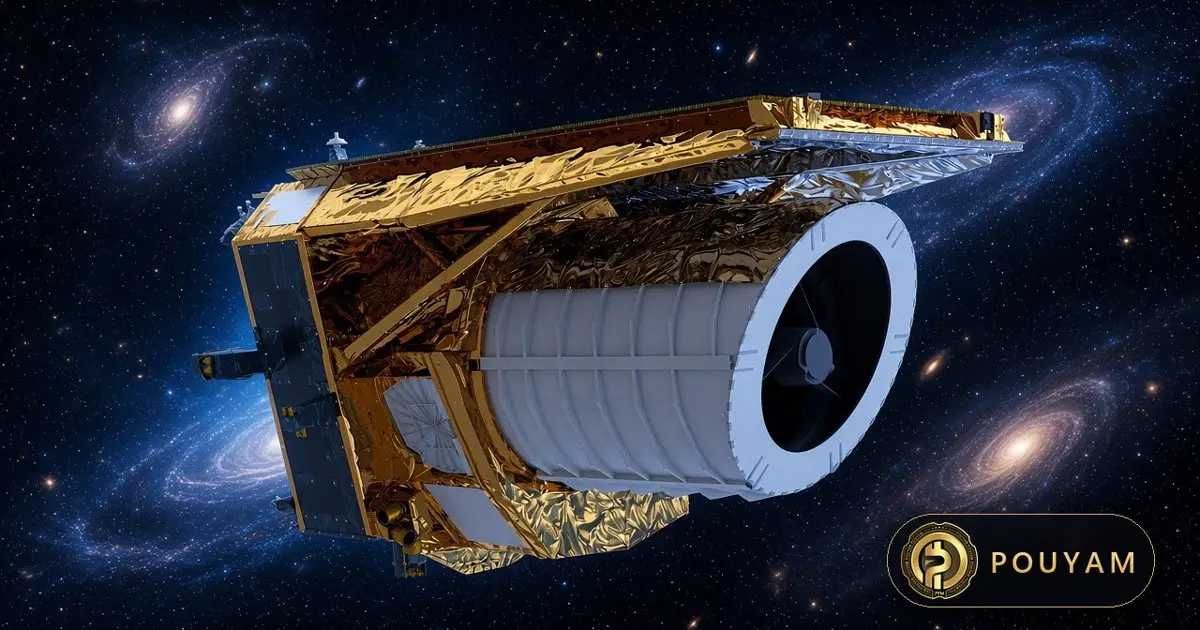
In short
On 12 November 2026, ESA's Euclid telescope released DR1-Foundation, its first major dataset: about 13 months of observations covering roughly 1,900 square degrees of sky, with more than 900 million galaxies, about 15,000 strong lens candidates and spectra of over 160 million sources [1][2]. It is a data release, not a single discovery [1].
Key takeaways
- DR1-Foundation came out on 12 November 2026 and covers observations from spring 2024 to spring 2025 [1][2].
- It spans about 1,900 square degrees, an area ESA compares to 9,500 full Moons, or about 14% of Euclid's planned six-year survey [1].
- Headline contents: over 900 million galaxies, about 15,000 strong gravitational lens candidates, over 60 million quasar candidates and spectra of more than 160 million sources [1][2].
- The data total about 1.7 million GB and include raw data, calibrated images, catalogues, spectra and redshifts [1][4].
- Anyone can explore the images in ESA's ESASky atlas; the data are released under a CC BY-NC 3.0 IGO licence [5].
- The full Data Release 1, with weak lensing and cluster results, is due in mid-2027 [1].
On this page 11 sections
- What did the Euclid telescope release?
- How many galaxies are in the Euclid data?
- Why is the Euclid strong lens catalogue important?
- What is the Euclid telescope trying to find?
- Why does Euclid survey such a wide area of sky?
- How can you see Euclid's images and data?
- What comes next for Euclid?
- Common mistakes
- Frequently asked questions
- Glossary
- Sources
What did the Euclid telescope release?
On 12 November 2026, the European Space Agency (ESA) and the Euclid Consortium published DR1-Foundation, the first major batch of survey data from the Euclid space telescope [1][3]. ESA says it captures the light of more than a billion objects and covers an area of sky as big as 9,500 full Moons [1].
The release holds about 13 months of observations, from spring 2024 to spring 2025, taken as part of Euclid's Wide and Deep Surveys [2][6]. ESA Archive Scientist Bruno Altieri says it includes raw data, calibrated images, catalogues and spectra; the official explanatory supplement adds photometric and spectroscopic redshifts, the distance estimates scientists need [1][4]. The Euclid Consortium says it contains about 10,000 science images from the telescope's two instruments, VIS (a visible-light camera) and NISP (a near-infrared spectrometer and photometer) [3].
ESA calls it "the largest space-based survey of its kind", in the words of its Director of Science, Carole Mundell [1]. It is a much bigger step than earlier releases: Euclid project scientist Valeria Pettorino said previous releases covered a few days of observations over around 60 square degrees [1].
How many galaxies are in the Euclid data?
More than 900 million galaxies, ESA says, among more than a billion objects in total [1][2]. The release also lists [1][2]:
- around 15,000 strong gravitational lens candidates;
- over 60 million quasar candidates, the bright cores of distant galaxies;
- spectra from more than 160 million sources;
- Euclid Wide Survey results from 1,900 square degrees, a total of 1.7 million GB of data.
"Candidates" matters. A candidate is an object that looks like a lens or quasar in the data but has not yet been confirmed one by one. The Euclid Consortium says AI, citizen science and expert validation were combined to find the lens candidates [3]. ESA adds that machine learning and thousands of volunteers on the Space Warps project on the Zooniverse platform were used [1].
Some areas, the Euclid Deep Fields, were observed repeatedly in multiple passes, allowing astronomers to study galaxies dating back up to 10 billion years, according to the Consortium [3].
Why is the Euclid strong lens catalogue important?
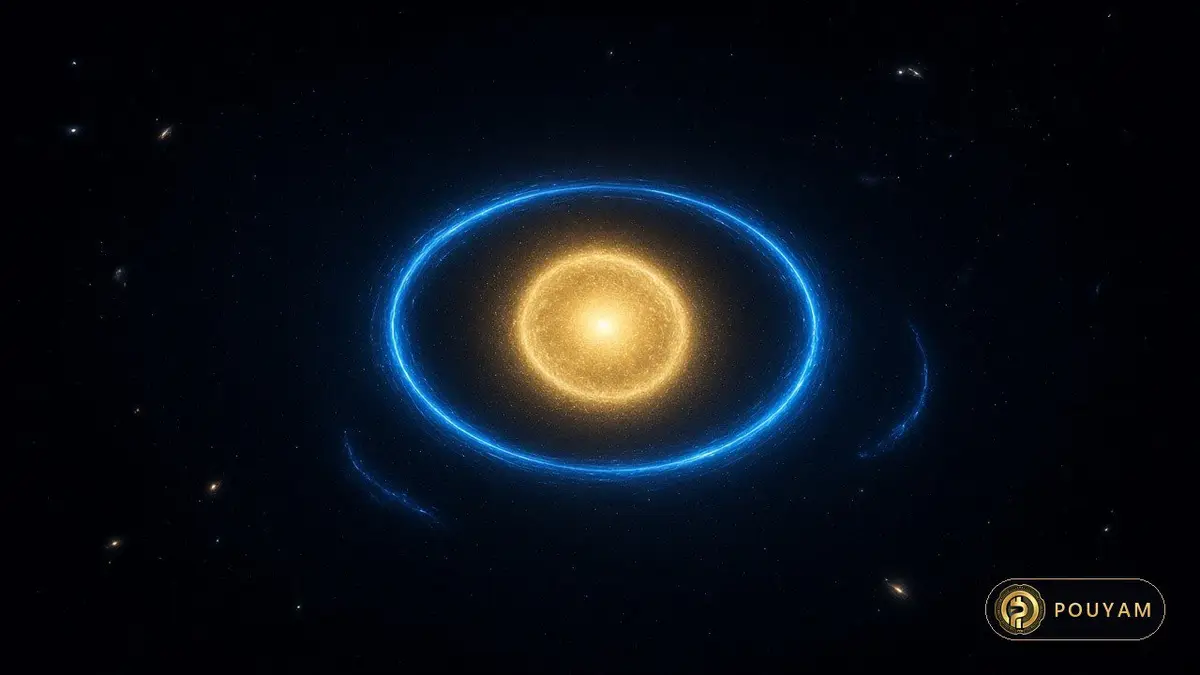
ESA says this release contains the largest strong lens catalogue ever, bigger than all previous catalogues combined [1]. A strong gravitational lens forms when the light of a distant galaxy is significantly distorted by a foreground galaxy, producing features such as arcs and partial rings [1].
Lenses are useful because they let scientists weigh galaxies, including their invisible dark matter, and explore how the Universe is expanding, says Natalie Lines of the University of Portsmouth, a Euclid Consortium member [1]. They also act as natural magnifying glasses for faint, distant galaxies [1].
They are rare: ESA says only one galaxy in several thousand acts as a lens, and many are too small to see through Earth's blurring atmosphere [1]. Because all 15,000 candidates were found with the same telescope and the same methods, they can be studied as a population for the first time, almost fifty years after the first strong lens was discovered [1][3]. The Consortium says four of the eight papers posted on arXiv with the release cover strong lensing [3].
What is the Euclid telescope trying to find?
Euclid's goal is to map the dark Universe: dark energy, dark matter and the cosmic web, by building a 3D map of the cosmos, imaging billions of galaxies and tracing the last 10 billion years of cosmic history [1]. ESA calls the mission its "dark Universe detective" [1].
The 3D part comes from spectroscopy. Euclid splits the light of galaxies into spectra and hunts for hydrogen-alpha, light from star-forming clouds of hydrogen gas, within them to measure the distances to galaxies [1]. DR1-Foundation provides these spectra for 160 million sources [1].
The cosmic web is a mesh of filaments, mostly made of dark matter, along which galaxies gather; it stretches for many millions of light-years but is mostly invisible [1]. ESA says the 3D map is crucial to solving the many mysteries of the dark Universe [1].
That work is mostly still ahead. ESA says scientists can now begin constructing the map, and that weak lensing, the subtle distortion used for the main cosmology results, will come with the full DR1 [1]. So far, this release does not solve dark matter or dark energy, and ESA does not claim that it does.
Why does Euclid survey such a wide area of sky?
Because rare objects such as strong lenses only show up in large numbers across very wide areas of sky [1]. ESA describes Euclid's strength as completing "deep and wide surveys of the sky" from space, above Earth's image-blurring atmosphere, in a way ground-based telescopes cannot, and notes that previous space telescopes could not cover the wide area needed to find large numbers of strong lenses [1].
The release has two parts: the Euclid Wide Survey and the Euclid Deep Fields, which were observed repeatedly in multiple passes and let astronomers study galaxies dating back up to 10 billion years [3][4][6]. ESA's footprint map shows the 1,900 square degrees covered so far, which it says is just 14% of the target for the entire six-year survey [6]. Released images include the Horologium supercluster, the galaxy cluster Abell 3128 and members of the Messier 81 galaxy group, such as Messier 81 itself and NGC 3077 [1].
ESA notes Euclid has already discovered truly ancient quasars dating back to when the Universe was just 5% of its current age [1].
Euclid is a European mission built and operated by ESA, with contributions from its member states and NASA; the Euclid Consortium has more than 2,000 scientists from 300 institutes [1].
How can you see Euclid's images and data?
The easiest way for the public is ESASky, ESA's web-based sky atlas, where DR1 images, mosaics and catalogues can be browsed interactively [5].
- Browse: open ESASky and search for a famous target in the release, such as the Messier 81 galaxy group or the Horologium supercluster [1][5].
- Download: researchers can query and download data through the ESA Euclid Science Archive, including programme access via the Python package astroquery.esa.euclid [5].
- Analyse online: ESA Datalabs offers cloud-based analysis without downloading the very large files [5].
- Check the licence: ESA states that all DR1 data are released under the CC BY-NC 3.0 IGO licence (a Creative Commons licence for non-commercial use with attribution; read the full terms before reusing) [5]. ESA's separate press-image pages show a different licence, CC BY-SA 3.0 IGO or the ESA Standard Licence [6].
Be careful with "Euclid" images on social media: some are artist impressions or heavily processed. How to Tell if an Image or Video Is AI-Generated: Signs, Tools and Limits explains how to check suspicious space pictures, and Quantum Computing Explained for Beginners: What It Is and What It Is Not is a useful companion for separating real science news from hype.
What comes next for Euclid?
The full Data Release 1 is planned for mid-2027, adding weak lensing and calculations of how galaxies and clusters fit into the cosmic web [1].
The mission timeline so far, according to ESA [1]:
- July 2023: launch.
- 14 February 2024: start of routine science observations.
- November 2023 and May 2024: first image previews; October 2024: first piece of the great map.
- March 2025 and June 2026: preliminary batches of survey data.
- 12 November 2026: DR1-Foundation.
- Mid-2027: full DR1.
Euclid Consortium lead Marc Sauvage said the release is "only 14% of what Euclid ultimately intends to deliver" [3]. Researchers also plan to study ancient galaxy clusters in the coming months, according to Consortium member Barbara Sartoris [1].
| Item | Value | Source |
|---|---|---|
| Release date | 12 November 2026 | ESA [1][2] |
| Observation period | Spring 2024 to spring 2025, about 13 months | ESA [1][2] |
| Sky area | About 1,900 square degrees (about 14% of the planned survey) | ESA [1][2] |
| Objects | More than a billion | ESA [1] |
| Galaxies | More than 900 million | ESA; Euclid Consortium [1][3] |
| Strong lens candidates | About 15,000 | ESA; Euclid Consortium [1][3] |
| Quasar candidates | More than 60 million | ESA [1][2] |
| Spectra | More than 160 million sources | ESA [1][2] |
| Data volume | About 1.7 million GB | ESA [1][2] |
| Science images | About 10,000 (VIS and NISP) | Euclid Consortium [3] |
| Licence | CC BY-NC 3.0 IGO | ESA Cosmos [5] |
Common mistakes
Reporting that Euclid has solved dark matter or dark energy.
Fix: DR1-Foundation is a dataset; the main weak lensing cosmology results come later [1].
Treating the 15,000 lenses or 60 million quasars as confirmed.
Fix: ESA calls them candidates; lens and quasar candidates are not the same as confirmed objects [1][2].
Saying Euclid mapped the whole sky.
Fix: This release covers about 1,900 square degrees, about 14% of the planned survey area [1].
Using the DR1 data commercially.
Fix: ESA states DR1 data are released under CC BY-NC 3.0 IGO, a non-commercial licence that requires credit [5].
Confusing artist impressions with real data.
Fix: Use ESA's own pages or ESASky for genuine Euclid images [1][5].
Frequently asked questions
What did the Euclid telescope release?
DR1-Foundation, on 12 November 2026: about 13 months of observations over 1,900 square degrees, with images, catalogues and spectra [1][4].
How many galaxies are in the Euclid data?
More than 900 million, among more than a billion objects in total [1][2].
Why is the Euclid strong lens catalogue important?
ESA says it is the largest ever, bigger than all previous catalogues combined, letting scientists study lenses as a population [1].
Why does Euclid survey such a wide area of sky?
Rare objects such as strong lenses only appear in large numbers across huge areas; this release covers 14% of the planned survey [1][6].
Can I see Euclid's images?
Yes. ESASky, ESA's online sky atlas, lets you explore the DR1 images and catalogues [5].
When is the next Euclid data release?
The full Data Release 1 is planned for mid-2027 [1].
Glossary
- DR1-Foundation
- The first part of Euclid's first major data release, published on 12 November 2026.
- Strong gravitational lens
- A galaxy whose gravity strongly distorts the light of a more distant object behind it, producing arcs or rings.
- Weak lensing
- Small, statistical distortions in the shapes of many galaxies caused by mass along the line of sight.
- Quasar
- The very bright core of a galaxy powered by material falling into its central black hole.
- Square degree
- A unit of sky area; the full Moon covers about one fifth of a square degree.
Sources
- Euclid lays the foundation for its best-ever 3D map of the Universe European Space Agency · 2026-11-12
- Euclid Data Release 1 ESA Cosmos · 2026-11-12
- Data Release 1 - Foundation: press release Euclid Consortium · 2026-11-12
- Euclid Explanatory Supplement, Data Release DR1-Foundation ESA / Euclid Consortium · 2026-11-12
- Euclid DR1 Data Access ESA Cosmos
- Euclid's Wide and Deep Surveys (DR1-Foundation) European Space Agency · 2026-11-12



Comments
Top comments