
RSV Vaccine in Pregnancy: Danish Baby Admissions Fall 75%
- 5 views
- 0 likes
- 0 comments
- All languages combined
 +30

Sign in and earn +30 points by reading this
Read to the end, wait a few seconds, then tap the claim button below.
In short
As of 13 November 2026, Danish surveillance data show RSV hospital admissions among infants aged 0 to 5 months fell by about 75% in the first season after Denmark began vaccinating pregnant women and giving antibodies to high-risk babies [1]. The authors stress the data are observational and do not prove cause [1].
Key takeaways
- Denmark started a national RSV prevention programme on 1 October 2025: vaccination in pregnancy plus long-acting antibodies for unvaccinated high-risk and premature infants [1].
- By 29 April 2026, 296 RSV hospital admissions were recorded in infants aged 0 to 5 months, against an average of about 1,128 a season over the three previous seasons [1].
- The incidence rate ratio was 0.25, meaning about a quarter of the usual rate [1].
- Uptake of the vaccine among eligible pregnant women was 72% [1].
- A separate Danish preprint, not yet peer reviewed, estimated 78% protection against RSV hospitalisation in infants aged 0 to 6 months [3].
- Guidance on timing differs: CDC recommends the maternal vaccine at 32 to 36 weeks in season, while the NHS offers it from 28 weeks in every pregnancy [4][5].
On this page 11 sections
- What did Denmark's RSV data show?
- How does the RSV vaccine in pregnancy work?
- How strong is the Danish evidence?
- Why does RSV matter for babies?
- Who is offered the RSV vaccine in pregnancy?
- What are the side effects of the RSV vaccine in pregnancy?
- What comes next for RSV prevention?
- Common mistakes
- Frequently asked questions
- Glossary
- Sources
What did Denmark's RSV data show?
In the 2025-26 season, Denmark recorded 296 RSV-associated hospital admissions among infants aged 0 to 5 months, an incidence of 9.9 per 1,000, about a quarter of the average rate in the three previous seasons [1].
The figures come from a letter by Caroline Klint Johannesen and colleagues at Nordsjællands Hospital, published in The Lancet Regional Health – Europe [1][2]. They used national surveillance data from Statens Serum Institut, Denmark's public health institute [1].
- Before the programme: between the 2022-23 and 2024-25 seasons, the average was 39.3 RSV admissions per 1,000 infants aged 0 to 5 months, or about 1,128 admissions a season [1].
- After the programme: 296 admissions by 29 April 2026, or 9.9 per 1,000 [1].
- Incidence rate ratio: 0.25 (95% CI 0.22 to 0.29) compared with the three-season average [1].
- Timing: weekly data show the reduction began early and lasted through the winter [1].
An RSV-associated hospitalisation was defined as an admission lasting more than 12 hours with laboratory-confirmed RSV recorded up to four days before or during admission [1].
Nature reported that a colleague of Johannesen, looking at the data, remarked that something seemed wrong because there were "too few people in hospitals" with RSV [2].
The table below compares the seasons.

How does the RSV vaccine in pregnancy work?
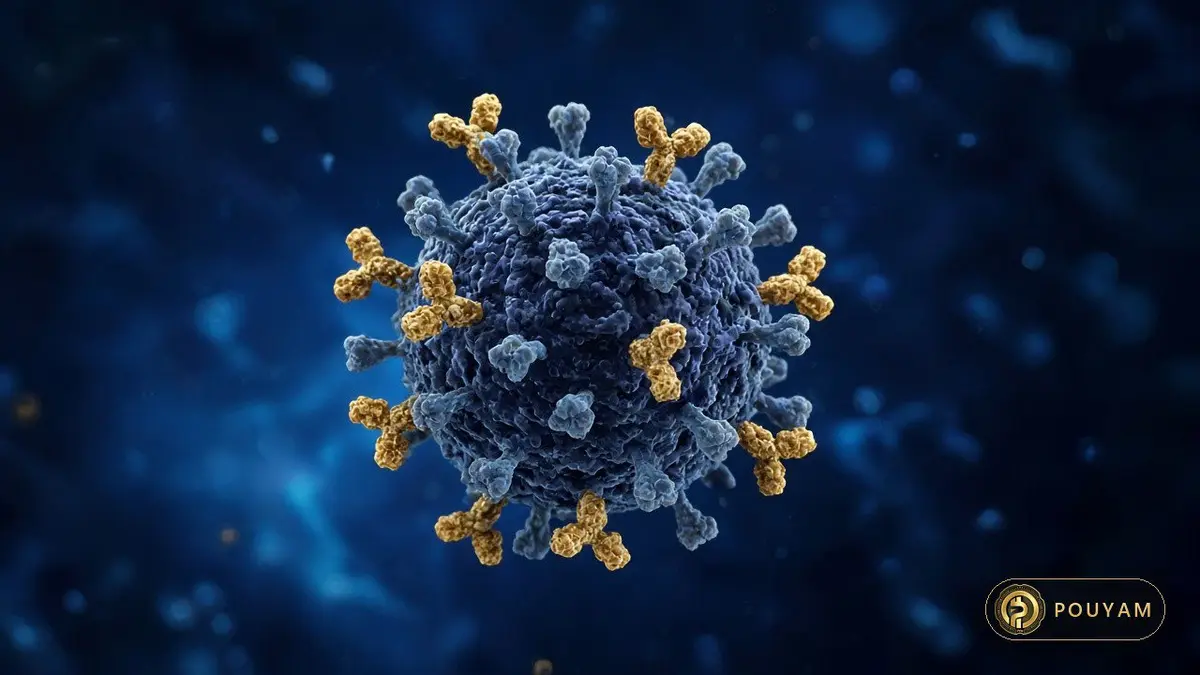
The vaccine is given to the pregnant woman, and the antibodies she makes cross the placenta to protect the baby for about the first six months of life, when RSV is most dangerous [2][4].
- Timing to protection: CDC says it takes about two weeks after vaccination to develop antibodies and pass protection to the baby [4].
- Duration: CDC says maternal antibodies protect the baby for approximately 6 months after birth [4].
- The vaccine used: CDC names Pfizer's Abrysvo as the maternal RSV vaccine, and the NHS says Abrysvo is the one RSV vaccine type it gives [4][5].
- The alternative: long-acting antibody injections given to the baby, such as nirsevimab or clesrovimab, provide immediate protection lasting at least 5 months, according to CDC [4].
CDC says most babies do not need both a maternal vaccine and an infant antibody [4]. Denmark used both approaches in a targeted way: maternal vaccination for all eligible pregnant women, and antibodies for high-risk and premature infants whose mothers had not been vaccinated [1][2].
WHO lists three licensed products to protect young infants: two long-acting antibodies given soon after birth and one maternal vaccine [6].
How strong is the Danish evidence?
The Lancet report is an ecological before-and-after comparison from one country and one season; the authors write that these observations "don't imply causality" [1].
They list other possible explanations, including changes in healthcare behaviour, testing, or interference between viruses [1]. They also give reasons to think the programme played a role [1]:
- RSV testing volumes remained substantial while the share of positive tests fell markedly [1].
- The decline occurred mainly in the infants targeted by the programme [1].
- Similar falls have been reported after RSV prevention programmes in Spain, Belgium, Portugal and England [1].
A second Danish analysis, described by Statens Serum Institut, looked at 22,593 children born between November 2025 and March 2026 [3]. It estimated that vaccination in pregnancy reduced the risk of RSV hospitalisation among infants aged 0 to 6 months by 78%, and by more than 82% in babies under three months [3]. That study is a preprint that has not yet been peer reviewed, the institute says [3].
Nearly 73% of children in that analysis were born to mothers vaccinated at least 14 days before birth [3]. For how to check claims that chatbots give, see AI Hallucinations Explained: Why Chatbots Make Things Up and How to Get Accurate Answers.
Why does RSV matter for babies?
WHO estimates RSV causes about 3.6 million hospitalisations and about 100,000 deaths a year in children under 5, with about half of those deaths in babies under 6 months [6].
- Where deaths happen: 97% of child RSV deaths occur in low- and middle-income countries with limited access to supportive care, WHO says [6].
- How common: nearly all children have been infected with RSV by age 2; most have mild illness but some become very sick [6].
- Symptoms: WHO lists runny nose, sore throat, fever, cough, shortness of breath, fast breathing and wheezing among the signs [6].
- Treatment: there is no specific treatment for RSV; severe cases need supportive care such as oxygen and fluids [6].
- Serious illness: the NHS says RSV can cause bronchiolitis and pneumonia in babies, which may need hospital treatment and can be life-threatening [5].
Nature notes that protection must expand to lower-income countries, which are harder hit [2]. Paediatrician Buddy Creech of Vanderbilt University told Nature the field had gone "from no mechanism to prevent RSV to an embarrassment of riches" [2].
Who is offered the RSV vaccine in pregnancy?
Recommendations differ by country: CDC recommends the maternal vaccine at 32 to 36 weeks of pregnancy from September to January in most of the US, while the NHS offers it from 28 weeks in every pregnancy, all year round [4][5].
- Denmark: pregnant women at gestational week 32 between October 2025 and February 2026 were offered vaccination [1].
- United States: CDC says that if someone received a maternal RSV vaccine in a previous pregnancy, another dose is not currently recommended, and the baby should get an antibody instead [4].
- United Kingdom: the NHS says the vaccine is recommended during every pregnancy, as soon as possible from 28 weeks for the best protection, though it can be given later, up until labour [5].
- Infant antibodies (US): recommended for babies under 8 months whose mothers did not receive the maternal vaccine [4].
The NHS says the RSV vaccine can be given at the same time as other pregnancy vaccines, such as whooping cough and flu [5].
What are the side effects of the RSV vaccine in pregnancy?
The NHS says the most common side effects are mild and short-lived, including pain or swelling at the injection site, headache and body aches; CDC lists headache, nausea and injection-site pain [4][5].
- Under study: CDC lists hypertensive disorders of pregnancy, including pre-eclampsia, as a possible risk under further study [4].
- Allergy: both CDC and the NHS say people who have had a severe allergic reaction to a vaccine ingredient should not have it [4][5].
- Regulatory status (UK): the NHS says the vaccine is approved by the MHRA [5].
- Safety view: the NHS states that studies have shown having the vaccine in pregnancy is much safer than the risk of the baby getting RSV [5].
- Reporting: CDC directs reports of adverse events after the maternal vaccine to VAERS [4].
The Danish report did not assess safety; it looked only at hospital admissions [1].
This is not medical advice. Decisions about your own treatment belong with a qualified clinician who knows your history.
What comes next for RSV prevention?
The Danish authors say continued surveillance is essential to test whether the effect lasts and whether it reaches older children indirectly [1].
- Durability: the authors say that if sustained, the findings suggest large-scale maternal vaccination plus targeted antibodies can substantially reduce severe RSV disease in infants within a single season [1].
- Peer review: the vaccine-effectiveness estimate from Statens Serum Institut is still a preprint [3].
- Older adults: Nature reports that RSV is also dangerous for older adults and that dozens of countries have launched immunisation programmes [2]. WHO says three vaccines are licensed for older adults and people with certain illnesses [6].
- Global access: WHO says most child RSV deaths occur in low- and middle-income countries [6].
What AI tools can and cannot do in health care, and how they are regulated, is covered in AI in Healthcare: What It Can Do Today, Where It Fails and How It Is Regulated.
Common mistakes
Reading the 75% fall as proven vaccine effect
Fix: The authors say the ecological data do not imply causality [1].
Quoting the 78% figure as peer reviewed
Fix: Statens Serum Institut says that study is a preprint [3].
Assuming one schedule applies everywhere
Fix: CDC says 32–36 weeks; the NHS says from 28 weeks [4][5].
Thinking babies need both vaccine and antibody
Fix: CDC says most babies do not need both [4].
Believing RSV has a specific cure
Fix: WHO says there is no specific treatment [6].
Frequently asked questions
What did Denmark's RSV data show?
Infant RSV admissions fell to 296, about a quarter of the usual rate, in the first season [1].
How does the RSV vaccine in pregnancy work?
Maternal antibodies cross the placenta and protect the baby for about 6 months [2][4].
How strong is the Danish evidence?
It is observational from one season; the authors say it does not prove cause [1].
Why does RSV matter for babies?
WHO estimates about 100,000 child deaths a year, half in babies under 6 months [6].
Who is offered the RSV vaccine in pregnancy?
CDC: 32–36 weeks in season; NHS: from 28 weeks in every pregnancy [4][5].
What are the side effects of the RSV vaccine in pregnancy?
Mostly mild, such as injection-site pain and headache; pre-eclampsia risk is under study per CDC [4][5].
What comes next for RSV prevention?
Continued surveillance to confirm the effect lasts, the authors say [1].
Glossary
- RSV
- Respiratory syncytial virus, a common cause of chest infections, severe in young babies.
- Maternal vaccination
- Vaccinating a pregnant woman so antibodies pass to the baby.
- Monoclonal antibody
- A lab-made antibody injected to give direct, short-term protection.
- Incidence rate ratio
- The rate in one period divided by the rate in a comparison period.
- Ecological study
- A study comparing population-level data, which cannot prove cause and effect.
- Preprint
- A study shared publicly before peer review.
Sources
- Early impact of RSV prevention on infant hospitalisations in Denmark The Lancet Regional Health – Europe · 2026-06-22
- RSV vaccines slash infections: data show jabs' staggering success against dangerous virus Nature · 2026-11-12
- Evaluering af RSV-vaccination til gravide viser markant effekt Statens Serum Institut · 2026-07-01
- Immunizations to Protect Infants CDC · 2025-08-18
- RSV vaccine NHS · 2024-09-01
- Respiratory syncytial virus (RSV) fact sheet World Health Organization · 2025-12-19



Comments
Top comments