
AI in Healthcare: What It Can Do Today, Where It Fails and How It Is Regulated
In short
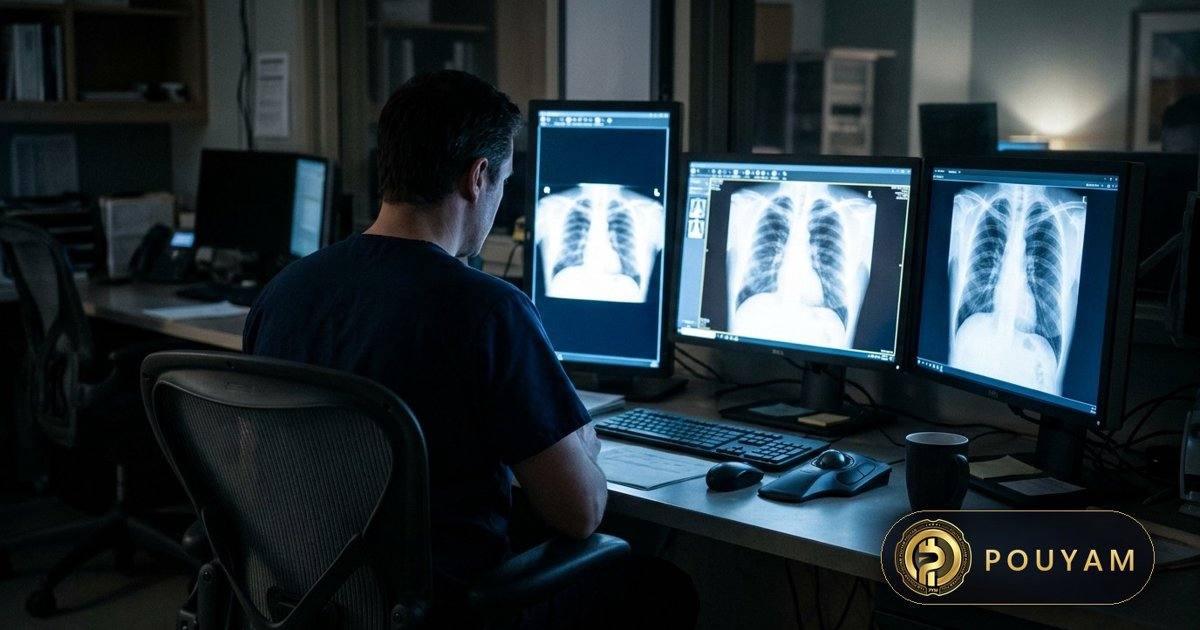
AI in healthcare works best today on narrow, well-tested tasks, especially medical imaging: most of the 1,600-plus AI devices on the US FDA's list are for radiology [1]. AI-supported mammography detected more cancers in a large Swedish trial [3]. Yet people using general chatbots identified relevant conditions no better than a control group [5].
Key takeaways
- A count of the FDA's AI-enabled device list, current as of 4 September 2026, shows 1,614 entries, of which 1,230 are in radiology [1].
- In the MASAI trial of 105,934 women in Sweden, AI-supported screening detected 29% more cancers with no rise in false positives and 44% fewer screen readings [3].
- A widely used hospital sepsis model missed 67% of sepsis cases in an external validation study [4].
- In a 2026 randomised study, chatbots alone named relevant conditions in 94.9% of cases, but people using them did so in fewer than 34.5% [5].
- WHO issued over 40 recommendations on large multi-modal models in health, warning about false, biased or incomplete outputs and automation bias [2].
- AI protein-structure prediction won part of the 2024 Nobel Prize in Chemistry [7].
On this page 13 sections
- What can AI do in healthcare today?
- How is AI used in medical imaging?
- Where has AI in healthcare failed?
- Can AI chatbots give reliable medical advice?
- How is AI helping medical research and drug discovery?
- What are the main risks of AI in healthcare?
- How is AI in healthcare regulated?
- How should patients use AI health tools safely?
- What happens next for AI in healthcare?
- Common mistakes
- Frequently asked questions
- Glossary
- Sources
What can AI do in healthcare today?
Artificial intelligence (AI) in healthcare covers many technologies, from image-analysis software inside a scanner to general chatbots that answer health questions. On the evidence summarised below, as of 3 November 2026, the strongest results come from narrow tools that do one clearly defined job and have been tested and authorised for it, and the weakest from general chatbots giving advice directly to patients.
The US Food and Drug Administration (FDA) keeps a public list of AI-enabled medical devices authorised for marketing in the United States [1]. A count of that list, which the FDA marks as current as of 4 September 2026, shows 1,614 entries, with 1,230 in radiology, 154 cardiovascular and 73 in neurology [1]. The FDA says these devices met the applicable premarket requirements, including a focused review of safety and effectiveness [1].
The World Health Organization (WHO) groups the uses of newer generative models into five areas: diagnosis and clinical care, patient-guided use such as researching symptoms, clerical and administrative work such as documenting visits, medical and nursing education, and scientific research and drug development [2].
This is general information, not medical advice. Decisions about your own health should be made with a qualified clinician.
How is AI used in medical imaging?
Measured by the number of authorised products, imaging is where AI is most established: radiology accounts for about three quarters of the entries on the FDA list [1].
Breast cancer screening
The best-known randomised evidence comes from the MASAI trial in Sweden's national screening programme, run at four sites in south-west Sweden [3]. It randomly assigned 105,934 women to AI-supported screening or standard double reading by two radiologists [3]. The AI system, Transpara, sorted examinations into single or double reading and highlighted suspicious findings [3].
The AI-supported group had 338 cancers detected (6.4 per 1,000) against 262 (5.0 per 1,000) with standard reading, a ratio of 1.29 [3]. The false-positive rate was essentially the same, with a ratio of 1.01, and radiologists performed 61,248 screen readings instead of 109,692, a 44.2% reduction [3]. The authors concluded that AI contributes to the early detection of clinically relevant breast cancer [3]. This report covered secondary outcomes; the published abstract describes it as a protocol-defined analysis of recall, detection, false positives and workload [3].
The trial's primary outcome, the rate of interval cancers (cancers diagnosed between screening rounds that screening did not detect), was published in The Lancet in 2026 [9]. Interval cancer rates were 1.55 per 1,000 participants with AI support and 1.76 per 1,000 with standard reading, a ratio of 0.88 that met the trial's non-inferiority test; sensitivity was 80.5% against 73.8%, and specificity was 98.5% in both groups [9]. The authors wrote that AI-supported screening may be considered for implementation in clinical practice [9].
Eye screening
AI has also moved outside the radiology department. The FDA list includes IDx-DR, an ophthalmic device with an authorisation date of 11 April 2018, and later versions and competitors such as EyeArt [1]. The FDA's De Novo database classifies IDx-DR as a diabetic retinopathy detection device, granted on that date [10].
Where has AI in healthcare failed?
Not every widely deployed tool performs as promised. The clearest warning comes from hospital prediction models, which estimate risks such as sepsis, a life-threatening reaction to infection.
In 2021, researchers at Michigan Medicine externally validated the Epic Sepsis Model, a widely implemented proprietary tool, on 27,697 patients and 38,455 hospitalisations [4]. It achieved an area under the curve (AUC, a measure of how well a model separates cases from non-cases, where 0.5 is chance and 1.0 is perfect) of 0.63 [4]. At its alert threshold it failed to identify 1,709 patients with sepsis, 67% of the total, while generating alerts for 18% of all hospitalisations [4]. The authors concluded that the model had poor discrimination and calibration and that its wide use raised concerns about sepsis management nationally [4].
The authors also reported that this performance was substantially worse than the figures reported by the model's developer [4], which shows that results reported by a developer do not guarantee performance elsewhere. The WHO likewise recommends independent post-release audits and impact assessments for large-scale deployments, with results broken down by user characteristics such as age, race or disability [2].
Can AI chatbots give reliable medical advice?
Large language models now score at a level commensurate with passing the US Medical Licensing Exam on medical knowledge benchmarks, but that does not mean they help people make good decisions about their own symptoms [5]. A randomised, preregistered study published in Nature Medicine on 9 February 2026 tested this directly [5].
Researchers at the University of Oxford and colleagues gave 1,298 UK adults one of ten medical scenarios, drafted from NICE Clinical Knowledge Summaries and developed with general practitioners and intensive care doctors [5]. Participants used GPT-4o, Llama 3 or Command R+, or, in a control group, whatever resources they usually used, mostly internet search [5].
- The models alone identified relevant conditions in 94.9% of cases and the right course of action (disposition) in 56.3% on average [5].
- People using the models identified relevant conditions in fewer than 34.5% of cases and the right disposition in fewer than 44.2% [5].
- The control group was significantly better at identifying relevant conditions than the chatbot groups [5].
The authors traced the failures to the interaction: users often left out key details such as the location or severity of symptoms, did not carry correct suggestions into their final answer, and received inconsistent advice; in a scenario describing a bleed on the brain (subarachnoid haemorrhage), one user was told to lie down in a dark room while another with near-identical symptoms was told to seek emergency care [5]. They concluded that none of the tested models was ready for deployment in direct patient care and called for systematic testing with real users before public deployment [5].
NIST, the US standards agency, gives the same warning in general terms: a confabulated (made-up) summary of patient information could lead doctors to incorrect diagnoses or treatments [6].
How is AI helping medical research and drug discovery?
AI is also used in the laboratory, not only in the clinic. The 2024 Nobel Prize in Chemistry was shared by David Baker, for computational protein design, and by Demis Hassabis and John Jumper of Google DeepMind, for protein structure prediction [7]. The Royal Swedish Academy of Sciences said their AI model, AlphaFold2, presented in 2020, has been used to predict the structure of virtually all the 200 million proteins researchers have identified, and has been used by more than two million people from 190 countries [7].
The Academy noted that a protein's structure is decisive for its function, and cited applications such as understanding antibiotic resistance and creating images of enzymes that can decompose plastic [7]. WHO lists scientific research and drug development, including identifying new compounds, among the main uses of generative models in health [2].
What are the main risks of AI in healthcare?
Benefits shown so far
- Higher cancer detection in screening without more false positives, and a lower reading workload, in a large randomised trial [3].
- More than 1,600 authorised AI-enabled devices on the FDA list, which the agency says met premarket requirements [1].
- Protein-structure prediction used by more than two million people from 190 countries, recognised by the 2024 chemistry Nobel [7].
- A non-inferior interval cancer rate and higher sensitivity in the same screening trial's primary analysis [9].
Risks identified by WHO and others
- Wrong outputs. WHO warns that large multi-modal models can produce false, inaccurate, biased or incomplete statements that could harm people making health decisions [2].
- Bias. Models may be trained on poor-quality or biased data, including bias by race, ethnicity, sex, gender identity or age [2].
- Automation bias. Clinicians and patients may overlook errors or hand difficult decisions to the system [2].
- Weak real-world performance. Tools can underperform outside the setting where they were developed, as the sepsis model showed [4].
- Privacy. Stanford researchers found that six leading chatbot developers use users' chat data by default to train their models, and warned about users sharing biometric and health data [8].
- Security and access. WHO also flags cybersecurity risks to patient information and unequal access to the best-performing systems [2].
How is AI in healthcare regulated?
Regulation depends on what the software does. In the United States, AI that meets the definition of a medical device goes through FDA premarket review, and the agency publishes the authorised devices it identifies [1]. The FDA notes that its list is not comprehensive, because devices are identified mainly through AI-related terms in their authorisation summaries [1]. It also says it will explore ways to identify and tag devices that use foundation models, including large language models (LLMs) [1].
General-purpose chatbots used by the public for health questions are not on that list, which covers devices authorised for marketing [1]. WHO recommends that governments assign an existing or new regulatory agency to assess and approve large multi-modal models intended for health use, as resources permit, and use laws to make sure such systems meet ethical and human-rights standards [2].
WHO also asks developers to involve patients and health professionals from the early stages of design and to build models for well-defined tasks with the accuracy and reliability needed [2]. Rules differ by country and change often; check your national medicines or medical-device regulator for current requirements.
How should patients use AI health tools safely?
- Treat chatbot answers as a starting point, not a diagnosis. In the Oxford study, people using chatbots did no better than a control group at identifying relevant conditions [5].
- Give complete information if you do use one, including where symptoms are, how severe and how often; missing details were a main cause of failure [5].
- Seek urgent care for emergency symptoms rather than asking a chatbot; the study found opposite advice for near-identical brain-bleed scenarios [5].
- Protect your health data. Avoid entering identifiable medical records into consumer chatbots, whose developers commonly use chat data for training by default [8].
- Ask your clinician whether an AI tool was used in your care and how its results were checked, given WHO's warning about automation bias [2].

What happens next for AI in healthcare?
The yearly number of authorisations has been rising: a count of the FDA list shows 226 entries with 2023 decision dates, 235 with 2024 dates and 335 with 2025 dates [1]. The FDA also says it will explore ways to identify and tag devices that incorporate foundation models, including LLMs [1].
What is still uncertain
- Long-term outcomes of AI screening. The published MASAI analyses cover detection, false positives, workload [3], interval cancers, sensitivity and specificity [9]; breast cancer deaths were not among the outcomes they reported.
- Whether chatbots can be made safe for direct patient advice. The Oxford authors found that none of the tested models was ready and that user testing is needed [5].
- How tools perform across hospitals and populations, which WHO wants measured through independent audits [2] and which the sepsis study shows cannot be assumed [4].
The overall picture as of 3 November 2026: AI is a proven aid on specific, tested tasks under professional oversight, and an unproven substitute for a clinician.
| Use | Evidence | Finding |
|---|---|---|
| Mammography screening (Transpara) | Randomised trial, 105,934 women, Sweden [3] | 6.4 vs 5.0 cancers per 1,000; false positives unchanged; 44.2% fewer readings [3] |
| Sepsis prediction (Epic Sepsis Model) | External validation, 38,455 hospitalisations [4] | AUC 0.63; missed 67% of sepsis cases [4] |
| Chatbots for public symptom checks | Randomised study, 1,298 UK adults [5] | Users found relevant conditions in under 34.5% of cases [5] |
| Protein structure prediction (AlphaFold2) | Nobel Prize in Chemistry 2024 [7] | Structures predicted for virtually all 200 million known proteins [7] |
| Authorised AI devices (US) | FDA AI-enabled device list, current 4 September 2026 [1] | 1,614 entries, 1,230 in radiology [1] |
Common mistakes
Assuming a chatbot that passes medical exams gives good personal advice
Fix: In a randomised study, users of chatbots identified relevant conditions in fewer than 34.5% of cases [5].
Believing all medical AI is approved by regulators
Fix: The FDA list covers authorised devices; general chatbots are not on it, and the list itself is not comprehensive [1].
Trusting a hospital tool because it is widely used
Fix: The widely implemented Epic Sepsis Model missed 67% of sepsis cases in an external test [4].
Sharing full medical records with a consumer chatbot
Fix: All six chatbot developers in a Stanford study used chat data by default to train their models [8]; remove identifying details or use clinician-approved tools.
Letting the AI's answer replace clinical judgement
Fix: WHO warns of automation bias, where errors go unnoticed; keep a clinician responsible for decisions [2].
Frequently asked questions
Is AI used in hospitals today?
Yes. The FDA's list of authorised AI-enabled devices has 1,614 entries in a count current to 4 September 2026, most of them for radiology [1].
Can AI detect cancer better than doctors?
In the MASAI trial, AI-supported screening with radiologists detected more cancers than standard double reading by radiologists alone [3], with higher sensitivity and a non-inferior interval cancer rate [9]. The evidence supports using AI to assist doctors, not to replace them.
Should I use ChatGPT to check my symptoms?
Use caution. In a 2026 study, people using GPT-4o and other chatbots did no better than those using their usual resources, and the authors said no tested model was ready for direct patient care [5]. This is not medical advice; contact a clinician.
Glossary
- AI-enabled medical device
- Software or hardware using AI that meets the definition of a medical device and is authorised by a regulator such as the FDA [1].
- Large multi-modal model (LMM)
- A generative AI model that can accept one or more types of input, such as text, video and images, and generate outputs not limited to the input type [2].
- AUC (area under the curve)
- A measure of how well a model separates cases from non-cases, where 0.5 is chance and 1.0 is perfect; the Epic Sepsis Model scored 0.63 [4].
- Automation bias
- The tendency to accept a system's output without noticing its errors, or to hand it decisions it should not make [2].
- Disposition
- The recommended next course of action for a patient, such as whether to rest or seek emergency care, as measured in the Oxford study [5].
Sources
- Artificial Intelligence-Enabled Medical Devices US Food and Drug Administration; content current as of 2026-09-04, retrieved 2026-11-03 · 2026-09-04
- WHO releases AI ethics and governance guidance for large multi-modal models World Health Organization · 2024-01-18
- Screening performance and characteristics of breast cancer detected in the Mammography Screening with Artificial Intelligence trial (MASAI) Hernstrom et al., The Lancet Digital Health 2025;7(3):e175-e183 (PubMed) · 2025-02-03
- External Validation of a Widely Implemented Proprietary Sepsis Prediction Model in Hospitalized Patients Wong et al., JAMA Internal Medicine · 2021-06-21
- Reliability of LLMs as medical assistants for the general public: a randomized preregistered study Bean et al., Nature Medicine 32(2):609-615 (PubMed Central) · 2026-02-09
- NIST AI 600-1: Generative Artificial Intelligence Profile US National Institute of Standards and Technology
- Press release: The Nobel Prize in Chemistry 2024 The Royal Swedish Academy of Sciences / Nobel Prize Outreach · 2024-10-09
- Be Careful What You Tell Your AI Chatbot Stanford Institute for Human-Centered Artificial Intelligence (HAI) · 2025-10-15
- Interval cancer, sensitivity, and specificity comparing AI-supported mammography screening with standard double reading without AI in the MASAI study Gommers et al., The Lancet 2026;407(10527):505-514 (PubMed)
- De Novo Classification Request: IDx-DR (DEN180001) US Food and Drug Administration, De Novo database · 2018-04-11




Comments
Top comments