
Bird Flu Death in Washington: What the H5N1 Case Means
- 13 views
- 0 likes
- 0 comments
- All languages combined
 +30

Sign in and earn +30 points by reading this
Read to the end, wait a few seconds, then tap the claim button below.
In short
According to the latest official updates found on 13 November 2026, one person in Yakima County, Washington, has died of H5N1 bird flu after exposure to infected dairy cattle; the death was announced on 1 November [2]. Three linked human cases are confirmed, officials say the public risk is low, and no human-to-human spread has been found [2][3][1].
Key takeaways
- The Yakima Health District reported a severe case on 31 October 2026 and the person's death on 1 November; the person had underlying health conditions [2][6].
- Three human cases in Yakima County are confirmed, all after exposure to infected dairy cattle; the other two were mild [2][3].
- ECDC says sequencing of the first two cases placed the viruses in clade 2.3.4.4b, genotype B3.13, a US sub-branch that included human, bird and cow isolates [1].
- US CDC rates the public risk as low but moderate to high for people in contact with infected animals [1].
- Yakima County reported 33 infected dairy herds as of 29 October; CIDRAP later counted 43 Washington detections since 8 October (article undated on the page) [6][5].
- Pasteurized milk remains safe; raw milk and raw pet food should be avoided, health officials say [6].
On this page 12 sections
- What happened in the Washington bird flu death?
- How many H5N1 cases are there in Washington?
- What type of H5N1 virus is it?
- Is bird flu spreading between people?
- What is the risk of bird flu to the public?
- What are the symptoms of bird flu in people?
- How can you protect yourself from bird flu?
- What happens next with H5N1 in Washington?
- Common mistakes
- Frequently asked questions
- Glossary
- Sources
What happened in the Washington bird flu death?
A Yakima County resident who caught avian influenza at a dairy with infected cattle was hospitalised with severe illness and died on 1 November 2026, the Yakima Health District said [2][6]. The person had underlying health conditions, and officials did not release their name, gender or age [2].
ECDC's 9 November summary, based on US CDC information, says the patient developed respiratory symptoms in the week ending 24 October, went to an emergency department the following week, and was hospitalised [1]. A respiratory specimen tested presumptively positive for A(H5) at the University of Washington, the Washington State Public Health Laboratory confirmed A(H5) with the CDC assay, and further testing identified A(H5N1) [1].
CNN, reported by KSL, called it the first known US death from bird flu in 2026 and the third in the US since February 2024, when the virus jumped into dairy cattle [4]. CIDRAP gave the same description [5]. ECDC's count, which uses a different case definition, lists 74 earlier A(H5) cases including three deaths since April 2024, not counting the two newest Washington cases [1].
How many H5N1 cases are there in Washington?
Three human cases are confirmed in Yakima County, all in people exposed to infected dairy cattle [2][3].
- First case (reported 15 October 2026): a person with occupational exposure to infected dairy cattle, mild illness, not hospitalised [1].
- Second case (reported 31 October, died 1 November): severe illness and underlying conditions [2][6].
- Third case (reported 1 November): conjunctivitis (eye infection) and mild symptoms, not hospitalised [1][2].
ECDC says US CDC reported on 6 November that the second and third cases were workers at commercial dairy cattle farms [1]. Across the US, ECDC counts 74 A(H5) human cases from 13 states between 1 April 2024 and 5 November 2026, not including the two newest: 44 linked to dairy cattle, 24 to poultry farms, three to other animals and three with no known animal exposure [1].
Not every case may be counted. CIDRAP reports that the United Farm Workers union says human cases among Yakima Valley dairy workers are underreported, partly because many workers fear immigration enforcement; this is the union's claim, and the article does not report confirmation from health officials [5].
What type of H5N1 virus is it?
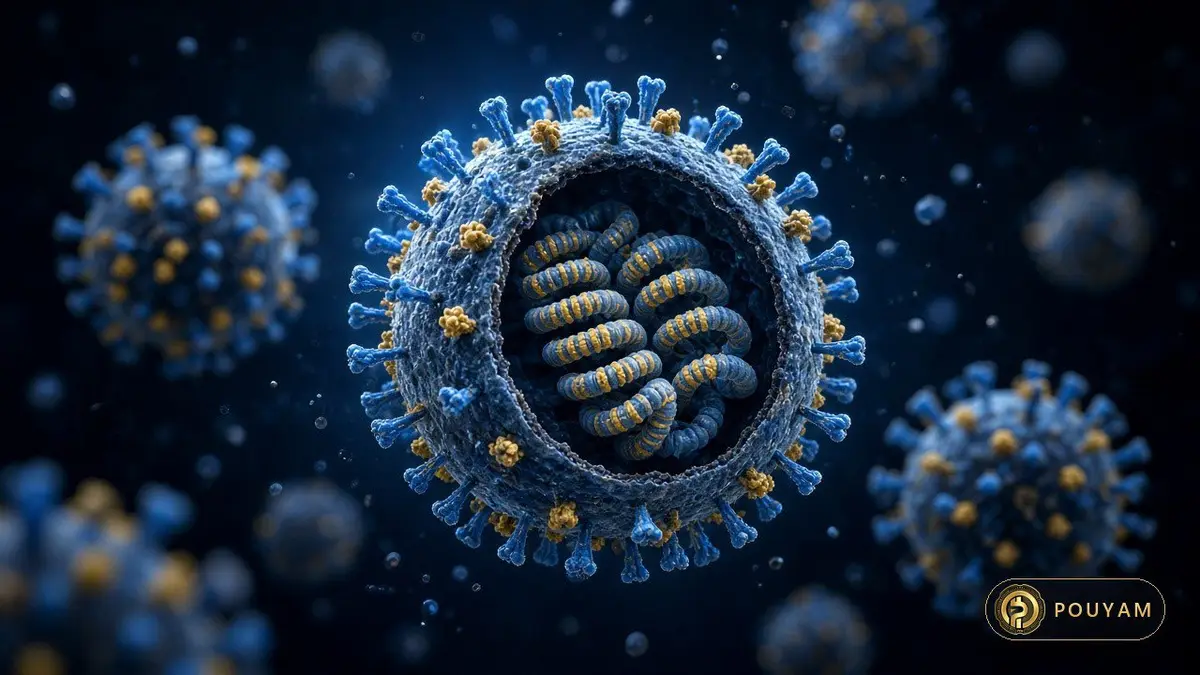
ECDC says the viruses from the first and second Washington cases belong to clade 2.3.4.4b, genotype B3.13, in a US sub-branch that included isolates from humans, birds and cows [1].
The sequences, collected on 12 and 29 October 2026, carry the PB2 631L mutation, which ECDC says is common in B3.13 and is associated with increased activity of the virus's copying machinery in mammals [1]. The virus from the person who died also had a change called 115I in the M1 protein, whose effect in H5 viruses is unclear and which had previously been seen only in a different clade from Asia [1].
ECDC found no signs of reassortment, meaning the virus has not swapped gene segments with other flu viruses [1]. Laboratory investigation is continuing [1]. These are genetic observations, not evidence that the virus spreads more easily between people.
Is bird flu spreading between people?
No: health officials say there is no evidence of human-to-human transmission, and such transmission has never been documented in the United States [2][6]. ECDC notes that human-to-human spread of H5N1 remains rare, and that no evidence of sustained human-to-human transmission has been identified; contact tracing and symptom monitoring of close contacts were started [1].
Public health workers are monitoring close contacts of the patient who died [2]. Yakima Health District's Dave Atteberry told CNN that farm workers who test positive are given antiviral medicine to ease symptoms and reduce viral load, which may lower the chance of spreading the virus, "even though we haven't seen that biologically be possible yet" [4].
Some experts are watching the timing. Jennifer Nuzzo of Brown University told CNN that dairy outbreaks overlapping with an early seasonal flu season could give H5N1 the chance to swap genes with human flu viruses, which she called "the bad scenario" [4]. That is a risk scenario, not something that has been observed; ECDC found no reassortment in the sequenced Washington viruses [1].
What is the risk of bird flu to the public?
US CDC rates the current public health risk from A(H5) viruses as low, but moderate to high for people in contact with potentially infected animals, contaminated surfaces or fluids, ECDC reports [1]. Yakima Health District says dairy workers and others with close or prolonged contact with infected animals are at greater risk [6].
In Europe, ECDC assesses the risk from circulating clade 2.3.4.4b viruses as low for the general population and low to moderate for people exposed to infected animals; there have been no confirmed human H5N1 cases in the EU/EEA [1].
The cattle outbreak is still growing. Yakima County reported 33 infected dairy herds as of 29 October [6]. CIDRAP (in an article undated on the page) said Washington had 43 detections since 8 October and that USDA had reported Oregon's first H5N1 detection in a dairy herd [5]. Numbers change quickly, so check the date on any figure.

What are the symptoms of bird flu in people?
Yakima Health District lists eye redness or irritation, fever or feeling feverish, cough, sore throat, runny or stuffy nose, muscle or body aches, headache and fatigue, and says illness can range from mild to severe [6]. The first and third Washington cases were mild, and the third person had conjunctivitis [1][2].
The district's alert asks clinicians to take an exposure history from all patients with suspected or confirmed influenza [3]. Exposures it lists include working on a dairy farm, close contact with sick or dead animals, close contact with a suspected or confirmed case, and handling raw milk or raw meat-based pet food [3]. It advises collecting specimens as soon as possible after symptoms start, ideally within 24 hours [3].
Dairy workers who develop symptoms after possible exposure are asked to contact a health provider and mention the exposure, or call the Yakima Health District for guidance [6].
How can you protect yourself from bird flu?
Yakima Health District's advice is to avoid sick or dead animals and raw milk, and for exposed workers to use protective equipment and report symptoms [6].
- Drink pasteurized milk. Pasteurization inactivates avian flu virus; avoid raw milk and unpasteurized dairy products [6].
- Protect pets. Cats are especially susceptible; do not feed pets raw milk, raw meat or raw pet food [6].
- Avoid sick or dead animals, animal waste and surfaces that may be contaminated [6].
- If you work with cattle or poultry, follow workplace safety guidance and use recommended protective equipment [6].
- Know the symptoms: eye redness or irritation, fever, cough, sore throat, runny nose, aches, headache and fatigue; if exposed, tell a health provider about the exposure [6].
- Get a seasonal flu vaccine. It does not prevent bird flu, but it lowers the risk of being infected with human and avian flu at the same time [6].
This is not medical advice. Contact a health provider or local health department if you have symptoms after animal exposure.

What happens next with H5N1 in Washington?
Officials are monitoring contacts, testing symptomatic exposed workers and working with affected dairies, and Yakima Health District plans to update its case page every Monday and Thursday [2][6]. The district's alert to clinicians asks them to take exposure histories from all patients with suspected flu and to report suspected cases immediately, since a negative routine flu test does not rule out avian influenza [3].
ECDC says it is in contact with US CDC and following updates, and recommends active monitoring and testing of exposed people for early detection of human cases [1].
Viral rumours about bird flu spread fast during outbreaks. Check claims against health agencies rather than chatbot summaries; AI Hallucinations Explained: Why Chatbots Make Things Up and How to Get Accurate Answers explains why AI tools can get facts wrong, and AI in Healthcare: What It Can Do Today, Where It Fails and How It Is Regulated covers where AI does help in medicine.
| Case | Reported | Illness | Exposure |
|---|---|---|---|
| 1 | 15 Oct 2026 | Mild, not hospitalised | Dairy cattle |
| 2 | 31 Oct 2026 | Severe, died 1 Nov 2026 | Dairy cattle |
| 3 | 1 Nov 2026 | Mild, conjunctivitis | Dairy cattle |
Common mistakes
Saying H5N1 now spreads between people.
Fix: Officials have found no human-to-human transmission; it has never been documented in the US [2][6].
Avoiding all milk.
Fix: Pasteurized milk and dairy remain safe; raw milk is the risk [6].
Treating the PB2 631L mutation as proof of a pandemic strain.
Fix: ECDC says it is common in B3.13 viruses; it found no reassortment [1].
Mixing herd counts from different dates.
Fix: Yakima reported 33 herds as of 29 October; CIDRAP counted 43 Washington detections since 8 October, in an article undated on the page [5][6].
Frequently asked questions
What happened in the Washington bird flu death?
A Yakima County resident infected at a dairy with sick cattle died on 1 November 2026 after severe illness [2].
How many H5N1 cases are there in Washington?
Three confirmed human cases in Yakima County, all linked to infected dairy cattle [2][3].
What type of H5N1 virus is it?
Clade 2.3.4.4b, genotype B3.13, according to ECDC; the viruses were sequenced from the first two cases, and the B3.13 sub-branch included human, bird and cow isolates [1].
What is the risk of bird flu to the public?
Low for the general public, higher for people in contact with infected animals [1][6].
What are the symptoms of bird flu in people?
Red or irritated eyes, fever, cough, sore throat, runny nose, aches, headache and fatigue [6].
How can you protect yourself from bird flu?
Avoid raw milk and sick animals, use protective gear at work and tell a provider about any exposure [6].
Glossary
- H5N1
- A highly pathogenic avian influenza A virus subtype; CNN dates its first jump into US dairy cattle to February 2024 [4].
- Clade 2.3.4.4b
- The H5N1 lineage to which the sequenced Washington viruses belong, according to ECDC [1].
- Genotype B3.13
- A genetic group within clade 2.3.4.4b; ECDC says a US B3.13 sub-branch included isolates from humans, birds and cows [1].
- Reassortment
- When two flu viruses swap gene segments; ECDC found none in the Washington viruses [1].
- Pasteurization
- Heat treatment of milk that inactivates avian flu virus [6].
Sources
- Avian influenza A(H5N1) human cases – United States – 2024-2026 (update 9 November 2026) European Centre for Disease Prevention and Control · 2026-11-09
- Yakima County Resident Dies from Complications of Avian Influenza Yakima Health District · 2026-11-01
- Provider Alert: Update on Avian Influenza in Yakima County Yakima Health District · 2026-11-06
- Washington reports first US bird flu death of 2026; health officials say risk to the public is low (CNN) KSL.com / CNN · 2026-11-02
- Oregon logs its first H5N1 case in cows; farmer's union says human avian flu cases underreported in Washington CIDRAP
- Second Yakima County Resident Tests Positive for Avian Influenza Yakima Health District · 2026-10-31




Comments
Top comments