
Alzheimer's Blood Test Approved in Japan: What pTau217 Shows
- 17 views
- 0 likes
- 0 comments
- All languages combined
 +30
Sign in and earn +30 points by reading this
Read to the end, wait a few seconds, then tap the claim button below.
In short
Yes: H.U. Group announced on 11 November 2026 that Japan's health ministry had approved Fujirebio's Alzheimer's blood test, a plasma pTau217 reagent that helps doctors judge whether amyloid beta has built up in the brain [1][2]. It is an aid, not a diagnosis on its own, and no price has been announced [1][2][3].
Key takeaways
- H.U. Group said on 11 November 2026 that its subsidiary Fujirebio won Japanese approval for a reagent measuring pTau217 in blood plasma [1].
- The approved use is to help assess the build-up of amyloid beta in the brain, a hallmark of Alzheimer's disease; Fujirebio had applied in November 2025 [1].
- Today amyloid is checked by PET scans or by spinal fluid taken with a needle in the lower back; a blood draw is less invasive [2][3].
- Experts quoted by the Asahi Shimbun warn that the test alone cannot give a definitive diagnosis and that amyloid can be present without symptoms [2].
- In the US, the FDA cleared Fujirebio's related pTau217/beta-amyloid 1-42 plasma ratio test on 16 May 2025 for people 55 and older with symptoms [4].
- The Alzheimer's Association says blood tests belong in specialist care for people with cognitive impairment, and many tests miss its accuracy thresholds [6].
- The FDA says the US test is not a screening or stand-alone diagnostic test; anyone worried about memory should see a doctor for a full assessment [4].
On this page 11 sections
- Is there a blood test for Alzheimer's in Japan?
- What does a pTau217 blood test show?
- How is a blood test different from a PET scan or spinal tap?
- How accurate is the Alzheimer's blood test?
- Who should get an Alzheimer's blood test?
- How much does the Alzheimer's blood test cost in Japan?
- What does the Japan approval change?
- Common mistakes
- Frequently asked questions
- Glossary
- Sources
Is there a blood test for Alzheimer's in Japan?
Yes. Japan's Ministry of Health, Labour and Welfare approved the manufacture and sale of Fujirebio's plasma pTau217 test reagent, which H.U. Group announced on 11 November 2026 [1]. The Japanese sales name, ルミパルス リン酸化タウ217(血漿), translates as Lumipulse Phosphorylated Tau 217 (Plasma), and its stated purpose is measuring phosphorylated tau 217 in plasma to aid the assessment of amyloid beta build-up in the brain [1].
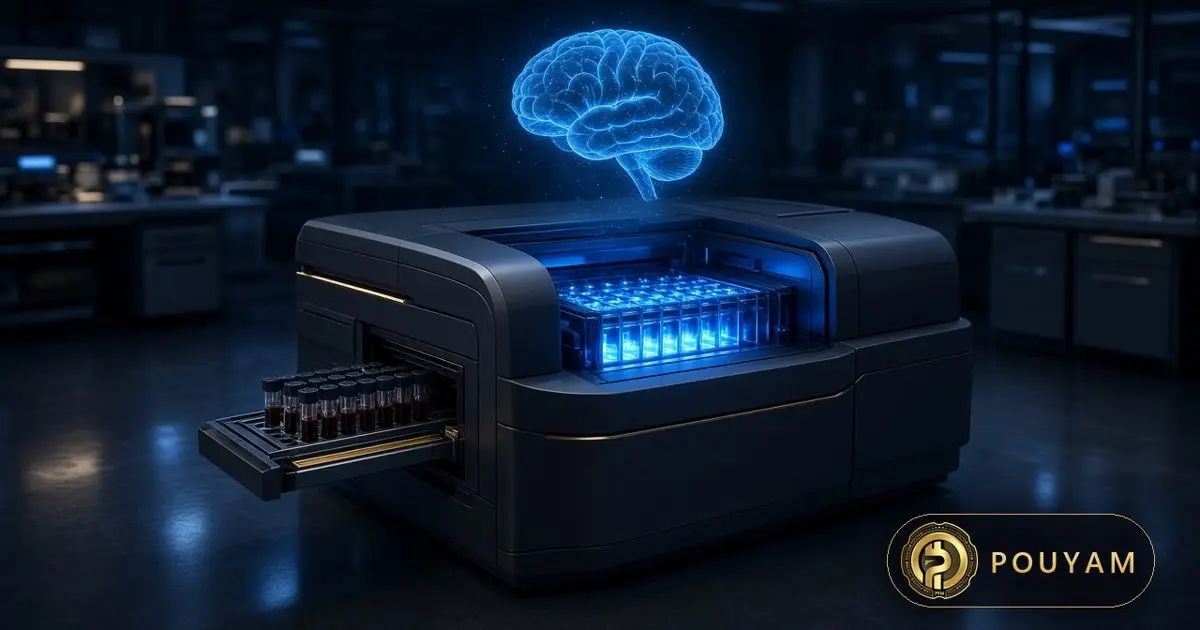
It is an in vitro diagnostic, a reagent used in a laboratory, not a home kit. It runs on Fujirebio's fully automated Lumipulse G1200 and G600II analysers, which use a chemiluminescent enzyme immunoassay, a method that measures proteins with antibodies and light [1]. Fujirebio had filed for approval in November 2025 [1][2].
Nikkei reported that approval came as competition among diagnostics companies grows with the arrival of new dementia drugs, and that Fujirebio had already received US clearance for an Alzheimer's-related blood test in 2025 [3].
What does a pTau217 blood test show?
A pTau217 test measures the level of one form of the protein tau in blood plasma, and that level is used to estimate whether amyloid beta plaques have built up in the brain [1][4]. Tau is a protein inside nerve cells. "Phosphorylated tau 217" means tau carrying a phosphate group at position 217 of the protein chain, which is what the Japanese product name refers to [1].
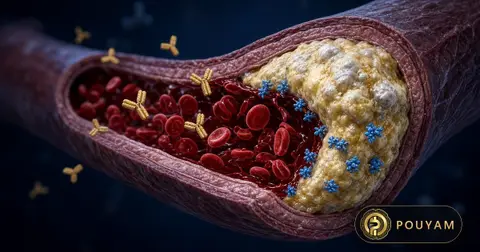
Amyloid beta build-up is considered one of the causes of Alzheimer's disease and is the target of antibody medicines approved for the disease, H.U. Group says [1]. The FDA describes amyloid plaques in the brain as a hallmark sign of Alzheimer's, while noting they can also occur in other diseases [4].
The blood test does not see the brain. As the Asahi Shimbun puts it, it measures proteins in the bloodstream that are believed to reflect conditions in the brain [2]. That is why it is called an aid: a doctor combines the result with memory testing, history and other examinations [2][4]. For how other software and tests in medicine are judged and approved, see the Pouyam guide AI in Healthcare: What It Can Do Today, Where It Fails and How It Is Regulated.

How is a blood test different from a PET scan or spinal tap?
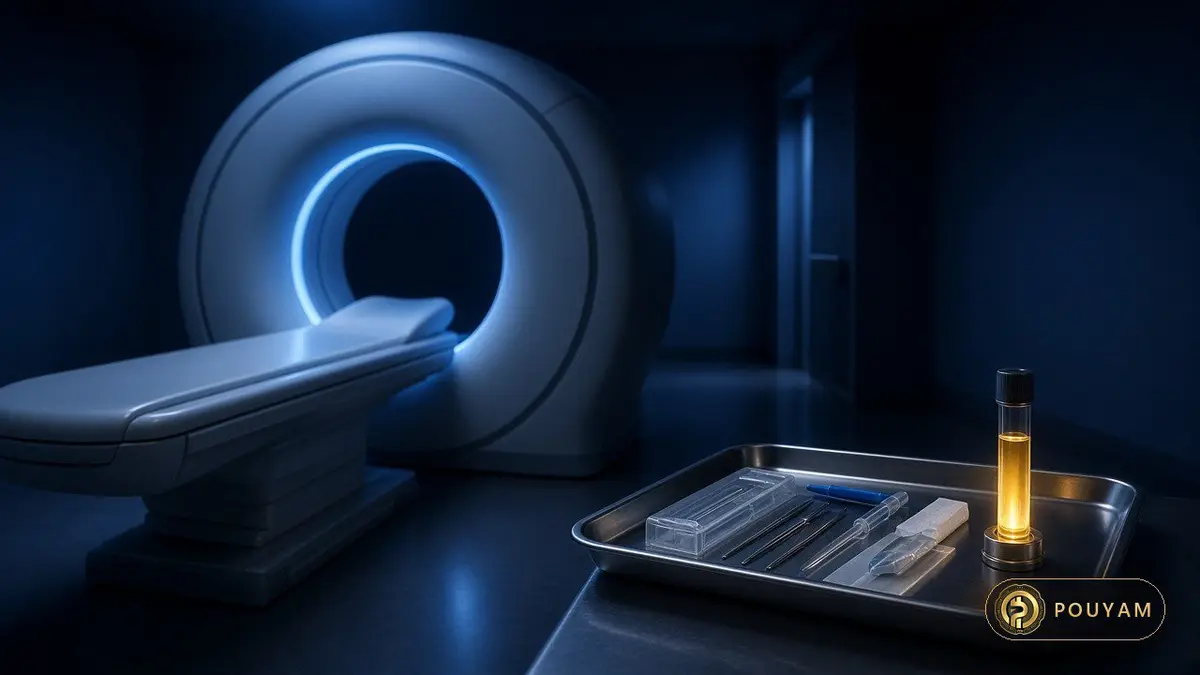
A blood test needs only a normal blood draw, while the current methods need a brain scan with an injected tracer or a needle into the lower back [2][3]. Until now, amyloid has been examined with positron emission tomography (PET) or with cerebrospinal fluid, the fluid around the brain and spinal cord [2].
- PET scan: available at a limited number of facilities and expensive, the Asahi reports; the FDA adds that it is time-consuming and exposes patients to radiation [2][4].
- Spinal fluid test: needs a lumbar puncture, a needle inserted into the lower back, which places a considerable physical burden on patients [2][3].
- Blood test: a simple draw, which Nikkei says could lighten the burden on patients and may lower testing costs [3].
The trade-off is certainty. In the US data, fewer than 20% of results were indeterminate, and the FDA says the test is not a stand-alone diagnostic and other clinical evaluations or tests should guide treatment [4].
How accurate is the Alzheimer's blood test?
Japan's approval announcement gives no accuracy figures, so the best public numbers come from the related US-cleared Fujirebio test: 91.7% of positive results and 97.3% of negative results matched PET or spinal fluid results [1][4]. The US product is not identical. It is the Lumipulse G pTau217/beta-amyloid 1-42 Plasma Ratio, which measures two proteins and calculates their ratio, while the Japanese product name refers to pTau217 [1][4].
The FDA reviewed a multi-centre study of 499 plasma samples from adults who were cognitively impaired, comparing results with amyloid PET or spinal fluid tests [4]. Less than 20% of the 499 patients received an indeterminate result [4].
The FDA also spelled out the risks. A false positive could lead to a wrong diagnosis and unnecessary treatment, with distress, cost and side effects; a false negative could delay effective treatment and trigger more tests [4]. The agency says the US test is not intended as a screening or stand-alone diagnostic test [4].
A second US test works differently. On 8 October 2025 the FDA cleared Roche's Elecsys Phospho-Tau (181P) Plasma, a pTau181 test meant to help with the initial assessment of adults 55 and older with signs of cognitive decline, a negative result points to a reduced likelihood that cognitive impairment is due to amyloid pathology, and the label says the assay is not recommended for patients already referred to a specialist [5].
Who should get an Alzheimer's blood test?
Current guidance limits these tests to people who already have memory or thinking problems and are being assessed by a doctor, not healthy people who are curious [4][6]. The US-cleared Fujirebio test is for adults aged 55 and older with signs and symptoms of Alzheimer's, seen in a specialised care setting [4].
In July 2025 the Alzheimer's Association published its first clinical practice guideline on blood-based biomarker tests, and both of its recommendations apply only to patients with cognitive impairment seen in specialist memory care [6]:
- Triage: a test with at least 90% sensitivity and 75% specificity can be used so that a negative result rules out Alzheimer's pathology with high probability; a positive result should be confirmed with spinal fluid or PET [6].
- Confirmation: a test with at least 90% sensitivity and 90% specificity can substitute for PET or spinal fluid testing [6].
The guideline cautions that accuracy varies widely and many commercially available tests do not meet these thresholds [6]. In Japan, experts quoted by the Asahi warn that amyloid may be present in the brain even with no symptoms of dementia, and that a belief that dementia can be diagnosed by a blood test alone could spread [2].

How much does the Alzheimer's blood test cost in Japan?
No price has been announced: the H.U. Group release of 11 November 2026 gives no price, launch date or information on national health insurance coverage [1]. Nikkei reported only that a blood draw may hold down testing costs compared with current methods [3].
So the cost to patients depends on decisions that had not been published as of 13 November 2026. A clinic that advertises an Alzheimer's blood test is not necessarily using this newly approved reagent; asking which test is used, and whether it is an approved in vitro diagnostic, avoids confusion.
The wider need is large. WHO says 57 million people were living with dementia worldwide in 2021, with nearly 10 million new cases every year, and that Alzheimer's disease may contribute to 60 to 70% of cases [7].
What does the Japan approval change?
The approval gives Japanese doctors an officially approved blood-based option for the amyloid question, which Nikkei says may lighten the burden on patients compared with PET scans and spinal taps [3]; how widely it will be used is not yet known. That matters because the antibody medicines approved for Alzheimer's target amyloid beta [1].
What it does not change: a definitive diagnosis must still be made by a physician based on a combination of examinations and clinical findings [2]. The blood test also does not predict who will develop dementia; the US labelling of the Roche test, for example, says performance has not been established for predicting dementia or monitoring responses to therapy [5].
Questions still open as of 13 November 2026: the launch date in Japan, the insurance price, and how the Japanese pTau217 reagent performs in published Japanese patient data. None of these was in the company announcement [1]. Claims that "brain training" can prevent the disease are a separate topic; the Pouyam guide Chess and Brain Games: What Research Really Says About Benefits looks at what the research on brain games actually shows.
This is not medical advice. Anyone worried about memory changes should see a doctor, who can decide whether any test is useful.
| Test | Regulator and date | What it measures | Intended use |
|---|---|---|---|
| Lumipulse Phosphorylated Tau 217 (Plasma), Fujirebio | Japan, health ministry, announced 11 Nov 2026 | pTau217 in plasma | Aid to assessing brain amyloid beta build-up |
| Lumipulse G pTau217/beta-amyloid 1-42 Plasma Ratio, Fujirebio | US FDA clearance, 16 May 2025 | Ratio of pTau217 to beta-amyloid 1-42 | Adults 55+ with symptoms, specialised care; not for screening |
| Elecsys Phospho-Tau (181P) Plasma, Roche | US FDA clearance, 8 Oct 2025 | pTau181 in plasma | Initial assessment, adults 55+ with signs of cognitive decline |
Common mistakes
Thinking a blood test can diagnose Alzheimer's on its own.
Fix: The approved use is an aid to assessing amyloid; a doctor makes the diagnosis from several examinations [1][2].
Treating a positive amyloid result as proof of dementia.
Fix: Amyloid can build up in the brain without symptoms, experts quoted by the Asahi say [2].
Assuming the Japanese and US Fujirebio tests are the same product.
Fix: The US test is a pTau217 to beta-amyloid 1-42 ratio; the Japanese product name refers to plasma pTau217 [1][4].
Ordering a test as a healthy adult to check future risk.
Fix: The US labels and the Alzheimer's Association guideline cover people with symptoms of cognitive decline, not screening [4][6].
Quoting a price before one exists.
Fix: As of 13 November 2026 no price or insurance decision for the Japanese reagent has been published [1].
Frequently asked questions
Is there a blood test for Alzheimer's in Japan?
Yes. Japan's health ministry approved Fujirebio's plasma pTau217 reagent, announced on 11 November 2026, to aid the assessment of amyloid beta build-up in the brain [1].
What does a pTau217 blood test show?
It measures phosphorylated tau 217 in plasma, which is used to estimate whether amyloid beta plaques have built up in the brain [1][4].
How accurate is the Alzheimer's blood test?
Japan published no figures. For the related US-cleared Fujirebio ratio test, 91.7% of positives and 97.3% of negatives matched PET or spinal fluid, with under 20% indeterminate [4].
Who should get an Alzheimer's blood test?
Current US labels and Alzheimer's Association guidance cover people with cognitive symptoms assessed by doctors, not healthy people [4][6].
How much does the Alzheimer's blood test cost in Japan?
No price, launch date or insurance coverage had been announced as of 13 November 2026 [1].
Glossary
- Amyloid beta
- A protein fragment that can clump into plaques in the brain; a hallmark of Alzheimer's disease [4].
- Tau and pTau217
- Tau is a nerve-cell protein; pTau217 is tau carrying a phosphate group at position 217, measured in plasma [1].
- PET scan
- Positron emission tomography, a brain scan using an injected tracer that can show amyloid plaques [2][4].
- Cerebrospinal fluid
- The fluid around the brain and spinal cord, collected by lumbar puncture [2][4].
- In vitro diagnostic
- A test performed on a sample such as blood in a laboratory, regulated as a medical product.
- Sensitivity and specificity
- The share of people with the condition a test correctly flags, and the share without it a test correctly clears [6].
Sources
- Approval in Japan of a blood-based pTau217 test reagent to aid in assessing brain amyloid beta accumulation related to Alzheimer's disease (Japanese) H.U. Group Holdings (via PR Times) · 2026-11-11
- Health ministry approves reagent in blood tests for Alzheimer's The Asahi Shimbun · 2026-11-12
- H.U. Group dementia-related test reagent approved in Japan, measured with blood (Japanese) Nikkei · 2026-11-11
- FDA Clears First Blood Test Used in Diagnosing Alzheimer's Disease US Food and Drug Administration · 2025-05-16
- 510(k) K252163: Elecsys Phospho-Tau (181P) Plasma US Food and Drug Administration · 2025-10-08
- Alzheimer's Association Releases Its First Clinical Practice Guideline for Blood-Based Biomarker Tests Alzheimer's Association · 2025-07-29
- Dementia: fact sheet World Health Organization · 2026-10-26
Comments
Top comments