
Why Were US Flights Grounded? The FAA Ground Stop Explained
- 0 views
- 0 likes
- 0 comments
- All languages combined
In short
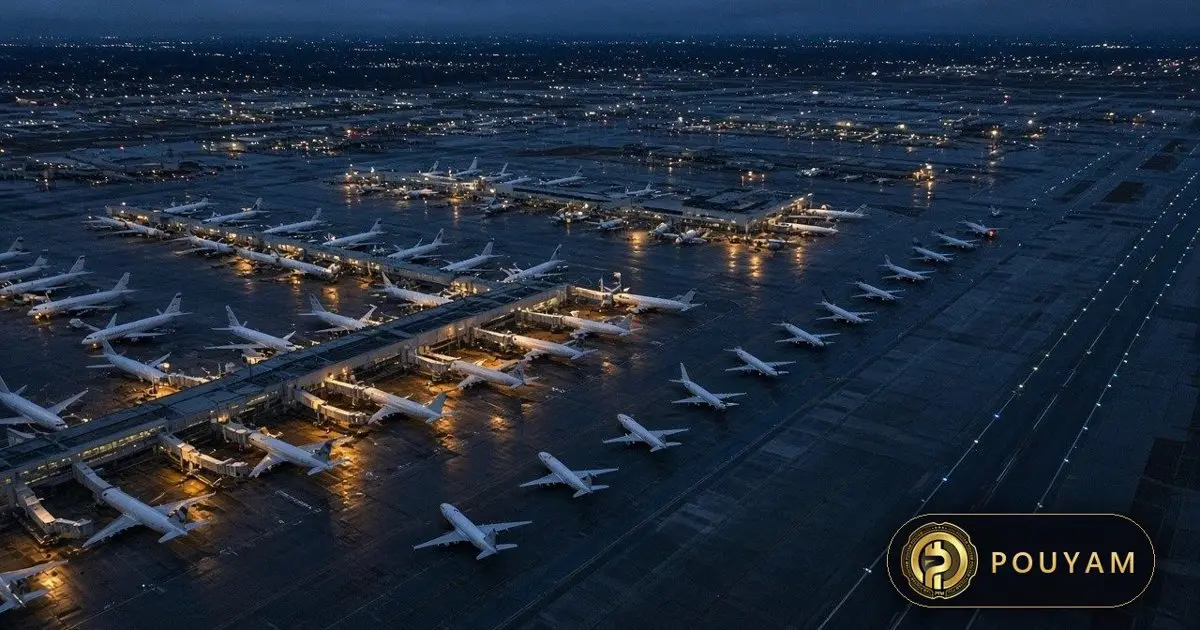
US flights were grounded on 13 November 2026 because a newly installed router flooded the FAA's air traffic control network, making radar and radio links with aircraft unstable at 17 of its 22 en route centers [5][6]. The FAA halted departures nationwide from 3:54 p.m. to 8:15 p.m. Eastern Time, and officials found no evidence of a cyberattack [3][4].
Key takeaways
- The FAA ordered a ground stop for all US airports at 3:54 p.m. ET (20:54 UTC) on Friday 13 November 2026 and lifted it at 8:15 p.m. ET [2][3].
- Controllers first saw inconsistent radar data and radio problems at 3:36 p.m. ET, according to Transportation Secretary Sean Duffy [3][4].
- Officials traced the fault to router work by FAA contractor L3Harris during a copper-to-fiber upgrade; one router sent more than 1,000 connection attempts every four to five seconds [5][6].
- Homeland Security said there was zero evidence of a cyberattack, while stressing that the investigation was not finished [4][5].
- About 9,200 US flights were cancelled on Friday and more than 6,400 on Saturday, according to FlightAware data cited by Reuters [5].
- It was the longest nationwide halt to US departures since the attacks of 11 September 2001 [4][5].
On this page 12 sections
- Why were US flights grounded on 13 November 2026?
- When did the FAA ground stop start and end?
- What caused the FAA outage?
- Was the FAA ground stop a cyberattack?
- How many flights were cancelled after the ground stop?
- How rare is a nationwide ground stop in the US?
- What does the ground stop mean for passengers?
- What happens next after the FAA outage?
- Common mistakes
- Frequently asked questions
- Glossary
- Sources
Why were US flights grounded on 13 November 2026?
US flights were grounded because the systems that carry radar data and radio contact between air traffic controllers and pilots became unstable, and the Federal Aviation Administration (FAA) stopped all departures as a precaution [1][3]. The FAA said in a short statement on Friday 13 November 2026 that it had issued a nationwide ground stop for all US airports after communication issues hit multiple Air Route Traffic Control Centers, the facilities that guide planes at cruising altitude [1].
A ground stop means aircraft that have not yet taken off must stay on the ground; planes already in the air continue to their destination. The official advisory from the FAA's Command Center said all departing traffic should remain ground stopped until further notice, while inbound international flights would be handled case by case [2].
Transportation Secretary Sean Duffy said controllers never completely lost radar or radio and were able to land thousands of planes safely, but the data had become unreliable [4]. FAA Administrator Bryan Bedford later explained that no facility went dark; the agency halted traffic because it was unwilling to risk a center losing contact with aircraft [6].
Medical flights, including those carrying organs for transplant, were allowed to continue during the stop [3].
When did the FAA ground stop start and end?
The nationwide ground stop ran from 3:54 p.m. to 8:15 p.m. Eastern Time on Friday 13 November 2026, just over four hours [3][4]. The FAA advisory lists the event as starting at 20:53 UTC and effective from 20:54 UTC [2]. The table below converts the key moments into other time zones.
The trouble started earlier: Duffy said instability in radar and communications appeared at 3:36 p.m. ET [3][4]. Bedford said officials were not sure what was causing it for about 45 minutes [6].
Reopening the airspace did not mean normal service. Duffy warned that departures would resume gradually, and Reuters reported that some aircraft at major airports waited more than five hours for a gate [4]. Bedford said he expected airline operations to largely return to normal by late Sunday 15 November [5].
What caused the FAA outage?
Officials blamed a router installed during routine maintenance by FAA contractor L3Harris Technologies, which flooded other routers in the air traffic control network with data [5][6]. Duffy said on Saturday 14 November that the work was part of an ongoing switch from copper wiring to fiber at at least one remote site [5][6].
According to Duffy, the router made more than 1,000 connection attempts every four to five seconds, which disrupted communication with aircraft and caused problems with radar feeds [5]. Reuters reported that the problem affected communications at 17 of the FAA's 22 en route centers [5]. The Professional Aviation Safety Specialists union, which represents FAA technicians, said the issue was isolated to two routers updated that Friday, and an official told Reuters they were believed to be in Arkansas and Texas [5].
The exact fault is not yet known. Duffy said investigators were working to determine whether it was user error, installer error, or a faulty router [5][6]. L3Harris said it was supporting the FAA's investigation and that it had completed more than 70% of the copper-to-fiber switch [6]. The FAA said it was running additional tests with the company to check for any further risks [5].
On Friday evening, before the cause was pinned down, Duffy described the overloaded switches and routers as a symptom of a decades-old system that relies on analog equipment [3][4].

Was the FAA ground stop a cyberattack?
As of 15 November 2026, officials say there is no evidence of a cyberattack, but they have not formally ruled one out [3][5]. Homeland Security Secretary Markwayne Mullin said there was zero evidence so far that the outage came from an attack or from a rogue automated system, adding that it appeared to be mechanically driven [4].
The National Security Agency worked with the Department of Homeland Security on the investigation, Mullin said, and the White House convened an emergency meeting in the Situation Room on Friday while agencies checked for hostile activity [4][5]. On Saturday, Bedford said there was zero evidence that anything nefarious had caused the problem [6].
A software company that supplies a new traffic-management tool to the FAA said publicly that its product was not involved, and Duffy said that tool was completely disconnected from the equipment that failed [3]. The router explanation given on Saturday points to a maintenance problem rather than an intrusion, but the final finding will come from the investigation.
How many flights were cancelled after the ground stop?
About 9,200 US flights were cancelled and 7,500 delayed on Friday, and more than 6,400 were cancelled and 8,000 delayed on Saturday, according to FlightAware figures reported by Reuters [5]. Counts differ by tracker and time of day; Flightradar24 put Friday's cancellations at nearly 10,000 by 11:30 p.m. [4].
Cancellations kept rising after the airspace reopened because planes and crews were in the wrong places. Many flights had diverted, aircraft were parked with limited gate space, and some crews reached their legal duty limits [3][6]. By 6 p.m. on Friday, Reagan Washington National Airport had run out of room to park aircraft, a source told NBC News [3].
Delta, United and American each cancelled about 25% of their flights on Saturday, while JetBlue cancelled nearly 45% [5]. Data firm Cirium said Friday had the second-highest number of US cancellations since a blizzard in January, and about 3 million people were scheduled to fly on Saturday [6]. FlightAware also showed 875 Sunday flights already cancelled by Saturday night [5]; CNBC later reported more than 2,000 cancellations on Sunday, as disruptions began to ease [6].
How rare is a nationwide ground stop in the US?
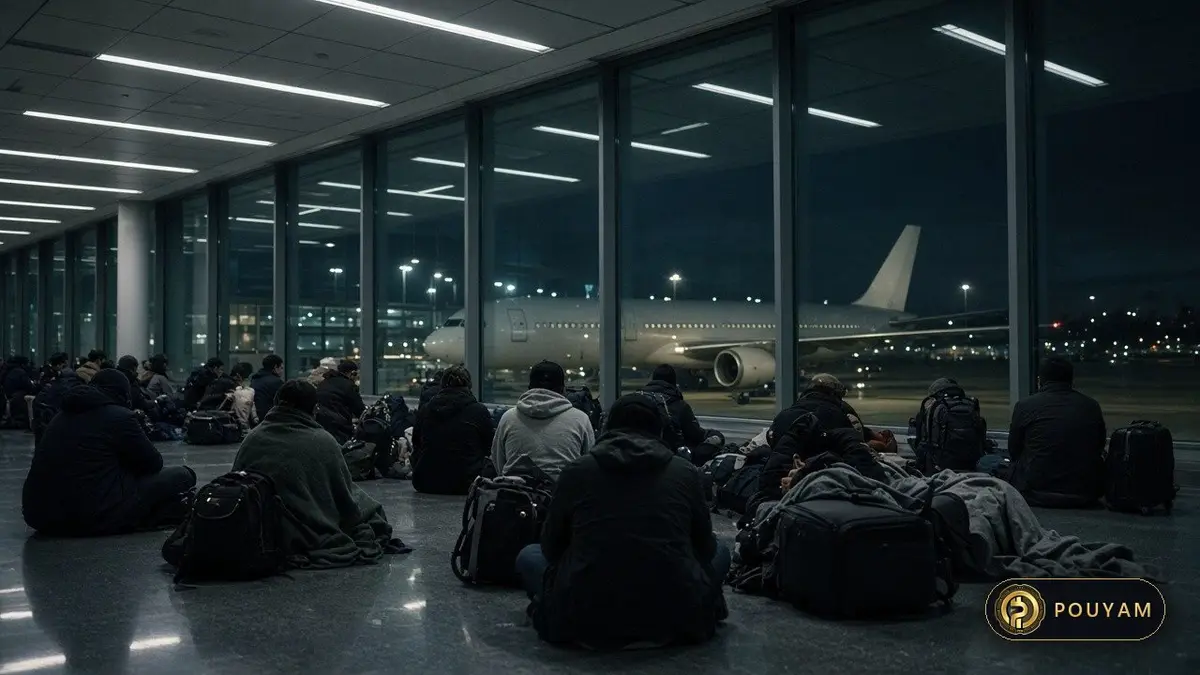
Very rare: this was only the second nationwide ground stop since the 11 September 2001 attacks, and the longest halt to departures since then [4][6]. After the attacks in 2001, the FAA halted all civilian air traffic and ordered planes in the air to land at the nearest airport [3].
The other recent case came in January 2023, when the FAA stopped domestic departures for about 90 minutes after a failure of the Notice to Air Missions system, which warns pilots about hazards [3][4]. Officials at the time blamed contract staff who accidentally deleted files [3].
Smaller failures have become more frequent. In May 2025, radar screens for flights at Newark went dark during a 90-second outage [3]. Reuters notes that the US system also faces a shortage of several thousand controllers [4][5].
What does the ground stop mean for passengers?
Travellers can usually rebook without change fees because airlines issued travel waivers, but carriers are not required to pay compensation because the FAA system, not the airline, failed [4][5]. American Airlines said it would change affected tickets without a fee or fare difference and cap some fares [6].
If your flight was cancelled, check the airline app or website first, because rebooking options appear there before airport queues clear. Waivers have date limits, so read the conditions before choosing a new date. If you decide not to travel, ask the airline about a refund for the unused ticket.
Hotel and meal vouchers depend on each airline's policy. Some airlines also offered crews extra pay to pick up trips over the weekend to rebuild schedules before the Thanksgiving period [6].
What happens next after the FAA outage?
The next steps are the investigation into the router fault, more testing of the L3Harris network and a fight in Congress over money to replace old air traffic equipment [5][6]. As of 15 November 2026, no final cause had been published.
Duffy called for $50 billion to modernize the system, up from an earlier request of $30.1 billion, after Congress approved $12.5 billion last year [4][5]. Representatives Rick Larsen and Andre Carson, who are due to lead the House transportation and aviation panels next year, said the department had awarded $4.3 billion in contracts from that money but spent only $1 billion, and promised hearings [5].
For travellers, the short-term test is whether schedules settle by late Sunday 15 November, as Bedford expects, before the busy Thanksgiving week [5]. The FAA said it tested its systems to confirm they were stable before clearing flights to resume [6].
| Moment | Eastern Time (ET) | UTC | Istanbul (UTC+3) |
|---|---|---|---|
| Radar and radio problems begin | 15:36, 13 Nov | 20:36, 13 Nov | 23:36, 13 Nov |
| Nationwide ground stop issued | 15:54, 13 Nov | 20:54, 13 Nov | 23:54, 13 Nov |
| Ground stop lifted | 20:15, 13 Nov | 01:15, 14 Nov | 04:15, 14 Nov |
| Expected return to normal (FAA) | late 15 Nov | late 15 Nov | early 16 Nov |
Common mistakes
Saying the FAA lost all radar and radio contact.
Fix: Officials said no facility went dark and nothing was fully lost; data became unstable, so departures were halted as a precaution [4][6].
Calling the outage a confirmed cyberattack.
Fix: Homeland Security said there was zero evidence of an attack, although the investigation continues [4][5].
Expecting cash compensation from the airline.
Fix: Airlines are not required to compensate passengers for an FAA failure, but waivers allow free rebooking [5][6].
Assuming flights were back to normal once the stop was lifted.
Fix: Cancellations continued into the weekend while planes and crews were repositioned [5][6].
Frequently asked questions
Why were all US flights grounded?
A router overload disrupted radar and radio links at FAA en route centers, so the FAA halted all departures for safety on 13 November 2026 [1][5].
How long did the FAA ground stop last?
From 3:54 p.m. to 8:15 p.m. Eastern Time on 13 November 2026, a little over four hours [3][4].
Was it a hack?
Officials say there is no evidence of a cyberattack, but the investigation has not formally ruled one out [4][5].
Who is L3Harris?
L3Harris Technologies is the FAA contractor that runs the telecommunications network involved; officials linked the fault to its router work [5][6].
How many flights were cancelled?
About 9,200 on Friday and more than 6,400 on Saturday, according to FlightAware data cited by Reuters [5].
When will flights be normal again?
The FAA head said he expected operations to largely return to normal by late Sunday 15 November [5].
Glossary
- Ground stop
- An FAA order that keeps aircraft on the ground at their departure airports until it is lifted.
- Air Route Traffic Control Center
- An FAA facility, also called an en route center, that controls aircraft at cruising altitude.
- Router
- A network device that directs data between computer systems; here, part of the network linking FAA facilities.
- Travel waiver
- An airline policy that lets affected passengers change flights without the usual fees.
Sources
- FAA Statement on Nationwide Ground Stop Federal Aviation Administration · 2026-11-13
- ATCSCC Advisory 111: National Ground Stop FAA Air Traffic Control System Command Center · 2026-11-13
- Thousands of flights canceled or delayed Saturday after FAA's nationwide ground stop NBC News · 2026-11-13
- US to resume flights after air traffic network failure sparks chaos Reuters · 2026-11-13
- US air travel disruptions to persist until late on Sunday, FAA head says Reuters · 2026-11-14
- DOT Sec. Duffy ties router in southern Arkansas to issues that led to nationwide ground stop CNBC · 2026-11-14




Comments
Top comments