
Starship Flight 15 Result: Did SpaceX Catch the Ship?
- 0 views
- 0 likes
- 0 comments
- All languages combined
In short
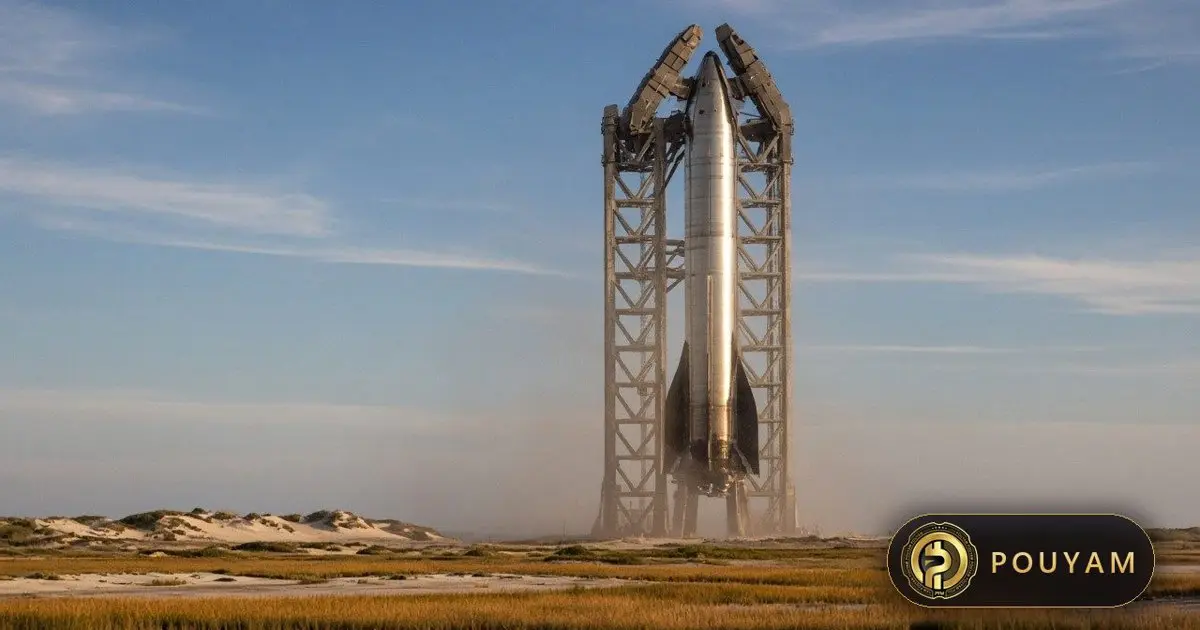
Yes: on 14 November 2026 at about 21:20 UTC, SpaceX caught the Starship upper stage with its launch-tower arms at Starbase, Texas, the first catch of a ship returning from orbit [2][5]. The Super Heavy booster was lost the day before after its boostback burn ended early and it aborted to the Gulf of Mexico [1][3].
Key takeaways
- Starship Flight 15 lifted off from Pad 2 at Starbase, Texas, at 22:47 UTC on 13 November 2026 [4].
- Ship 42 reached orbit, deployed 26 Starlink V3 satellites, flew 14 orbits and was caught by the tower's chopstick arms about 22.5 hours after launch [1][2][5].
- It was the first time SpaceX caught a Starship upper stage; the company had caught Super Heavy boosters on three earlier flights [2][3].
- Booster 22 relit 32 of 33 engines for its return burn, which ended early because of a low fuel mass alarm; it aborted the catch, hovered over the Gulf and was destroyed by its flight termination system [1][3].
- SpaceX says the root cause of the booster problem is still under investigation [1][3].
- The result is a partial success: one stage recovered, not the double catch SpaceX had planned [6][7].
On this page 11 sections
- Did SpaceX catch Starship on Flight 15?
- What time did Starship Flight 15 launch and land?
- What happened to the Super Heavy booster?
- What did Starship do in orbit?
- Why is catching the ship such a big deal?
- Was Starship Flight 15 a success or a failure?
- What happens after Starship Flight 15?
- Common mistakes
- Frequently asked questions
- Glossary
- Sources
Did SpaceX catch Starship on Flight 15?
Yes. The Starship upper stage, Ship 42, slid into the chopstick arms of the launch tower at Starbase, Texas, at about 4:20 p.m. EST (21:20 UTC) on Saturday 14 November 2026 [2][5]. It was the first time SpaceX had caught a Starship coming back from orbit [2][5]. The ship had launched from the same pad about 22.5 hours earlier [2].
SpaceX had caught its Super Heavy booster three times before, but never the upper stage, which flies higher and returns much faster, so it is the harder target [2][3]. Space.com quoted SpaceX commentator Dan Huot during the landing webcast: "We caught a Starship, and now everything changes" [2].
The flight was not a complete success. The plan was a double catch, booster and ship, and the booster was lost a few minutes after liftoff on 13 November [1][6]. The Verge described the result as a milestone even though the company could not recover the entire vehicle [6].
The pre-flight plan, the launch window and the double-catch idea are explained in the Pouyam guide Starship Flight 15: Launch Time, Double Catch and Status. This guide covers what actually happened.
What time did Starship Flight 15 launch and land?
Starship lifted off at 22:47 UTC on Friday 13 November 2026 (4:47 p.m. CST in Texas), and the ship was caught at about 21:20 UTC on Saturday 14 November [2][4]. The table below converts both moments into several time zones.
The ship's descent began with a 10-second single-engine deorbit burn at about 3:23 p.m. EST (18:23 UTC) on 14 November, which SpaceX said went according to plan [2]. Before that, flight controllers made a final check at the 20-hour mark to decide between a landing at Starbase and an early splashdown off Hawaii, and every team polled go [2][3].
Times for other cities are simple conversions of the UTC times reported by Space.com and Spaceflight Now [2][4]. Readers in Iran and Türkiye saw the catch just after midnight on 15 November local time.
What happened to the Super Heavy booster?
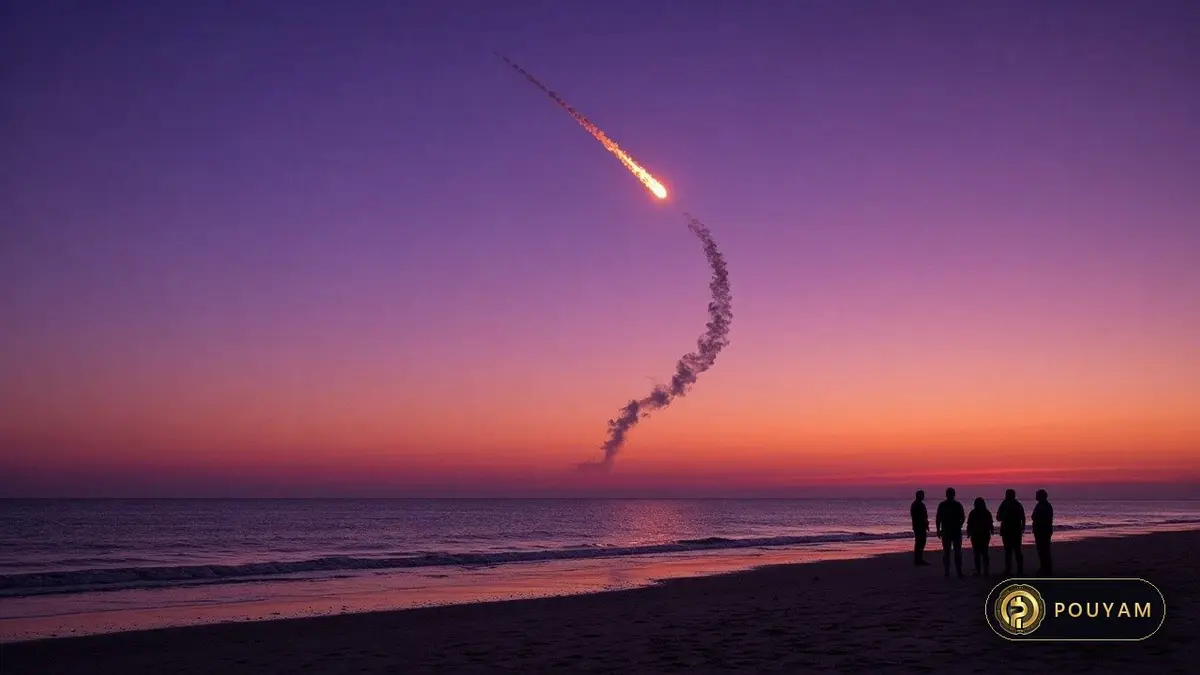
The booster, Booster 22, was destroyed over the Gulf of Mexico about 6.5 minutes after liftoff, after it aborted its planned catch at the tower [3][4]. SpaceX's official flight summary says it relit 32 of the planned 33 Raptor engines for the boostback burn, the burn that turns it back towards the launch site, and that this burn ended early because of low fuel mass [1].
Its guidance, navigation and control system then detected that the booster was not where it needed to be and triggered an automated abort during the coast, sending it to an offshore landing point instead [1][3]. The booster performed a landing burn and hovered over the water; when its engines shut down, the flight termination system, a safety system designed to destroy a vehicle in an emergency, was triggered [1][3].
On the first night, Huot said a guidance issue appeared to be the cause; the next day he corrected himself, saying guidance had worked as intended and had only reacted to the booster being in the wrong place [3]. SpaceX's Kate Tice said early indications pointed to the low fuel mass alarm and that the root cause was still being investigated [3][7].
Spaceflight Now noted that three earlier boosters had been caught by the tower, but that Version 3 of Super Heavy had not yet made a successful return [4].
What did Starship do in orbit?
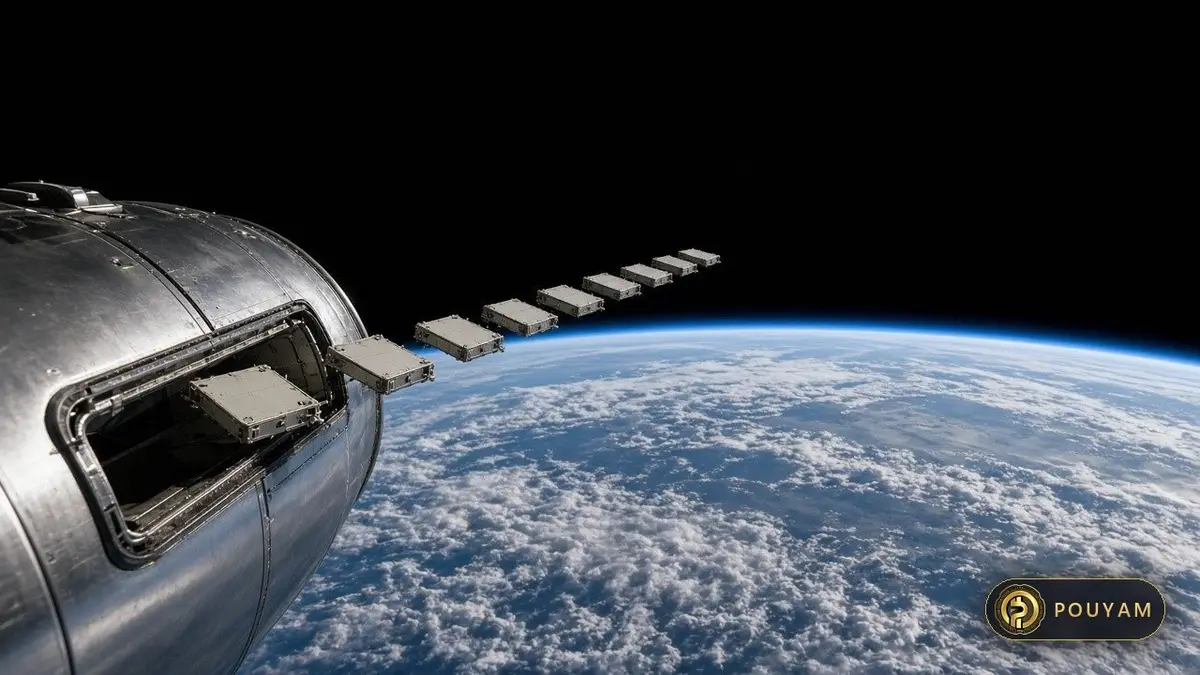
After separating from the booster, Starship reached orbit with a single-engine insertion burn, deployed 26 Starlink V3 satellites and stayed in space for more than 20 hours [1]. SpaceX says contact was made with every satellite and that they had begun raising their orbits to join the Starlink network [1].
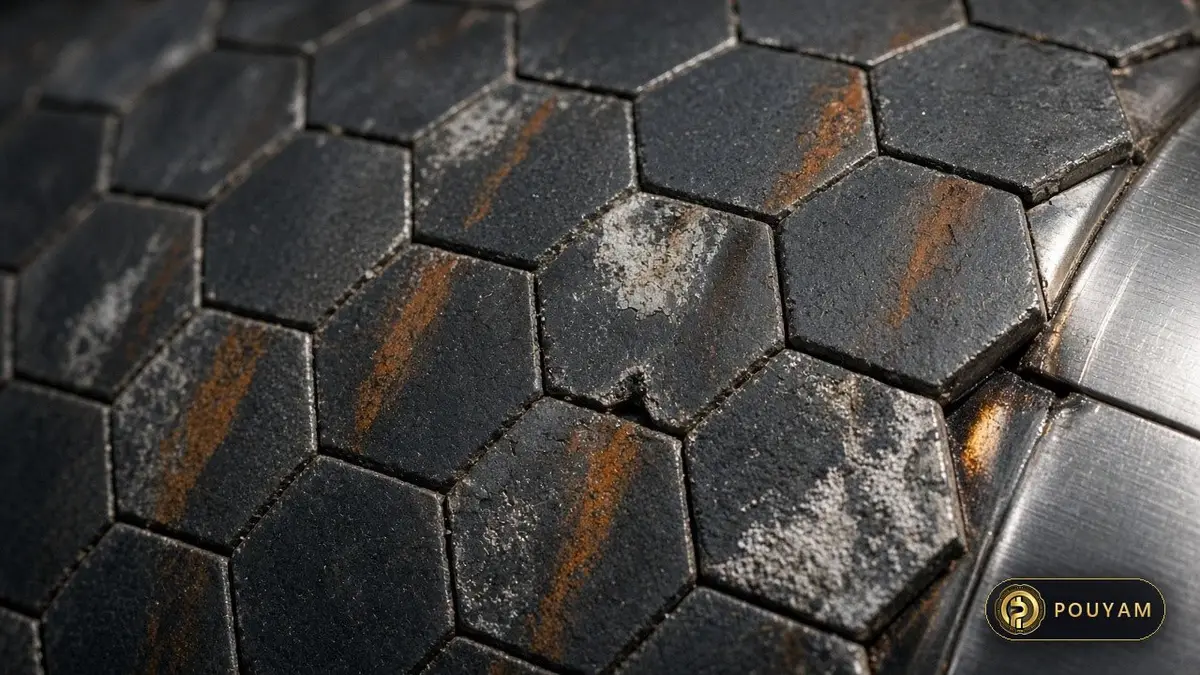
Some of those satellites carried cameras used to inspect the ship's heat shield from outside, and SpaceX said the heat-shield team reviewed that imagery and ground-camera data before clearing the vehicle for re-entry [3]. CNBC reported that the ship flew around the Earth 14 times before landing on the tower, which SpaceX nicknames Mechazilla [5].
The payload was a real one: SpaceX's newest Starlink V3 satellites [5][7]. For background on the network itself, see the Pouyam guide Starlink Explained.
Why is catching the ship such a big deal?
Catching both stages is the core of SpaceX's plan to make Starship fully and rapidly reusable, and the upper stage was the missing half [2][7]. Aerospace America reported that the primary objectives were the catch of both stages and the deployment of the 26 satellites [7].
A booster returns a few minutes after launch from a relatively low altitude. The ship, by contrast, comes back from orbit at very high speed, has to survive the heat of re-entry and then flip and slow down precisely enough to be grabbed by arms on a tower [2]. Recovering it intact, rather than letting it fall into the ocean, is what would let the same vehicle fly again.
Before the flight, SpaceX CEO Elon Musk had said on the company's third-quarter earnings call that success was not guaranteed on these first flights, but that he thought it more likely than not, as The Verge reported [6]. The ship catch confirmed that part of the plan; the booster loss shows the system is not yet reliable from start to finish.
A caught ship is not automatically a reusable one: engineers still have to inspect the heat shield, engines and structure before anyone can say how much work is needed to fly it again.
Was Starship Flight 15 a success or a failure?
It was a partial success: the hardest new goal, the ship catch, worked, while the booster recovery, which SpaceX had achieved before with older boosters, failed [2][3][6]. The table in the next section lists each objective and its result.
On the positive side, the vehicle reached orbit, delivered a real payload of 26 satellites, completed a long coast of 14 orbits, relit an engine in space for the deorbit burn and returned to the launch site [1][5]. These steps are exactly what a reusable orbital rocket needs.
On the negative side, the booster did not return, and the cause of its low fuel mass reading is still unknown as of 15 November 2026 [1][3]. The Verge noted that, because boosters had been caught before, there is reason to think the problem is not insurmountable, but that is a judgement, not a finding [6].
What happens after Starship Flight 15?
SpaceX first has to find the root cause of the booster's early boostback shutdown; as of 15 November 2026 the company says that work is ongoing [1][3]. No date for Flight 16 had been announced in the sources available on that day.
The Federal Aviation Administration (FAA) licenses Starship launches. After Flight 12 in May 2026, when a Super Heavy booster suffered a mishap and crashed into the Gulf of Mexico, the FAA ordered a SpaceX-led investigation, said it would oversee it and said it would approve the company's final report [8]. Whether the agency will classify the Flight 15 booster loss as a mishap had not been reported as of 15 November; no FAA statement on Flight 15 had been reported as of that date.
Engineers will also study Ship 42 itself. A vehicle that comes back intact gives SpaceX data that a splashdown never could, such as how the heat shield and flaps look after a full orbital re-entry.
For readers following the programme, the most reliable sources are SpaceX's own flight page, which publishes an official summary after each mission, and the FAA's statements on any investigation [1][8].
| Event | UTC | Texas (CST) | Istanbul (UTC+3) | Tokyo (UTC+9) |
|---|---|---|---|---|
| Liftoff | 22:47, 13 Nov | 16:47, 13 Nov | 01:47, 14 Nov | 07:47, 14 Nov |
| Booster lost over the Gulf | about 22:54, 13 Nov | about 16:54, 13 Nov | about 01:54, 14 Nov | about 07:54, 14 Nov |
| Deorbit burn | about 18:23, 14 Nov | about 12:23, 14 Nov | about 21:23, 14 Nov | about 03:23, 15 Nov |
| Ship caught by the tower | about 21:20, 14 Nov | about 15:20, 14 Nov | about 00:20, 15 Nov | about 06:20, 15 Nov |
| Objective | Result |
|---|---|
| Launch and stage separation | Achieved [1] |
| Booster return and tower catch | Failed: boostback ended early, booster destroyed offshore [1][3] |
| Reach orbit | Achieved with a single-engine insertion burn [1] |
| Deploy 26 Starlink V3 satellites | Achieved; all satellites in contact [1] |
| Deorbit burn and re-entry | Achieved [1][2] |
| Ship tower catch | Achieved, a first [2][5] |
Common mistakes
Saying Flight 15 achieved the double catch.
Fix: Only the ship was caught; the booster aborted and was destroyed over the Gulf of Mexico [1][3].
Blaming the booster loss on a guidance failure.
Fix: SpaceX corrected that: guidance triggered a correct abort after the boostback burn ended early on low fuel mass [3].
Treating the ship catch as proof that Starship is already reusable.
Fix: The ship must still be inspected and refurbished; reuse has not yet been shown on this vehicle.
Quoting the launch time in the wrong zone.
Fix: Use 22:47 UTC on 13 November, which was 4:47 p.m. CST in Texas [4].
Frequently asked questions
Did SpaceX catch Starship?
Yes, the Ship 42 upper stage was caught by the tower arms at Starbase at about 21:20 UTC on 14 November 2026 [2][5].
Did the Super Heavy booster survive?
No. Booster 22 aborted its catch, hovered over the Gulf of Mexico and was destroyed by its flight termination system [1][3].
Why did the booster abort?
Its boostback burn ended early because of a low fuel mass alarm, so guidance found it out of position; the root cause is still under investigation [1][3].
How long was Starship Flight 15?
About 22.5 hours from liftoff to the ship catch, including 14 orbits of the Earth [2][5].
How many satellites did Starship deploy?
26 Starlink V3 satellites, all of which made contact with SpaceX [1].
Glossary
- Chopsticks
- The two large mechanical arms on SpaceX's launch tower that catch returning Starship stages.
- Boostback burn
- An engine burn that reverses the booster's direction so it can fly back to the launch site.
- Flight termination system
- A safety system that destroys a rocket stage if it leaves its safe flight path or must be disposed of.
- Deorbit burn
- An engine burn that slows a spacecraft so it leaves orbit and falls back into the atmosphere.
Sources
- Starship Flight 15 SpaceX · 2026-11-14
- SpaceX Starship Flight 15 live updates: Starship lands from orbit for 1st time Space.com · 2026-11-14
- SpaceX still investigating why Starship Flight 15 booster aborted 'chopsticks' landing catch Space.com · 2026-11-14
- Starship returns to Starbase and a successful tower catch Spaceflight Now · 2026-11-13
- SpaceX catches upper stage of Starship rocket in historic first CNBC · 2026-11-14
- Watch SpaceX successfully execute the first 'chopstick' catch of Starship The Verge · 2026-11-14
- SpaceX achieves first Starship tower catch Aerospace America (AIAA) · 2026-11-14
- FAA orders SpaceX to investigate Starship booster mishap Reuters · 2026-05-27


Comments
Top comments