In short
On 28 October 2026, T-Mobile CEO Srini Gopalan said he sees “no room for an MVNO with SpaceX” [1][2], rejecting a proposed arrangement but staying open to satellite resale deals like T-Satellite. T-Mobile has not announced an end to its Starlink partnership [3].
Key takeaways
- On 28 October 2026 T-Mobile CEO Srini Gopalan said he sees “no room for an MVNO with SpaceX”, rejecting a potential arrangement, and T-Mobile has not announced an end to its Starlink partnership [1][3].
- Gopalan said T-Mobile is open to a resale deal for a complementary product, “exactly what T-Satellite was” [1][2].
- SpaceX's Direct to Cell constellation was over 400 satellites in February 2025 and, according to T-Mobile, more than 650 by 1 October 2025 [4][5].
- T-Mobile said in January 2026 that T-Satellite serves more than 150,000 Americans every day and powers data on 34 apps [6].
- The FCC approved the sale of roughly 65 MHz of EchoStar spectrum to SpaceX in May 2026, and on 6 October 2026 the FCC Space Bureau granted SpaceX a 15,000-satellite direct-to-cell system [7][8].
- Satellite data is limited: T-Mobile says some apps may not work, and BGR cites an estimate of about 4 Mbps in fair conditions [5][9].
On this page 13 sections
- Did T-Mobile reject a deal with SpaceX?
- What is Starlink Direct to Cell and how does it work?
- How does satellite texting work on a normal phone?
- What is T-Satellite and what does it cost?
- Why is satellite-to-phone service regulated by the FCC?
- What has SpaceX secured for its own direct-to-cell network?
- Is satellite really “inferior” to towers, and who is right?
- Can satellite texting replace a dedicated satellite messenger?
- What happens next for T-Mobile, SpaceX and satellite-to-phone service?
- Common mistakes
- Frequently asked questions
- Glossary
- Sources
Did T-Mobile reject a deal with SpaceX?
Partly. On T-Mobile’s third-quarter 2026 earnings call, held on 28 October 2026, CEO Srini Gopalan said he sees “no room for an MVNO with SpaceX”, on either the consumer side or the physical and edge AI side [1][2]. An MVNO (mobile virtual network operator) is a company that sells wireless service using wholesale access to another carrier’s network [1][2]. The rejection was of that kind of arrangement, not of satellite service as such [3].
Was an existing deal cancelled?
No. The October 2026 comments concerned a potential MVNO arrangement. They were not the cancellation of an existing signed deal, and T-Mobile has not announced an end to its Starlink partnership [3]. T-Satellite, the service most readers know, is a separate product powered by Starlink Direct to Cell (see below) [5].
Why did T-Mobile say no?
Gopalan’s criteria for such deals are unchanged, according to Yahoo Finance (Stocktwits): additional customers, new distribution channels or new capabilities. He said he sees no room for an MVNO with SpaceX [1]. Wccftech reports that T-Mobile sees no “incremental TAM” (total addressable market) in such a deal, and quotes Gopalan as saying T-Mobile still sees “huge growth opportunities” among fixed wireless customers in dense urban areas [10].
On satellite itself, Wccftech reports that Gopalan said that, except in some deep rural areas, satellite is “an inferior version of FWA” (fixed wireless access), with more constraints, including the size of the beam [10]. Rolling Out likewise reports that he called satellite inferior [2].
What did T-Mobile leave open?
Gopalan said T-Mobile is open to a resale arrangement for a complementary product, “exactly what T-Satellite was” [1][2]. Gopalan drew that line himself, describing an MVNO, which gives wholesale access to a network, as a wholly different thing from a resale arrangement [1].
Was this the first refusal?
No. Outlets describe the comments as a repeat rejection (“again”) of a SpaceX network deal [1][2][10]. Yahoo Finance (Stocktwits) reports that Gopalan had already questioned a Starlink MVNO at a Morgan Stanley conference in March and again on T-Mobile’s April earnings call, without stating the year [1]. The same report quotes Verizon’s CEO as seeing no benefit in extending an MVNO deal to any satellite provider [1].
What is Starlink Direct to Cell and how does it work?
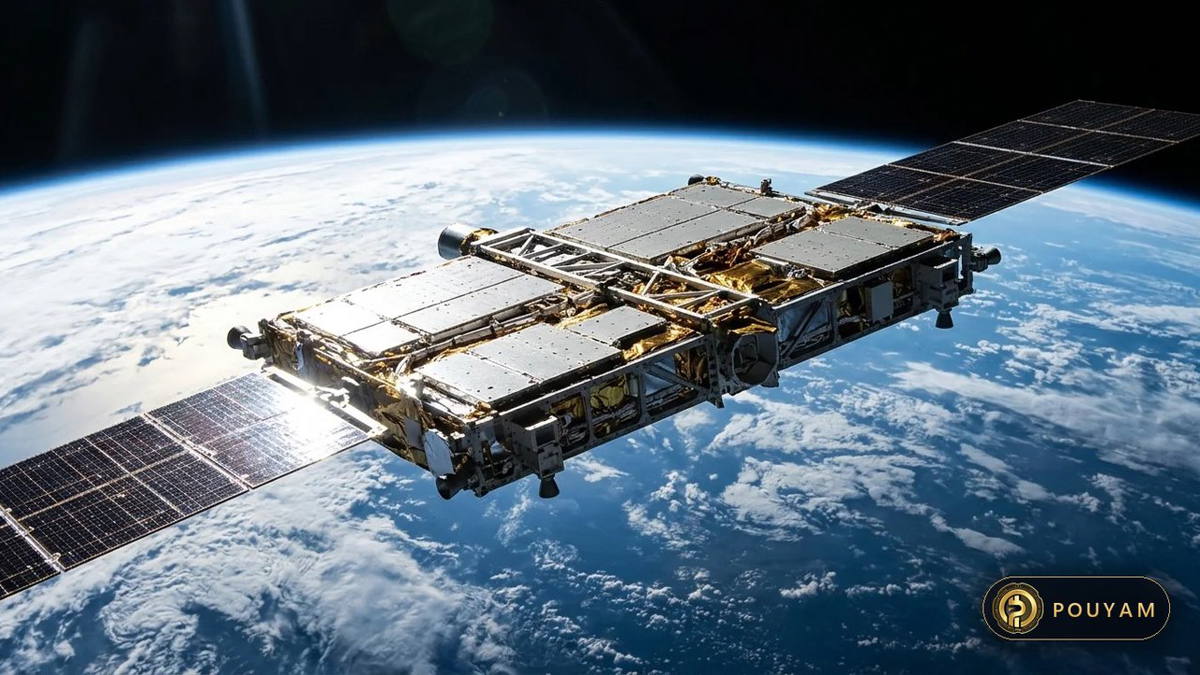
Direct to Cell is SpaceX’s service that connects Starlink satellites straight to ordinary mobile phones. SpaceX describes the satellites as functioning essentially as cell towers in space, orbiting a few hundred kilometres up [4]. It launched its first Direct to Cell satellites in January 2024 and by February 2025 had scaled the network to a constellation of over 400 satellites [4]. When T-Mobile added satellite data for apps on 1 October 2025, it said the service was powered by more than 650 Starlink Direct to Cell satellites [5]. Taken at face value, that is roughly 250 more satellites in about eight months.
Why can ordinary phones connect?
The mechanism is spectrum, the radio frequencies licensed for mobile service. Under the FCC’s Supplemental Coverage from Space (SCS) framework, satellites talk directly to unmodified cell phones using a mobile network operator’s spectrum, to “supplement” the reach of that operator’s network [11]. Because the phone is unmodified, it needs no extra satellite hardware [11].
What does the phone need?
BGR reports that T-Satellite is delivered through an eSIM and requires a compatible phone with support for T-Mobile LTE bands [9]. BGR also says speeds are limited and coverage can be patchy, and it cites an estimate from the Universidad Politécnica de Madrid and Weplan Analytics of about 4 Mbps in fair conditions [9].
How does satellite texting work on a normal phone?
When regular cell service is lost, the satellite connection starts automatically within a few seconds, according to Backpacker’s review of T-Satellite [12]. At the time of that review, T-Mobile was the only US carrier partnered with Starlink for this service [12]. In effect, the satellite link is a fallback that takes over when ground coverage is gone [12].
Worked example: a hiker on a trail beyond tower range carries a compatible phone on T-Satellite. According to Backpacker, the phone would move to the satellite connection within seconds [12]. T-Mobile said the service would include texting, picture messaging and 911 texting via satellite [13].
What can you do over satellite?
In June 2025 T-Mobile said T-Satellite would be commercially available on 23 July 2025 after a beta. It said the launch would include SMS texting, MMS, picture messaging, short audio clips (Android first, iOS to follow) and 911 texting via satellite [13]. By 1 October 2025 T-Mobile had added satellite data for apps such as WhatsApp, AllTrails, AccuWeather, Google Maps, T-Life and X [5].
Which phones can use satellite data?
T-Mobile says most satellite-capable devices running the latest software, such as Android 16 or iOS 26, can use it [5].
How fast is it?
T-Mobile says only that data speeds are limited and that some apps may not work or may work differently [5]. Backpacker cites a July 2025 study estimating average Starlink Direct to Cell speeds of about 3 Mbps, against about 704 Kbps for Garmin’s Iridium network [12]. That study is not named, so treat the figures as the outlet’s claim. BGR cites a different estimate of about 4 Mbps in fair conditions [9].
As idealised arithmetic that ignores overhead and signal quality, a 1 MB photo is 8 megabits. At 3 Mbps that takes about 2.7 seconds, and at 704 Kbps about 11 seconds. Real-world results will differ.
What is T-Satellite and what does it cost?
T-Satellite is T-Mobile’s satellite-to-phone service, powered by Starlink Direct to Cell [5]. In June 2025 T-Mobile said it would launch commercially on 23 July 2025 [13]. Backpacker reports it costs $10 per month, either as an add-on to T-Mobile plans or as a standalone service for people who are not T-Mobile customers [12]. That price comes from 2025 coverage, so check current plan terms with T-Mobile.
How many people use it?
In January 2026 T-Mobile said T-Satellite serves more than 150,000 Americans every day and powers data on 34 apps, about six months after the July 2025 launch [6]. These are company figures, not independent counts.
Where does it work?
T-Mobile has said Starlink enables smartphone connectivity in parts of the US that will probably never have ground-based cellular coverage [14]. BGR reports that the service can also be used in Australia, Canada, Japan and New Zealand, though texting emergency services in Japan is not possible [9]. Confirm the country list on T-Mobile’s own coverage page before travelling.
What are the limits?
Speeds are limited and coverage can be patchy [9]. Some apps may not work or may work differently [5]. The table below summarises the service as described in the sources.
Why is satellite-to-phone service regulated by the FCC?
Because the FCC sets the rules for satellites that use mobile spectrum, the radio frequencies licensed for wireless service. The FCC adopted its Supplemental Coverage from Space framework in March 2024. In an order released in November 2024 it approved SpaceX to run direct-to-cell service with T-Mobile, its first SCS approval [11]. Under SCS, satellites use a carrier’s spectrum [11].
What is the FCC deciding now?
CNBC reported on 7 October 2026 that the FCC would vote on 29 October 2026 on a proposal to auction 25 MHz of “prime spectrum” for direct-to-device services. It would also vote on taking public comment on making an additional 482 MHz available for supplemental coverage from space [8]. Rolling Out reports that the day after T-Mobile’s earnings call the FCC voted to propose opening hundreds of megahertz of new spectrum to satellite service delivered straight to phones [2]. Because these votes concern proposals and public comment, the final rules and auction terms are not yet in the sources.
Why does spectrum matter so much?
This is analysis rather than a sourced finding. Under SCS the satellite uses a carrier’s spectrum [11]. SpaceX’s own spectrum purchase, described in the next section, changes that starting point. That is background to the dispute, but none of the sources states that it is the reason T-Mobile refused an MVNO deal.
What has SpaceX secured for its own direct-to-cell network?
The sources point to spectrum and scale. In May 2026 the FCC approved EchoStar’s sale of roughly 65 MHz of spectrum to SpaceX and up to 50 MHz to AT&T. The two sales are reported together as about $40 billion, and EchoStar had agreed to them in September 2025 [7][15]. The approval came with a $2.4 billion escrow condition on EchoStar, covering amounts it may owe in disputes over work under the licences [14][7].
What did the spectrum purchase change?
Ex Terra Media reports that it is the first time SpaceX has obtained exclusive-use, contiguous spectrum nationwide, and that the FCC granted waivers letting SpaceX use it flexibly [15]. The spectrum may be used across terrestrial, space-based and hybrid network architectures [15][7]. Under its SCS approval for T-Mobile, by contrast, the satellites used a carrier’s spectrum [11].
Wccftech lists what it calls SpaceX’s terrestrial spectrum as around 15 MHz of unpaired AWS-3, around 40 MHz of AWS-4 and around 10 MHz of H-block, all nationwide, plus around 14 MHz paired in the 800 MHz band [10].
What did the FCC approve in October 2026?
On Tuesday 6 October 2026 the FCC Space Bureau granted SpaceX’s application for a new direct-to-cell system of 15,000 satellites. The FCC said the constellation will use the spectrum SpaceX bought from EchoStar [8].
Is the timing connected to the T-Mobile refusal?
Gopalan’s remarks on 28 October 2026 came three weeks after that grant [1][8]. The sources do not say whether the two are linked, so this guide does not claim they are.
Is satellite really “inferior” to towers, and who is right?
The “inferior” label is Gopalan’s, as reported by Wccftech, and it is a comparison with fixed wireless, not a measurement [10]. He said that, except in some deep rural areas, satellite is “an inferior version of FWA” with more constraints, including beam size [10]. SpaceX’s side of the argument is not covered by a source this guide could check, but its regulatory moves show heavy investment in direct-to-cell: spectrum purchases and a 15,000-satellite system [7][8]. The sourced evidence supports parts of both positions.
Where satellite helps
- Reach. T-Mobile has said Starlink enables smartphone connectivity in parts of the US that will probably never have ground-based cellular coverage [14].
- No special hardware. Satellites talk to unmodified phones under the SCS framework [11].
- Automatic fallback. The connection starts within a few seconds of losing regular service [12].
- Emergency texting. 911 texting via satellite was part of the announced commercial launch [13].
Where satellite falls short
- Speed and app support. T-Mobile says speeds are limited and some apps may not work or may work differently [5].
- Patchy coverage. BGR says coverage can be patchy [9].
- Constraints versus fixed wireless. Gopalan pointed to constraints such as beam size, and said satellite is inferior to fixed wireless outside deep rural areas [10].
The honest reading: satellite is a supplement to towers today, as the SCS name itself says [11]. Whether it can become more than that is not demonstrated in the sources.
Can satellite texting replace a dedicated satellite messenger?
Not entirely, according to Backpacker. The outlet calls T-Satellite the most fully featured satellite service yet but advises against dropping a dedicated satellite messenger such as a Garmin [12]. Its cited July 2025 study estimates about 3 Mbps average for Starlink Direct to Cell against about 704 Kbps for Garmin’s Iridium network, though the study is not named [12]. Speed is not the only question.
What the phone-based route requires
A compatible phone with T-Mobile LTE band support and an eSIM [9], and for app data, a device running the latest software, such as Android 16 or iOS 26 [5].
Practical takeaway
For casual trips near the edge of coverage, phone satellite texting may be enough. For remote travel where help is far away, Backpacker’s advice is to keep the dedicated device [12].
What happens next for T-Mobile, SpaceX and satellite-to-phone service?
Several questions are open, and the sources do not settle them.
- The FCC process. The 25 MHz auction proposal and the comment process on an additional 482 MHz were put to a vote on 29 October 2026 [8][2]. The final rules are not yet known.
- Carrier responses. AT&T also bought spectrum from EchoStar, up to 50 MHz [7]. How AT&T, Verizon and T-Mobile respond to SpaceX’s own network is unknown.
- T-Mobile’s stance. It rejected an MVNO but not resale [1][2]. Whether that line holds as SpaceX’s own network grows is unclear.
- Exact wording. Reports of Gopalan’s remarks come from news coverage, so a full earnings-call transcript would settle the precise wording.
- Real-world speed. Published estimates range from about 3 to about 4 Mbps and come from different studies [12][9].
What does this mean for readers in Iran?
No source reviewed for this guide addresses satellite-to-phone service for people in Iran, so this guide does not speculate. T-Satellite is a US carrier product [5], and questions about filtering, legality, payment and sanctions are unanswered here. Readers should check the provider’s current terms and local law rather than assume access.
| Feature | Detail |
|---|---|
| Commercial launch | T-Mobile said in June 2025 it would launch commercially on 23 July 2025, after a beta [13] |
| Price | $10 per month as an add-on or standalone, per a 2025 report; confirm current terms [12] |
| Texting and emergency | SMS, MMS, picture messaging, short audio clips (Android first) and 911 texting announced for launch [13] |
| App data | Added by 1 October 2025; apps include WhatsApp, AllTrails, AccuWeather, Google Maps, T-Life and X [5] |
| Device requirements | Most satellite-capable devices on the latest software, such as Android 16 or iOS 26, for data [5]; eSIM and T-Mobile LTE bands [9] |
| Reported usage | More than 150,000 Americans a day and 34 apps, about six months after launch [6] |
| Estimated average speed | About 3 Mbps from an unnamed July 2025 study cited by Backpacker [12]; about 4 Mbps in fair conditions in an estimate cited by BGR [9] |
| Date | Event |
|---|---|
| January 2024 | SpaceX launches its first Direct to Cell satellites [4] |
| March 2024 | FCC adopts its Supplemental Coverage from Space framework [11] |
| November 2024 | FCC order approves SpaceX direct-to-cell service with T-Mobile, its first SCS approval [11] |
| February 2025 | Constellation grows to over 400 satellites [4] |
| 23 July 2025 | Launch date T-Mobile announced in June 2025 for commercial T-Satellite service [13] |
| 1 October 2025 | Satellite data for apps launches; more than 650 satellites in service [5] |
| 12 May 2026 | FCC announces approval of EchoStar spectrum sales to SpaceX and AT&T [15][7] |
| 6 October 2026 | FCC Space Bureau grants SpaceX a 15,000-satellite direct-to-cell system [8] |
| 28 October 2026 | T-Mobile CEO says he sees no room for an MVNO with SpaceX [1][2] |
| 29 October 2026 | FCC votes to propose opening more spectrum to satellite-to-phone service [2][8] |
Common mistakes
Assuming T-Mobile cancelled its existing deal with SpaceX and that T-Satellite is ending.
Fix: Read the detail: the sources describe a rejected proposal for an MVNO arrangement. T-Mobile has not announced an end to its Starlink partnership [3], and the CEO said he is open to resale deals like T-Satellite [1].
Expecting satellite data to feel like 5G or home broadband.
Fix: Treat satellite as a fallback for texting and light app use. T-Mobile itself says data speeds are limited and some apps may not work or may work differently [5].
Assuming any phone will connect to Starlink Direct to Cell.
Fix: Check that the phone supports T-Mobile LTE bands and can use an eSIM [9]. For app data, T-Mobile says most satellite-capable devices running the latest software, such as Android 16 or iOS 26, work [5].
Dropping a dedicated satellite messenger for backcountry trips because the phone now has satellite texting.
Fix: Backpacker calls T-Satellite the most fully featured satellite service yet but still advises against dropping a dedicated satellite messenger such as a Garmin [12].
Treating a carrier executive's view of satellite as a settled technical verdict.
Fix: Read Gopalan's remarks as T-Mobile's position, as reported by Wccftech [10], and compare them with measured speed and coverage data rather than treating them as a neutral benchmark.
Relying on old pricing or country coverage without checking.
Fix: The $10 per month price comes from Backpacker's 2025 coverage and the country list from BGR (October 2026). Confirm both with T-Mobile before relying on them [12][9].
Frequently asked questions
Did T-Mobile reject SpaceX?
On 28 October 2026 CEO Srini Gopalan said he sees “no room for an MVNO with SpaceX” [1][2]. That rejected a potential wholesale-network arrangement. T-Mobile has not announced an end to its Starlink partnership [3], and Gopalan said he is open to a resale deal for a complementary product, “exactly what T-Satellite was” [1].
Is T-Mobile ending its Starlink partnership?
No end has been announced. Coverage of the October 2026 comments describes the rejection of a potential MVNO deal, not the cancellation of an existing agreement [3]. T-Satellite is powered by Starlink Direct to Cell [5], and in January 2026 T-Mobile said it serves more than 150,000 Americans every day [6].
Why won't T-Mobile give SpaceX an MVNO deal?
Gopalan’s criteria for such deals are unchanged: additional customers, new distribution channels or new capabilities, and he said he sees no room for an MVNO with SpaceX [1]. Wccftech reports that T-Mobile sees no “incremental TAM” in such a deal, and quotes Gopalan as seeing “huge growth opportunities” among fixed wireless customers in dense urban areas [10].
How does satellite texting work on a phone?
Backpacker reports that when regular cell service is lost, the satellite connection starts automatically within a few seconds [12]. SpaceX describes the satellites as essentially cell towers in space, orbiting a few hundred kilometres up [4], and they use a carrier's spectrum so unmodified phones can connect [11]. T-Mobile says speeds are limited [5].
How much does T-Satellite cost?
Backpacker reports T-Satellite costs $10 per month, either as an add-on to T-Mobile plans or as a standalone service for people who are not T-Mobile customers [12]. That figure comes from 2025 coverage, so confirm current pricing and plan terms with T-Mobile before relying on it. BGR says the service is delivered through an eSIM [9].
Do I need a special phone for Starlink direct to cell?
A compatible phone is needed, but not special satellite hardware. BGR reports T-Satellite is delivered through an eSIM and requires support for T-Mobile LTE bands [9]. For app data, T-Mobile says most satellite-capable devices running the latest software, such as Android 16 or iOS 26, can use it [5]. The FCC framework covers satellites talking to unmodified phones [11].
What is supplemental coverage from space?
Supplemental Coverage from Space (SCS) is an FCC framework, adopted in March 2024, under which satellites talk directly to unmodified cell phones using a mobile network operator's spectrum, to “supplement” the reach of that operator's network [11]. In November 2024 the FCC gave SpaceX its first SCS approval, for service with T-Mobile [11].
Can satellite replace my cell phone provider?
Not on the evidence in these sources. The SCS framework is named for supplementing a carrier's network [11], BGR says speeds are limited and coverage can be patchy [9], and T-Mobile says some apps may not work [5]. Gopalan called satellite, except in deep rural areas, an inferior version of fixed wireless [10].
Glossary
- Direct to Cell
- Direct to Cell is SpaceX's Starlink service in which satellites connect straight to ordinary mobile phones, acting like cell towers in space.
- Supplemental Coverage from Space (SCS)
- Supplemental Coverage from Space (SCS) is the FCC framework under which satellites use a mobile carrier's spectrum to extend that carrier's network to unmodified phones.
- MVNO
- An MVNO (mobile virtual network operator) is a company that sells wireless service using wholesale access to another carrier's network.
- T-Satellite
- T-Satellite is T-Mobile's satellite-to-phone service, powered by Starlink Direct to Cell.
- Low Earth orbit (LEO)
- Low Earth orbit (LEO) is an orbit relatively close to the planet, a few hundred kilometres up in the case of the Direct to Cell satellites.
- Spectrum
- Spectrum is the range of radio frequencies that regulators license for wireless services such as mobile networks.
- eSIM
- An eSIM is a digital SIM profile installed on a phone instead of a physical SIM card.
- Fixed wireless access (FWA)
- Fixed wireless access (FWA) is home or business internet delivered over a mobile network instead of a cable or fibre line.
Sources
- SPCX Stock Slips Overnight: T-Mobile CEO Again Rejects SpaceX Mobile Network Deal Yahoo Finance (Stocktwits) · 2026-10-28
- T-Mobile rejects SpaceX again and calls satellite inferior Rolling Out · 2026-10-29
- Why Is SpaceX Stock Falling? T-Mobile Rejects Network Deal INDmoney · 2026-10-30
- Starlink Direct to Cell Service Now Available SpaceX (Starlink)
- T-Satellite Is Here: And Now It's Powering Apps! T-Mobile (newsroom and Business Wire) · 2025-10-01
- Reaching for the Stars T-Mobile · 2026-01-21
- FCC approves EchoStar's spectrum sale to SpaceX/AT&T Advanced Television · 2026-05-13
- FCC to vote on auctioning 25MHz of 'prime spectrum' in move that could benefit Amazon, SpaceX CNBC · 2026-10-07
- What Starlink Direct-To-Cell Can (And Can't) Actually Do On Your Phone BGR
- T-Mobile Again Rejects A Network Deal With SpaceX, Saying It Does Not Offer Any "Incremental TAM" And That Satellite Connectivity Remains An Inferior Medium Wccftech · 2026-10-29
- FCC Approves Starlink Direct-to-Cell Service With T-Mobile Via Satellite · 2024-11-27
- Is T-Mobile's New Satellite Service the End of the Dedicated Satellite Messenger? Backpacker
- T-Mobile to Launch T-Satellite Commercial Service Next Month Via Satellite · 2025-06-24
- FCC approves SpaceX spectrum deal with $2.4 billion escrow condition SpaceNews
- FCC Approves $40 Billion EchoStar Spectrum Sale to SpaceX, AT&T Ex Terra Media · 2026-05-14