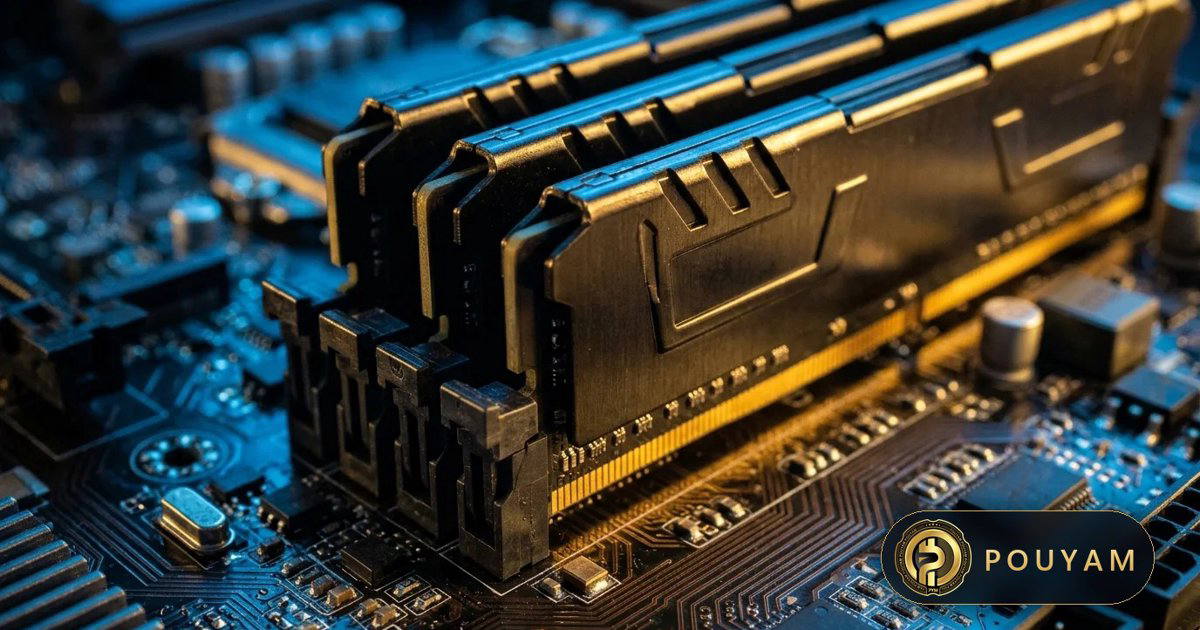
In short
RAM prices are soaring because memory makers are shifting advanced production capacity to server DRAM and high-bandwidth memory for AI data centers, leaving less for PCs and phones [1][2]. TrendForce forecast conventional DRAM contract prices up 55-60% quarter on quarter in 1Q26 [1], and IDC sees no relief before the end of 2027 [3].
Key takeaways
- TrendForce forecast on 5 January 2026 that conventional DRAM contract prices would rise about 55-60% quarter on quarter in 1Q26, and server DRAM by more than 60% [1].
- Memory makers are prioritising advanced-node production for HBM and server DRAM, which cuts wafer allocations for DDR4 and other mature-node products [2].
- IDC forecast on 2 June 2026 that PC shipments will fall 11.3% in 2026 while PC average selling prices rise 17%, and sees no memory relief before the end of 2027 [3].
- TrendForce projects server CPU shipments to grow 31% in 2026 and more than 40% in 2027 [4], and said each CPU requires accompanying DDR5 memory [5].
- Consumer demand is subdued, with PC shipments forecast down 11.3% in 2026 [3], yet AI is taking a growing share of production capacity and raising memory and component costs [5], and suppliers keep prioritising server DRAM and HBM [1][2].
- No source reviewed gives a date when DRAM prices will fall, so any end date for the shortage is an estimate.
On this page 13 sections
- Why is RAM so expensive in 2026?
- What is the RAM shortage, and how does DRAM get made?
- How do AI data centers cause a memory shortage?
- What did Sam Altman say about RAM, and is OpenAI buying up memory?
- Which devices and parts are affected: PCs, phones, GPUs and older DDR4?
- Who gains and who loses from the memory shortage?
- Will RAM prices go down?
- Should you buy RAM now or wait?
- What is still uncertain about the DRAM shortage?
- Common mistakes
- Frequently asked questions
- Glossary
- Sources
Why is RAM so expensive in 2026?
RAM is expensive because the companies that make it are steering their best production capacity toward memory for AI servers, which leaves less for everything else. In its 5 January 2026 release, the analyst firm TrendForce said DRAM suppliers were reallocating advanced process nodes and new capacity toward server and HBM products, sharply limiting supply for other markets and pushing up conventional DRAM prices [1]. By 22 June 2026 it said the three major DRAM suppliers continued to prioritise advanced-node production for HBM and server DRAM, cutting wafer allocations for DDR4 and other mature-node products [2].
The result is a shortage that is about allocation, not only about total output. Suppliers are prioritising server products, so supply for PC and phone memory stays tight [1][2].
How big are the price increases?
The sharpest figures come from TrendForce's forecast for the first quarter of 2026, published on 5 January 2026. It expected conventional DRAM contract prices to rise about 55-60% quarter on quarter and NAND Flash contract prices by 33-38%. It expected server DRAM contract prices to rise by more than 60% and client SSD contract prices by at least 40% [1]. These are forecasts from an analyst firm with a commercial interest in the memory market, not final transaction data.
What does it mean for finished products?
IDC, another analyst firm, forecast on 2 June 2026 that PC average selling prices (ASP, the average price at which products are sold) would grow 17% in 2026, and said pricing is unlikely to return to 2025 levels even as memory capacity expands over the next two years [3]. Memory is a cost inside every PC and phone, so higher memory prices reach buyers as higher device prices or reduced specifications.
What is the RAM shortage, and how does DRAM get made?
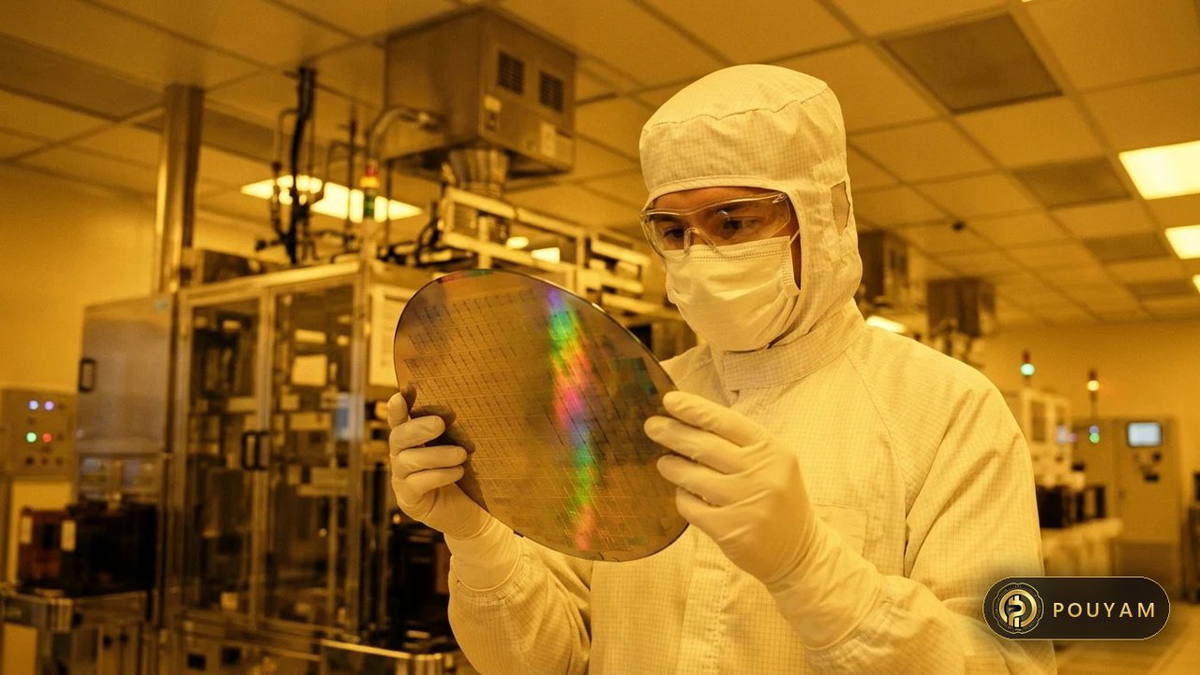
RAM (random-access memory) is the fast working memory a device uses while it runs programs. Most of it is DRAM (dynamic random-access memory), manufactured on silicon wafers, which are thin discs on which many chips are made at once. A wafer is processed on a given manufacturing node, and the choice of node determines which kinds of memory the output can become.
Memory comes in families that differ in purpose:
- DDR4 and DDR5 are generations of standard DRAM for PCs and servers.
- LPDDR is low-power DRAM used in phones and many thin laptops.
- Graphics DRAM is used on graphics cards.
- HBM (high-bandwidth memory) is a specialised design used with AI accelerators.
Why does one product starve another?
Because the products compete for the same factories. TrendForce said in January 2026 that graphics DRAM prices kept rising because supply is constrained by DDR5 capacity, which uses similar process technology [1]. In other words, capacity moved toward one product is capacity taken from the products built on related processes. TrendForce described the same choice in June 2026: advanced-node production goes to HBM and server DRAM, and wafer allocation for DDR4 and other mature-node products is cut [2].
What is the difference between contract and spot prices?
A contract price is what large buyers such as PC makers and cloud providers pay under negotiated supply agreements. A spot price is for immediate, one-off purchases. TrendForce's headline forecasts concern contract prices [1][2], so they describe what manufacturers pay, not necessarily what a given shop charges.
How do AI data centers cause a memory shortage?
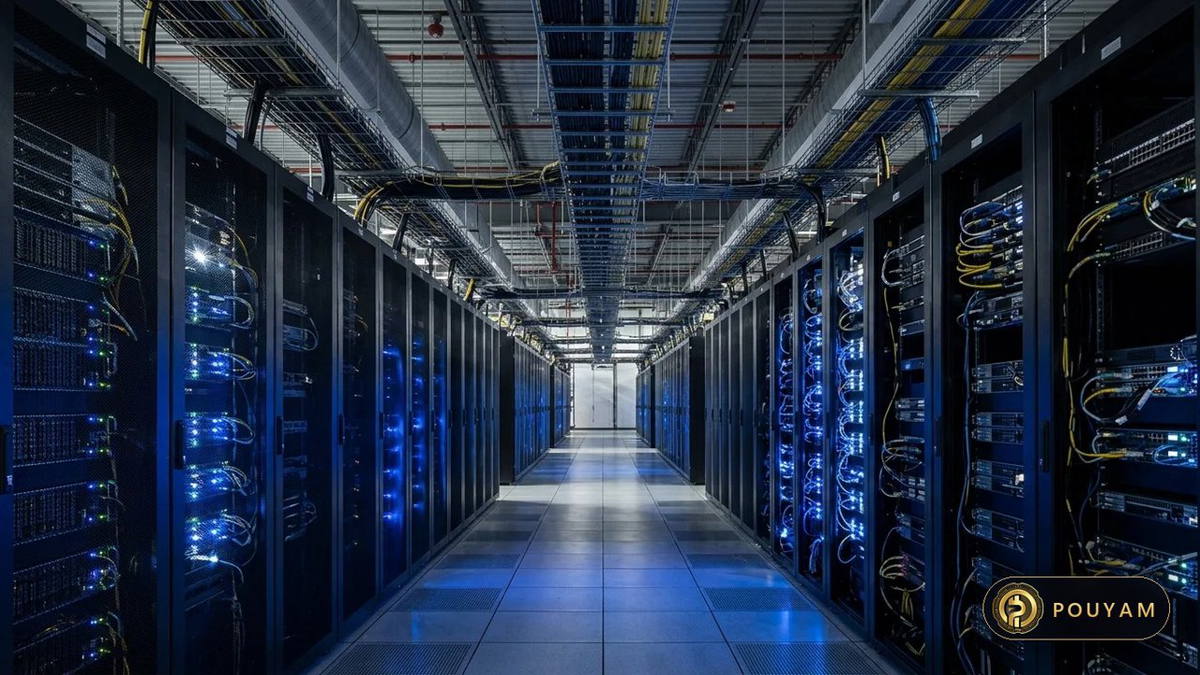
AI data centers cause the shortage through two channels: they buy very large volumes of server memory, and they pull manufacturing capacity toward the advanced products they use.
Why did cloud providers pull orders forward?
TrendForce said U.S.-based cloud service providers have been pulling in orders since late 2025 as AI inference infrastructure expands. AI inference is the stage where a trained model answers real requests, as opposed to training, where the model is built. TrendForce added that supplier inventories were approaching depletion, so shipment growth relied solely on wafer output increases [1]. With little stock in the system, any rise in demand shows up quickly in prices.
Why do AI agents raise demand for ordinary DDR5?
The shortage is not only about specialised HBM. TrendForce projected on 22 October 2026 that server CPU shipments will grow 31% year on year in 2026 and by more than 40% in 2027. It said the ratio of CPUs to GPUs or ASICs in AI servers is shifting from the traditional 1:8 toward 1:2 or even 1:1 as AI inference and AI agents grow [4]. In a separate release on 29 October 2026, TrendForce said each CPU requires accompanying power modules and DDR5 memory [5]. More CPUs per AI server therefore points to more conventional server DRAM per AI server.
Is capacity being added?
IDC expects memory capacity to expand over the next two years, but said that even so pricing is unlikely to return to 2025 levels [3]. The dossier behind this guide holds no dated supplier announcement on new fabs, so no figures on new capacity are given here. How fast capacity can grow relative to AI demand is one of the main open questions.
What did Sam Altman say about RAM, and is OpenAI buying up memory?
Many people search for Sam Altman and RAM because they have seen claims that OpenAI is absorbing a large share of the world's memory supply. The research behind this guide did not retrieve any primary source, such as an OpenAI, Samsung or SK hynix statement, or a major-outlet report documenting OpenAI's memory purchases. For that reason this guide does not give a share-of-supply figure and does not attribute any quote to Altman.
What can be said with sources?
The sourced demand evidence points to a broad group of buyers. TrendForce attributes the order pull-in to U.S.-based cloud service providers building AI inference infrastructure [1], and ties the CPU growth in AI servers to AI inference and AI agents [4]. Individual AI companies are part of that picture, but the dossier does not isolate any one of them.
How should you read claims about one company's share?
- Agreements are not deliveries. A letter of intent or announced partnership describes a plan, not chips that have shipped.
- Estimates are not data. A percentage of global supply attributed to a buyer should be traced to who produced it and how.
- Shortages have many causes. Wafer allocation and depleted supplier inventories both contribute [1][2], and more CPUs per AI server [4] bring more demand for DDR5 [5].
Which devices and parts are affected: PCs, phones, GPUs and older DDR4?
Almost every product that contains DRAM is affected. The signals below are dated, and each comes from an analyst firm.
PCs and notebooks
IDC forecast on 2 June 2026 that global PC shipments would fall 11.3% in 2026, with Q4 2026 shipments down 20% year on year, and said PC makers would struggle to keep full product portfolios [3]. IDC also said Q1 2026 shipments grew 3% year on year, largely because buyers accelerated purchases ahead of expected price rises and availability limits [3]. TrendForce said on 29 October 2026 that major notebook ODMs expect orders to fall an average of 10-15% year on year in 4Q26 [5].
Phones and graphics
In January 2026 TrendForce expected smartphone LPDDR4X and LPDDR5X markets to stay undersupplied in 1Q26, with mobile DRAM tightness unlikely to ease soon [1]. On 29 October 2026 it said AI is taking a growing share of production capacity and raising memory and component costs, and, separately, that smartphone brands are scaling back entry-level and mid-range shipments amid subdued consumer demand [5].
Older memory generations
On 22 June 2026 TrendForce reported that some OEMs and ODMs are downgrading memory specifications, in some cases replacing DDR4 designs with DDR3 and redesigning certain DDR3 products to use DDR2. It expected contract prices to keep rising in 3Q26 [2]. Shortages therefore cascade down through older generations instead of leaving them as a cheap refuge.
Worked example: what a 17% rise means
IDC's forecast of a 17% rise in PC average selling prices in 2026 [3] is a market-wide average. As an illustration only, an average PC that sold for 1,000 dollars in 2025 would average about 1,170 dollars at a 17% rise, while an illustrative group of 100 PCs shipped in 2025 would fall to about 89 under an 11.3% decline [3]. Real prices vary by product, region and configuration.
Who gains and who loses from the memory shortage?
The shortage redistributes money and choices across the supply chain. The sources cover this unevenly, so only the documented effects are listed.
Who gains pricing power?
- Memory suppliers. TrendForce said Taiwanese suppliers such as Nanya and Winbond have gained substantial pricing leverage because demand far exceeds their bit output [2]. Bit output is the amount of memory capacity, measured in bits, that a maker ships.
- Producers of in-demand AI-oriented memory. Suppliers prioritise HBM and server DRAM [1][2], so these are the products where they have the strongest position.
Who loses flexibility?
- PC and phone makers. IDC said PC makers will struggle to keep full product portfolios, and TrendForce reported specification downgrades such as DDR4 designs replaced by DDR3 [2][3].
- Buyers of older products. TrendForce said Winbond is gradually reducing DDR2 production, which narrows options for products still built on that generation [2].
- Consumers. Higher average PC prices and thinner low-end phone lineups are the visible effects [3][5].
Is there an upside for buyers?
The only sourced upside is indirect: IDC said memory capacity should expand over the next two years [3]. Nothing in the sources shows a near-term price benefit for consumers. This is a market with a clear short-term winner on the supply side and mostly costs on the demand side, though supplier profits are not quantified in the sources used here.
Will RAM prices go down?
Probably not soon, according to the analysts quoted here, though nobody can give a reliable end date. IDC's Jean Philippe Bouchard said on 2 June 2026 that the firm sees no relief to the memory shortage before the end of 2027, so prices will keep rising [3]. IDC also said pricing is unlikely to return to 2025 levels even as memory capacity expands over the next two years [3]. TrendForce expected contract prices to keep rising in 3Q26 [2].
Why don't weak sales pull prices down?
It is a common expectation that falling demand should lower prices. The sources show falling consumer demand, with PC shipments forecast down 11.3% in 2026 and notebook orders down 10-15% in 4Q26 [3][5], yet TrendForce expected contract prices to keep rising [2]. The explanation in the sources is supply allocation: suppliers favour server DRAM and HBM, so supply for other markets stays tight [1][2].
What could change the picture?
Three things are plausible but unproven, and no source reviewed quantifies them. AI-related spending could slow. New capacity could arrive faster than expected. Consumer demand could weaken further as devices become more expensive. Any of these could change the balance, but this guide does not predict which will happen or when.
Do other components show easing?
Mixed signals exist, but not for DRAM. TrendForce said on 29 October 2026 that spot prices for low- to mid-capacitance consumer MLCCs slipped about 5% in early October 2026, while it expects the shortage of high-capacitance MLCCs to last through 1H27. Murata has brought forward its expansion, but TrendForce says new capacity is unlikely before 2028 [5]. MLCCs are ceramic capacitors used on CPU motherboards and memory modules, and this is not a memory forecast [5].
Should you buy RAM now or wait?
This guide gives general information, not personal buying advice. The sourced picture is that analysts expect no relief before the end of 2027 [3], so waiting for a quick price drop is a bet against the current forecasts. Waiting can still make sense if you do not need an upgrade. A practical approach:
- Decide whether you need more memory at all. Check your actual usage before spending money on capacity you may not use.
- Confirm compatibility. Find out whether your device uses DDR4, DDR5 or soldered memory, since generations do not mix and many phones and thin laptops cannot be upgraded.
- Compare configurations, not just headline prices. Makers are downgrading specifications in some cases [2], so check the memory type and amount on the spec sheet.
- Do not assume older generations are cheaper. Shortages have reached DDR4, DDR3 and DDR2 [2].
- Avoid panic purchases. IDC noted that Q1 2026 PC shipments rose 3% largely because buyers accelerated purchases ahead of expected price rises [3], which shows how forecasts themselves can change behaviour.
Prices differ between retailers and regions, and the sources describe contract prices, not what a given shop charges.
What is still uncertain about the DRAM shortage?
Several questions have no reliable answer yet.
- Forecast quality. TrendForce and IDC both have commercial interests in the memory market, and their figures are projections, not outcomes.
- End date. IDC's view is no relief before the end of 2027 [3]. No source reviewed gives a date when DRAM prices fall. Claims of shortages lasting to 2028 or later appeared in secondary outlets only and are not repeated here.
- HBM's share of wafers. The sources say suppliers prioritise HBM and server DRAM [1][2] but do not give the share of wafers going to each.
- Individual buyers. OpenAI's actual memory purchases are not documented in the sources used.
- New capacity timing. IDC expects memory capacity to expand over two years [3], but the details of new fabs are not covered here.
- Readers in Iran. No sourced material specific to import, sanctions or payment conditions for hardware was found, so this guide makes no claims on them. Readers there should check current local prices and supplier terms directly.
The most defensible position is that the direction of prices is clear in the short term, while the date of relief is not.
| Item | Forecast | Period | Source |
|---|---|---|---|
| Conventional DRAM contract prices | About +55-60% quarter on quarter | 1Q26 | TrendForce, 5 Jan 2026 [1] |
| NAND Flash contract prices | +33-38% quarter on quarter | 1Q26 | TrendForce, 5 Jan 2026 [1] |
| Server DRAM contract prices | More than +60% quarter on quarter | 1Q26 | TrendForce, 5 Jan 2026 [1] |
| Client SSD contract prices | At least +40% quarter on quarter | 1Q26 | TrendForce, 5 Jan 2026 [1] |
| PC average selling price | +17% | Full-year 2026 | IDC, 2 Jun 2026 [3] |
| Market | Sourced signal | Date of source | Source |
|---|---|---|---|
| PCs | Shipments forecast down 11.3% in 2026; Q4 2026 down 20% year on year | 2 Jun 2026 | IDC [3] |
| Notebook ODMs | Orders expected down 10-15% year on year in 4Q26 | 29 Oct 2026 | TrendForce [5] |
| Smartphones | Brands scaling back entry-level and mid-range shipments | 29 Oct 2026 | TrendForce [5] |
| Smartphone memory | LPDDR4X and LPDDR5X expected to stay undersupplied in 1Q26 | 5 Jan 2026 | TrendForce [1] |
| Older DDR generations | DDR4 designs replaced by DDR3; some DDR3 products redesigned to DDR2; contract prices expected to rise in 3Q26 | 22 Jun 2026 | TrendForce [2] |
| Server CPUs | Shipments forecast +31% in 2026 and more than +40% in 2027 | 22 Oct 2026 | TrendForce [4] |
Common mistakes
Assuming falling PC and phone sales will quickly bring RAM prices down.
Fix: Weak consumer demand does not lower memory prices on its own. PC and notebook demand is falling: IDC forecasts PC shipments down 11.3% in 2026 [3] and TrendForce reports notebook ODM orders down 10-15% in 4Q26 [5]. Yet suppliers prioritise HBM and server DRAM [1][2], and TrendForce expected contract prices to keep rising in 3Q26 [2]. Watch supplier allocation, not just shipment numbers.
Reading a quarterly forecast as a fixed price that will apply for years.
Fix: Treat forecasts as dated projections. TrendForce's 55-60% figure was a forecast published on 5 January 2026 for one quarter, not a price that applies for years [1].
Assuming older memory such as DDR4 is spared.
Fix: The shortage has spread to older generations. TrendForce reported on 22 June 2026 that some makers were replacing DDR4 designs with DDR3 and redesigning some DDR3 products to use DDR2, and expected contract prices to keep rising in 3Q26 [2]. Check current retail prices instead of assuming older memory is cheap.
Blaming one company, such as OpenAI, for the whole shortage.
Fix: Stick to what sources document. This guide found no primary source that quantifies OpenAI's memory purchases, and the cited demand data points to U.S. cloud service providers and AI inference build-outs more broadly [1]. Separate announced agreements from delivered supply.
Buying RAM without checking compatibility because a price looked good.
Fix: Check the module type your device supports (DDR4, DDR5 or soldered LPDDR) before buying. Modules of different generations are not interchangeable, and many phones and thin laptops cannot be upgraded at all.
Treating a price dip in an adjacent part as proof that memory is getting cheaper.
Fix: A small dip in one component does not signal a DRAM turn. TrendForce said consumer-grade MLCC spot prices slipped about 5% in early October 2026 while high-capacitance MLCC shortages are expected to last through 1H27 [5]. MLCCs are capacitors, not memory.
Frequently asked questions
Why is RAM so expensive right now?
Memory makers are directing advanced process nodes and new capacity to server DRAM and HBM for AI data centers, which limits supply for PCs, phones and other products. TrendForce forecast conventional DRAM contract prices to rise about 55-60% quarter on quarter in 1Q26, and said the major suppliers kept prioritising these products in June 2026 [1][2].
Will RAM prices go down in 2027?
IDC said on 2 June 2026 that it sees no relief from the memory shortage before the end of 2027, and that PC pricing is unlikely to return to 2025 levels even as memory capacity expands over the next two years [3]. No source reviewed gives a date when DRAM prices will fall, so the timing is uncertain.
How do AI data centers affect RAM prices?
AI servers need large amounts of server DRAM and HBM, and suppliers shift wafers toward them. TrendForce said U.S. cloud providers have pulled in orders since late 2025 as AI inference infrastructure expands, while supplier inventories neared depletion [1]. It expects server CPU shipments to grow 31% in 2026 [4], and said each CPU requires accompanying DDR5 memory [5].
What did Sam Altman say about RAM, and is OpenAI buying up memory?
Searches linking Sam Altman and RAM reflect a belief that OpenAI is absorbing memory supply. The research behind this guide found no primary statement or announcement that quantifies OpenAI's memory purchases, so no share figure is given here. The sourced demand data names U.S. cloud service providers and AI inference growth in general [1].
Are DDR4 and DDR5 equally affected?
No. TrendForce reported on 22 June 2026 that the shortage has cascaded down older generations: the three major suppliers cut wafer allocations for DDR4 and other mature nodes, some OEMs and ODMs replaced DDR4 designs with DDR3, and some DDR3 products were redesigned to use DDR2. It expected contract prices to keep rising in 3Q26 [2].
Why are laptop, PC and phone prices rising in 2026?
Higher memory and component costs are one reason. IDC forecast PC average selling prices to grow 17% in 2026 and global PC shipments to fall 11.3% [3]. TrendForce said on 29 October 2026 that AI is taking a growing share of production capacity and raising memory and component costs, and said smartphone brands are scaling back entry-level and mid-range shipments while consumer demand is subdued [5].
What is HBM and why does it take memory away from PCs?
HBM (high-bandwidth memory) is a specialised memory used with AI accelerators. It matters for PC buyers because suppliers prioritise advanced-node production for HBM and server DRAM, which cuts wafer allocations for DDR4 and other mature-node products [2]. The same advanced capacity is therefore less available for consumer memory [1].
Glossary
- RAM
- RAM (random-access memory) is the fast, short-term working memory a device uses to run programs, and it loses its contents when power is off.
- DRAM
- DRAM (dynamic random-access memory) is the chip technology used for most main memory in PCs, phones and servers.
- HBM
- HBM (high-bandwidth memory) is a specialised memory design used alongside AI accelerators to move data very quickly.
- DDR4 / DDR5
- DDR4 and DDR5 are successive generations of standard DRAM, and modules of different generations are not interchangeable.
- LPDDR
- LPDDR is low-power DRAM used in smartphones and many thin laptops.
- Contract price vs spot price
- A contract price is the negotiated price large buyers pay under supply agreements, while a spot price is the price for immediate one-off purchases.
- Wafer allocation
- A wafer is a thin silicon disc on which chips are manufactured, and wafer allocation is how a maker divides that output between products.
- AI inference
- AI inference is the stage where a trained AI model answers requests, as opposed to training, where the model is built.
- OEM and ODM
- OEMs design and sell devices under their own brand, while ODMs design and build devices for other brands.
- MLCC
- An MLCC (multilayer ceramic capacitor) is a tiny component used on motherboards and memory modules.
- ASP
- ASP (average selling price) is the average price at which products in a category are sold.
Sources
- Memory Makers Prioritize Server Applications, Driving Across-the-Board Price Increases in 1Q26, Says TrendForce TrendForce · 2026-01-05
- Consumer DRAM Shortages Extend to DDR2 Products with Contract Prices Expected to Continue Rising in 3Q26 TrendForce · 2026-06-22
- PC Market Enters Volatile Territory as Memory Shortage Persists Through 2027 IDC · 2026-06-02
- Server CPU Shipments Projected to Grow Over 40% YoY in 2027, with Arm-Based Products Continuing to Gain Market Share, Says TrendForce TrendForce · 2026-10-22
- AI Inference Drives CPU and DDR5 Demand, with High-Capacitance MLCC Shortages Expected to Persist Through 1H27, Says TrendForce TrendForce · 2026-10-29