
Milk Price in Iran 2026: Why Dairy Prices Rose Again
- 3 views
- 0 likes
- 0 comments
- All languages combined
In short
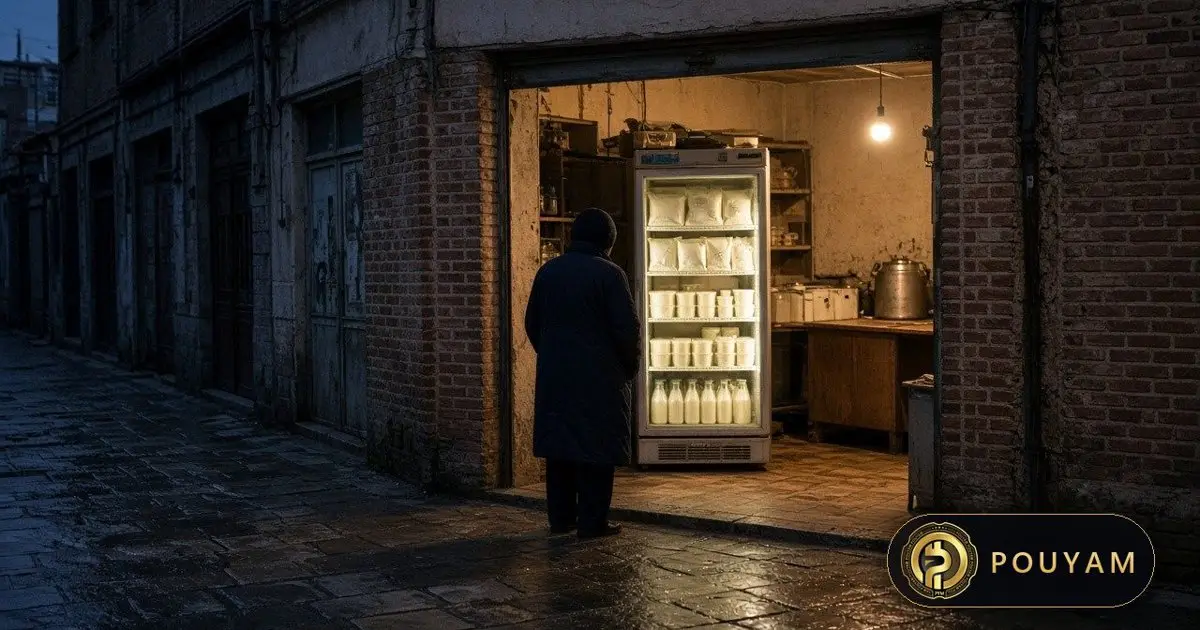
As of 15 November 2026, raw milk in Iran trades at about 70,000 tomans a kilogram, up from the official 60,500, even though no new rate has been approved [4]. Shop prices rose first: a 900-gram bag of low-fat milk went from 84,000 tomans in September to 143,000 in November, roughly 70% more [1][3].
Key takeaways
- The official raw-milk rate is still 60,500 tomans per kilogram; the Market Regulation Taskforce kept it on 4 November 2026 [2][6].
- On 14 November the head of the Dairy Cooperatives Union said raw milk had nevertheless reached 70,000 tomans, an increase he put at about 17%, without a resolution to raise it [4].
- A 900-gram bag of low-fat milk rose from 84,000 tomans in September to 143,000 in November, an increase of about 70% [1][3].
- Producers blame feed, packaging, transport and the exchange rate; feed inputs rose from about 50,000 to 70,000 tomans in a month [3][5].
- The cooperatives union warns the raw-milk jump alone will lift dairy product costs by more than 20% [4].
- Per-person dairy consumption has fallen to about 40 kilograms a year or less, according to the union [4].
On this page 12 sections
- What is the milk price in Iran as of 15 November 2026?
- Why did raw milk go from 60,500 to 70,000 tomans?
- How much have bagged milk, bottled milk and yogurt risen since September?
- Is the dairy price rise legal, and what did regulators say?
- Why are feed and production costs climbing?
- How are households cutting back on dairy?
- How can shoppers check a dairy price before paying?
- What happens next to milk prices in Iran?
- Common mistakes
- Frequently asked questions
- Glossary
- Sources
What is the milk price in Iran as of 15 November 2026?
As of 15 November 2026, raw milk is changing hands at about 70,000 tomans a kilogram, while the only approved rate is still 60,500 tomans [2][4]. On store shelves, a 900-gram bag of low-fat milk costs about 143,000 tomans, against 84,000 tomans in September [1][3].
The gap between the official number and what people pay is the heart of this story. Iran sets a reference price for raw milk, the milk farmers sell to processing plants, and dairy companies are supposed to calculate their shelf prices from it [6]. That reference rate of 60,500 tomans per kilogram, and 650,000 tomans for fat, dates from a decision taken in the spring of 2026 [6].
On 4 November the Market Regulation Taskforce decided to keep that rate unchanged [2]. Ten days later, on 14 November, Ali-Ehsan Zafari, head of the Dairy Cooperatives Union, said in remarks published by Eghtesad Online that raw milk had risen to 70,000 tomans anyway, an increase he put at about 17%, although no resolution to raise the rate had been issued [4]. He warned that it would push up the cost of finished dairy products by more than 20% [4].
So the honest answer to how much milk costs in Iran today is: more than the official figures suggest, and it varies by brand, pack and city. The table in this guide lists the prices recorded in a store survey in early November [1][3].
Why did raw milk go from 60,500 to 70,000 tomans?
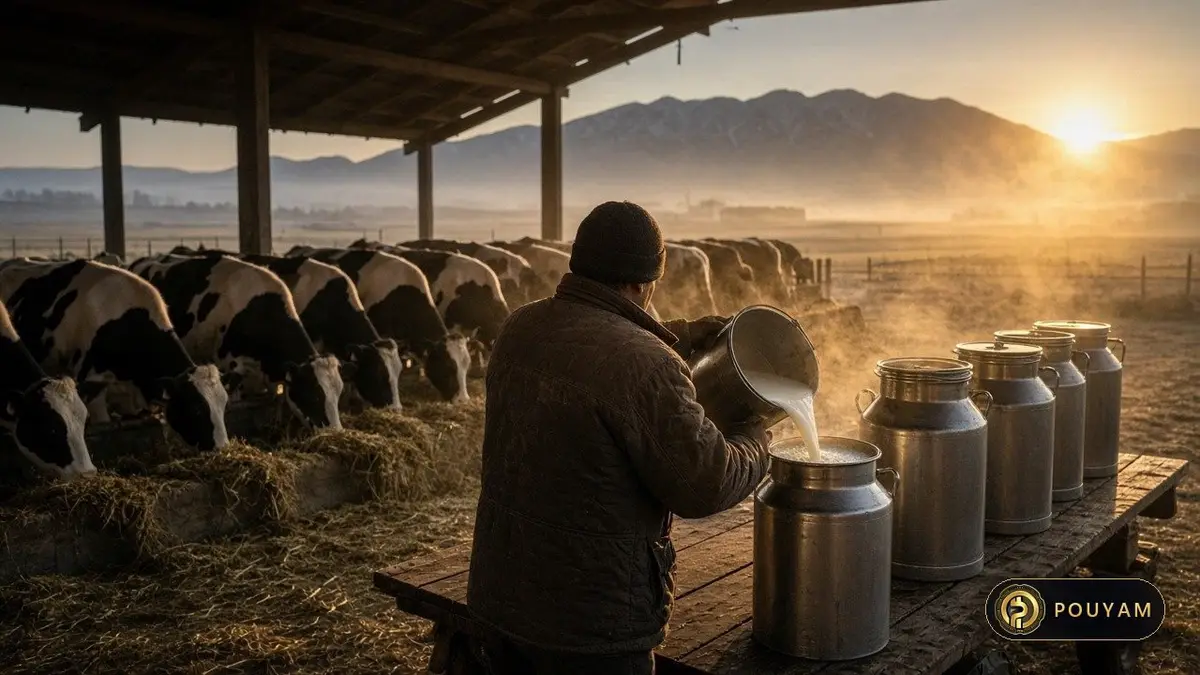
Farmers and dairy companies agreed among themselves on a higher raw-milk price in late October 2026, and the market moved to it before any official approval [1][7]. The proposed rates were 68,000 tomans a kilogram at the farm gate and 70,000 tomans delivered to the factory [1].
On 25 October Ahmad Moghaddasi, head of the Iranian Cattle Breeders Association, said his group and the Dairy Industries Association had reached that agreement [1][3]. He pointed to more expensive livestock feed and a weaker currency as the main reasons [1]. The proposal had not been approved: on 28 October Zafari described the roughly 16% rise as a guild decision that the Consumer and Producer Protection Organisation had not approved [7].
Separately, experts at the livestock department of the Ministry of Agriculture worked out a technical price of 70,800 tomans a kilogram, according to Javad Azad, head of the Hamgam National Union of Livestock Farmers [5]. Azad said even that figure was out of date, because it was based on feed prices from a month earlier, and put the real production cost at no less than 75,000 tomans [5].
In other words, three numbers are circulating at once: the approved 60,500, the 68,000 to 70,000 agreed by the industry, and a cost-based 70,800 or more from farmers' groups [2][5]. The 70,000 figure Zafari reported on 14 November matches the factory price in the industry proposal [1][4].
How much have bagged milk, bottled milk and yogurt risen since September?
A store survey published on 5 November 2026 found that some dairy items had risen by around 70% in two months, and one bottled milk had roughly doubled [1][3]. The survey covered shops in central and western areas and was reported by ISNA and IranWire [1][2].
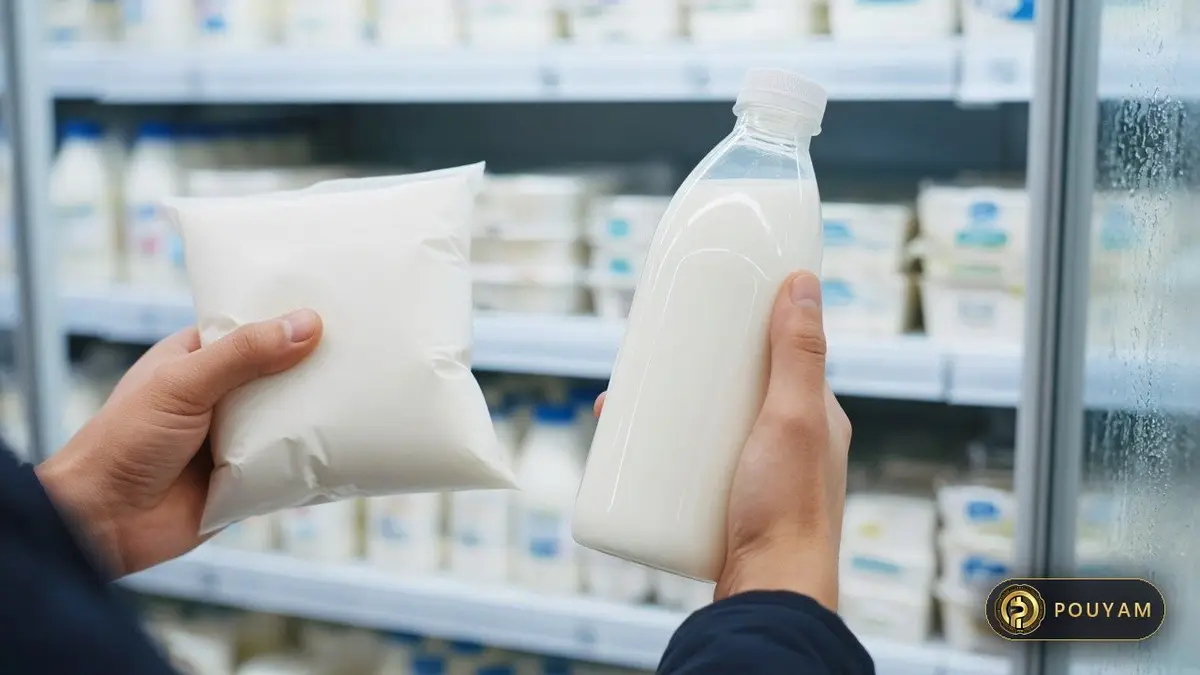
The 900-gram bag of low-fat milk, the cheapest everyday format, rose from 84,000 to 143,000 tomans, a jump of 59,000 tomans [1]. A one-litre bottle of high-fat milk went from 160,000 to 207,900 tomans [1]. In one sample, a one-litre bottle of low-fat milk climbed from 98,000 to 196,900 tomans [1][3]. A 1.8-kilogram tub of low-fat yogurt from some brands now sells for 327,800 tomans [1].
Cheese, butter and cream also went up, by different amounts in different samples [1][3]. Shopkeepers told reporters that manufacturers and distributors keep sending revised price lists, and that a product's price sometimes changes from one order to the next [1][3].
These are prices seen in specific shops at a specific time, not national averages. Prices for the same product can differ between neighbourhoods and cities, and they may have moved again since the survey. The table below brings the recorded figures together so the size of each increase is easy to compare.
Is the dairy price rise legal, and what did regulators say?
No new raw-milk or dairy price has been approved, and the cooperatives union says any increase without approval is unlawful [2][6]. On 6 November 2026 Zafari told the ILNA news agency that factories may not raise prices without permission and that violators would face legal action [2].
According to Zafari, the Market Regulation Taskforce decided at its 4 November meeting that the rates approved in the spring remain the basis for pricing [2][6]. He said factories must calculate costs using 60,500 tomans for a kilogram of raw milk and 650,000 tomans for fat, and should not assume any increase [6].
The ban leaves important questions open. IranWire noted that the official text of the taskforce decision had not been published, so it is unclear how prices will be monitored, what happens to products that have already gone up, and whether factories will be told to return to earlier prices [2]. Dairynews, which followed the same story, reported that the proposed new rates were still awaiting final approval [8].
By 14 November, Zafari himself was saying that raw milk had reached 70,000 tomans regardless [4]. That suggests the ban has not held at the farm and factory level, at least for raw milk. It also means shoppers face a market where the official rule and the actual price point in different directions.
Why are feed and production costs climbing?
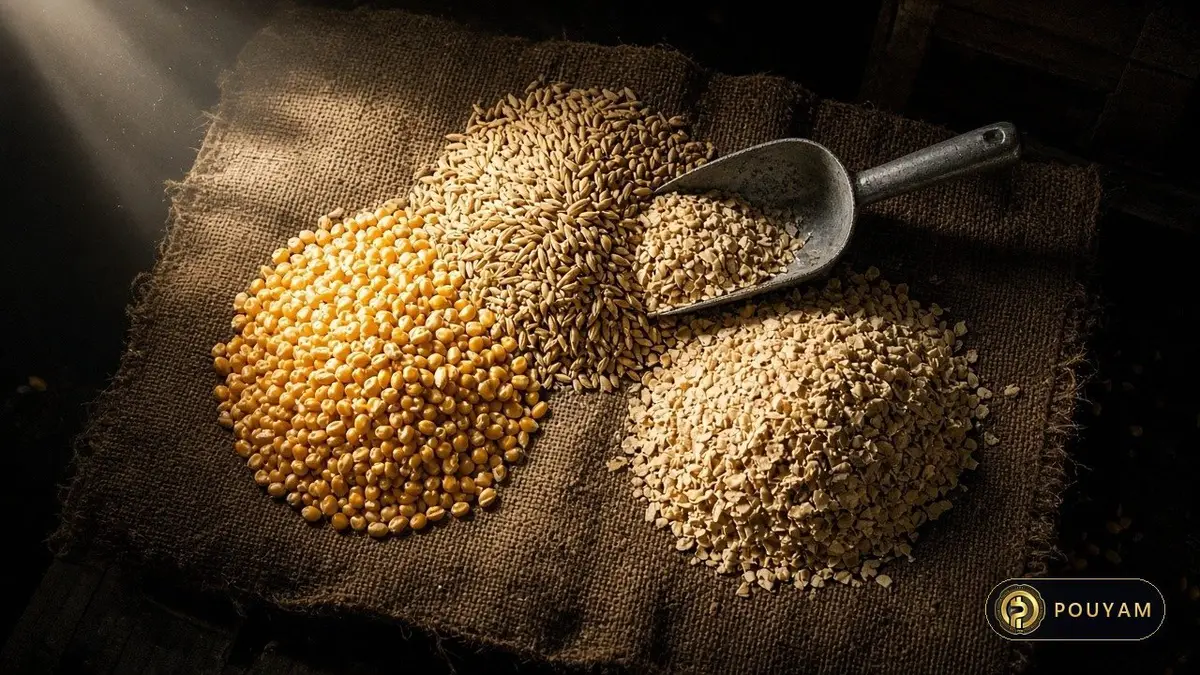
Producers say the main pressure comes from animal feed, packaging, transport and the exchange rate, and feed has risen fastest [1][5]. Azad said feed inputs went from about 50,000 to about 70,000 tomans in a single month [5].
Iran depends heavily on imports for animal feed. Azad told reporters that the country imports 80% to 90% of the soybean meal and corn it needs, and about two thirds of its barley [5]. When the currency weakens, the cost of those imports rises, and dairy farms feel it quickly [1][5].
Azad said there is no shortage of feed on the market; the problem is its high price combined with weak cash flow at dairy farms [5]. He linked part of the transport cost to current conditions but said most of the problems trace back to domestic management [5]. Producers surveyed in early November also named packaging and transport as costs that had gone up [1][3].
Raw milk is the main ingredient in packaged milk, yogurt and cheese, so a change in its price passes through to the shelf. Zafari estimated that, given raw milk's share of production costs, the rise from 60,500 to 70,000 tomans would lift the cost of dairy products by more than 20% [4]. Higher costs, he said, are eventually passed on to consumers [4].
How are households cutting back on dairy?
Families are buying less milk and yogurt, choosing smaller packs or switching to cheaper brands, and consumption per person has fallen [1][4]. Zafari said per-person dairy consumption had dropped to about 40 kilograms a year or even less [4].
Mohammad Farbod, spokesman for the Dairy Products Industry Association, estimated that consumption of milk and other dairy products per person fell by about 10% to 15% over the past year [1][3]. He attributed most of the decline to lower household purchasing power [1].
A director at the Ministry of Health's community nutrition office reported that average intake is below one unit of dairy a day, compared with the recommended two to three units [1][3]. Shopkeepers and buyers interviewed in the November survey described the same pattern: smaller purchases, smaller packs and cheaper alternatives [1].
Falling sales also hurt producers. Zafari warned that lower consumption is a serious alarm for small and medium dairy plants, some of which could close if the trend continues [4]. He added that adjusting the value of the kalabarg, the electronic food voucher, would not on its own make a lasting difference to dairy consumption [4].
How can shoppers check a dairy price before paying?
Compare the price printed on the pack with the shelf price, note the weight, and compare the price per kilogram across brands and pack sizes [1]. Because price lists change often, these simple checks help you see what you are actually paying [1][3].
- Read the consumer price printed on the package and compare it with what the till charges. A higher till price is worth questioning at the counter.
- Check the weight or volume. A 900-gram bag and a one-litre bottle are not the same amount of milk, so compare like with like [1].
- Work out the price per kilogram or litre. In the November survey, low-fat milk cost 143,000 tomans for 900 grams in a bag but up to 196,900 tomans for a litre in a bottle [1].
- Compare brands. The survey found large differences between brands and samples of the same product type [1][3].
- Keep receipts if you notice repeated changes, so you can compare prices over time.
None of this lowers the price of milk, but it makes increases easier to spot. With the official rate and the market price pointing in different directions, knowing the exact price per kilogram is the most reliable way to judge whether a pack has gone up [2][4].
What happens next to milk prices in Iran?
The next step is a decision on a new official raw-milk rate, which farmers' groups expected at a Market Regulation Headquarters meeting in mid-November 2026 [5]. Until a rate is published, the market price and the approved price will keep diverging [2][4].
Azad said on 9 November that the proposed rate would probably be settled at the following week's meeting [5]. Zafari estimates that the raw-milk rise to 70,000 tomans alone would lift the cost of dairy products by more than 20% [4]. If the approved rate stays at 60,500, the question becomes whether the ban on price increases is enforced, which IranWire noted remains unclear [2].
Producers' costs are moving in the other direction. Azad put the production cost of raw milk at no less than 75,000 tomans, above both the official rate and the industry's own proposal [5].
This page reflects reports available on 15 November 2026. Dairy prices in Iran are changing quickly, so check the date on any price you see and compare it with the latest official announcement.
| Product | September | November | Change |
|---|---|---|---|
| Low-fat milk, 900 g bag | 84,000 | 143,000 | +59,000 (about 70%) |
| High-fat milk, 1 litre bottle | 160,000 | 207,900 | +47,900 |
| Low-fat milk, 1 litre bottle (one sample) | 98,000 | 196,900 | About double |
| Low-fat yogurt, 1.8 kg tub (some brands) | Not reported | 327,800 | Not reported |
| Raw milk, 1 kg (official rate) | 60,500 | 60,500 | No approved change |
| Raw milk, 1 kg (market, 14 November) | 60,500 | 70,000 | +9,500 (union: about 17%) |
Common mistakes
Treating 70,000 tomans as the new official raw-milk price.
Fix: The approved rate is still 60,500 tomans; 70,000 is what the market reached without approval [2][4].
Comparing a 900-gram bag with a one-litre bottle directly.
Fix: Compare the price per kilogram or litre, since pack sizes differ [1].
Assuming survey prices are national averages.
Fix: They come from shops in central and western areas in early November and vary by brand and city [1][3].
Expecting the price ban to roll back increases already made.
Fix: It is unclear whether factories must return to earlier prices; the decision text has not been published [2].
Frequently asked questions
What is the official raw milk price in Iran?
60,500 tomans per kilogram, kept unchanged by the Market Regulation Taskforce on 4 November 2026 [2][6].
How much is a bag of milk in Iran now?
About 143,000 tomans for a 900-gram bag of low-fat milk in November 2026, against 84,000 in September [1][3].
Why did dairy prices rise again?
Producers cite feed, packaging, transport and the exchange rate; raw milk reached 70,000 tomans without approval [3][4][5].
Are dairy price increases allowed?
The cooperatives union says no increase has been approved and unapproved rises are unlawful [2][6].
How much more will dairy products cost?
The union estimates the raw-milk rise alone adds more than 20% to dairy product costs [4].
When will a new raw milk rate be decided?
Farmers' groups expected a decision at a Market Regulation Headquarters meeting in mid-November 2026 [5].
Glossary
- Raw milk
- Unprocessed milk that farmers sell to dairy plants; its approved price is the basis for shelf prices [6].
- Market Regulation Taskforce
- The government working group that approves raw-milk and dairy prices [2].
- Farm-gate price
- The price paid at the dairy farm, before transport to the factory [1].
- Technical price
- A cost-based price calculated by experts, put at 70,800 tomans for raw milk [5].
- Kalabarg
- Iran's electronic food voucher for households [4].
Sources
- Dairy Prices Surge Ahead of Official Raw Milk Rate Announcement IranWire · 2026-11-05
- Ban Announced on Dairy Price Hikes Pending New Raw Milk Rates IranWire · 2026-11-06
- Iran's bagged low-fat milk price rises approximately 70% between September and November DairyNews · 2026-11-05
- قیمت شیر خام از ۶۰ هزار به ۷۰ هزار تومان رسید / لبنیات چقدر گرانتر میشود؟ Eghtesad Online · 2026-11-14
- Raw Milk Price Increase on Government Agenda Bazar361 · 2026-11-09
- ظفری: افزایش قیمت شیر خام و محصولات لبنی مصوب نشده است AgroFoodNews · 2026-11-05
- افزایش ۱۶ درصدی قیمت شیر خام هنوز تصویب نشده است Khabar Mohem · 2026-10-28
- Iran retains raw milk price at 60,500 tomans and bars unauthorised dairy increases DairyNews · 2026-11-06



Comments
Top comments