
Delhi Weather Chhath Puja 2026: Rain, Fog and AQI Today
- 0 views
- 0 likes
- 0 comments
- All languages combined

In short
Delhi can expect only isolated very light rain or drizzle on Sunday 15 November 2026, the Sandhya Arghya day of Chhath Puja, with morning fog, highs of 26-28°C and very poor air, according to India Meteorological Department (IMD) forecasts [3][4][5]. Monday's Usha Arghya should be dry, with mist or fog possible at dawn [3][5].
Key takeaways
- Chhath Puja 2026 runs from 13 to 16 November; Sandhya Arghya is on Sunday 15 November and Usha Arghya on Monday 16 November [1][2].
- In Delhi, sunset on 15 November is at about 5:28 PM and sunrise on 16 November at about 6:44 AM [1][2].
- IMD forecast very light rain or drizzle at isolated places in Delhi on Sunday morning to forenoon, with no weather warning for the day [3][4].
- Dry weather is forecast from 16 to 21 November, with mist or shallow fog in the mornings [3][5].
- Delhi's AQI was 353, very poor, on Sunday morning, and some stations such as IIT Delhi (425) were severe [3][10].
- Delhi Traffic Police expects restrictions near Yamuna ghats from 2 PM on 15 November to 8 AM on 16 November [8].
On this page 12 sections
- Will it rain in Delhi during Chhath Puja 2026?
- What are the Chhath Puja 2026 dates and arghya times in Delhi?
- How cold will Delhi be at Chhath ghats?
- What is the AQI in Delhi today?
- Which GRAP rules are in force in Delhi-NCR?
- Which Delhi roads and ghats are affected on 15 and 16 November?
- How can devotees prepare for fog, cold and smog at the ghats?
- Why is Delhi's air so bad in mid-November?
- Common mistakes
- Frequently asked questions
- Glossary
- Sources
Will it rain in Delhi during Chhath Puja 2026?
Only lightly, if at all. IMD forecast very light to light rain or drizzle at isolated places in Delhi on Sunday 15 November 2026, mainly between morning and forenoon, under a new western disturbance [3][4]. The forecast points to a brief, patchy spell rather than widespread rain, and India Today reported that there was no weather warning for Delhi on the day [4].
IMD's all-India bulletin issued at 9:02 AM on 15 November listed isolated rain over Haryana, Chandigarh and Delhi for Sunday, followed by dry weather from 16 to 21 November, UNI reported [5]. That means the main Chhath rituals, the evening offering on Sunday and the dawn offering on Monday, are not expected to face widespread rain in Delhi, though skies may stay cloudy on Sunday [3][5].
Weather can change quickly when a western disturbance passes. Before leaving for a ghat, check the latest forecast and warnings on the IMD website (mausam.imd.gov.in).
What are the Chhath Puja 2026 dates and arghya times in Delhi?
Chhath Puja 2026 is observed from Friday 13 November to Monday 16 November, with Sandhya Arghya on Sunday 15 November and Usha Arghya on Monday 16 November [1][2]. The festival is tied to Kartika Shukla Shashthi, which falls on 15 November this year [1].
The four days are Nahay Khay on 13 November, Kharna on 14 November, Sandhya Arghya on 15 November and Usha Arghya with Parana, the breaking of the fast, on 16 November [1]. The fast without water lasts about 36 hours, from the evening of Kharna until after the dawn offering [1].
For New Delhi, the Drik Panchang calendar gives sunset at 5:28 PM on 15 November and sunrise at 6:44 AM on 16 November [1]. The Economic Times lists sunset at 5:26 PM in Noida and 5:28 PM in Gurugram, and 5:01 PM in Patna [2]. Exact times differ by a minute or two between sources and locations, so devotees usually follow the local panchang for their own ghat [2].
The table below sets out the Delhi times together with the weather outlook for each day.
How cold will Delhi be at Chhath ghats?
Mild in the afternoon and cool at dawn: IMD forecast a maximum of 26-28°C and a minimum of 15-17°C for Sunday 15 November, India Today reported [4]. Times Now reported a forecast high of around 30°C and a low of around 17°C for the same day, which shows how forecasts vary between outlets [10].
For the evening offering, temperatures at sunset should still be comfortable, although standing in river or pond water for a long time can feel colder than the air. The dawn offering on Monday is likely to be the coolest part of the festival, with temperatures close to the daily minimum shortly before sunrise; the forecast minimum for Sunday was 15-17°C [4].
IMD also forecast mist or shallow fog at most places during the morning, with moderate fog possible at isolated places [4]. Fog near the Yamuna can reduce visibility on approach roads and riverbanks before sunrise, which matters for families walking to ghats in the dark. For Monday, IMD expected dry weather, with mist or fog possible at dawn, and surface winds of around 15 kmph in the afternoon [3].
What is the AQI in Delhi today?
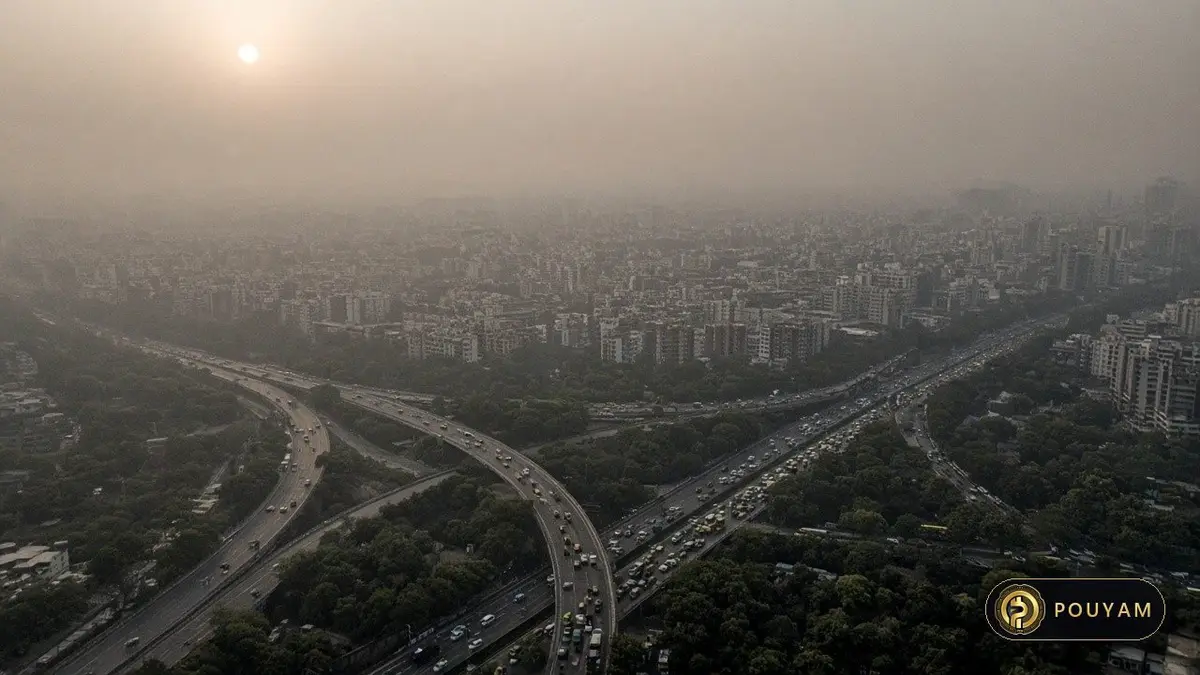
Delhi's average AQI was 353 on the morning of Sunday 15 November, in the 'very poor' category, according to Central Pollution Control Board (CPCB) data reported by Times Now [10]. Anand Vihar recorded 365 [3].
Several stations were in the 'severe' band, above 400. The Economic Times reported readings of 425 at IIT Delhi, 415 at ITO, 403 at the Commonwealth Sports Complex and 402 at both Delhi University's North Campus and Pusa [3]. Nearby cities were also polluted: Gurugram 324, Noida 313, Faridabad 311, Ghaziabad 294 and Greater Noida 283 [3].
Light drizzle can wash some dust out of the air, but the Economic Times noted that isolated showers are likely to bring only limited and temporary relief [3]. Winds of around 15 kmph on 16 and 17 November may help disperse pollutants in the afternoons, while calm mornings and evenings can still trap smoke and dust near the ground [3].
AQI changes hour by hour. Live station readings are published on the CPCB website (cpcb.nic.in).
Which GRAP rules are in force in Delhi-NCR?
The Commission for Air Quality Management (CAQM) invoked Stage III ('severe' air quality) of the Graded Response Action Plan (GRAP) across Delhi-NCR on 6 November 2026, in addition to Stages I and II already in force [6]. The order said Delhi's AQI was 382 on 6 November and that forecasts showed it could slip into the severe category [6].
Separately, CAQM ordered preventive measures for 5 to 20 November 2026 [7]. These restrict dust-generating demolition and outdoor construction across NCR, with exemptions for projects such as railways, metro, airports, hospitals and national security [7]. State government and private offices in Delhi and in the districts of Gurugram, Faridabad, Sonipat, Ghaziabad and Gautam Buddha Nagar are to work with up to 50% of staff attending in person, with the remainder working from home, except for industrial establishments and essential services where this is not feasible [7].
The sources used here do not show whether the stage has changed since 6 November. GRAP stages can be raised or lowered at short notice as air quality changes. The current stage and the full list of actions are published on the CAQM website (caqm.nic.in). Schools in Delhi and NCR had earlier been told to offer hybrid classes, and the choice of physical or online attendance depends on local orders [9].

Which Delhi roads and ghats are affected on 15 and 16 November?
Delhi Traffic Police said traffic would be regulated on a need basis on roads leading to Yamuna ghats from about 2 PM on 15 November to 8 AM on 16 November [8]. Large crowds are expected at Ram Ghat, Soor Ghat and Bajrangi Ghat in the Wazirabad area, Vasudev Ghat near ISBT and Hathi Ghat in the IP Estate area [8].
Stretches likely to be affected include Bundh Road, Wazirabad Road, Vikas Marg, roads in the IP Estate area and approach roads to the ghats [8]. Commuters who are not attending are advised to plan alternative routes and allow extra time [8].
In Ghaziabad, police put diversions in place from noon on 15 November and restricted heavy vehicles from entering the city; Chhath is being celebrated at around 79 locations there, including the Hindon river ghat near GT Road [8].
Schools under Delhi's Directorate of Education will be closed on Monday 16 November for Chhath Puja, according to a circular issued on 13 November [9].
How can devotees prepare for fog, cold and smog at the ghats?
Check the weather and AQI before leaving, plan for cold water and poor visibility at dawn, and follow official advisories on routes and crowding [3][4][8].
- Check the forecast: look at the IMD nowcast on Sunday morning in case drizzle moves in earlier or later than expected [4].
- Check the AQI: readings above 400 were recorded at several stations on Sunday morning, so note the level nearest your ghat [3].
- Dress in layers: the forecast low for Sunday was about 15-17°C, and it feels colder after standing in water; carry a dry change of clothes and a towel [4].
- Plan for fog: carry a torch or phone light for the walk before sunrise on Monday and allow extra travel time [4].
- Avoid the busiest roads: use public transport where possible and follow traffic police diversions near the Yamuna ghats [8].
- Keep the timing in mind: sunset is about 5:28 PM on Sunday and sunrise about 6:44 AM on Monday in Delhi [1].
People with breathing or heart conditions who are worried about smog exposure should follow advice from their own doctor or official health bulletins; this guide does not give medical advice.

Why is Delhi's air so bad in mid-November?
Early to mid-November regularly brings very high pollution to Delhi-NCR because local emissions combine with weather that limits dispersion, CAQM said in its order for 5 to 20 November [7]. Its review of AQI data for November in 2018 to 2025 found a recurring pattern of very high pollution in early to mid-November, with AQI reaching 'severe' and 'severe+' on some days [7].
The contributors CAQM names are local emission sources, seasonal burning of agricultural residue and other biomass, and other episodic events [7]. During this period, low wind speeds, a shallow atmospheric boundary layer and reduced vertical mixing limit the dispersal of pollutants [7].
Rain usually helps only when it is steady and widespread. Isolated drizzle like that forecast for Sunday can settle some dust, but the effect is often short-lived once calm conditions return [3]. The dry spell IMD expects from 16 to 21 November means any relief would depend mainly on wind [3][5].
| Day | Ritual and time | Weather outlook |
|---|---|---|
| Friday 13 November | Nahay Khay | - |
| Saturday 14 November | Kharna | Partly cloudy, high 27-29°C, low 16-18°C |
| Sunday 15 November | Sandhya Arghya, sunset about 5:28 PM | Isolated drizzle in the morning, fog, high 26-28°C, low 15-17°C |
| Monday 16 November | Usha Arghya, sunrise about 6:44 AM | Dry, with mist or fog possible at dawn |
Common mistakes
Expecting rain to clear the smog.
Fix: Isolated drizzle brings only limited, temporary relief [3].
Using Patna arghya times in Delhi.
Fix: Delhi sunset on 15 November is about 5:28 PM, Patna about 5:01 PM [2].
Reading one city-wide AQI number as your local air.
Fix: Stations ranged from 283 to 425 across NCR on Sunday [3].
Leaving for the dawn offering without allowing for fog.
Fix: IMD forecast mist or shallow fog in the mornings [4].
Driving to Yamuna ghats on Sunday evening.
Fix: Traffic is regulated from 2 PM on 15 November to 8 AM on 16 November [8].
Frequently asked questions
Will it rain in Delhi on Chhath Puja?
Only isolated very light rain or drizzle is forecast on Sunday morning; Monday should be dry [3][5].
What is the Delhi weather today?
Cloudy with morning fog, possible drizzle and a high of 26-28°C on 15 November [4].
When is Usha Arghya 2026?
On Monday 16 November, at sunrise around 6:44 AM in Delhi [1].
What is the Delhi AQI today?
353 on Sunday morning, very poor, with some stations above 400 [3][10].
Are Delhi schools closed for Chhath?
Yes, Directorate of Education schools are closed on 16 November [9].
Glossary
- Sandhya Arghya
- The evening offering to the setting Sun on the third day of Chhath [1].
- Usha Arghya
- The offering to the rising Sun on the final day, after which the fast ends [1].
- Western disturbance
- A weather system from the west that brings rain or snow to north India in winter [4].
- AQI
- Air Quality Index; 301-400 is very poor and above 400 is severe [3].
- GRAP
- The Graded Response Action Plan, a set of anti-pollution rules applied by stage in Delhi-NCR [6].
Sources
- 2026 Chhath Calendar, Surya Shashthi Calendar for New Delhi, NCT, India Drik Panchang
- Chhath Puja 2026: Sandhya Arghya Sunset and Usha Arghya Sunrise Timings in Patna, Delhi, Ranchi and Other Cities The Economic Times · 2026-11-15
- Delhi AQI Today: What's the air quality in Delhi, Gurgaon, Noida, Ghaziabad on November 15? The Economic Times · 2026-11-15
- Rain likely in Delhi-NCR as western disturbance gets active, AQI to ease India Today · 2026-11-14
- Isolated rain likely in Haryana and Delhi on Sunday, dense fog alert for Uttar Pradesh UNI · 2026-11-15
- Invocation of actions under Stage III ('Severe' Air Quality, AQI: 401-450) of extant schedule of GRAP in Delhi-NCR Commission for Air Quality Management · 2026-11-06
- Implementation of precautionary measures for prevention and control of air pollution in Delhi-NCR during 05th to 20th November, 2026 Commission for Air Quality Management · 2026-10-30
- Delhi Traffic Police warns of restrictions on roads near Yamuna ghats for Chhath Puja Hindustan Times · 2026-11-14
- Delhi schools to shut on Monday for Chhath Puja; NCR schools continue with hybrid classes The Indian Express · 2026-11-14
- Delhi Chokes At AQI 353 As IMD Predicts Cloudy Skies, Light Rain For Today Times Now · 2026-11-15




Comments
Top comments