

In short
Bitcoin is a peer-to-peer payment network whose price is set by supply and demand [1][2]. As of 3 November 2026 one bitcoin traded near $77,140, about 39% below its $126,080 peak of 6 October 2025 [5]. New supply halves every 210,000 blocks [3], while demand shifts with investment products, policy and risk appetite [6][8].
Key takeaways
- Bitcoin replaces a trusted middleman with a public ledger secured by proof-of-work mining [1].
- Supply is capped at 21 million coins, and the reward for each new block halves every 210,000 blocks [2][3].
- As of 3 November 2026 the price was about $77,140, down 28.4% over one year, according to CoinGecko [5].
- No single factor sets the price: supply and demand, spot ETPs, government policy and stock-market mood all play a part [2][6][7][8].
- SEC Chair Gary Gensler called bitcoin a speculative, volatile asset in 2024, and the FBI recorded $11.366 billion in crypto-related fraud losses in 2025 [6][9].
- In Iran, the central bank cut rial payments to crypto exchanges in January 2025 and was given full authority over the market, Al Jazeera reported [10].
On this page 12 sections
- What is Bitcoin and how does it work?
- How are new bitcoins created, and what is the halving?
- What is the bitcoin price as of 3 November 2026?
- What moves the bitcoin price?
- What are the risks of owning bitcoin?
- How do people buy and store bitcoin more safely?
- What should readers in Iran know about bitcoin?
- What happens next for bitcoin supply and policy?
- Common mistakes
- Frequently asked questions
- Glossary
- Sources
What is Bitcoin and how does it work?
Bitcoin is a digital currency and a payment network that runs without a central bank or company in charge. Its design was published in 2008 in a short paper by an author using the name Satoshi Nakamoto, titled Bitcoin: A Peer-to-Peer Electronic Cash System [1]. The paper describes a purely peer-to-peer form of electronic cash that lets one party pay another online without going through a financial institution [1].
The core problem the paper solves is double-spending: stopping someone from spending the same digital coin twice. Instead of a bank checking every payment, the network timestamps transactions by hashing them into an ongoing chain of proof-of-work, creating a record that cannot be changed without redoing that work [1]. This shared record is the blockchain. In the paper's terms, an electronic coin is a chain of digital signatures, and each owner passes it on by signing a hash of the previous transaction together with the next owner's public key [1].
Who controls Bitcoin?
According to the project's own FAQ, Bitcoin is controlled by all of its users around the world, and no single developer or group can force changes on the network [2]. The security model rests on one assumption: the system is secure as long as honest computers together control more computing power than any group of cooperating attackers [1].
Is Bitcoin anonymous?
No. The FAQ states that Bitcoin is not anonymous and cannot offer the same level of privacy as cash, because every transaction is recorded publicly [2]. Addresses are not names, but activity can often be traced.
How are new bitcoins created, and what is the halving?
New bitcoins are created through mining, which the FAQ describes as a competitive and decentralised process in which miners are rewarded for securing the network [2]. In the original design, the first transaction in each block is a special one that creates new coins for whoever produced the block; this both rewards miners and puts coins into circulation without a central issuer [1]. Miners also collect transaction fees, and the paper expected fees to replace new coins once a set number had been issued [1].
The issue schedule is written into the Bitcoin Core software. The block subsidy started at 50 bitcoins and is cut in half every 210,000 blocks, which the code comment says happens approximately every four years [3]. The software targets one block every 10 minutes [3]. This cut is called the halving. The issuance keeps halving until it stops, leaving a total of 21 million bitcoins [2].
The most recent halving took place at block 840,000, mined on 20 April 2024 at 00:09:27 UTC; it reduced the subsidy from 6.25 to 3.125 bitcoins per block [4]. As of 3 November 2026, CoinGecko listed a circulating supply of 20,105,365 bitcoins against the maximum of 21,000,000 [5].
Does the halving push the price up?
A halving cuts the flow of new coins, which affects the supply side of the market. It does not guarantee a price rise, because the FAQ is explicit that the price is set by supply and demand together [2]. Demand can fall at the same time as new supply falls.
What is the bitcoin price as of 3 November 2026?
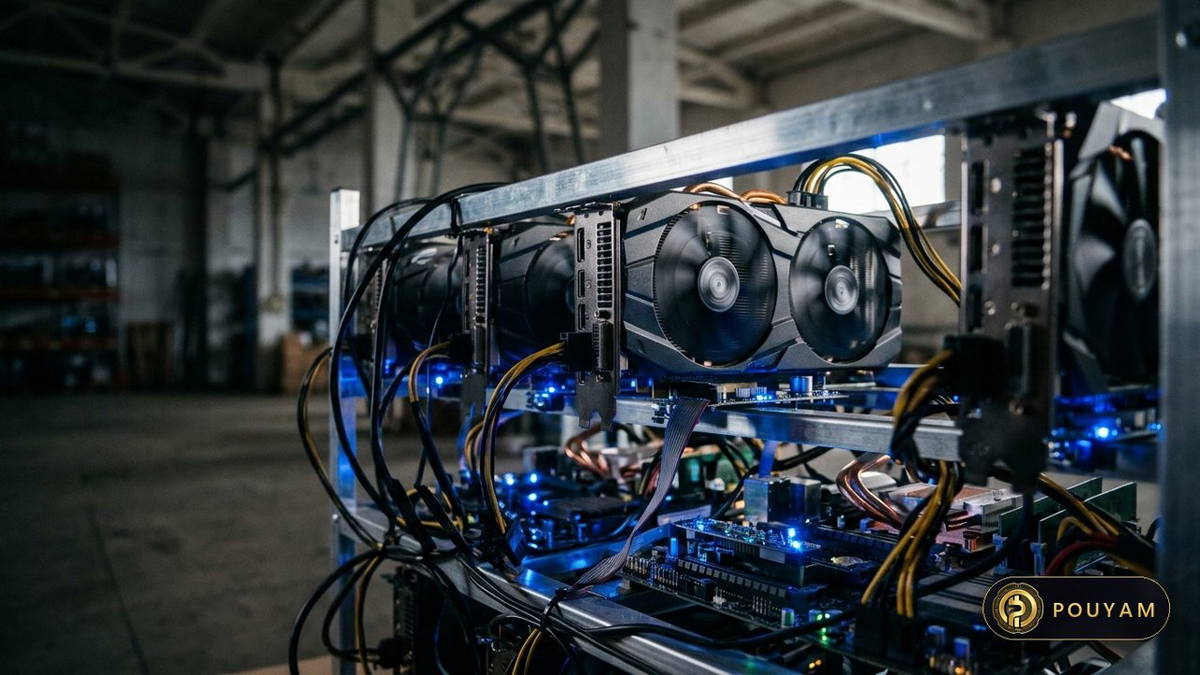
As of 3 November 2026 (data updated at 12:20 UTC), CoinGecko showed one bitcoin at $77,140, with a 24-hour range of $76,303 to $78,120 [5]. The total market value of all bitcoins was about $1.55 trillion [5]. The price was 9.6% lower than 30 days earlier and 28.4% lower than one year earlier [5].
The all-time high recorded by CoinGecko is $126,080, reached on 6 October 2025 [5]. On 3 November 2026 the price stood about 39% below that peak (a calculation from the two CoinGecko figures). CoinGecko's daily data for the 12 months to 3 November 2026 show a low near $58,600 on 1 July 2026 and a rebound to about $83,600 by 1 October 2026 [11].
Prices differ slightly between exchanges and data providers and change every second, so any figure is a snapshot. For a current number, check a live market data page rather than a news article.
What moves the bitcoin price?
Bitcoin has no earnings or interest payments, so its price reflects what buyers and sellers will pay at a given moment. The FAQ notes that the market is still small enough that it does not take large amounts of money to move the price up or down, which is one reason it is volatile [2]. The main forces researchers and regulators point to are below.
Supply schedule
New issuance is fixed by software and falls at each halving [3]. Because the schedule is public and known years in advance, markets can anticipate it.
Investment products and institutional demand
On 10 January 2024 the US Securities and Exchange Commission (SEC) approved the listing and trading of spot bitcoin exchange-traded product (ETP) shares [6]. These products let investors gain exposure through ordinary brokerage accounts. The SEC stressed that the approval was not an endorsement of bitcoin [6].
Government policy
Policy news can move expectations. On 6 March 2025, Executive Order 14233 set up a US Strategic Bitcoin Reserve funded with bitcoin the Treasury already held through forfeiture, and said that bitcoin placed in the reserve shall not be sold [7]. The order did not direct purchases; it asked officials to develop only budget-neutral strategies for acquiring more [7]. Regulation in other countries can work in the opposite direction, as Iran's case shows in the section below [10].
Stock-market mood and interest rates
An International Monetary Fund (IMF) analysis found that the correlation between bitcoin and the S&P 500 index rose from 0.01 in 2017 to 2019 to 0.36 in 2020 to 2021 [8]. The authors warned that this limits diversification benefits and lets shocks spread across asset classes [8]. On that evidence, bitcoin has at times moved with stocks rather than offsetting them [8].
Investor behaviour
A Bank for International Settlements (BIS) study of crypto app data from August 2015 to December 2022 found that a majority of crypto app users in nearly all economies made losses on their bitcoin holdings, and that large, sophisticated investors were selling while smaller retail investors bought during the 2022 slump [12].
What are the risks of owning bitcoin?
This is general information, not financial advice. Bitcoin's supporters value its fixed supply, its independence from any single issuer, and the ability to send value across borders without a bank [1][2]. Its risks are just as concrete:
- Volatility. In the January 2024 statement on spot ETPs, SEC Chair Gary Gensler described bitcoin as primarily a speculative, volatile asset and urged investors to stay cautious about the many risks of crypto-linked products [6]. The 28.4% one-year fall to 3 November 2026 is an example [5].
- Fraud. The FBI's Internet Crime Complaint Center (IC3) logged 181,565 complaints involving cryptocurrency in 2025, with reported losses of $11.366 billion, up 22% from 2024 [9]. Cryptocurrency investment fraud was the largest source of losses to Americans in 2025, at $7.2 billion [9].
- Irreversible payments. The system was designed so that transactions are computationally impractical to reverse [1]. A payment sent to a scammer or a wrong address is usually gone.
- No deposit insurance. The FAQ warns that some services may not insure deposits and that the software is still being developed [2].
- Illicit use and scrutiny. The same statement noted that bitcoin is also used for illicit activity, including ransomware [6].
How do people buy and store bitcoin more safely?
The steps below describe common practice and are not a recommendation to buy.
- Use a regulated, reputable service. Check whether the exchange or broker is licensed in your country. The SEC's ETP approval did not vouch for crypto trading platforms or custody arrangements [6].
- Understand custody. Coins held on an exchange depend on that company's security and solvency. Coins in your own wallet depend on you keeping the private keys and recovery phrase safe, since no one can reset them.
- Ignore unsolicited investment offers. The FBI says crypto investment scams typically start with a text, a social media message, an advert or a dating app, then move to a messaging platform and show fake profits on a fake platform [9].
- Send a small test amount first. Because transfers are hard to reverse [1], confirm the address with a small payment before a large one.
- Expect public visibility. Treat your addresses as traceable, because Bitcoin is not anonymous [2].

What should readers in Iran know about bitcoin?
Crypto use in Iran is large and tightly managed. Al Jazeera reported that in January 2025 the Central Bank of Iran (CBI) stopped rial payments on all crypto exchanges, affecting more than 10 million users, and that a meeting of the heads of the three branches of power then gave the CBI full authority over the crypto market [10]. The same report said mining was legalised in 2019 under strict conditions, but many miners were pushed out by repeated power cuts to mining rigs [10].
Exchange security is a further risk. The Associated Press reported in June 2025 that more than $90 million had been drained from Nobitex, Iran's largest cryptocurrency exchange, by a group calling itself Predatory Sparrow, and that the funds were sent to addresses where they were effectively burned [13]. Rules in Iran can change quickly, so check the latest CBI notices before using any local platform.
What happens next for bitcoin supply and policy?
The next halving is due at block 1,050,000, the fifth multiple of the 210,000-block interval in the code, when the subsidy will drop from 3.125 to 1.5625 bitcoins [3]. At the 10-minute block target [3], that points to around 2028; the exact date depends on how fast miners find blocks.
On the policy side, the US reserve created by Executive Order 14233 holds forfeited bitcoin and bars its sale [7], while the SEC's 2024 approval statement warned investors about the risks [6]. No source can say where the price will go. Forecasts published online vary widely and should be treated as opinions, not data.
Common mistakes
Assuming the halving guarantees a price rise.
Fix: The halving only cuts new supply; the price still depends on demand as well [2][3].
Treating the SEC's approval of spot bitcoin ETPs as a seal of approval for bitcoin.
Fix: The SEC said plainly that it did not approve or endorse bitcoin [6].
Trusting a stranger who offers to teach crypto trading on a messaging app.
Fix: That is the opening pattern of crypto investment scams described by the FBI; stop contact and report it [9].
Believing bitcoin payments are private like cash.
Fix: Every transaction is public, and the project itself says Bitcoin is not anonymous [2].
Quoting a bitcoin price without a date.
Fix: Always give the time and data source, since the price changes constantly [5].
Frequently asked questions
What is the bitcoin price today?
As of 3 November 2026 at 12:20 UTC, CoinGecko showed about $77,140 per bitcoin [5]. Check a live data page for the current figure.
How many bitcoins will ever exist?
The issuance schedule ends with a total of 21 million bitcoins [2]. About 20.1 million were in circulation as of 3 November 2026 [5].
When is the next bitcoin halving?
At block 1,050,000, when the subsidy falls to 1.5625 bitcoins [3]. With a 10-minute block target, that is expected around 2028 [3].
Why is bitcoin so volatile?
The price is set by supply and demand, and the market is small enough that modest sums can move it [2]. Its link to stock-market mood has also grown [8].
Who created Bitcoin?
The design was published in 2008 under the name Satoshi Nakamoto [1]. The person or group behind the name has never been publicly confirmed.
Is bitcoin legal in Iran?
Mining was legalised in 2019 under strict conditions, and in early 2025 the central bank was given full authority over the crypto market, according to a February 2025 Al Jazeera report [10]. Rules change often, so check current CBI notices.
Glossary
- Blockchain
- The public, time-stamped chain of blocks that records every Bitcoin transaction and is secured by proof-of-work [1].
- Proof-of-work
- Computing effort miners spend to add a block; changing history would require redoing that work [1].
- Halving
- The cut in the block subsidy by half every 210,000 blocks [3].
- Block subsidy
- The new bitcoins created in each block for the miner, currently 3.125 [4].
- Spot bitcoin ETP
- An exchange-traded product that holds bitcoin directly; the SEC approved the first US listings on 10 January 2024 [6].
- Market capitalisation
- Price multiplied by circulating supply; about $1.55 trillion for bitcoin as of 3 November 2026 [5].
Sources
- Bitcoin: A Peer-to-Peer Electronic Cash System Satoshi Nakamoto (hosted by Bitcoin.org)
- Frequently Asked Questions Bitcoin.org
- Bitcoin Core source code: GetBlockSubsidy (validation.cpp) and chain parameters Bitcoin Core project (GitHub), retrieved 2026-11-03
- Bitcoin Block 840,000 Blockchain.com Explorer · 2024-04-20
- Bitcoin price, market cap and supply CoinGecko; live data retrieved 2026-11-03 12:20 UTC
- Statement on the Approval of Spot Bitcoin Exchange-Traded Products US Securities and Exchange Commission (Chair Gary Gensler) · 2024-01-10
- Executive Order 14233: Establishment of the Strategic Bitcoin Reserve and United States Digital Asset Stockpile US Government Publishing Office (Daily Compilation of Presidential Documents) · 2025-03-06
- Crypto Prices Move More in Sync With Stocks, Posing New Risks International Monetary Fund (IMF Blog) · 2022-01-11
- 2025 IC3 Annual Report FBI Internet Crime Complaint Center
- Iran's government hits out at crypto again as currency freefalls Al Jazeera · 2025-02-27
- Bitcoin historical data (daily prices) CoinGecko; retrieved 2026-11-03
- Crypto shocks and retail losses (BIS Bulletin No 69) Bank for International Settlements · 2023-02-20
- Hackers reportedly wipe out $90 million from largest Iranian cryptocurrency exchange Associated Press via PBS NewsHour · 2025-06-19




Comments
Top comments