




Senior U.S. military commander in the Middle East calls for a halt to bombardment of the Strait of Hormuz
- Axios reporter Barak Ravid
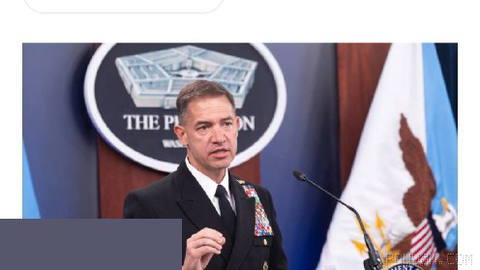
Based on what two sources familiar with his position said, Admiral Brad Cooper, the senior U.S. military commander in the Middle East, has recommended that the bombing campaign around the Strait of Hormuz be stopped because the operation has reached its ceiling of effectiveness.
Why it matters: According to these sources, Cooper’s recommendation, made by the commander of the U.S. Central Command (CENTCOM), along with the views of other advisers, influenced President Donald Trump’s decision on Friday to temporarily halt U.S. attacks against Iran.
This decision reflected the acceptance by the president’s military and civilian advisers of the reality that military action—especially an air campaign—has limitations in achieving the intended goals.
News details: For the first time in the past two weeks, Trump ordered the military to stop the fire and not carry out attacks on Iranian targets on the southern coasts of Iran and in the Strait of Hormuz area.
The decision was made after a meeting attended by senior advisers and military officials; a meeting in which a new attack plan for that same day was presented to the president.
Sources say that in the days before this meeting, Trump was inclined to return to broader military operations, but starting Thursday evening his view began to change.
His decision to slow down and stop the bombardment of the Strait of Hormuz was finalized on Friday.
Behind the scenes: According to sources, Admiral Cooper had presented his proposed path forward earlier in the week to the Pentagon, the Joint Chiefs of Staff, and the White House.
He emphasized that two weeks of attacks in the Strait of Hormuz area had significantly reduced Iran’s ability to attack ships.
Cooper noted that most of the targets set for the bombing were nearly hit.
The CENTCOM commander said that one of the possible next options would be a return to broader military operations to complete the attack on 20 percent of the targets that the U.S. Army had identified in Operation “Earnest Anger” but had not attacked.
Sources said that in the absence of a decision to return to broader operations, Cooper believed continuing the bombing campaign carried out over the past two weeks would be of no use.
Captain Tim Hawkins, the CENTCOM spokesperson, declined to comment on the matter.
A closer look: Sources said that General Dan Kin, the head of the U.S. Joint Chiefs of Staff, had privately also warned Pete Hegseth, the secretary of defense, and Trump that the shortage of defensive intercepting missiles could limit the ability to protect U.S. forces and the country’s allies in the region.
Kin’s warning was first reported by The New York Times. A spokesperson for the head of the Joint Chiefs of Staff said they do not comment about “classified military consultations that the Joint Chiefs provide to the president.”
What to watch next: Iran and Oman are still negotiating a new agreement to reopen the Strait of Hormuz; an agreement aimed at restoring the passage of ships without attacks.
However, it is unclear whether such an agreement would be acceptable to Trump. If no agreement is reached, the likelihood of a renewed escalation of the war exists.
Meanwhile, the situation on the ground appears to have turned into “calm against calm,” and both sides have halted their attacks.
Mike Waltz, the U.S. ambassador to the United Nations, said on Sunday on NBC’s “Meet the Press” that although Trump “keeps all options on the table,” he is at the same time “giving negotiations [with Iran] an opportunity.”
Waltz said talks between the United States and Iran are “underway at all levels.”
A broader view: The United States and Britain are still discussing holding an international conference toward the end of this week. The conference aims to form a coalition to protect the Strait of Hormuz and clear the sea mines along this route.
No final date has been set yet for the meeting.
Hashtags: null

Comments
Top comments