



Exclusive: The United States and Britain are planning an international conference about the Strait of Hormuz
- By Axios reporter Barak Ravid
The United States and Britain are planning to hold a high-level meeting in London next week, focused on forming a possible international coalition to protect shipping in the Strait of Hormuz, two European diplomats and two other sources familiar with the matter told Axios.
Why it matters: Reopening the Strait of Hormuz for commercial shipping is a key element of any U.S. strategy for ending the war with Iran, as well as efforts to stabilize global energy markets.
The timeline and the exact date of the meeting are still being reviewed and have not been finalized. According to European diplomats, the meeting may bring together defense ministers and senior military commanders from Western countries as well as regional countries.
U.S. Defense Secretary Pete Hegseth and General Dan Kin, the head of the U.S. Joint Chiefs of Staff, are expected to attend the meeting. The White House and the Pentagon did not respond immediately to a request for comment. The British Embassy in Washington also declined to comment.
What happened: Since Iran began attacks on ships in the Strait of Hormuz two weeks ago, the United States has carried out daily attacks against Iranian military targets along the southern coasts of the country.
Over the past four days, there have been no attacks by Iran against commercial vessels. Some U.S. defense officials say the reason is that Iran’s military capability around the Strait of Hormuz has been nearly eliminated by U.S. attacks.
Other officials believe Iran still has the ability to attack ships in this region.
On Wednesday, President Trump threatened that if Iran attacks ships in the Strait of Hormuz again, the United States will bomb bridges and power plants, including in Tehran. In response, Iran threatened the infrastructure of U.S.-allied Gulf countries.
Bigger picture: Tensions over the Strait of Hormuz escalated after negotiations in Oman among Iran and Qatar over a new agreement for the region ended without results.
Shortly afterward, Abbas Araghchi, Iran’s foreign minister, returned to Tehran for consultations, and the Islamic Revolutionary Guard Corps began attacks on ships in the strait.
On Friday, an Omani delegation arrived in Tehran to resume negotiations on the mechanism for reopening the strait.
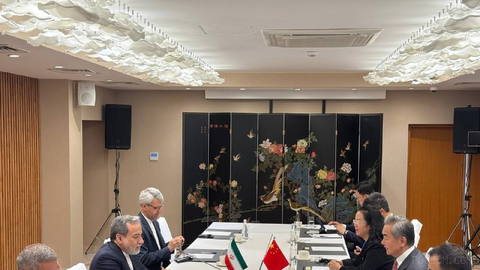
On Friday, Araghchi said he discussed various initiatives and proposals with his Pakistani counterpart, who is one of the intermediaries in negotiations between Iran and the United States.
He said: “The problem is not that there is no mediator between us and the United States; the problem is the U.S. approach.”
Araghchi added that Iran “will not submit to U.S. bullying” and will protect its interests in the Strait of Hormuz.
He said: “As long as the goals and legitimate demands of the Iranian people are not realized, it is natural that we will continue on our path.”
On Friday, Araghchi spoke by phone with Badr Albusaidi, Oman’s foreign minister, about “the security of shipping and the passage of commercial ships through the Strait of Hormuz.”
In a statement, Iran’s foreign ministry said: “The two ministers emphasized the importance of maintaining maritime security and discussed regional solutions and cooperation aimed at preventing further escalation of tensions in the region.”
Behind the scenes: Sources said the United States wants to act based on discussions Britain and France have had in recent months with several countries about forming an international coalition for the Strait of Hormuz.
One of the key conditions for many countries is that the fighting in the strait ends so that on-the-ground conditions for conducting a secure international maritime mission are in place.
Sources said the United States is asking its allies to deploy military equipment such as mine-sweepers, maritime vessels, and drones to the region to help secure shipping routes.
One European diplomat said: “The Americans are looking for a way out, and they want our help.”


コメント
トップコメント