
Starlink Mini 2: Battery, Price, Speed and Who Should Wait
- 1 views
- 0 likes
- 0 comments
- All languages combined

In short
As of November 11, 2026, Starlink says Mini 2 preorders are open by invitation for select US customers; reports put the launch offer at $999 with a year of Roam Unlimited service. Reported $249 hardware and $50 battery figures come from backend beta references, not a published standard retail price. No independent Mini 2 speed testing is established. [1][2][3][8]
Key takeaways
- Mini 2 was reported as announced on November 10, 2026, with invitation-only US preorders; Starlink's own page says only that it is coming soon to more customers and countries, and no standard retail price was published in the material reviewed. [1][2][8]
- The reported $999 invite-only offer includes one year of Roam Unlimited service, so it cannot be compared directly with a hardware-only price. [1][2]
- The $249 Mini 2 Beta Kit and $50 Beta Battery figures came from reported Starlink backend/API references and may change; they are not confirmed general-retail prices. [3]
- Starlink's Mini 2 page lists a quick-swap 71 Wh battery with battery life of up to 4.5 hours; that is a manufacturer maximum, and real runtime depends on conditions and needs independent testing. [1][8]
- Do not infer Mini 2 upload or download performance from leaks or the current Mini. No reliable independent Mini 2 speed test had been published as of November 11, 2026. [1][2]
- Starlink availability, plan compatibility, price, taxes and lawful use depend on country and address. Check the official order flow and local rules rather than an overseas news report. [4]
On this page 12 sections
- What is Starlink Mini 2, and can you buy it now?
- What is confirmed, reported, and still unknown about Mini 2?
- How does Mini 2 compare with the current Starlink Mini?
- What do the reported price figures actually mean?
- What speed can Starlink Mini 2 deliver?
- Who does Mini 2 suit, and who should wait?
- What should you check before ordering a portable satellite kit?
- What to watch for before Mini 2 becomes a normal retail purchase?
- Common mistakes
- Frequently asked questions
- Glossary
- Sources
What is Starlink Mini 2, and can you buy it now?
Starlink Mini 2 is the second-generation version of Starlink's portable satellite-internet terminal. As of November 11, 2026, the important qualification is availability: Starlink's Mini 2 page says preorders are open by invitation for select US customers and that the device is coming soon to more customers and countries, so this is not a general worldwide sale. The Next Web reports that the launch offer is $999 and includes one year of Roam Unlimited service, with initial shipping expected in mid-December. SatelliteInternet likewise describes an invite-only US first wave and says there is no information on when it will become widely available. [1][2][8]
That means the plain answer to ‘should I buy it?’ is usually ‘not yet’ for anyone who has no invitation, needs equipment immediately, or needs a confirmed price in their own country. A product page or article about a forthcoming device does not create stock, service eligibility, lawful local use, warranty coverage or a return route. Starlink's current Mini availability page says its regions and compatible plans vary, and directs customers to enter an address to check their specific availability. [4]
The Mini 2 matters because Starlink lists a quick-swap battery and USB-C charging, which could reduce the amount of separate equipment carried for temporary or mobile use. [8] However, an attractive hardware feature does not by itself answer the more important service questions: whether the plan works at the intended location, what it costs after the included period, whether the user has a clear sky view, and what happens if the terminal is damaged or unavailable.
There is also a difference in how fully each device is documented. The existing Mini has an official product page, support articles and published specifications. For Mini 2, Starlink's own page lists headline specifications and box contents, but its public text as read on November 11, 2026 states no price; the $999 figure and the Roam Unlimited plan name come from reports of the invitation offer. Therefore, Mini 2 details below are attributed either to Starlink's page or to named reports; unreported details are left unconfirmed rather than filled with guesses. [1][5][8]
What is confirmed, reported, and still unknown about Mini 2?
Reported launch status: The Next Web says Starlink announced Mini 2 on November 10, 2026 and opened US preorders by invitation. It reports an initial $999 offer with a year of Roam Unlimited service and says the offer is limited to invited US customers. SatelliteInternet reports the same invitation-only starting point and says there is no published timetable for broad availability. Starlink's Mini 2 page itself says preorders are open by invitation for select US customers and that Mini 2 is coming soon to more customers and countries. These are reports of the launch, not a substitute for the order terms an individual customer sees. [1][2][8]
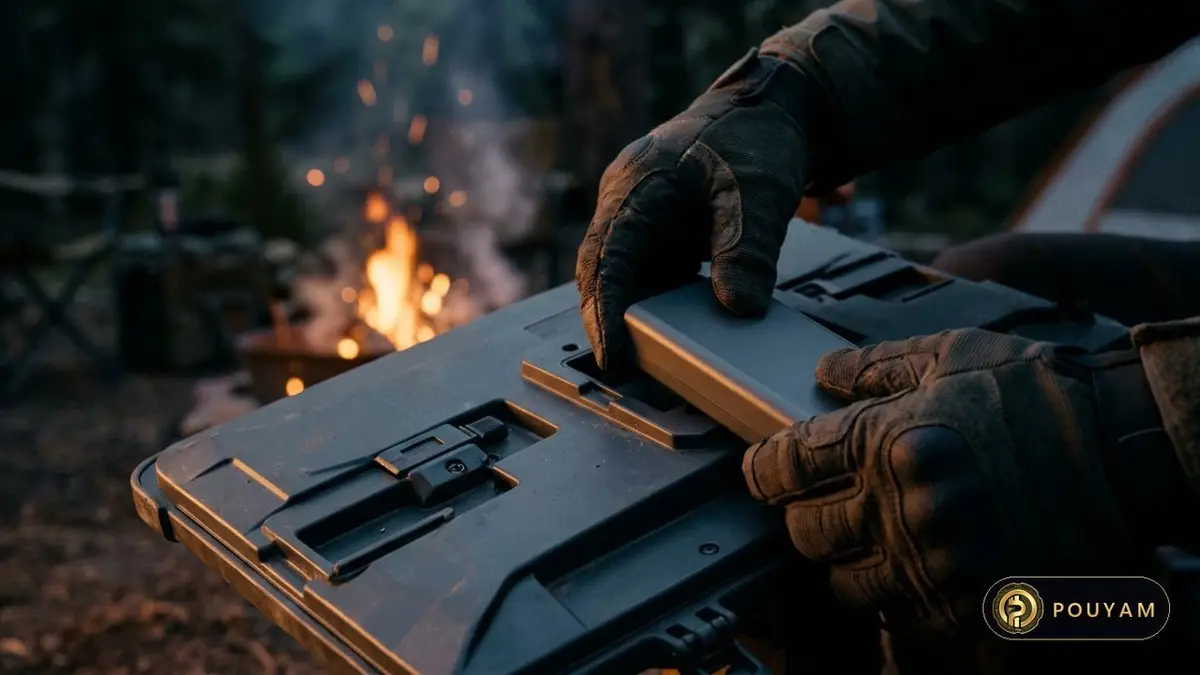
Reported battery and power features: The Next Web reports a detachable 71 Wh battery, a claimed maximum of 4.5 hours of connectivity on one charge, tool-free attachment, a USB-C port on the battery, and charging through a 60 W USB-C connection. SatelliteInternet also reports a swappable battery, an up-to-4.5-hour claim, USB power and a dedicated power button. Starlink's own Mini 2 page lists the same core figures: a 71 Wh battery capacity, battery life of up to 4.5 hours and USB-C 60W charging. These are manufacturer claims; they are not independent runtime measurements. [1][2][8]
Reported physical and wireless changes: The Next Web reports Wi-Fi 6, a 23.1 mm thickness, IP67 rating and a 1.6 kg weight with battery and kickstand, figures that match Starlink's Mini 2 page. SatelliteInternet similarly reports Wi-Fi 6, IP67 and a weight comparison, but notes a possible loss of an Ethernet port based on its reading of the available material. A buyer who requires Ethernet or a particular mounting setup should wait for the final official documentation or verify the exact offered kit before ordering. [1][2][8]
Reported beta references: DISHYtech says it found ‘Mini 2 Beta Kit’ and ‘Mini 2 Beta Battery’ entries in a Starlink API response, associated with $249 and $50 respectively. The site itself says Starlink had not officially announced the next-generation Mini at the time of that report, that the beta price might not be the final launch price, and that capacity and runtime were unclear. The figures should therefore be treated as reported backend information, not a published retail promise. [3]
Still unknown from the evidence reviewed: a public standard hardware-only price, global release date, country-by-country plan pricing, detailed throughput under varied conditions, independent latency and speed testing, full accessory compatibility, complete warranty terms and a confirmed retail shipment schedule outside the reported invitation offer. Absence of a published confirmation is not proof that a feature is absent; it is a reason not to present it as established fact. [1][2][3]
How does Mini 2 compare with the current Starlink Mini?
The current Mini is the safer comparison point because Starlink publishes information about it. As of November 11, 2026, the current US product page says the Mini Kit starts at $149, describes it as compact and portable, lists Wi-Fi 5, an average power use of 25–40 W, IP67, a 1.10 kg terminal weight and a 12–48 V DC input. It also says that a 100 W USB Power Delivery source is required when using Starlink's USB-C-to-barrel-jack cable accessory. Prices, availability and plan terms on the actual checkout may differ by place and time. [5]
Starlink's support material says the current Mini kit includes the terminal with integrated Wi-Fi, a kickstand, Mini Pipe Adapter and Flat Mount, a 15 m DC power cable, power supply and Starlink Plug. It says installation can take as little as 15 minutes in a standard setup, while other installations can take longer. Those are current-Mini details; they must not be assumed to describe every Mini 2 package. [6]
The reported Mini 2 distinction is integrated portable power through a quick-swap battery rather than the original Mini's need for an external power solution. That can be meaningful for a person who regularly sets up away from AC power and already understands the service plan. It may be less meaningful for a fixed location where the terminal will stay connected to normal power. The reported battery increases total carried weight, so the trade-off is not simply ‘newer is better.’ [1][2][5]
Wi-Fi generation is likewise not a complete performance verdict. Starlink's Mini 2 page lists Wi-Fi 6 and the current Mini page lists Wi-Fi 5. Wireless coverage and actual internet experience still depend on the client device, interference, distance, obstacles, plan conditions and the satellite link. Neither label proves the speed of a particular upload, video call or download. [1][5][8]
For an existing Mini owner, the practical comparison is not just dish versus dish. It is existing equipment and a known service setup versus a limited-launch offer whose wider terms are still unclear. Replacing working equipment makes sense only if the removable battery, reported power changes or other confirmed features solve a real constraint that the current setup cannot solve at an acceptable cost.
What do the reported price figures actually mean?
Three numbers have appeared in coverage, and they should not be blended into one price. First, The Next Web and SatelliteInternet report a $999 invitation-only US launch offer that includes a year of Roam Unlimited service. That is a combined equipment-and-service package. It is not evidence that a future hardware-only Mini 2 will cost $999, and it is not comparable dollar for dollar with a dish-only product listing. [1][2]
Second, DISHYtech reported a $249 figure tied to an API label for ‘Mini 2 Beta Kit.’ Its article says this may indicate an initial beta group, but also says the beta price may not represent the final launch price. Third, the same report associates $50 with a separately named ‘Mini 2 Beta Battery’; it does not establish the battery capacity, runtime or final retail price. These figures are useful signals of what may be planned, but they remain unconfirmed for ordinary retail buyers. [3]
As of November 11, 2026, the current Mini's official US page says it starts at $149, the same figure The Next Web gives for the original Mini. That is a price for the existing device on that page, not an equivalent Mini 2 offer and not a global price. A current product's promotional price, a reported beta reference, and an invitation package with service included represent different transactions. Comparing them without separating hardware, service, tax, shipping and eligibility creates a false bargain. [1][5]
Before comparing any Starlink offer, list five elements separately: terminal hardware, battery or power accessories, service plan and its duration, shipping and tax, and any activation or cancellation conditions. If the offer includes a year of service, identify what happens after that year and whether the plan is transferable or refundable under the actual terms. Do not assign a value to service simply because a news story mentions a plan price elsewhere.
A price reported for the US is not a usable price for every country. Starlink's Mini availability support page states that pricing may be higher in high-usage areas such as the US and that the Mini is compatible only with certain plans in most countries; it asks prospective customers to enter their address to check availability. Country-specific taxes, delivery, import rules, service rules and local consumer protections can alter both availability and the real total. [4]
What speed can Starlink Mini 2 deliver?
No fixed Mini 2 speed figure should be promised from the material reviewed. The launch reporting describes battery, power, Wi-Fi and physical changes, but it does not provide an independent Mini 2 benchmark for download speed, upload speed, latency or performance under congestion. SatelliteInternet explicitly says there is no stated performance difference from the original in the available information and characterises similarity as a guess. That is a reason to wait for tested results, not a basis for a performance claim. [1][2]
The current Mini page says the existing product can provide speeds of up to 300+ Mbps. ‘Up to’ is a maximum-style marketing statement, not a measurement that every customer will see at every time or place. Starlink's support comparison describes the current Mini as compact and portable for basic internet use, while it describes a larger Standard 4 X kit as aimed at high-demand everyday use such as streaming, video calls and gaming. This is product positioning, not a guaranteed performance threshold. [5][7]
Speed has several parts. Download speed affects how quickly data reaches a device. Upload speed affects sending files and live video. Latency is the delay before a response returns. Wi-Fi coverage is the local connection between the terminal's router and a phone or computer, while the satellite link is the wider internet connection. A Wi-Fi 6 label does not establish any of the satellite-link figures, and a battery claim does not establish them either.
For a prospective buyer, the useful question is not ‘what number will I get?’ but ‘what task must work, at what location, for how long, and with what fallback?’ A person who only needs occasional messages or basic connectivity has a different threshold from someone who needs reliable large uploads or a sustained work call. Until independent Mini 2 tests and official plan terms are available for the relevant place, retain a backup connection for a critical task rather than treating a reported speed claim as a guarantee.
Reports and early claims can change quickly during an invitation-only rollout. When public reviews arrive, distinguish measurements from claims, check their location and plan, and avoid treating one result as a universal figure. A useful review discloses the test conditions and does not convert a short favourable result into a promise for other countries or situations.
Who does Mini 2 suit, and who should wait?
Mini 2 may suit an invited US customer whose actual need is portable connectivity, whose service address and intended plan are eligible, and for whom the reported quick-swap battery solves a specific power-management problem. In that narrow case, the purchase decision should come from the invitation's final checkout, service terms, delivery information and return terms—not from a reported beta price or a headline. [1][2][3]
It may also suit a future customer who expects to set up temporarily in locations with a clear view of the sky and who values reducing external power gear. Starlink's current support comparison says both the existing Mini and the Standard 4 X are set up with no obstructions and aligned with a tool in the Starlink app. That describes the current equipment and illustrates why portable satellite use is not simply a matter of owning the dish. [7]
Waiting is more appropriate for people outside the reported invite-only US group, people who need firm pricing, people who require a known Ethernet or accessory arrangement, and people whose decision depends on confirmed upload performance. The reported $249 and $50 beta figures do not resolve those questions. Neither does the $999 invitation package, because it includes a year of service. [1][2][3]
Waiting is also prudent where service availability is uncertain. For people in Iran, reports about a US invitation do not establish local availability, support or a safe way to obtain a kit; Iran is not among the regions listed on Starlink's Mini availability page. [4] The site's Starlink in Iran guide covers the legal risks and practical limits there with separate sources; unofficial sellers, altered equipment and third-party promises are not proof that a service will work.
Finally, a portable terminal is not a substitute for an emergency plan. Battery time is finite, sky visibility matters, service conditions can change, and hardware can fail or be lost. If continuity is important, decide on backups, charging and communications arrangements before relying on any single link.
What should you check before ordering a portable satellite kit?
Start at the official order flow for your actual address. Check whether the kit, plan and delivery are offered there, then read the final price and terms shown to you. Starlink's Mini availability page says the device can be purchased through its website or selected authorised retailers in listed regions, and says the Mini is compatible only with certain plans in most countries. A social post or a foreign news article cannot replace that address-level check. [4]
Separate the hardware and service questions. Confirm what is in the box, the power requirements, the plan name, service duration, renewal price if disclosed, cancellation rules, portability limits and return terms. For the current Mini, official support lists a terminal, kickstand, mounts, 15 m DC cable, power supply and Starlink Plug. For Mini 2, Starlink's page lists the Mini 2, a battery, a kickstand, a power supply and a USB-C cable as in the box; confirm the package from the actual offer instead of assuming it matches the older kit. [6][8]
Check power in practical terms. Starlink's up-to-4.5-hour battery claim does not show how long the device will last for your workload, temperature, signal conditions or charging arrangement. If a task is essential, plan how the terminal will be charged and what backup connection is available. Do not rely on a claimed maximum as a minimum runtime. [1][2][8]
Check the installation environment. The current support comparison says the Mini is an electronic phased-array antenna and uses an alignment tool in the Starlink app; it says an unobstructed view is needed. Obstructions and local conditions can affect whether any portable satellite setup is useful at a particular place. [7]
Keep records of the offer, terms, device serial details where appropriate, order confirmation and support communications. Buy only from a source you can identify. An unusually cheap ‘preorder’ or a request to pay outside the official checkout may be a scam or may leave the buyer without a usable dispute route. The safest response to an unclear deal is to wait for a verifiable offer.

What to watch for before Mini 2 becomes a normal retail purchase?
Watch first for a published standard price and the exact offer in the intended country. Starlink's Mini 2 page already lists core specifications; the key missing details are the standard hardware price, availability date, included equipment, plan options after any bundled period, warranty and returns. These details determine whether an apparent price is a purchase option or merely an early-launch package. [1][2][3][8]
Next, watch for independent measurements. The most useful reviews will state the location, plan, time, obstructions, client device and test method, then separate download, upload, latency, battery runtime and Wi-Fi coverage. They should not use a current Mini result to claim Mini 2 performance. Until such testing exists, the correct description of Mini 2 speed is unconfirmed rather than fast, slow, better or worse. [1][2]
Finally, watch for country-specific eligibility. The current Mini availability material shows a long but finite regional list and says plan compatibility differs. A worldwide announcement is not the same as a supported purchase in every location. Check the official site at the moment of purchase and read local rules independently where they matter. [4]
Mini 2's reported battery and power changes may be valuable for portable users, but they do not make an incomplete offer complete. For most readers on November 11, 2026, the sound conclusion is to distinguish the reported US invitation launch from the unconfirmed beta pricing, avoid speed speculation, and wait for verifiable terms if the current Mini does not already meet the need.
| Question | Best-supported answer | Status | What a buyer should do |
|---|---|---|---|
| Can everyone order Mini 2? | Starlink says preorders are open by invitation for select US customers. | Official, but not general availability. [1][2][8] | Check the official order flow for the actual address. |
| What does the launch offer cost? | A reported $999 US offer includes one year of Roam Unlimited service. | Reported invitation package. [1][2] | Separate service, hardware, tax and shipping before comparing. |
| Is Mini 2 a $249 product? | A $249 ‘Mini 2 Beta Kit’ was reported from an API entry. | Unconfirmed beta reference. [3] | Do not budget around it until a retail offer is published. |
| Does it have a battery? | Starlink's Mini 2 page lists a quick-swap 71 Wh battery and battery life of up to 4.5 hours. | Manufacturer claim, not independently tested. [1][8] | Wait for final documentation and independent runtime tests. |
| How fast is it? | No independent Mini 2 speed benchmark was established in the reviewed sources. | Unknown. [1][2] | Do not treat Wi-Fi generation or leaks as a performance guarantee. |
| What about the current Mini? | As of November 11, 2026, the official US page lists a $149 starting price, Wi-Fi 5, 1.10 kg weight and 25–40 W average use. | Official current-product information. [5] | Compare the exact available offer and plan, not headlines. |
Common mistakes
Calling the reported $249 beta entry the Mini 2 retail price
Fix: Label it as a reported API beta reference. DISHYtech says it may not be the final price. [3]
Comparing a $999 package with an alleged hardware-only price
Fix: The reported $999 invite offer includes a year of Roam Unlimited service; separate equipment and service before comparing. [1][2]
Promising a Mini 2 speed from Wi-Fi 6 or an early leak
Fix: No independent Mini 2 speed testing was established in the reviewed sources. Wait for measured results with stated conditions. [1][2]
Assuming existing Mini accessories and box contents automatically apply to Mini 2
Fix: Use official current-Mini documentation only for the current Mini; verify the Mini 2 package in the actual offer. [6]
Treating a US invitation as worldwide availability
Fix: Check the official address-level order flow. Starlink says availability and compatible plans vary by region. [4]
Buying through an unclear reseller because an early product is scarce
Fix: Wait for a verifiable offer with terms, a legitimate seller and a documented return route.
Frequently asked questions
Has Starlink Mini 2 been released?
Starlink's Mini 2 page and reports on November 10–11, 2026 describe an invitation-only US preorder launch for select customers, not a normal worldwide retail release. Starlink says it is coming soon to more customers and countries, and no timetable for wider availability appears in the material reviewed. [1][2][8]
Does Starlink Mini 2 have a built-in battery?
Starlink's page uses the phrase "built-in battery", but it and reports describe a removable quick-swap 71 Wh pack rather than a permanently sealed one. Starlink states battery life of up to 4.5 hours; independent runtime testing is not yet established. [1][2][8]
What is the Starlink Mini 2 price?
The reported invite-only US launch package is $999 and includes a year of Roam Unlimited service. Separately, an API report identified a $249 beta kit and a $50 beta battery, but those are not confirmed standard retail prices. [1][2][3]
Is the $249 Mini 2 price confirmed?
No. DISHYtech reported the number from a Starlink API response and explicitly said the beta price may not reflect the final launch price. Treat it as unconfirmed until an official public offer states the terms. [3]
How fast is Starlink Mini 2?
No reliable independent Mini 2 speed result had been published as of November 11, 2026. The current Mini's official page advertises speeds of up to 300+ Mbps, but that is a current-product claim and does not establish Mini 2 performance. [5]
Should existing Mini owners upgrade?
An upgrade may suit someone whose verified use case requires the reported removable battery or power changes. Otherwise, wait for final local pricing, package contents, plan terms and independent tests; working current equipment has known official specifications. [1][3][5]
Glossary
- Invitation-only preorder
- An order opportunity offered to a selected group rather than a public sale open to all customers.
- Roam Unlimited
- The Starlink service-plan name reported as included for one year in the initial $999 Mini 2 invitation package. [1]
- Watt-hour (Wh)
- A measure of stored energy. It does not by itself guarantee a fixed operating time because use and conditions vary.
- IP67
- An ingress-protection rating listed on Starlink's pages for both Mini 2 and the current Mini; confirm the rating and its conditions in the final product documentation. [5][8]
- Backend/API reference
- Information observed in a site's underlying data response rather than necessarily presented as a public product offer; it can change before release. [3]
Sources
- SpaceX launches Starlink Mini 2 with a swappable battery and Wi-Fi 6 The Next Web · 2026-11-11
- Starlink Mini 2 Revealed. Invite-Only Preorders Start at $999 SatelliteInternet.com · 2026-11-10
- Starlink Mini 2 Pricing Revealed! $249 Kit and $50 Battery DISHYtech · 2026-11-09
- Where is Starlink Mini available? Starlink
- Starlink | Mini Starlink
- Starlink Mini: Specifications and Installation Starlink
- What are the differences between Starlink Mini and Standard 4 X? Starlink
- Starlink | Mini 2 Starlink




Comments
Top comments