In short
A Pokémon card lottery, or drawing, picks buyers at random instead of selling first come, first served [1][2]. Target's allows one entry per logged-in guest [1]. Cards sell out because demand outruns printing, which The Pokémon Company says is at maximum capacity [3], and about 10 billion cards were printed in the year to spring 2026 [4].
Key takeaways
- Target's drawing allows one entry per logged-in guest, and entries for the Kangaskhan blister close at 11 AM ET on 4 November [1].
- On 27 March 2025 The Pokémon Company said it was printing affected products at maximum capacity because of very high demand [3].
- About 10 billion Pokémon cards were printed in the year to spring 2026, and lifetime output is reported at more than 85 billion [4].
- Screen Rant says Target's drawing tackles scalping but does not fully stop scalpers from buying [5].
- Walmart announced a 'Collectibles Drawing' in August 2026 that picks winners at random and sizes each drawing to its stock [2].
- Card values depend on the card, set, condition and grade: a well-preserved first-booster Pikachu sold for about 10 million yen in a Tokyo shop in August 2026, so check live sold listings before paying or selling [6].
On this page 14 sections
- What is the Pokémon card lottery system?
- How does the Target Pokémon card lottery work?
- Do Walmart and Japan's Pokémon Center use lotteries or limits?
- Why are Pokémon cards sold out everywhere?
- Who are the scalpers and what do they do?
- How much are Pokémon cards worth?
- Are Pokémon cards a safe investment?
- How can you buy Pokémon cards at normal prices?
- What is different for buyers in Iran?
- What happens next with Pokémon card lotteries and prices?
- Common mistakes
- Frequently asked questions
- Glossary
- Sources
What is the Pokémon card lottery system?
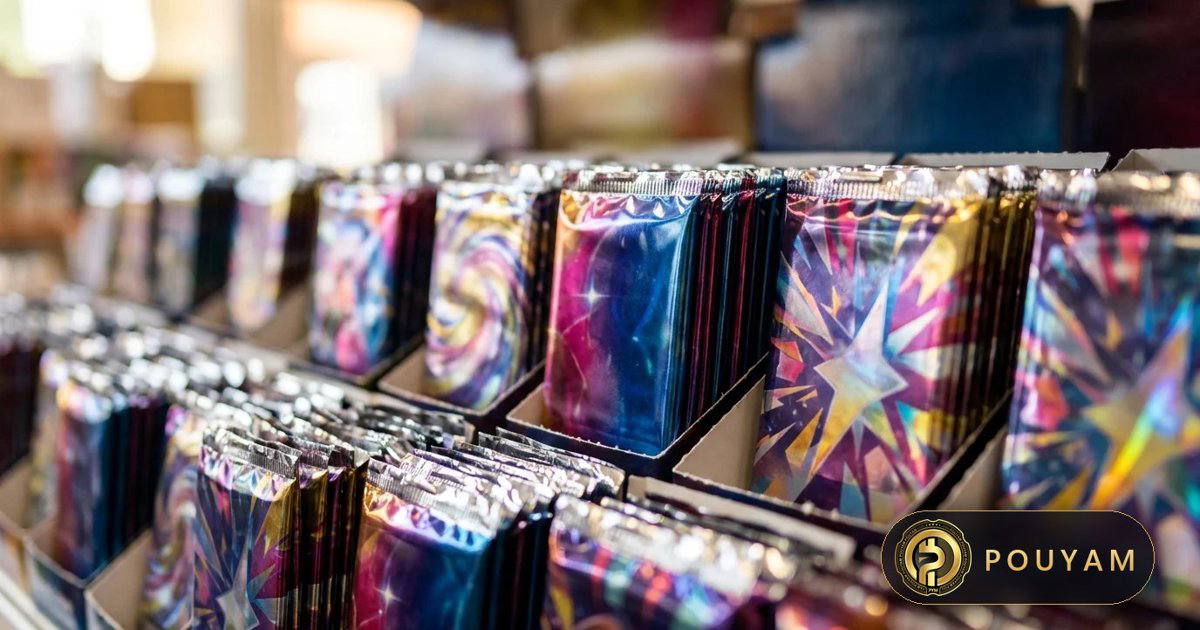
A Pokémon card lottery, which retailers also call a drawing, is a sales method in which shoppers enter for a chance to buy a product and winners are picked at random, instead of everyone racing to the shelf or the checkout [1][2]. It replaces first-come, first-served selling for products that vanish within minutes.
Where did the idea come from?
Lotteries are not new to Pokémon. In May 2021 Creatures Inc. moved some Pokémon TCG products for the Eevee Heroes expansion to a lottery-only sale in Japan, and did not sell them in physical Pokémon Center stores [7]. What is new is that large US chains now run their own versions: Target's online drawing was live in November 2026 [1], and Walmart announced a 'Collectibles Drawing' in August 2026 [2].
Why do retailers use lotteries?
Drawings are presented as a way to tackle scalping [2][5]. A lottery removes the advantage of being first in line, so a buyer with more time or more tools no longer wins automatically. Walmart sizes its drawings to the stock it has [2], which keeps the number of winners in line with what is on hand.
The method has limits. Screen Rant says Target's drawing tackles scalping but does not fully stop scalpers from buying [5]. No independent measurement of how much lotteries reduce reselling turned up in the research behind this article, so treat claims of success as company positions, not proven results.
How does the Target Pokémon card lottery work?
Target's drawing is the clearest recent example of a US retailer using a lottery for Pokémon cards. As of 2 November 2026, the product page for the Pokémon TCG Scarlet & Violet–Destined Rivals Three-Booster Blister (Kangaskhan) showed an 'Enter drawing' button [1][8].
How do you enter?
- Open the product page and look for the 'Enter drawing' button [1][8].
- Log in to your Target account. The drawing allows one entry per logged-in guest [1].
- Submit your entry before 11 AM ET on 4 November [1][8].
- Watch your email. Winners are chosen at random and emailed from 4 November [1].
What is in the drawing and what does it cost?
TrackaLacker lists the Kangaskhan three-booster blister at $14.99 with one foil Kangaskhan promo card [8]; confirm the price on Target's product page. That is a useful reference point for what a sealed retail product costs when you win a drawing, as opposed to what resellers may ask later.
What is still unclear?
As of 2 November 2026, the Kangaskhan blister was the only Pokémon pack showing the drawing, and it was unclear how many packs a winner can buy [1]. Reports also disagree on scope. Screen Rant, citing Polygon, says the system has gone live across Target storefronts and will make buying booster packs harder [5]. The two accounts may describe different moments or different parts of the site, so check Target's own product page before assuming a particular product is in the drawing.
Do Walmart and Japan's Pokémon Center use lotteries or limits?
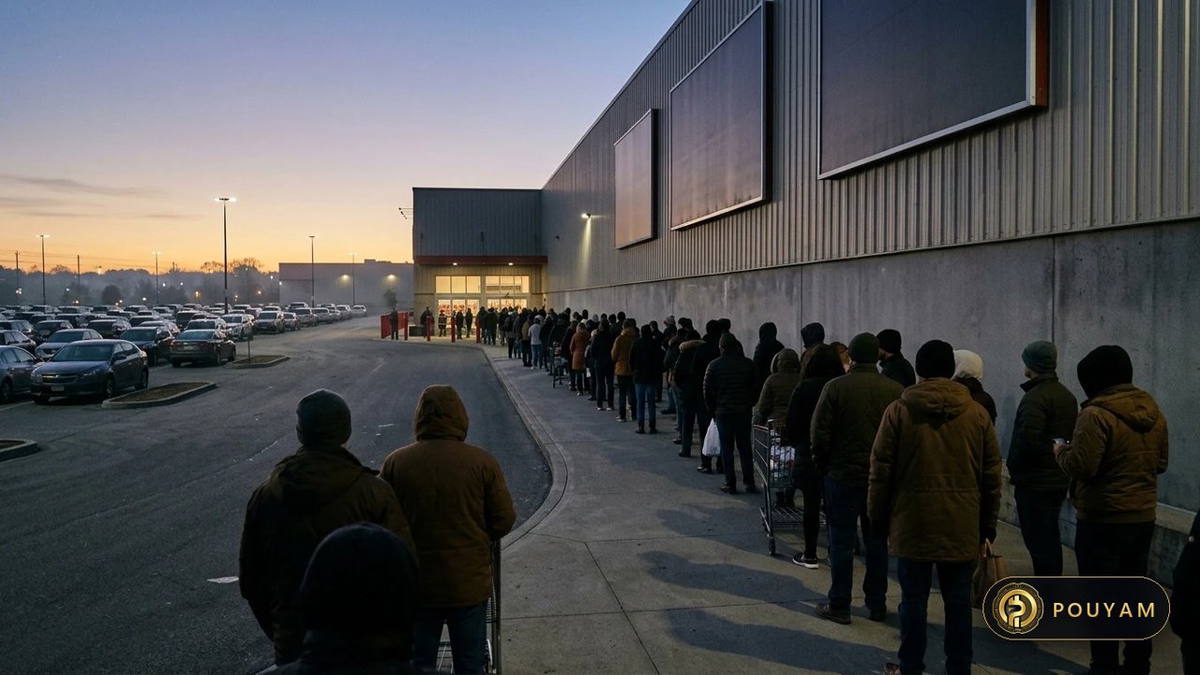
Yes, several retailers and The Pokémon Company itself have added controls, and they work in different ways.
Walmart
Walmart announced a 'Collectibles Drawing' for Pokémon TCG products. It selects winners at random, and winners get access to buy the product. Entrants can authorise an automatic order, and a Prismatic drawing was listed for 31 August [2].
Walmart also told stores to enforce a limit of five packages per visit on Pokémon and other trading cards from 5 November 2025. This followed a viral video of a man buying thousands of cards at a Las Vegas store. Kotaku based its report on an internal announcement shared on Reddit, not a public Walmart statement [9].
Japan
Japan has used lotteries since at least 2021, when Creatures Inc. sold some Eevee Heroes products by lottery only [7]. Pokémon Japan later said that from around August 2026 buyers must verify identity with Japan's government 'My Number Card' to enter lotteries and buy selected TCG products on Pokémon Center Online. PokeBeach reports that this limits access for scalpers and overseas buyers, and the exact start date, products and rules were still to be announced as of 20 May 2026 [10].
Why are Pokémon cards sold out everywhere?
The short answer is that demand has outrun supply, and the company says it is already printing flat out.
What has The Pokémon Company said?
On 27 March 2025 The Pokémon Company said some fans were having trouble buying certain TCG products because of very high demand. It said it was printing affected products as quickly as possible and at maximum capacity, and would keep reprinting recent sets [3]. It also said it would raise print volumes for future expansions and reprint affected products for participating retailers; the statement references Pokémon Center [3].
How many cards are being printed?
About 10 billion Pokémon cards were printed worldwide in the year to spring 2026. The company's own updated figures, as reported, put the lifetime total at more than 85 billion cards, up from 75 billion distributed as of May 2025 [4][11]. Lifetime production was 34.1 billion in May 2021 [4][11]. The sources describe the 10 billion window differently: Kotaku counts the 12 months after May 2025 [4], while PokeBeach says March 2025 to March 2026 [11]. Both agree on roughly 10 billion a year, so the figure is best read as 'about 10 billion, as reported'.
Is speculation part of the problem?
Nintendo, which counts The Pokémon Company as an equity-method affiliate, said it is aware of 'speculative buying up' of limited-quantity Pokémon cards. It said it is communicating with The Pokémon Company about measures to deliver products to customers properly [12].
Will new factories fix it?
Millennium Print Group, The Pokémon Company International's printer, has confirmed that it leased a large manufacturing campus in North Carolina, first reported in December 2025 [13]. ComicBook says it could be about two more years, to roughly 2028, before more printing capacity is felt, and argues that high prices keep encouraging resellers [13]. That is commentary, not a company forecast.
Who are the scalpers and what do they do?
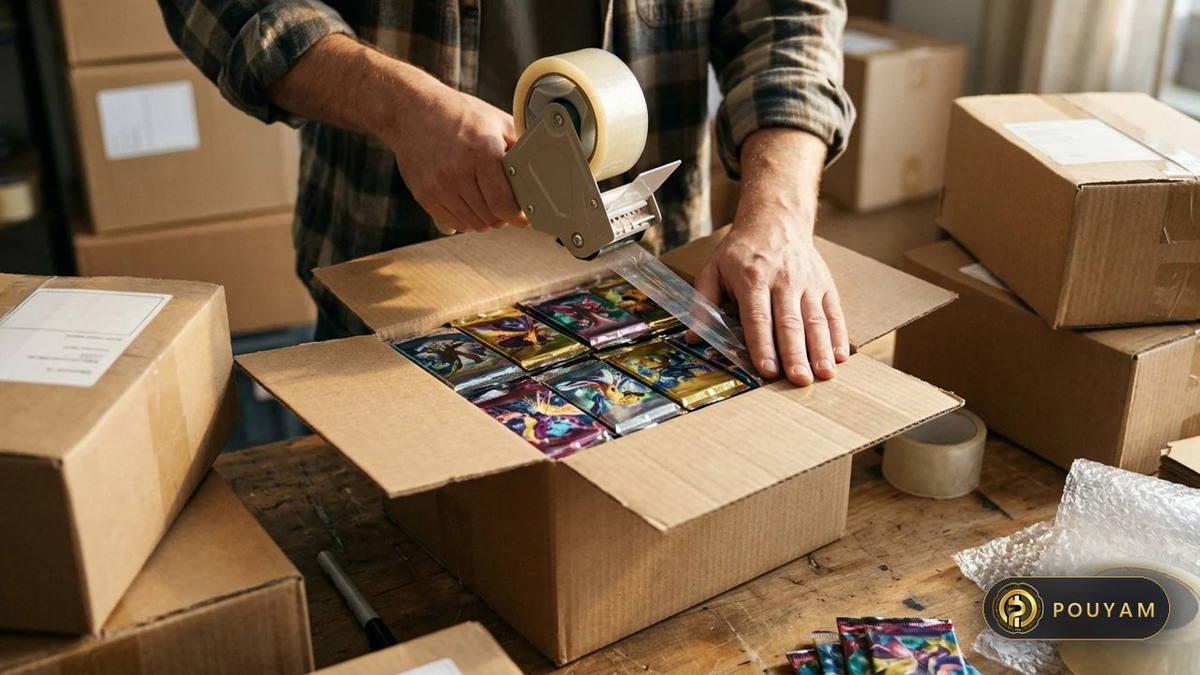
A scalper is a buyer who purchases sought-after products in bulk to resell them at a higher price on the secondary market. In Pokémon cards, that means buying boosters, boxes and special sets as soon as they appear and listing them elsewhere at a markup.
What did the Las Vegas video change?
The clearest recent example involved Walmart. A viral video showed a man buying thousands of cards at a Las Vegas store, and Walmart then told stores to enforce a limit of five packages per visit on Pokémon and other trading cards from 5 November 2025. Kotaku based that report on an internal announcement shared on Reddit, not a public Walmart statement [9].
When has the hunt turned dangerous?
In May 2021 Target temporarily suspended in-store sales of Pokémon and sports trading cards after four men allegedly assaulted a man outside a store in Brookfield, Wisconsin on 7 May. Cards stayed on sale at Target.com, and Target had already limited purchases to one per customer per day [14].
In Japan, a lawyer interviewed by ABC in August 2026 said price spikes attract fraud, theft, counterfeits and possible money laundering [6]. Those are the lawyer's concerns, not court findings, but they explain why Japanese authorities are looking at the market (see the outlook below).
Are all bulk buyers scalpers?
Not necessarily. Nintendo's phrase 'speculative buying up' covers anyone buying limited-quantity cards in bulk to profit [12], and the sources do not separate hobby sellers from large operations. Retail limits and lotteries treat everyone the same.
How much are Pokémon cards worth?
The reporting used for this article covers record sales and a few shop-floor examples, not a market-wide average or a live price index. Prices change daily, and value depends on the card, the set, its condition and its grade. A graded card is one a grading company has authenticated and scored for condition. Always check live sold listings for the exact card before you buy or sell.
What do high-end cards sell for?
At the Hareruya2 shop in Tokyo, a well-preserved Pikachu card from the first booster pack sold for about 10 million yen, according to ABC in August 2026. ABC gives a figure of $89,000, which is probably Australian dollars. ABC also shows Grade 9 cards valued at ¥500,000 [6].
What is the record?
The Pikachu Illustrator, one of only 40 issued in 1998 and the only copy graded PSA 10, was sold by Logan Paul in 2026 [6][15]. Neokyo reports $16,492,000 at Goldin on 16 February 2026 and says Guinness World Records recognised it as the most expensive trading card ever sold at auction [15]. ABC reports $22.6 million. The two figures are probably the same sale in different currencies, since ABC is an Australian outlet, but that is an inference, so confirm the currency before quoting either number [6].
What about sealed products?
A shopper told ABC that a box from a new Japanese set released a few weeks earlier was already $200 [6]. That is one person's account, not a market statistic.
Are Pokémon cards a safe investment?
This section gives general information only. It is not financial advice, and anyone weighing a purchase of cards as an investment should speak to a qualified financial adviser.
What is the case for?
Demand at the top of the market is real. A first-booster Pikachu sold for about 10 million yen in a Tokyo shop [6], and the Pikachu Illustrator reached $16,492,000 at auction on 16 February 2026 [15]. A box from a new Japanese set was already $200 weeks after release, according to one shopper [6]. ComicBook argues that high prices keep drawing resellers in, which shows how strong the demand is [13].
What is the case against?
A Japanese lawyer told ABC that ordinary people risk 'financial ruin' from speculation, and that price spikes attract fraud, theft, counterfeits and possible money laundering. Logan Paul was himself caught by a box of fake cards that cost him almost $5 million (ABC's currency) [6]. If a well-known buyer can be caught out, an ordinary buyer can too.
Supply is also growing. About 10 billion cards were printed in the year to spring 2026 [4], and The Pokémon Company International's printer has leased a large new manufacturing campus in North Carolina [13]. None of the sources forecasts card prices, so any assumption that scarcity premiums on modern sealed products will last is a guess.
What about regulation?
ABC reports that the Japanese government has launched a parliamentary group to examine regulating the trading-card market, over concerns about scalping, counterfeiting and money laundering. Its chair warned against regulating so hard that it destroys the market [6]. Rules could change what cards can be bought, sold or imported, which adds uncertainty.
Only spend money you can afford to lose, and check the currency and date of any quoted price.
How can you buy Pokémon cards at normal prices?
No method guarantees success, but a few steps improve your chances without paying a markup.
- Enter official drawings. Target's drawing needs a logged-in account and allows one entry per guest [1]. Walmart's winners are chosen at random and get access to buy, and Walmart sizes drawings to its stock [2].
- Read the rules. Check limits, account requirements and closing times. Target's pack limit per winner was unclear as of 2 November 2026 [1], and Walmart told stores to enforce a limit of five packages per visit from 5 November 2025 [9].
- Watch for reprints and new sets. The Pokémon Company said it would keep reprinting recent sets and raise print volumes for future expansions [3].
- Compare against the shelf price. TrackaLacker, for example, lists the Kangaskhan blister at $14.99 at Target [8]. A far higher asking price is a resale markup.
- Be wary of counterfeits. A Japanese lawyer told ABC that price spikes attract fraud and counterfeits [6]. Buy from sellers you can verify.
Patience matters too. ComicBook estimates it could take until roughly 2028 before extra printing capacity is felt [13], so shortages may continue.
What is different for buyers in Iran?
The research behind this article found no Iran-specific source, so it does not make claims about filtering, payment limits or sanctions for Iranian buyers. Those barriers can affect any online purchase, and readers should check each retailer's terms before relying on a drawing or a shipping option.
One sourced point matters for buyers outside Japan in general. PokeBeach reports that Pokémon Japan's My Number Card rule for select Pokémon Center Online products limits access for overseas buyers [10]. The source does not mention Iran. For US drawings, the sourced requirement is a logged-in retailer account, as at Target [1]. Whether an account, payment method or delivery address from Iran can use such a drawing is not covered by the sources, and the safest assumption is that it may not.
What happens next with Pokémon card lotteries and prices?
Several things are likely to move, and several are uncertain.
What is likely?
- More retailer controls. Walmart's five-package limit arrived in November 2025, its Collectibles Drawing and Japan's ID rule followed in 2026, and Target's drawing was live in November 2026 [9][2][10][1].
- More supply. The Pokémon Company says it will raise print volumes and keep reprinting [3], and its printer, Millennium Print Group, has leased a large new manufacturing campus in North Carolina, first reported in December 2025 [13].
- Closer scrutiny in Japan. A parliamentary group is examining regulation of the trading-card market over scalping, counterfeiting and money laundering [6].
What is uncertain?
- How widely Target will extend its drawing. One source says it was only on one product as of 2 November 2026, another says it is live across storefronts [1][5].
- Whether lotteries and ID checks work. Screen Rant says Target's drawing does not fully stop scalpers [5], and no independent measurement was found.
- When extra capacity will be felt. ComicBook says roughly 2028 [13], but that is not a company forecast.
- The details of Japan's My Number Card rule, which were still to be announced as of 20 May 2026 [10], and the scope of any regulation, since the parliamentary group's chair warned against regulating so hard it destroys the market [6].
Because retailer rules and prices change quickly, check each retailer's current page before acting on anything here.
| Measure | Where | What it does | Status in the sources |
|---|---|---|---|
| Online drawing | Target | One entry per logged-in guest; winners picked at random and emailed [1] | Kangaskhan blister showed the drawing as of 2 November 2026 [1] |
| Collectibles Drawing | Walmart | Random winners get access to buy; sized to stock; optional automatic order [2] | Announced August 2026 [2] |
| Purchase limit | Walmart stores | Five packages per visit on Pokémon and other trading cards [9] | From 5 November 2025, per an internal announcement reported by Kotaku [9] |
| ID-verified lottery | Pokémon Center Online, Japan | Requires a My Number Card for selected products [10] | Planned from around August 2026; details pending as of 20 May 2026 [10] |
| Period | Reported figure | Note |
|---|---|---|
| May 2021 | 34.1 billion cards produced in total | Lifetime production at that date [4][11] |
| October 1996 to March 2022 | 43 billion cards printed | PokeBeach's figure [11] |
| As of May 2025 | 75 billion cards distributed | Starting point for Kotaku's count [4] |
| Year to spring 2026 | About 10 billion cards printed | Window described differently by Kotaku and PokeBeach [4][11] |
| Spring 2026 | More than 85 billion cards in total | Updated company figures as reported [4] |
| December 2025 | Large North Carolina manufacturing campus leased by Millennium Print Group (first reported) | ComicBook says capacity may be felt around 2028 [13] |
| Card or product | Price reported | Note |
|---|---|---|
| Pikachu Illustrator, PSA 10 (one of 40 issued in 1998) | $16,492,000 at Goldin, 16 February 2026 | Neokyo says Guinness World Records recognised it as the most expensive trading card sold at auction [15] |
| Pikachu Illustrator, same card per ABC | $22.6 million | Probably Australian dollars; likely the same sale, which is an inference [6] |
| Well-preserved first-booster Pikachu | About 10 million yen | Hareruya2 shop in Tokyo, August 2026 [6] |
| Same Pikachu, ABC figure | $89,000 | Probably Australian dollars [6] |
| Grade 9 cards | ¥500,000 | Value given by ABC [6] |
| Box from a new Japanese set | $200 | One shopper's account, not a market statistic [6] |
Common mistakes
Treating a drawing entry as a guaranteed purchase
Fix: Treat a drawing as a chance, not a purchase. Target's drawing allows one entry per logged-in guest, and winners are chosen at random and emailed [1]. Plan for the possibility of not winning.
Missing the entry deadline or misreading the time zone
Fix: Note the closing time and convert it to your own time zone. Entries for Target's Kangaskhan drawing close at 11 AM ET on 4 November [1][8].
Believing a lottery has solved scalping
Fix: Remember that Screen Rant says Target's drawing tackles scalping but does not fully stop scalpers from buying [5]. Expect stock to stay tight and keep checking official channels.
Treating record-sale headlines as typical card values
Fix: Check live sold listings for the same card, set, condition and grade. Record sales such as the Pikachu Illustrator involve one of 40 cards issued in 1998 [15], not everyday cards.
Comparing prices in different currencies as if they were the same
Fix: Check the currency of every quoted figure. ABC's dollar figures are probably Australian dollars, and shop prices in Japan are in yen [6]. Convert before comparing.
Paying resale markups or buying sealed product from unverified sellers
Fix: Buy through official drawings and retailers where possible. A Japanese lawyer interviewed by ABC said price spikes attract fraud, theft and counterfeits [6].
Frequently asked questions
What is the Pokémon card lottery system?
A Pokémon card lottery, also called a drawing, lets shoppers enter for a chance to buy a sought-after product, and winners are chosen at random rather than by who clicks or queues first [1][2]. In Japan, Creatures Inc. used lottery-only sales for some Eevee Heroes products in 2021 [7], and Target and Walmart now run versions for Pokémon products [1][2].
Does Target have a Pokémon card drawing?
Yes, for at least one product. As of 2 November 2026, Target's Destined Rivals Kangaskhan three-booster blister showed an 'Enter drawing' button, and GameRant reported it was the only Pokémon pack with the drawing [1]. Guests must be logged in and get one entry; winners are picked at random and emailed from 4 November [1]. Screen Rant describes a wider rollout, so check the product page [5].
How do I enter the Walmart Pokémon card drawing?
Walmart announced a 'Collectibles Drawing' for Pokémon TCG products in August 2026. Winners are selected at random and then get access to buy, and Walmart sizes each drawing to the stock it has [2]. Entrants can authorise an automatic order [2]. Rules can differ by product, so read the individual drawing listing before entering.
Why are Pokémon cards sold out everywhere?
Demand has outrun supply. On 27 March 2025 The Pokémon Company said very high demand was making some products hard to buy and that it was printing at maximum capacity [3]. About 10 billion cards were printed in the year to spring 2026 and it still was not enough, according to Kotaku [4]. Nintendo has also acknowledged speculative buying up of limited-quantity cards [12].
Why doesn't The Pokémon Company just print more cards?
The company says it is printing as much as it can. It described printing affected products at maximum capacity and said it would raise print volumes for future expansions [3]. More capacity is coming: Millennium Print Group, The Pokémon Company International's printer, has confirmed it leased a large manufacturing campus in North Carolina, first reported in December 2025 [13]. ComicBook estimates the effect may not arrive until about 2028, which is commentary, not a company forecast [13].
What is the most expensive Pokémon card ever sold?
Neokyo reports that a Pikachu Illustrator, one of 40 issued in 1998 and the only copy graded PSA 10, sold for $16,492,000 at Goldin on 16 February 2026, and says Guinness World Records recognised it as the most expensive trading card sold at auction [15]. ABC reports $22.6 million, probably in Australian dollars, for what is likely the same sale [6].
Are Pokémon cards a good investment?
Not safely in general. A Japanese lawyer quoted by ABC in August 2026 warned that ordinary people risk 'financial ruin' from speculation, and that price spikes attract fraud, theft, counterfeits and possible money laundering [6]. Record sales exist at the top of the market [15], but this is general information, not financial advice. Speak to a qualified adviser first.
Does Pokémon Center use a lottery?
Yes, in Japan. Creatures Inc. used lottery-only sales for some Eevee Heroes products in 2021 and did not sell them in physical Pokémon Center stores [7]. From around August 2026, Pokémon Japan said buyers must verify identity with a My Number Card to enter lotteries for selected products on Pokémon Center Online, with details still to be announced as of 20 May 2026 [10].
Glossary
- Booster pack
- A sealed pack of randomised trading cards from a particular Pokémon set.
- Blister pack
- A sealed plastic-and-card package holding a small number of booster packs, often with a promo card.
- Scalper
- A person who buys in bulk to resell at a higher price.
- Secondary market
- The market where products are resold by people other than the original retailer.
- Retail lottery (drawing)
- A sale in which entrants are chosen at random for the right to buy, instead of first come, first served.
- Graded card
- A card that a grading company has authenticated and scored for condition, then sealed in a protective case.
- My Number Card
- Japan's government identity card, which Pokémon Japan said would be needed to enter some online lotteries.
- Reprint
- A new printing of an existing product to add supply after the first print run sold out.
Sources
- Target's Pokemon TCG Lottery and Drawing System, Explained GameRant · 2026-11-02
- Walmart enacts "Collectibles Drawing" lottery system to stave off Pokémon TCG scalpers GoNintendo · 2026-08-31
- Pokémon addresses Pokémon trading card shortage, vows increased production Video Games Chronicle · 2025-03-27
- 10 Billion Pokémon Cards Were Printed Last Year And It Still Wasn't Enough Kotaku · 2026-05-27
- Pokémon TCG New Lottery System At Target Is Live Now Screen Rant
- Japan considers crackdown on Pokémon cards as 'skyrocketing' interest sparks crime fears ABC News (Australian Broadcasting Corporation) · 2026-08-15
- Japan's Pokemon Center Stores Stop Selling Some Pokemon Cards, Implement Lottery System ComicBook.com · 2021-05-17
- Target Drawing: How to Score Pokemon Cards TrackaLacker
- Walmart Finally Takes Action Against Pokémon Scalpers After Video Of Guy Buying Thousands Of Cards Goes Viral Kotaku · 2025-11-04
- Pokemon Japan to Require Government ID for Select TCG Purchases, Limiting Access for Scalpers and Overseas Buyers PokeBeach · 2026-05-20
- Pokemon TCG Printed 10 Billion Cards in 2025 as Overwhelming Demand Outpaced Production Capacity PokeBeach
- Nintendo Is "Communicating" With Pokemon To Resolve TCG Scalping Issues TheGamer · 2026-07-02
- The Pokemon Company's Big Move to Fix the Pokemon TCG Market Might Come Too Late ComicBook.com · 2026-01-03
- Target to stop selling Pokémon, sports trading cards in store over safety concerns Fox Business · 2021-05-13
- The Most Expensive Pokémon Cards in 2026: From the $16.5M Pikachu to Modern Chase Cards Neokyo