
OpenRouter Prompt Leak: What Zero Data Retention Means
- 1 views
- 0 likes
- 0 comments
- All languages combined
 +78

Sign in and earn +78 points by reading this
Read to the end, wait a few seconds, then tap the claim button below.
In short
On 22 November 2026 OpenRouter said it had off-boarded three inference providers, removed 125 endpoints from Zero Data Retention and notified affected customers after a Dragos study seeded about two million canary prompts and caught breaches and leaks [1][2]. OpenRouter itself was not breached; the removed providers are unnamed [1][3].
Key takeaways
- OpenRouter off-boarded three providers, removed 125 endpoints from ZDR eligibility and notified potentially affected customers [1].
- OpenRouter says the findings showed no breach of OpenRouter itself [1].
- Dragos sent about two million prompts with unique secrets from July to November 2026 and found three compromised providers [2].
- Some stolen requests were marked ZDR, showing a privacy flag cannot stop an attacker already inside a provider [2].
- Atlas Cloud, Novita, Phala and Together AI have notices on OpenRouter's list, but none is confirmed as one of the three removed providers [1][3].
- Rotate any secret ever sent in a prompt and pick upstream providers yourself [2][6].
On this page 12 sections
- What happened with OpenRouter and the prompt leaks?
- What are AI routers and inference providers?
- What does Zero Data Retention (ZDR) mean?
- How did the Dragos canary test catch the leaks?
- What have Phala, Together AI and Novita disclosed?
- Am I affected and what should I do now?
- Is it safer to use a model provider directly?
- What happens next for ZDR and AI routers?
- Common mistakes
- Frequently asked questions
- Glossary
- Sources
What happened with OpenRouter and the prompt leaks?
On 22 November 2026 OpenRouter said it had off-boarded three inference providers, removed 125 endpoints from Zero Data Retention (ZDR) eligibility and notified all potentially affected customers, after security researchers found that some providers had data compromised or were not following their data policies [1]. OpenRouter said the findings did not show any breach of, or unauthorized access to, OpenRouter itself [1].
The trigger was research published on 19 November by HD Moore, chief research officer of the security company Dragos [2]. His team sent about two million prompts containing unique, trackable secrets to AI services between July and November 2026, then watched where those secrets turned up [2]. The results, in Dragos's words, revealed "security breaches, prompt theft, and widespread failures to protect customer data" [2].
OpenRouter did not name the three providers it removed [1]. It did publish a list of security notices from providers, which as of 23 November 2026 names Atlas Cloud, Novita, Phala and Together [1]. The Hacker News notes that Dragos has not named the three breached providers, OpenRouter has not named the three it removed, and neither has said whether they are the same companies [3]. The providers with public notices should not be treated as the off-boarded three.
What are AI routers and inference providers?
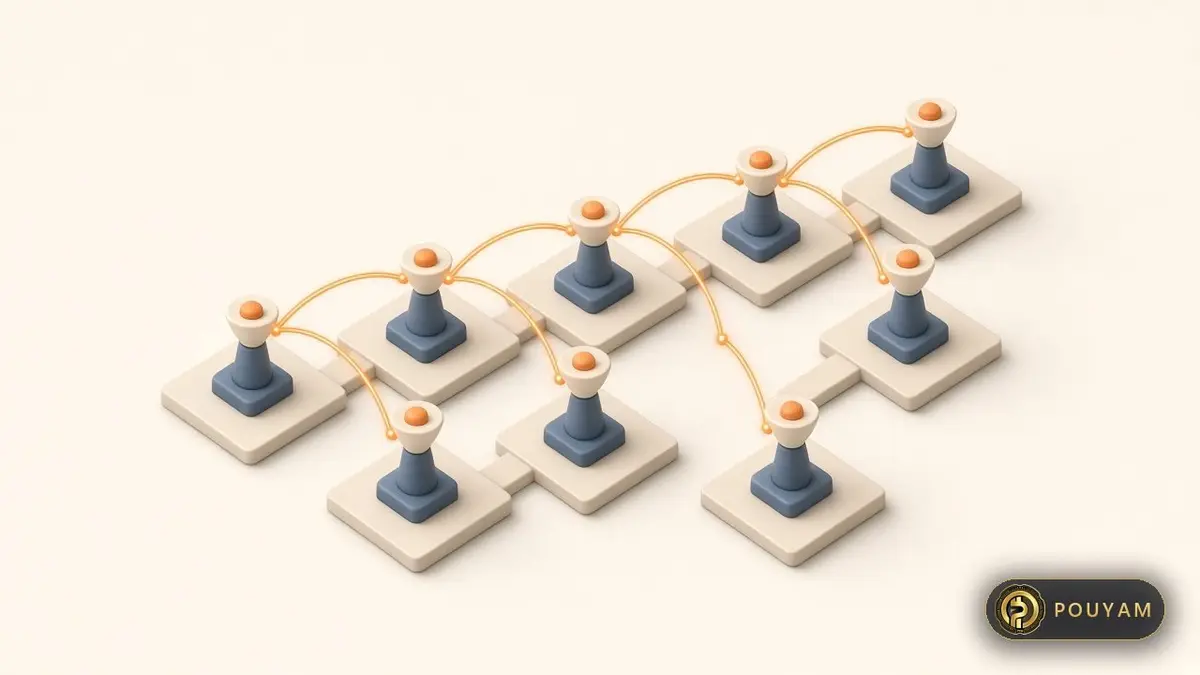
An AI router, also called an AI gateway, takes a request from an app and forwards it to one of many companies that actually run the model, often choosing by price or speed; those companies are the inference providers [4]. OpenRouter and Vercel are examples of routers named by Ars Technica [4].
Many AI apps do not send prompts straight to one model maker. A developer signs up with a router, picks a model, and the router decides which provider serves each request [4]. The same open model can be offered by many hosting companies at different prices, and some US hosts resell models made by other labs [2].
That flexibility has a privacy cost. Ars Technica explains that prompts are encrypted in transit but decrypted at each hop: the router reads the plaintext to decide where to send it, the provider reads it to run the model, and a request can even pass from one router to another [4]. Each company in the chain may log the prompt and keep it for as long as its own policy allows [4]. Dragos summarises the risk plainly: a privacy flag only binds the first hop [2].
What does Zero Data Retention (ZDR) mean?
On OpenRouter, Zero Data Retention means no routine storage of prompts or responses after processing, and endpoints with ZDR are also not allowed to train on your data [5]. OpenRouter lets customers enforce ZDR for their whole account, per model group, per guardrail or per request [5].
OpenRouter sorts each endpoint into one of three data-policy tiers [5]:
- ZDR: no routine storage after processing.
- Safety Retention: prompts and responses may be kept only to detect, investigate and prevent abuse, and not for training.
- Retention and Training: data may be stored and used for training under the provider's policy.
Two details matter. First, OpenRouter's documentation describes a planned update dated 27 October 2026 under which all inference requests, including ZDR traffic, are screened for child sexual abuse material, and flagged content may be retained where the law requires [5]. Second, ZDR enforcement covers provider routing for inference only, not plugins or tools such as web search, which may be run by third parties with their own policies [5].
The key point from the Dragos research is that ZDR is a promise made by a provider, not a technical guarantee. Dragos found cases where providers appeared not to honour privacy settings, and in two of the three breaches some of the stolen requests were marked ZDR [2]. As Moore wrote: "A privacy flag doesn't help when the attacker is already inside" [2].
How did the Dragos canary test catch the leaks?
Dragos seeded each prompt with a unique secret, such as a real AWS access key tied to an empty account, a password, a secret web address or a reference to a private code repository, and sent each one to a single provider; any later use of that secret proved that someone had read that specific prompt [2][4]. The approach is named after the canaries miners once carried to detect danger [4].
The research produced three main findings [2]:
- Three compromised providers. Attackers were stealing data from inside three hosting companies. In the largest case, a couple of hundred AWS keys sent in short windows in late October were all stolen, including from requests the provider had rejected before a model ran, which suggests copying at the provider's "front door" [2]. The keys were used for tens of thousands of AWS API calls [2]. The earliest breach dates to mid-July, and none of the three providers knew until Dragos told them [2].
- Resellers reading prompts. Sellers on an inference marketplace listed models at the lowest price, turned on request logging and collected what came through, without exploiting any vulnerability [2][3].
- Ignored privacy settings. One unnamed Chinese AI lab fetched secret links from more than half of the prompts sent to its models between July and October, including about two-thirds of requests marked no data collection or ZDR, and prompts sent to US hosts reselling its models triggered the same scraper [2][4]. One seeded link later appeared in an internal company chat in China [2].
Dragos's prompts were bait, but they were processed alongside real customer requests, so real prompts were almost certainly copied too [2]. Dragos says it is working with about a dozen providers, and some stolen keys and links were still being accessed months later [2].

What have Phala, Together AI and Novita disclosed?
OpenRouter's list also links a notice from Atlas Cloud; three of the listed notices describe incidents: Phala reported an attacker who could see in-flight requests to one model, Together AI reported stolen prompt samples, and Novita reported a routing error that sent some requests to MiniMax's own service [1][6][7][3].
Phala. In a preliminary report dated 10 November, Phala said users whose DeepSeek V4 Flash 0731 requests were routed to it by OpenRouter between 00:00 UTC on 21 October and 05:35 UTC on 8 November 2026 should treat the contents as exposed and rotate any secrets in them [6]. An attacker had taken control of an inference machine and could see request data during processing; Phala said it contained the incident on 8 November [6]. Canary misuse was confirmed only for requests sent on 21 and 22 October, but Phala keeps the wider window because the tests only sampled traffic [6].
Together AI. On 21 November Together said an unauthorized party downloaded stored prompt samples after an AI coding agent committed a credential for a private repository to a public GitHub project [7]. The samples came from MiniMax M3, GLM-5.2 and Kimi K2.6 requests, mainly on 24 June and 4, 8 and 14 July 2026, and five of the credentials the party tested were Dragos canaries [7]. Together has made ZDR the default for new accounts [7].
Novita. Novita said a routing configuration issue caused some MiniMax requests to be forwarded to MiniMax's official API beyond what was intended for those customers [3]. Unite.AI reports the window as 28 May to 11 November 2026 and says Novita suspended the affected models [8].
Am I affected and what should I do now?
If you sent prompts through OpenRouter, check your email for a notice, because OpenRouter says it has notified all potentially affected customers whether or not the provider involved has posted publicly [1]. If you used DeepSeek V4 Flash 0731 through Phala in the window above, Phala says to treat those requests as exposed [6].
Whatever your notice says, these steps follow the providers' and researchers' own advice:
- Rotate secrets that ever appeared in a prompt. API keys, tokens, passwords and connection strings pasted into a prompt, or read by a coding agent, should be replaced [6].
- Stop sending credentials to models. Dragos warns that AI agents will send whatever they can read, including credentials [2]. Keep secrets in environment variables or a secrets manager that the agent cannot read.
- Choose the upstream provider yourself. Instead of accepting a router's default pool, pick named providers and confirm that your privacy settings really change where requests go [2].
- Turn on ZDR where you need it. Enforce ZDR in OpenRouter's privacy settings or per request, and decide whether to allow Safety Retention endpoints [5]. Together advises customers with sensitive prompts to enable ZDR in their account [7].
- Avoid reseller marketplaces for sensitive work. Dragos says some of that capacity runs on stolen keys [2].
- Seed your own canary. Put a fake credential in the context your agents send and treat any use of it as an incident; Dragos notes a free canary token is enough to start [2].

Is it safer to use a model provider directly?
Dragos ranks the options this way: hosting the model yourself is the only choice where nobody else reads your prompts, going directly to a first-tier provider is the smallest exposure you can buy, and routers need the most care [2].
Going direct means "one company, one contract, and one privacy policy to read," in Moore's words, though data can still leak through sharing agreements or a breach at that provider [2]. Self-hosting removes third parties but is expensive; Dragos lists hardware prices from about $7,000 for a small system to more than half a million dollars for an eight-GPU server [2].
Routers are not bad by design. They let developers compare models and switch providers quickly, and OpenRouter says it is adapting the researchers' testing approach to run these checks continuously and verifying network paths to find where requests may be forwarded to third parties [1]. It also says it will require assurances and validation before any removed endpoint gets ZDR status back [1]. For now, a ZDR label on a router is best read as one layer of protection, not proof of where your data went.
What happens next for ZDR and AI routers?
OpenRouter says it will keep its list of provider security announcements updated, encourage all providers to publish incident write-ups and run canary-style checks on an ongoing basis [1]. Phala and Together say their investigations continue, and Phala has promised a full root-cause analysis [6][7].
Several questions are still open as of 23 November 2026: which three providers OpenRouter removed, whether they overlap with the three breached companies in the Dragos study, and how many real customer prompts were exposed [3]. Treat claims that name the off-boarded providers as unconfirmed unless they come from OpenRouter or the companies themselves.
For developers, the lesson is practical: assume any prompt may be read by every company on its path, and design so that a leaked prompt is boring. Keep secrets out, prefer providers you have chosen and checked, and watch for notices from your router.
For related guides, read Free AI API Keys and Tokens: Official Free Tiers (Nov 2026); Notion Data Breach: Fireworks AI Hack Exposed AI Chats; and Are Vibe-Coded Apps Safe? 8 Security Holes to Check.
| Provider | What it disclosed | Affected requests | Date of notice |
|---|---|---|---|
| Phala | Attacker controlled an inference machine and could see in-flight requests | DeepSeek V4 Flash 0731 via OpenRouter, 21 Oct to 8 Nov 2026 | 10 Nov 2026 |
| Together AI | Stored prompt samples downloaded after a credential leaked to a public code repository | MiniMax M3, GLM-5.2 and Kimi K2.6 samples, June and July 2026 | 21 Nov 2026 |
| Novita | Routing error sent some MiniMax requests to MiniMax's official API | Some MiniMax requests, 28 May to 11 Nov 2026 | November 2026 |
| Tier | Stored after processing? | Used for training? |
|---|---|---|
| ZDR | No routine storage | No |
| Safety Retention | Only to detect and prevent abuse | No |
| Retention and Training | Yes, under the provider's policy | May be |
Common mistakes
Thinking OpenRouter itself was hacked.
Fix: OpenRouter says the findings showed no breach or unauthorized access of OpenRouter [1].
Treating a ZDR label as a guarantee.
Fix: Some stolen requests in the Dragos study were marked ZDR; it is a policy, not a technical barrier [2].
Naming Atlas Cloud, Novita, Phala or Together as the three removed providers.
Fix: OpenRouter has not named the three; the notices it links are separate disclosures [1][3].
Pasting API keys or passwords into prompts or agent context.
Fix: Keep secrets out of prompts and rotate any that were ever sent [2][6].
Accepting a router's default provider pool for sensitive work.
Fix: Pick upstream providers yourself and verify that privacy settings change the route [2].
Frequently asked questions
Was OpenRouter breached?
No. OpenRouter says the research showed no breach of OpenRouter; the problems were at certain inference providers [1].
Which providers did OpenRouter remove?
It has not named them. It removed three providers and 125 endpoints from ZDR eligibility [1].
What is a canary prompt?
A prompt carrying a unique secret, such as a fake key or private link, so any later use proves someone read it [2][4].
How many prompts did Dragos send?
About two million, between July and November 2026 [2].
Should I rotate my API keys?
Yes, if a key, token or password ever appeared in a prompt or in an agent's context [6][2].
Does ZDR cover web search plugins?
No. OpenRouter says ZDR applies to provider routing for inference, not to plugins or tools such as web search [5].
Glossary
- Zero Data Retention (ZDR)
- A policy that prompts and responses are not routinely stored after processing [5].
- Inference provider
- A company that runs an AI model and returns its answers to requests [4].
- AI router
- A service that forwards each request to one of many inference providers [4].
- Canary token
- A unique fake secret whose use reveals that someone read the data it was placed in [2].
- Safety Retention
- An OpenRouter tier where data may be kept only to detect and prevent abuse [5].
Sources
- Data Processing Incidents on Inference Providers OpenRouter · 2026-11-22
- Three breaches, endless leaks: Your AI supply chain needs canaries Dragos · 2026-11-19
- OpenRouter Drops 3 Providers After Researchers Catch Months of Prompt Theft at AI Hosting Firms The Hacker News · 2026-11-22
- Researcher plants 2m canaries into the AI supply chain. A privacy disaster surfaced. Ars Technica · 2026-11-20
- Zero Data Retention OpenRouter Docs
- Phala November Preliminary Incident Report Phala · 2026-11-10
- Security event: Prompt leakage for requests in June and July of 2026 Together AI · 2026-11-21
- OpenRouter Cuts Three Providers After AI Prompt Exposure Findings Unite.AI · 2026-11-21




Comments
Top comments