
Ghostscript Upload2Shell Flaw: Update to 10.08.0
- 1 views
- 0 likes
- 0 comments
- All languages combined
 +78
Sign in and earn +78 points by reading this
Read to the end, wait a few seconds, then tap the claim button below.
In short
Upload2Shell (CVE-2026-125396) is a Ghostscript font-loader flaw that lets a crafted document escape the -dSAFER sandbox and run commands on servers that convert uploads, emails or print jobs [1][3]. Ghostscript 10.08.0 fixes it, and distributions ship backported builds [2][4]. No attacks had been reported by 22 November 2026 [6].
Key takeaways
- CVE-2026-125396 lets a crafted PostScript or PDF file bypass Ghostscript's -dSAFER sandbox [3].
- Files named .png or .jpg can still reach Ghostscript through ImageMagick, Pillow and similar libraries [2].
- Ghostscript 10.08.0, released on 8 September 2026, fixes the flaw [1].
- Debian, Ubuntu and others ship fixes as backports with older version numbers [4][5].
- Containers and bundled copies need their own update [2].
- No in-the-wild attacks had been reported as of 22 November 2026 [6].
On this page 11 sections
- What is Upload2Shell (CVE-2026-125396)?
- How can a .png or .jpg upload reach Ghostscript?
- Which apps and services were affected?
- Is Upload2Shell being exploited in the wild?
- Which Ghostscript versions are fixed?
- How do I check whether my server is exposed?
- How do I reduce the risk until I can update?
- Common mistakes
- Frequently asked questions
- Glossary
- Sources
What is Upload2Shell (CVE-2026-125396)?
Upload2Shell, tracked as CVE-2026-125396, is a use-after-free bug in Ghostscript's Type 1 font loader that lets a crafted PostScript or PDF document break out of Ghostscript's -dSAFER sandbox and run commands as the account doing the rendering [1][3]. Ghostscript is the open-source interpreter that turns PostScript and PDF files into images or other formats, and it sits quietly underneath many print, email, upload and preview features [1].
The technical root, as described in VulnCheck's advisory and Debian's tracker, is that a procedure called .putgstringcopy in the file gs_fonts.ps calls a privileged operator without checking what kind of data it receives [3][4]. A malicious document can trigger an error, recover that privileged operator and corrupt memory in a way that switches off the sandbox's checks while the sandbox still looks enabled [2][3].
The flaw was found by Paulos Yibelo of the security firm pwn.ai on 27 July 2026, reported upstream to Artifex as bug 709684, and fixed in Ghostscript 10.08.0, released on 8 September 2026 [1][2]. The CVE number was published on 9 November 2026 [1]. VulnCheck credits Yibelo, pwn.ai and Artifex developer Ken Sharp [3].
The name reflects the risk pwn.ai describes: an ordinary file upload, such as a profile picture, an email attachment or a print job, can end up as a shell command on a server [2].
How can a .png or .jpg upload reach Ghostscript?
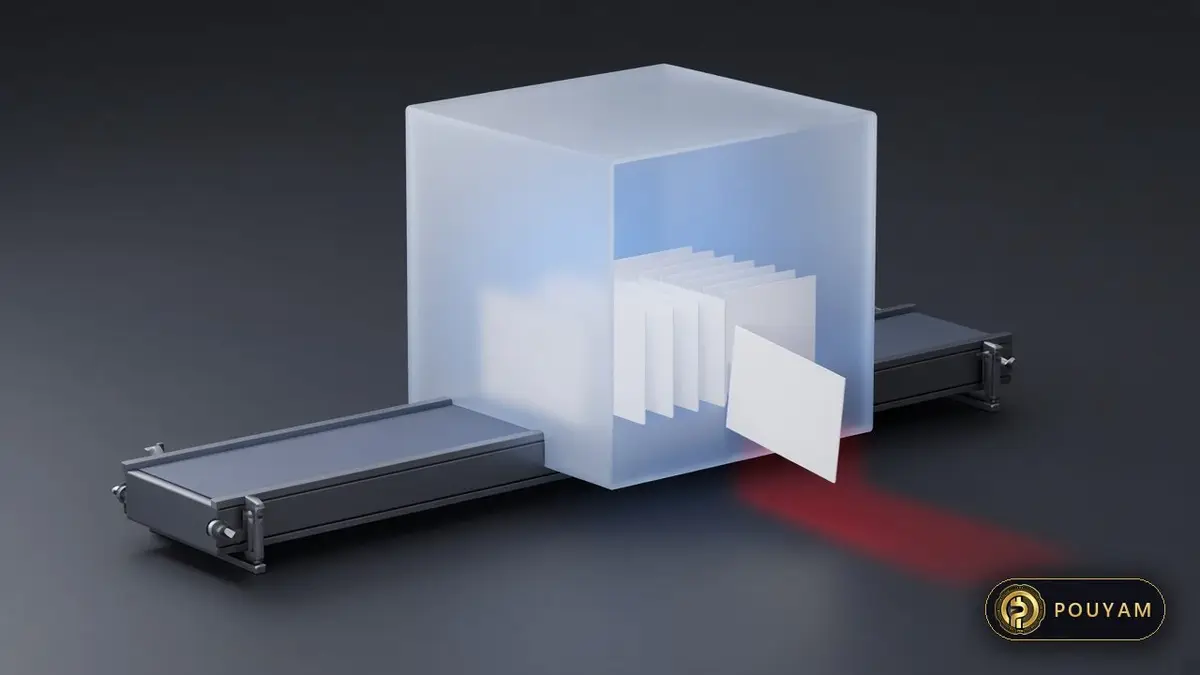
A file does not need a .ps or .pdf name to reach Ghostscript: image libraries such as ImageMagick, Pillow and libvips look at the file's contents, and when those contents are PostScript or EPS they hand the file to Ghostscript, even if it is named .png or .jpg [2][6]. The application itself may never call Ghostscript directly [2].
pwn.ai's write-up gives a typical example: a PHP application makes a preview with Imagick, the PHP binding to ImageMagick; ImageMagick picks a format handler, and that handler delegates the rendering to Ghostscript under -dSAFER [2]. In separate tests, ordinary Python Pillow calls that load, crop or convert pixels started Ghostscript for EPS content named .png [2].
Ghostscript can also be linked into an image-processing build as a library, so it runs inside the existing process and never shows up as a separate gs command [2]. That is why searching application code for explicit Ghostscript calls can miss the risk.
The -dSAFER sandbox relies on checks inside the interpreter rather than an operating-system filter, so once those checks are disabled, the document's code gets whatever access the rendering account has [2]. In pwn.ai's tests the commands ran as low-privilege service accounts such as www-data or lp, not automatically as root [2][6].
Which apps and services were affected?
pwn.ai reports confirmed command execution through about ten applications, including an anonymous print job to a shared CUPS queue on Debian 13, Roundcube webmail when a recipient simply views a message, and public upload forms in the WordPress plugins Forminator and Essential Addons for Elementor [1][6]. Several of those paths needed no login [1][6].
The list also includes MediaWiki with PdfHandler on wikis that allow anonymous PDF uploads, DokuWiki with its optional ImageMagick backend, Mayan EDMS through an email inbox, ResourceSpace and Plesk Obsidian's bundled Roundcube [1]. In Plesk, an enforced AppArmor profile blocked the shell in one test, and pwn.ai did not test live Plesk endpoints [1].
WordPress Core needed more: an account with the upload_files capability, which Authors and higher roles have by default, plus Imagick and Ghostscript on the server [1][6]. WordPress fixed its own path separately as CVE-2026-65640 in version 7.0.4 on 12 August 2026 [2]. Roundcube restricted unsafe attachment image types under CVE-2026-114727 on 19 October 2026 [1].
At Google, pwn.ai says a signed-out request for an attacker-hosted file reached Ghostscript in a document renderer; Google mitigated that path on 10 November 2026 [1]. Other names in pwn.ai's September teaser, such as Dropbox, belong to separate Ghostscript findings, not to CVE-2026-125396 [1][6]. Projects such as Gradio, ComfyUI or Paperless-ngx are listed only as code paths mapped to Ghostscript, not as confirmed exploits [1].

Is Upload2Shell being exploited in the wild?
As of 22 November 2026, about 14:30 UTC, there were no public reports of CVE-2026-125396 being used in real attacks, and The Hacker News reported the same on 22 November [6]. What exists are research demonstrations by pwn.ai.
pwn.ai has published one self-contained proof file. It changes native memory inside the rendering process but does not run a shell command or touch host files, and it fails on the fixed 10.08.0 build [2][6]. As of pwn.ai's evidence index updated on 18 November 2026, the full command-execution chains for each application had not been published [1].
That window may be short. pwn.ai says the Debian 13 CUPS chain will be the first full case study and proof of concept in its series, with other product write-ups to follow [2]. Once working chains are public, unpatched print servers and upload pipelines could become easier targets.
VulnCheck rates the flaw high, with a CVSS v4.0 score of 8.5 [3]. The official vector says 'local', because the document has to be processed on the machine, but pwn.ai's tests reached Ghostscript from the network through print jobs, email and web uploads [1][3][6].
Which Ghostscript versions are fixed?
Upstream Ghostscript 10.08.0 and later fix Upload2Shell, and many Linux distributions ship the fix as a backport inside an older version number, so the number alone does not tell you whether you are safe [2][4]. Always compare against your vendor's advisory.
On Debian, the security tracker lists these fixed builds: 10.0.0~dfsg-11+deb12u9 for Debian 12 (bookworm, via DLA-4914-1), 10.05.1~dfsg-1+deb13u3 for Debian 13 (trixie, current security build) and 10.08.0~dfsg-2 for forky and sid [4]. Note that pwn.ai and The Hacker News still listed Debian 12 as vulnerable as of 12 November; the tracker has since added the fix [2][4][6].
Ubuntu's USN-8949-1 of 21 October 2026 fixed the font-loader flaw for seven releases before the CVE number was published, and the notice lists it as 'No CVE number' [5]. Fixed versions include 10.02.1~dfsg1-0ubuntu7.10 for 24.04 LTS and 9.55.0~dfsg1-0ubuntu5.15 for 22.04 LTS, with older LTS releases fixed through Ubuntu Pro [5].
Coverage was uneven elsewhere. As of 12 November, pwn.ai found Amazon Linux listing a pending fix and several SUSE and openSUSE branches still affected or in progress, and it could not establish the status of current Red Hat, Rocky, AlmaLinux, Oracle Linux or stable Fedora packages [2]. As of 12 November, Arch Linux, Alpine Edge, Gentoo and Homebrew had 10.08.0 [2].
How do I check whether my server is exposed?
Start by finding every copy of Ghostscript your services actually use, then compare each version with your vendor's fixed list; updating the host does not update a separate copy inside a container image or application bundle [2][6]. A document worker can keep running old code after the host package is replaced [2].
- On the server, run
gs --versionto see the upstream version, and check the package version with your package manager, for exampleapt policy ghostscripton Debian or Ubuntu orrpm -q ghostscripton RPM-based systems. - Repeat the check inside every container image that converts documents, makes thumbnails or prints, because each image carries its own copy [2].
- List the features that accept files from outside: uploads, email attachments, shared print queues and document imports. Each can hand a file to Ghostscript through ImageMagick, Pillow or a similar library [2][6].
- Check whether ImageMagick's active policy allows PostScript, EPS or PDF input with
magick identify -list policy[7]. - Check WordPress (7.0.4 or a backported branch) and Roundcube updates, because those application fixes close separate points in the same chain [2][1].
If you run a small website on shared hosting, ask your host whether its image processing uses a fixed Ghostscript. pwn.ai's research does not cover desktop PDF readers; it centres on servers and services that process other people's files, such as uploads, previews and print queues [2].
No exploit steps are given here, and none are needed to check exposure.

How do I reduce the risk until I can update?
Update to Ghostscript 10.08.0 or your vendor's fixed build as soon as possible; until then, stop untrusted files from reaching Ghostscript and limit what a compromised renderer can do [2][6]. These steps reduce exposure but do not replace the patch.
ImageMagick's own guidance says the default policy is open and that public-facing services should tighten it [7]. Its example policy for web services disables all external delegates, including Ghostscript, and allows PDF, PS, XPS, SVG and similar formats only for writing, not for reading untrusted input [7]. If your application only needs JPEG, PNG and GIF, ImageMagick recommends restricting processing to those trusted formats, which closes its own PostScript route; Pillow and other libraries need their own limits [7][2].
Other controls help too. Require authentication on network print queues, run renderers in containers or restricted user namespaces with no access to secrets, and use system profiles such as AppArmor; in one pwn.ai test an AppArmor profile stopped the compromised interpreter from starting a shell [1][6][7].
For more patch guides, also read Apache HTTP/2 Flaw CVE-2026-119618: Update to 2.4.71, Chrome Zero-Day CVE-2026-125350: Update Chrome Now, Are Vibe-Coded Apps Safe? 8 Security Holes to Check and VMware vCenter CVE-2026-123890: Patch the Zero-Day Now.
| Platform | Fixed version |
|---|---|
| Upstream Ghostscript | 10.08.0 |
| Debian 12 (bookworm) | 10.0.0~dfsg-11+deb12u9 |
| Debian 13 (trixie) | 10.05.1~dfsg-1+deb13u3 |
| Ubuntu 24.04 LTS | 10.02.1~dfsg1-0ubuntu7.10 |
| Ubuntu 22.04 LTS | 9.55.0~dfsg1-0ubuntu5.15 |
| Ubuntu 26.04 LTS | 10.06.0~dfsg-3ubuntu1.2 |
| Date (2026) | Event |
|---|---|
| 27 Jul | pwn.ai finds the font-loader flaw |
| 12 Aug | WordPress 7.0.4 fixes its upload path |
| 8 Sep | Artifex releases Ghostscript 10.08.0 |
| 21 Oct | Ubuntu publishes USN-8949-1 |
| 9 Nov | CVE-2026-125396 published |
| 10 Nov | Google mitigates its renderer path |
| 21 Nov | pwn.ai publishes its technical write-up |
Common mistakes
Assuming only .ps or .pdf files matter.
Fix: Image libraries route PostScript content to Ghostscript even when it is named .png or .jpg [2].
Reading an older version number as vulnerable or safe.
Fix: Distributions backport the fix; check your vendor's advisory [4][5].
Updating the host and forgetting containers.
Fix: Each container image or bundle carries its own Ghostscript copy [2].
Treating the 'local' CVSS vector as low risk.
Fix: Tests reached Ghostscript over the network through print, email and uploads [1][6].
Blaming every service in the September teaser on this CVE.
Fix: Dropbox and redacted services are separate Ghostscript findings [1].
Frequently asked questions
What is CVE-2026-125396?
A -dSAFER sandbox bypass in Ghostscript before 10.08.0, caused by a use-after-free in the Type 1 font loader [1][3].
Is Upload2Shell being exploited?
No attacks had been reported as of 22 November 2026; only research proofs exist [6].
Am I at risk as a home user?
pwn.ai's research centres on servers and services that process other people's files; keep your system updated anyway [2].
Does updating WordPress fix it?
WordPress 7.0.4 closes one path, but the server's Ghostscript still needs the fix [2][6].
How severe is it?
VulnCheck rates it high, CVSS v4.0 8.5 [3].
Glossary
- Ghostscript
- An open-source interpreter for PostScript and PDF used by many servers to convert documents [1].
- -dSAFER
- Ghostscript's sandbox mode, meant to stop documents from running commands or reaching files [2].
- Use-after-free
- A memory bug where a program keeps using memory after releasing it [2].
- Delegate
- An outside program, such as Ghostscript, that ImageMagick calls to handle a format [7].
- Backport
- A security fix copied into an older software version by a distribution [2].
Sources
- Upload2Shell - CVE-2026-125396 pwn.ai
- How We Hacked the Pipes - Upload2Shell pwn.ai · 2026-11-21
- Ghostscript before 10.08.0 -dSAFER Bypass via .putgstringcopy .forceput Recovery VulnCheck · 2026-11-09
- CVE-2026-125396 Debian Security Tracker
- USN-8949-1: Ghostscript vulnerabilities Ubuntu · 2026-10-21
- Researchers Demonstrate Ghostscript Sandbox-Escape RCE via Crafted File Uploads in Popular Apps The Hacker News · 2026-11-22
- Security Policy ImageMagick



Comments
Top comments