
COP31 2026: Dates, Host City and Who Runs the Talks
- 0 views
- 0 likes
- 0 comments
- All languages combined
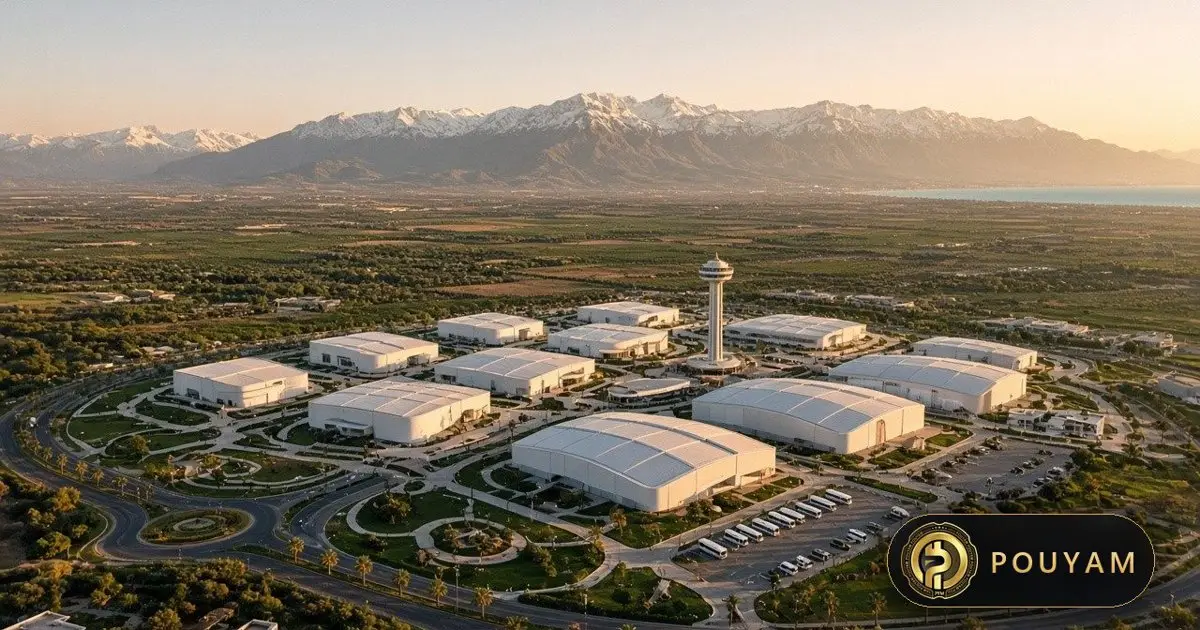
In short
COP31, the 2026 UN climate summit, runs from 9 to 20 November 2026 at the Antalya EXPO Center in Türkiye, with Türkiye holding the presidency and Australia chairing the negotiations [1][2][4]. As of 15 November 2026, the rest day, a first draft of the main decision is expected early next week [6][12].
Key takeaways
- Dates: 9 to 20 November 2026; recent summits ran over, so a deal after 20 November is possible [1][10].
- Host city: Antalya, Türkiye, at the Antalya EXPO Center in the Aksu district; local time is UTC+3 [2][3].
- Türkiye's minister Murat Kurum is COP31 President; Australia's minister Chris Bowen is President of Negotiations [4][6].
- The split presidency came from a deal at COP30: Australia backed Türkiye's bid in return for chairing the talks and a pre-COP in the Pacific [4].
- The main open questions are a possible cover decision, climate finance, adaptation finance and the voluntary 35-by-35 electrification pledge [6][7][8].
- Sunday 15 November is the rest day; the second week opens on 16 November with ministers in Antalya [4][12].
- COP32 follows in Ethiopia in 2027 [4].
On this page 13 sections
- When is COP31 and when does it end?
- Where is COP31 held?
- Who is hosting COP31, Türkiye or Australia?
- What is on the table at COP31?
- What happened in the first week of COP31?
- How can I follow COP31 live?
- What happens in the second week of COP31?
- How does COP31 compare with COP30 and COP32?
- Why does COP31 matter for ordinary people?
- Common mistakes
- Frequently asked questions
- Glossary
- Sources
When is COP31 and when does it end?
COP31 runs from Monday 9 November to Friday 20 November 2026, according to the United Nations, and the closing plenary on the last day is where final decisions are adopted [1][13]. COP stands for Conference of the Parties, the yearly meeting of the countries that signed the UN Framework Convention on Climate Change. COP31 is the 31st session.
The official end date is not a promise. The last two summits both went into overtime. COP30 in Belém, Brazil, was due to finish on 21 November 2025 but concluded on 22 November, and COP29 in Baku, Azerbaijan, closed on 24 November 2024 after a scheduled finish on 22 November [10]. Decisions need the agreement of every party, so the final package is often settled overnight once ministers have traded their last positions.
For COP31 this means that the weekend of 21 and 22 November is a realistic window for the final texts if talks slip. As of 15 November 2026, the UN and UNFCCC materials still give Friday 20 November as the scheduled end [1][3].
The two weeks follow a fixed pattern. The first week is mostly technical work by officials in the subsidiary bodies, plus the World Leaders' Summit on 11 and 12 November [14]. After the rest day on Sunday 15 November, ministers take over the political questions in the second week [4][6].
Where is COP31 held?
COP31 is held at the Antalya EXPO Center in the Aksu district of Antalya, a city on Türkiye's Mediterranean coast, according to the UN climate secretariat (UNFCCC) [2]. The venue is reached through Antalya Airport and the main highways, with dedicated COP31 shuttle buses [2].
The site is split into two areas with different rules:
- Blue Zone: managed by the United Nations and open only to accredited participants. It hosts the official negotiations, country pavilions, presidency events and side events [2][3].
- Green Zone: managed by the host country and open to the public and accredited media. Visitors need a free visitor registration, and the Green Zone was closed to visitors during the Leaders' Summit on 11 and 12 November [2][3].
The two zones are linked by a shuttle bus, and free shuttles connect the main accommodation areas with the venue for badge holders [3]. Local time in Antalya is UTC+3 with no daylight saving, which matters if you follow livestreams from abroad [3].
Registration for official delegations and observer organisations closed on 8 November 2026 [2]. If you were not registered by then, the Green Zone and the online broadcasts are the realistic ways to follow the summit.
Who is hosting COP31, Türkiye or Australia?
Both, in a split arrangement: Türkiye is the host and holds the COP31 presidency, while Australia is the President of Negotiations and chairs the formal talks [4][5]. The COP31 President is Murat Kurum, Türkiye's Minister of Environment, Urbanisation and Climate Change. The President of Negotiations is Chris Bowen, Australia's Minister for Climate Change and Energy [4].
The split came out of a deadlock. Australia and Türkiye both bid to host the 2026 summit, and neither had withdrawn before COP30. During COP30, Australia agreed to support the Turkish bid in return for its minister presiding over the negotiations and for hosting a pre-COP meeting in the Pacific [4]. The roles are set out in the Türkiye Australia Partnership modalities [4].
In practice the work is divided like this:
- Bowen oversees the detailed negotiations on the formal agenda [6].
- Kurum leads the voluntary initiatives of the Action Agenda, such as pledges and thematic days [6].
- Australia says it will use the role to build consensus across all negotiating issues and to elevate Pacific priorities [5].
On 14 November Bowen told journalists that the arrangement had worked "exceedingly well" so far, saying it lets the two countries draw on each other's relationships [6]. Whether it helps produce a stronger outcome will only be clear at the closing plenary.
What is on the table at COP31?
As of 15 November 2026, four questions dominate COP31: whether to adopt a cover decision, how to run a climate finance work programme, how much adaptation finance to set, and whether a voluntary 35-by-35 electrification pledge is reflected in the outcome [6][7][8]. For a deeper look at each negotiating track, see the Pouyam guide COP31 Antalya: What Is Being Negotiated and Why It Matters.
- Cover decision: an overarching political text that sums up the main outcomes [13]. The presidency's informal note of 13 November records views that it should be concise and non-prescriptive and should not have top-down targets [9]. The Arab Group said top-down sectoral targets and energy pathways interfere with countries' national priorities, while the EU asked for the text to reflect the duration and magnitude of a 1.5°C overshoot and the challenges of implementing the first global stocktake outcome, including transitioning away from fossil fuels [7].
- Climate finance: a 15-page draft on a climate finance work programme carries 83 brackets and 5 options [8]. One option seeks a needs-based target and burden sharing for developed countries; another proposes a non-prescriptive, non-punitive approach [8].
- Adaptation: a draft on the global goal on adaptation is the main battleground for Africa's demand to triple adaptation finance to at least $120 billion per year by 2035 [6].
- Electrification: the voluntary pledge to raise electricity to 35% of energy use by 2035 has public backing from at least 14 countries but is not part of the formal negotiations [6].
Smaller groups added their own priorities. Small island states suggested referencing the Green Climate Fund replenishment and the best available science, the least developed countries said the cover decision must include concrete adaptation measures, and the UK pointed to its commitment of GBP 6 billion in climate finance over three years [7].
What happened in the first week of COP31?
The first week ended with the subsidiary bodies rounding up their technical work, several heavily bracketed drafts on the table and a midway stocktaking plenary on Saturday night, 14 November, at which countries' first red lines were expected to emerge [6][7].
The week had three phases. It opened on 9 November with the opening plenary [1][6]. The World Leaders' Summit followed on 11 and 12 November, with heads of state and government setting out commitments [14]. From 13 November thematic days on finance and trade began, while officials worked through the formal agenda [4][7].
Progress was uneven. On 13 November, the Earth Negotiations Bulletin reported that several negotiating rooms had agreed conclusions or moved items on to the governing bodies, while others had not reached agreement [7]. Climate Home News described most issues on the formal agenda as still needing a lot of work, with the cover text closer to a wishlist of every proposal than a draft [6].
On 14 November thousands of campaigners marched through Antalya, demanding climate finance, a just transition, an end to fossil fuels and that polluters pay [6]. UN Climate Change Executive Secretary Simon Stiell urged countries to move swiftly towards agreement before the rest day [12].
How can I follow COP31 live?
The easiest way to follow COP31 is the UNFCCC website, which publishes the official schedule, live streams of public meetings, and official documents as they become available [2][3].
- Watch the plenaries. All public meetings are live streamed and recordings are available online; the two plenary halls are named Anadolu and Akdeniz [3].
- Check the daily schedule. Times and access arrangements may change, so check the official online schedule; Antalya time is UTC+3 [3].
- Read the draft texts. New drafts appear on the UNFCCC site; trackers such as the one from Carbon Brief follow the negotiating texts, and Carbon Brief has also counted the brackets in the finance draft [8][13].
- Use a daily summary. The Earth Negotiations Bulletin publishes a detailed report of each day's negotiations [7].
- Watch the presidency briefings. Daily presidency press briefings are held in press conference room 1, subject to confirmation [3].
If you are in Antalya without a badge, register online as a visitor for the Green Zone [2].
What happens in the second week of COP31?
The second week, from 16 to 20 November, is when ministers negotiate the political deals, starting from a first draft of the cover decision that is due early in the week [6][12]. Drafts are then revised several times; as brackets disappear, they become clean texts that can be adopted as draft decisions at the closing plenary [13].
The thematic days continue: 16 November covers science, industry and technology, 17 November oceans, seas, nature and land use, and 18 November human and social development and gender [4].
Watch for these signals:
- Whether large developing countries accept a cover decision at all, after they pushed back on it during the first week [6].
- Whether electrification appears in the text "in a way that reflects consensus", as Bowen put it [6].
- Whether the adaptation finance figure of $120 billion per year by 2035 survives, or a review process replaces it [6].
- How many brackets remain in the finance text by the final days [8].
The outcome will build on COP30, where countries agreed to triple climate finance for developing nations to adapt by 2035 [11].
How does COP31 compare with COP30 and COP32?
COP31 sits between COP30 in Brazil, which ended in overtime with the Belém outcome, and COP32, which Ethiopia will host in 2027 [4][10]. The table below compares the three summits.
COP31 is not a deadline year in the Paris Agreement cycle in the way COP30 was for new national climate plans. That makes it more about implementing earlier promises, which the UK Parliament briefing describes as the focus of both the 2025 and 2026 conferences [4].
Why does COP31 matter for ordinary people?
COP31 decides how much money and support will flow to countries hit by floods, droughts and heat, and shapes the political debate on energy policy [6][8]. Its decisions are not laws in themselves; each government must turn them into national policy.
The adaptation finance target is the main demand of African countries in the talks [6], and it concerns money for adapting to climate impacts. The debate on electrification is about raising the share of electricity in energy use to 35% by 2035, a voluntary pledge [6].
Citizens also have a role. Many groups in Antalya argued for a people-centred outcome: Brazil said the presidency's informal note does not reflect a people-centred approach and pointed to the rights of youth, women, Indigenous Peoples, migrants and people with disabilities [7]. Following the drafts and asking your own government what it supports in Antalya is a practical way to hold leaders to their promises.
| Summit | Host | Dates | Key point |
|---|---|---|---|
| COP30 | Belém, Brazil | 10 to 22 November 2025 (ended one day late) | Agreed to triple adaptation finance by 2035 |
| COP31 | Antalya, Türkiye, with Australia chairing negotiations | 9 to 20 November 2026 | Split presidency; cover decision and finance open |
| COP32 | Ethiopia | 2027 | Next host after Antalya |
Common mistakes
Assuming Australia is hosting COP31 because it chairs the negotiations.
Fix: Türkiye is the host and holds the presidency in Antalya; Australia chairs the formal talks [4][5].
Expecting final results on the afternoon of 20 November.
Fix: Recent summits ended one or two days late, so watch the closing plenary even after 20 November [10].
Treating the 35-by-35 electrification pledge as a binding target.
Fix: It is a voluntary pledge outside the formal negotiations, backed by at least 14 countries so far [6].
Trying to enter the Blue Zone without accreditation.
Fix: Only accredited participants enter the Blue Zone; visitors register for the Green Zone [2].
Reading a draft text as the final outcome.
Fix: Drafts with brackets show options still under negotiation; only texts adopted at the closing plenary count [13].
Frequently asked questions
When does COP31 end?
COP31 is scheduled to end on Friday 20 November 2026, but COP30 and COP29 both ran past their official end dates [1][10].
Which city is hosting COP31?
Antalya, Türkiye, at the Antalya EXPO Center in the Aksu district [2].
Who is the COP31 President?
Murat Kurum of Türkiye is COP31 President, and Chris Bowen of Australia is President of Negotiations [4].
Can the public attend COP31?
The public can visit the Green Zone with a free registration; the Blue Zone is for accredited participants only [2][3].
Is there a COP31 rest day?
Yes, Sunday 15 November 2026 is the rest day between the two weeks [4][12].
Where is COP32?
COP32 will be held in Ethiopia in 2027 [4].
Glossary
- COP
- Conference of the Parties, the yearly decision-making meeting of the UN climate convention [4].
- President of Negotiations
- The role created for COP31 so that Australia chairs the formal talks while Türkiye holds the presidency [4].
- Cover decision
- An overarching political text that summarises the main outcomes of a summit [13].
- Brackets
- Square brackets around draft wording that marks text still in dispute [8].
Sources
- COP31 to take place 9-20 November 2026 in Antalya, Türkiye United Nations
- Information for COP 31 participants (A-Z) UNFCCC
- United Nations Climate Change Conference 2026: Media Bulletin Note 01 UNFCCC · 2026-11-07
- COP31: The 2026 United Nations Climate Change Conference UK House of Commons Library
- COP31 Australia-Pacific Australian Government DCCEEW
- COP31 Bulletin Day 6: Climate marchers call for justice as talks make limited progress Climate Home News · 2026-11-14
- Earth Negotiations Bulletin Vol. 12 No. 906: Antalya Climate Change Conference, 13 November 2026 IISD · 2026-11-14
- NEW: Climate finance text circulating Carbon Brief · 2026-11-14
- Summary of Reflections Expressed by Parties During Consultations on the Proposed Cover Decision UNFCCC / COP31 Presidency · 2026-11-13
- UN Climate Change Conferences United Nations
- COP30 seals uneasy climate deal that sidesteps fossil fuels Reuters · 2025-11-22
- COP31 Day 6: Negotiations Gather Pace as Countries Prepare for Final Week Climate and Clean Air Coalition · 2026-11-14
- Interactive: Tracking negotiating texts at the COP31 climate summit Carbon Brief · 2026-11-05
- IEA at COP31: Energy and Climate Action International Energy Agency

Comments
Top comments