
ChatGPT Wallet: How It Works, Who Gets It and Is It Safe
- 0 views
- 0 likes
- 0 comments
- All languages combined
In short
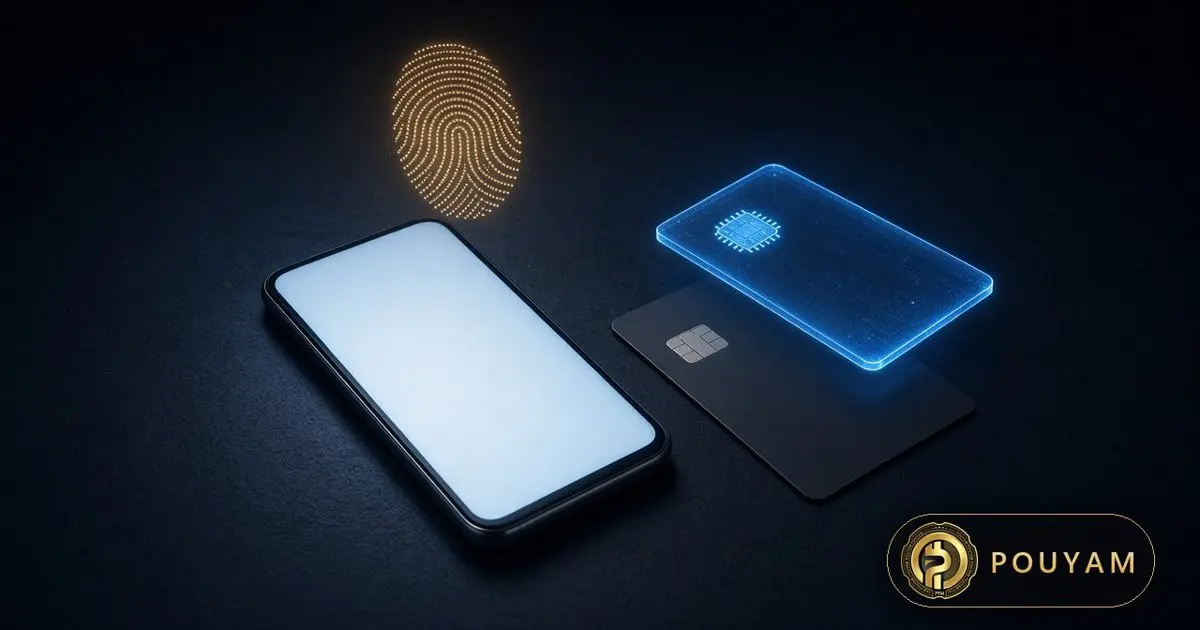
ChatGPT Wallet, launched by OpenAI on 13 November 2026, lets ChatGPT's dots agents pay for purchases with a payment token instead of your real card number, after you approve each purchase with Face ID or a fingerprint [1][2][6]. It starts with US ChatGPT Pro users aged 18 and over [1][6].
Key takeaways
- ChatGPT Wallet launched on 13 November 2026 and works only inside conversations with a dot, OpenAI's AI agent [1][2][3].
- At launch it is limited to ChatGPT Pro subscribers aged 18 or over who live in the US and have an eligible US-issued American Express, Chase, Mastercard or Visa credit card [2].
- Debit cards and virtual cards are not supported, and Chase cards must belong to the primary cardholder [2].
- Every purchase needs your approval with a biometric check such as Face ID or Touch ID; the payment network then issues a token so the shop and agent never see your real card details [1][2][6].
- Card rewards and dispute protections stay in place [7]; refunds and cancellations go through the merchant, disputed charges through your card issuer [1][2].
- OpenAI says it is not taking a cut of transactions to start, and some businesses, such as Amazon, block agent purchases [3].
On this page 12 sections
- What is ChatGPT Wallet?
- What are ChatGPT dots?
- Who can use ChatGPT Wallet and which cards work?
- How does a ChatGPT Wallet purchase work?
- Is ChatGPT Wallet safe?
- How do I avoid ChatGPT Wallet scams?
- How do refunds and disputes work with ChatGPT Wallet?
- Will ChatGPT Wallet come to more countries and users?
- Common mistakes
- Frequently asked questions
- Glossary
- Sources
What is ChatGPT Wallet?
ChatGPT Wallet is a payment feature, announced by OpenAI on 13 November 2026, that lets your ChatGPT agent complete purchases for you without seeing your actual card details [1]. OpenAI built it with American Express, Mastercard and Visa, and calls it the first wallet that lets agents pay without access to real card details while requiring a security check for every purchase [1].
The idea is that you ask your agent to find something, for example "Help me find a new sweater" or "Book me a hotel for my trip to Chicago next weekend", and when it is time to check out, the agent asks you to approve payment through Wallet [2]. You add a card once and then approve each purchase without typing your card number again [1].
OpenAI says 1.2 billion people use ChatGPT each week and many already use it to research products [1]. CNBC cites more than 1.2 billion weekly active users [3]. CNBC reports that OpenAI described agentic commerce as still in its "early days" and published tools and guidance for businesses alongside the announcement [3]. For a refresher on how ChatGPT itself works, see the Pouyam guide What Is ChatGPT? How Large Language Models Like It Actually Work.
What are ChatGPT dots?
Dots are OpenAI's AI agents inside ChatGPT, and ChatGPT Wallet only works in conversations with a dot [2]. CNBC reports that OpenAI introduced dots at its developer conference in late September [3]. A dot can carry out tasks such as searching for products or booking travel, then hand you a purchase request to approve [2].
OpenAI's help page says Wallet is not available in Chat, Work or standalone Codex threads; you need to set up a dot first [2]. If you do not see Wallet in a conversation with your dot, it may not have reached your account yet, because the rollout is gradual [2].
Who can use ChatGPT Wallet and which cards work?
As of 13 November 2026, ChatGPT Wallet is available only to ChatGPT Pro subscribers who are 18 or older, live in the United States and have a US billing address for an eligible US-issued credit card [1][2]. TechCrunch describes it as a limited rollout [6]. Eligible card brands are American Express, Chase, Mastercard and Visa [2].
The help page lists several limits: debit cards are not supported, virtual cards are not supported at launch, and a Chase card can be added only by the primary cardholder, not an authorized user [2]. Your bank may also ask you to verify the card when you add it, for example with a code or an approval in its app [2]. Approving a purchase requires biometric verification on a supported device [2].
Users outside the US cannot use it yet. OpenAI says it will expand availability after learning from early use, but has given no date or list of countries [1]. American Express's Luke Gebb called the limited rollout "the right approach to make sure things are working", as quoted by CNBC [3]. An offer of ChatGPT Wallet access in another country does not match what OpenAI has announced [1][3].
How does a ChatGPT Wallet purchase work?
You add a card in a secure form, ask your dot to buy something, review the request, and approve it with Face ID or a fingerprint; the payment network then issues a one-use payment token for checkout [1][2].
- Add a card. Ask your dot "Help me add a card to Wallet", or open Settings and select Wallet, then Add Card. Enter the card number, expiry date and security code in the secure form, not in the chat [2].
- Verify with your bank if asked. For Chase, you approve the connection in the Chase mobile app [2].
- Shop. Ask your dot to find and buy what you want.
- Review. Check the merchant, items, total, selected card and any shipping or recurring-payment terms [2].
- Approve with Face ID or Touch ID. If your current device cannot do it, a link or QR code lets you continue on a supported phone [2].
- Confirm the order. The help page warns that "Ready to check out" means your approval is complete, not that the merchant has placed your order; check for the merchant's confirmation before trying again [2].
The number used at checkout is a virtual card number linked to your card, so it may differ from the number printed on your card or receipt [2].
Is ChatGPT Wallet safe?
ChatGPT Wallet is designed with strong payment protections, a token instead of your real card number and a biometric check for every purchase, but it adds new risks, so use it with care [1][2].
Protections built in:
- The agent and the business never receive your actual card details; they get a payment token with its own card number, security code and expiry date [1]. CNBC reports the token is scoped to the given transaction [3].
- Each purchase needs your approval with Face ID or a fingerprint, which creates a clear record of what you authorized [1][6].
- Your card's existing rewards and protections for eligible disputes remain, for example when an item is defective [1].
- Banks and card networks still evaluate each transaction with their own fraud systems [1].
Risks to keep in mind:
- The agent chooses what goes into the request. If it picks the wrong item, size or seller, your approval makes the purchase valid, so read every request [2].
- Recurring plans: if you agree to a subscription, the merchant may store the credential and charge it again; you must cancel with the merchant [2].
- Some stores may fail or decline agent purchases, and a failed checkout can leave a pending charge [2].
- Personal data: merchants may need your name, address, phone and email, which you may share in the conversation [2]. The Pouyam guide Is ChatGPT Safe for Your Privacy? What AI Chatbots Do With the Data You Share explains what happens to chat data.
How do I avoid ChatGPT Wallet scams?
Only enter card details in the secure Wallet form inside ChatGPT, never in a chat message, an email, a support ticket or a website claiming to be ChatGPT Wallet [2]. OpenAI's help page repeats that you should never share your full card number, security code, password or bank verification codes in a support message [2].
- Ignore emails, texts or social posts inviting you to "activate" ChatGPT Wallet through a link. Wallet is set up from your dot or the Settings page [2].
- Remember who is eligible: if you are outside the US or not on ChatGPT Pro, any offer of Wallet access does not match what OpenAI has announced as of 13 November 2026 [1][2].
- Decline any purchase request you do not recognize or for a seller you do not trust [2].
- For an unrecognized charge, contact your card issuer at once through its official app or the number on your card [2].
- If you think someone has accessed your OpenAI account, secure it and report it to OpenAI Support [2].
How do refunds and disputes work with ChatGPT Wallet?
Refunds, returns and cancellations go through the merchant; declined, disputed or unrecognized charges go through your card issuer; Wallet errors go to OpenAI Support [2]. Users transact directly with businesses, which keep control over pricing, fulfilment, returns and customer service [1].
Removing a card from Wallet does not cancel past purchases, close the card or end a recurring plan; you need to contact the merchant for those [2]. If checkout fails or the conversation stops responding, check the merchant's order status before you try again, so you do not pay twice [2].
Will ChatGPT Wallet come to more countries and users?
OpenAI says it will expand availability after learning from early use, but as of 13 November 2026 it has not named new countries, plans or dates [1]. Gebb of American Express said, as quoted by CNBC, that OpenAI can "turn up the volume" when it chooses, given its large user base [3].
OpenAI also describes a future step: letting users pre-approve purchases by setting limits such as spending caps, purchase categories or time periods, with extra safeguards [1][7]. That is a plan, not a current feature. Meanwhile, businesses are split. CNBC reports that United Airlines said it will block agents from booking tickets and that Amazon prevents agents from buying on its platform [3]. OpenAI says it is working with fraud prevention firms including Forter, Riskified, Sardine and Signifyd, and payment providers including Adyen, Checkout.com and Stripe, so that legitimate agent purchases are recognized [1]. Bloomberg Law reported the same launch details, including the US-only, Pro-only start [4]. Bloomberg News framed the launch as a renewed push into AI shopping after OpenAI wound down its earlier Instant Checkout feature [5].
| Question | Answer at launch |
|---|---|
| Who can use it | ChatGPT Pro subscribers, 18+, living in the US |
| Where it works | In conversations with a dot only, not Chat, Work or standalone Codex |
| Eligible cards | US-issued American Express, Chase, Mastercard and Visa credit cards |
| Not supported | Debit cards, virtual cards; Chase authorized users |
| Approval | Biometric check (Face ID, Touch ID or fingerprint) for every purchase |
| Card details shared with shop or agent | No: a payment token is used instead |
| Refunds and cancellations | Through the merchant |
| Disputed or unknown charges | Through your card issuer |
| Fee taken by OpenAI | None to start, per CNBC |
Common mistakes
Typing card details into the chat.
Fix: Enter them only in the secure Wallet form; never in chat or a support message [2].
Treating 'Ready to check out' as an order confirmation.
Fix: It only confirms your approval; wait for the merchant's confirmation before retrying [2].
Approving without reading the request.
Fix: Check merchant, items, total, card and recurring terms before you approve [2].
Trying to add a debit card.
Fix: Wallet supports only eligible US-issued credit cards at launch [2].
Expecting OpenAI to handle a refund.
Fix: Returns and refunds go through the merchant; disputes go through your card issuer [2].
Frequently asked questions
Is ChatGPT Wallet free?
It is available to ChatGPT Pro subscribers at launch, and OpenAI says it is not taking a cut of transactions to start, according to CNBC [2][3]. The launch coverage does not mention a separate Wallet charge.
Can I use ChatGPT Wallet outside the US?
Not as of 13 November 2026; it requires US residence, a US billing address and a US-issued card [2].
Does ChatGPT see my card number?
No. OpenAI says the agent and the business get a payment token, not your actual card details [1].
Does ChatGPT Wallet work with debit cards?
No. Debit cards are not supported; use an eligible US-issued credit card [2].
Can my dot buy things without asking me?
Not at launch: every purchase needs your biometric approval; pre-approved purchases are only a future plan [1][7].
Can I use ChatGPT Wallet on Amazon?
CNBC reports that Amazon prevents agents from purchasing on its platform [3].
Glossary
- Payment token
- A substitute card number, security code and expiry date used in place of your real card details [1].
- Agentic commerce
- Shopping in which an AI agent finds and buys items for a person [1].
- Card issuer
- The bank that issued your card and handles disputed or unrecognized charges [2].
- Biometric verification
- Confirming your identity with Face ID, Touch ID or a fingerprint [2].
Sources
- Introducing ChatGPT Wallet OpenAI · 2026-11-13
- Making purchases with ChatGPT Wallet OpenAI Help Center · 2026-11-13
- OpenAI launches ChatGPT Wallet, allowing its 'dots' AI agents to make purchases for users CNBC · 2026-11-13
- OpenAI Launches ChatGPT Wallet for Agentic Payments Bloomberg Law · 2026-11-13
- OpenAI Debuts New ChatGPT Payment Method With Card Networks Bloomberg Law · 2026-11-13
- ChatGPT's new Wallet lets AI agents shop and check out for you TechCrunch · 2026-11-13
- OpenAI rolls out ChatGPT Wallet to let Dots AI agents make purchases Android Authority · 2026-11-13




Comments
Top comments