

📹🟥❌ Fox News hosts, Persian subtitle text:
Host: Let’s take a look at the power plants and places where we might be able to target. Lucas, when you look at these as possible targets, where do you think we would hit first?
Lucas: Well, I don’t know whether it would be the first target, but the Damavand power plant supplies 40% of Tehran’s electricity. The Bushehr nuclear power plant probably won’t be targeted either. The Russians built it, and they are still providing Iran with low-enriched uranium.
Host: Because, Lucas, we should say that exploding a nuclear power plant carries risks.
Lucas: Without a doubt. The South Pars gas field is also on the largest natural gas field in the world. Israeli forces targeted it on March 18, at the start of the war, and Iran responded by attacking the Qatari section of the same natural gas field.
Host: If we want to send a message in the strait where they attack the ships, isn’t there somewhere we should go?
Lucas: Why not; the only question is what Iran’s response will be. We’ve seen that Iran retaliates. The natural gas facilities in Qatar and the oil fields in the United Arab Emirates are the main concerns.
Host: So if we hit a power plant, they would also give a response similar to that?
Lucas: Undoubtedly. This whole time, the story has been about tit-for-tat. What’s notable about the Israelis is that they give disproportionate responses. One of the reasons Israel hasn’t entered the war again is probably this: Iran hasn’t attacked Israel since the beginning of June.
Host: What’s your assessment of the way we’re acting now? Do you think our response is disproportionate, or could it have been more disproportionate?
Lucas: Our response isn’t disproportionate. What’s notable is that American forces, after an American base in Jordan was targeted, attacked Iran’s barracks—those same attacks that killed three U.S. Army soldiers.
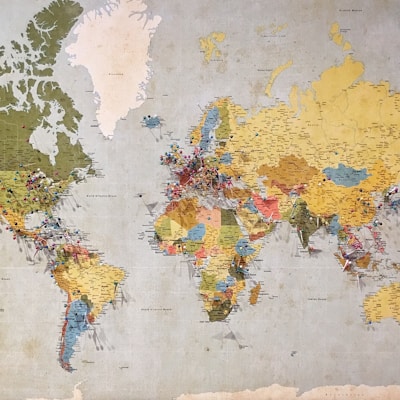
Host: So this is the power plant that we might target. This is the main thing. Let’s go to the other side of the map; here is “Pickaxe Mountain.”
Lucas: The U.S. intelligence assessment is that Iran likely moved part of its enriched uranium from Fordow to Pickaxe Mountain a few days before the “Midnight Hammer” operation a year ago.
This location is much deeper than other nuclear facilities. We’re also dealing with the Zagros Mountains and very hard dolomite stone, so an air strike would be very difficult. This is one of the reasons why ground forces might be used.
In fact, such a mission would be for the U.S. Army’s special mission forces; units such as Delta, the 6th Seal team, and the 24th Special Tactics Squadron of the Air Force.
The risk in the matter is that nobody knows exactly what the situation is inside. There is no technical map of the inside of Pickaxe Mountain.
Host: That’s right. That’s what we’re saying.
Lucas: The International Atomic Energy Agency has never had access to this site. Therefore, we don’t know with confidence whether the centrifuges and highly enriched uranium have been moved to Pickaxe Mountain or not; but this site is under surveillance.
We heard that President Trump said he would target Pickaxe Mountain soon. We’ve seen B-1 bombers take off that flew from the United Kingdom, and, of course, B-2 bombers launched from the Whiteman Air Force Base in Missouri for that same around-the-world flight we saw during the “Midnight Hammer” operation.
Host: And Natanz was targeted too, right?
Lucas: Natanz was targeted. Fordow and Isfahan were also targeted. These were the three locations that were targeted in the “Midnight Hammer” operation a year ago. However, Pickaxe Mountain has remained untouched so far.
[Sentences that are in the video but I didn’t quote here so they would fit the text in the post.]
Host: And now, as far as I know, this power plant supplies electricity for two million people.
Lucas: Yes.
Host: And it’s outside Tehran.
Lucas: If the president wants to give a response that would be perceived as somewhat disproportionate, he would target the Damavand power plant. Again, I’ll say this: this power plant supplies 40% of Tehran’s electricity—that is, the electricity of the capital.
The only question is whether you want to cut off the electricity of millions of Iranians who are sympathetic to the American goal?


Comentarios
Comentarios destacados