



🔶 U.S. attack on Iran; how long will people’s resilience last?
🔻 Report by Morad Rahmati
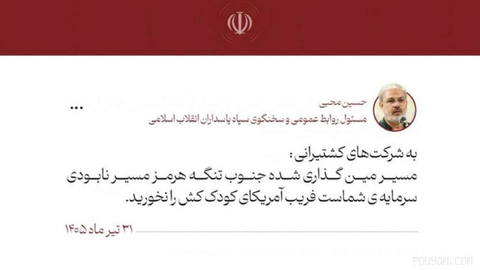
In the latest developments of the war, the U.S. Army expanded the scope of its attacks from cities in southern Iran to Shiraz, Isfahan, and Tabriz. On Wednesday, Tir 31 (July 22), the Iranian Islamic Republic’s media reported explosions in Chawar and Abdanan in Ilam Province, as well as in the cities of Baneh, Mahshahr, Behbahan, Omidiyeh, Bushehr, Chabahar, and Kankor, and also the activation of air defenses in Tehran.
The new round of U.S. attacks began with targeting the “Aq-takhe Khan” rail bridge in Aqqala, located at the northernmost point of the country. An attack on this strategic bridge can be seen as sending the message that the U.S. Army is capable of striking different points in Iran and disrupting the country’s communication and logistical routes with Russia and China.
However, after the attack on Aqqala, the focus of the attacks shifted to southern regions of the country.
Mehran Borati, an analyst of Iranian affairs, says in an interview with Deutsche Welle Persian that he does not see signs of widespread resilience in Iranian society; because protests are taking place in different areas across the country and people’s ability to tolerate has reached its final limit.



Kommentare
Top-Kommentare