




Mindfulness for Busy People: A Daily 10-Minute Practice That Really Lasts
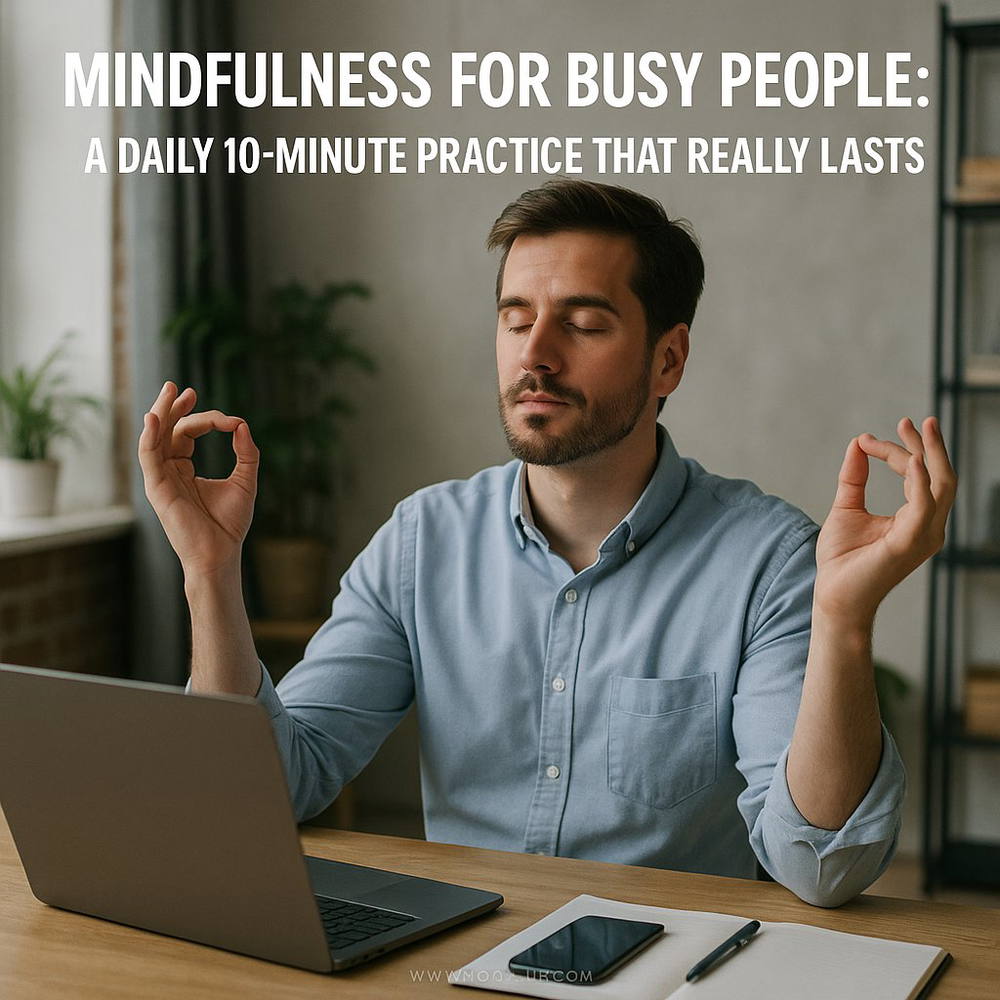
 +50
+50 Mindfulness doesn’t need a lot of time or a particular mood. This step-by-step guide helps you strengthen your attention with a 10-minute practice and manage everyday stress better—without obsessing about “doing it right.”
Mindfulness means conscious attention to “what is happening right now”—not judging, not trying to immediately change the world, and not a magical technique to eliminate thoughts. If your mind keeps wandering, that’s not a failure—it's part of the practice. The goal is that when you notice your attention has drifted, you gently return it; this mindful return strengthens the muscle of attention.
To fit this into a busy schedule, you don’t need to spend a lot of time. Choose a daily 10-minute practice that is repeatable: (1) find a fixed time (for example, after brushing your teeth or before sleep). (2) promise yourself the time, not the outcome. (3) put your phone on silent and set a 10-minute timer. Now sit or lie comfortably, take a few slow breaths, and keep your focus on one simple “anchor”: the breath in and out, or the feeling of your feet making contact with the ground.
The exact steps of the practice: minutes 1 to 3, pay attention only to bodily sensations and your breathing. Minutes 4 to 7, when a thought or worry comes, say its name in your mind—“thought” or “worry”—without wrestling with it, and return your attention very calmly to the anchor. Minutes 8 to 10, think of a short kind sentence such as “Right now, this is enough,” and then gently end the timer. If you feel like “I’m not doing it right,” remind yourself that the most accurate indicator of progress is returning mindfully—not staying the same.
For progress without obsessing, use a simple tracking method: every day, just mark one tick (done/didn’t). If it’s done, record a number from 1 to 3: 1 = hard and very distracted, 2 = relatively good, 3 = easier. After a few weeks, look for patterns: usually when the time becomes more consistent or sleep improves, the practice becomes gentler as well. If one day you miss it, don’t “punish” yourself; just return to the routine the next day.
Three common obstacles also have practical answers: restlessness means sitting is hard for you—you can do the practice sitting or even standing, or focus on the sensation of air movement in your nose. Boredom means your mind is looking for entertainment—in this case, change the anchor to details (for example, the feeling in your belly during breathing) and slow down. “Not doing it properly” means you’re blaming yourself—rather than correcting yourself, simply bring attention back to the present moment. Mindfulness isn’t meant to create a mind without thoughts; it’s meant to improve your relationship with thoughts and wake up less stress in your body.
If you want to build a lasting version, decide today: 10 minutes, a fixed time, a simple anchor, and a daily tick. With the passage of time, this small practice turns into an attention habit—the same thing that matters most in busy days.
Comments
Top comments