



Europa Clipper Spots Unexpected Magnetic Anomalies During Europa Flyby
Read the full article for context, quotes, and updates from the team.
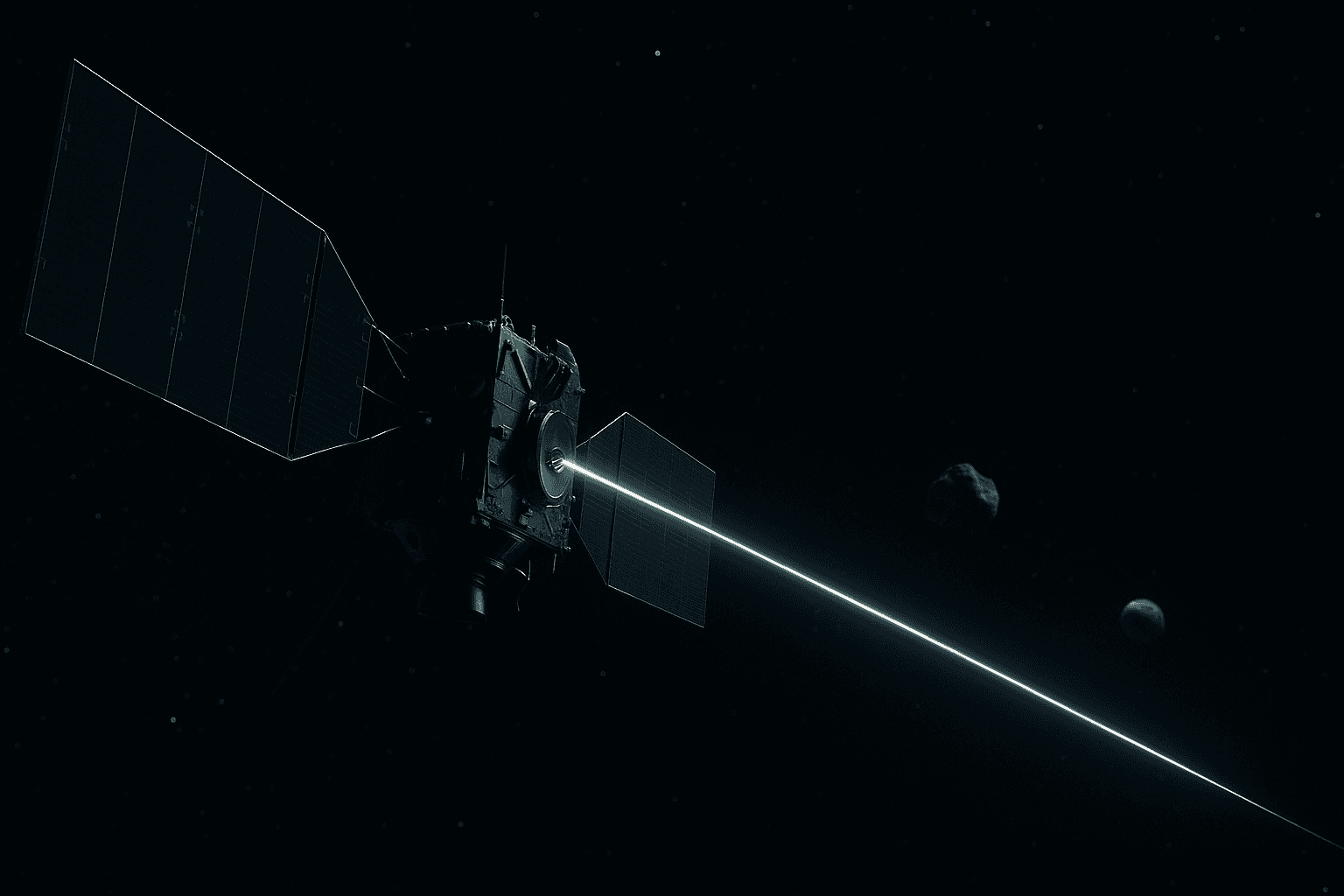
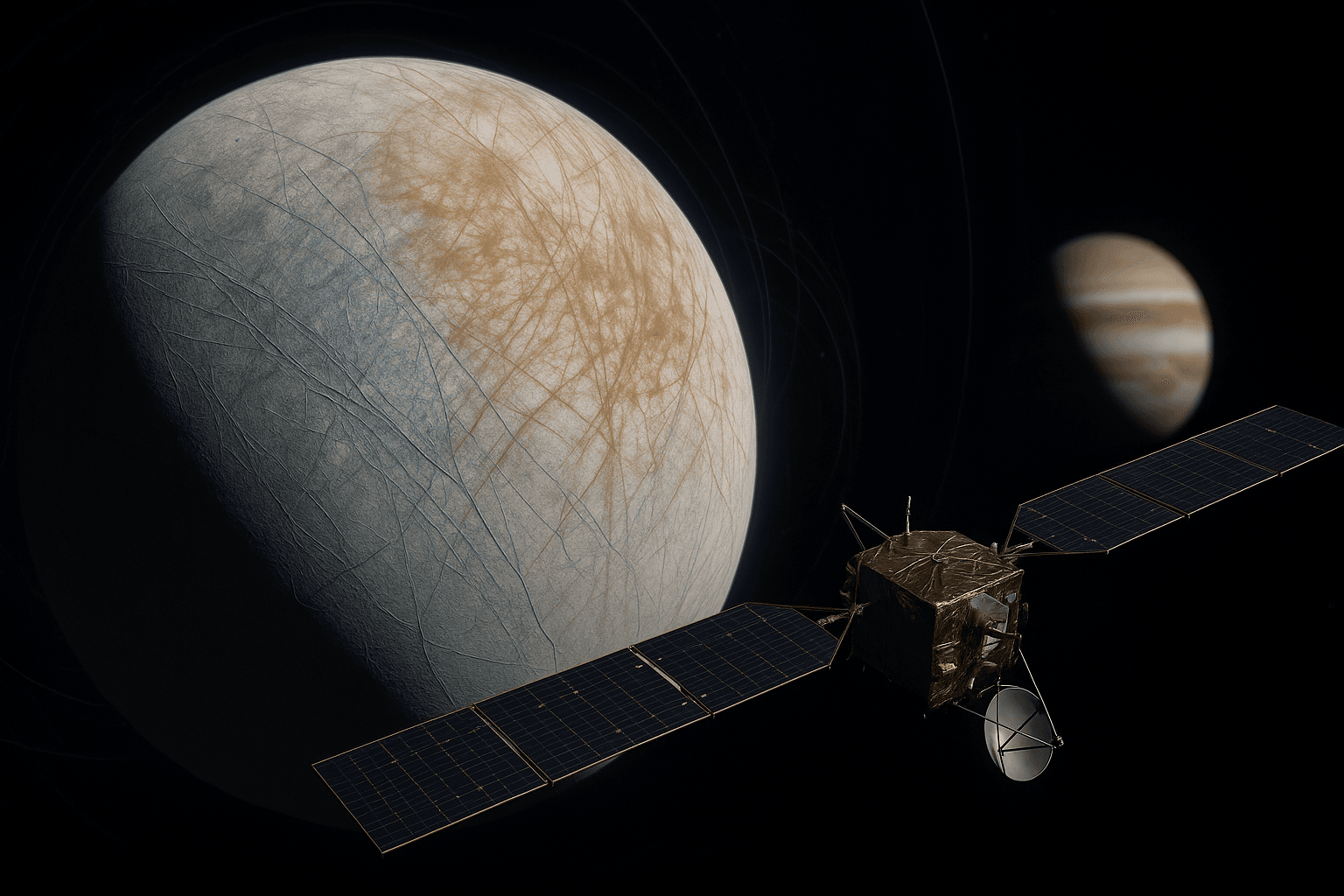
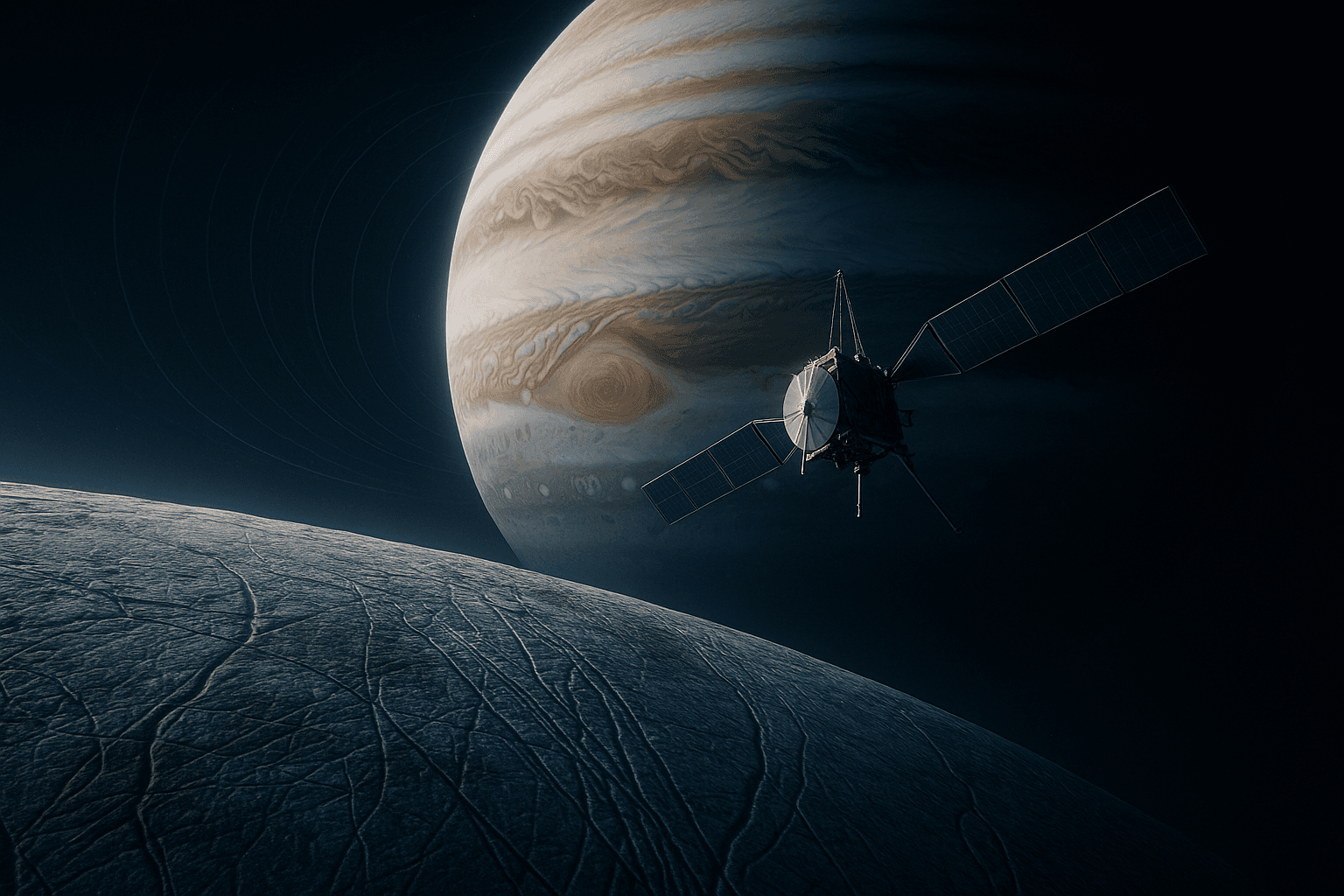
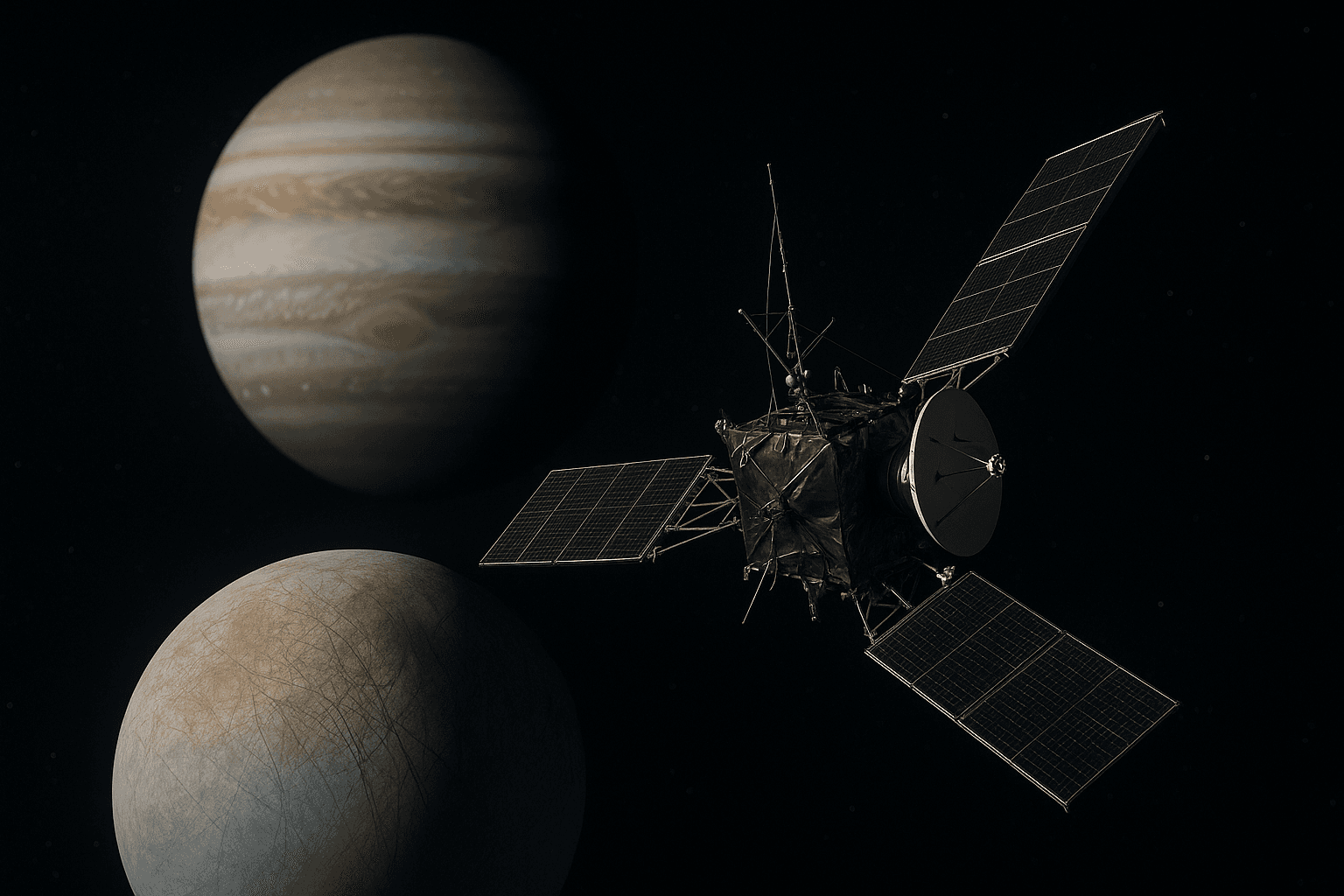
NASA’s Europa Clipper spacecraft has recorded unexpected magnetic field fluctuations during a recent close flyby of Jupiter’s icy moon Europa, adding new intrigue to the mission’s search for signs of habitability. The probe, launched to investigate Europa’s hidden ocean and frozen surface, detected anomalies that scientists say may point to active processes beneath the moon’s thick ice shell.
Researchers are now analyzing the data to determine whether the magnetic variations were caused by interactions with a salty subsurface ocean, shifting ice, or other geological activity. If confirmed, the findings could strengthen the case that Europa is a dynamic world rather than a dormant frozen body.
Europa has long been considered one of the most promising places in the solar system to search for environments that could support life. Its global ocean, believed to lie beneath miles of ice, may contain the chemical ingredients and energy sources needed for habitability.
Mission scientists caution that the results are still preliminary, and more detailed analysis is expected in the coming weeks. Even so, the latest measurements offer an early glimpse into the complex interior of one of Jupiter’s most compelling moons.