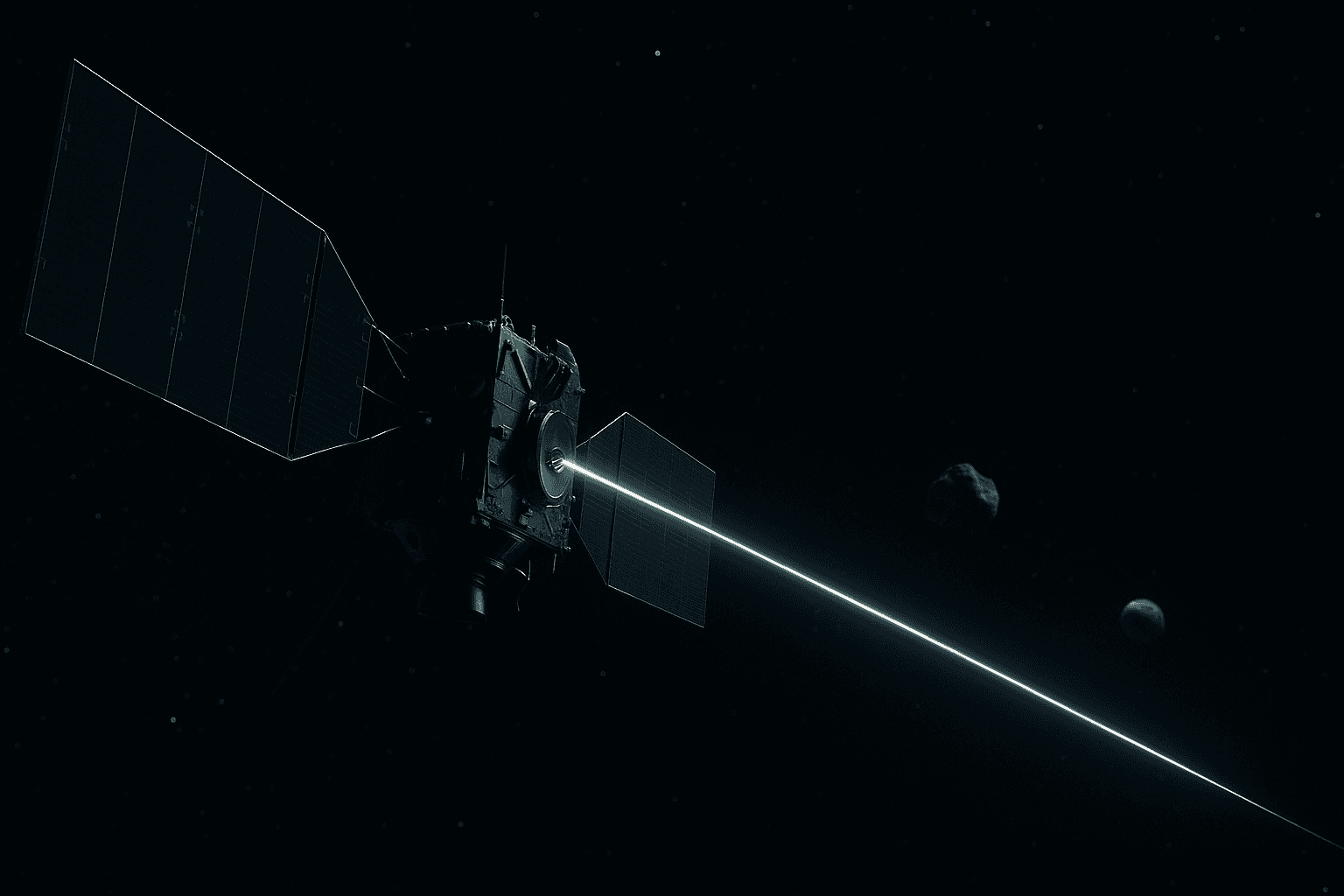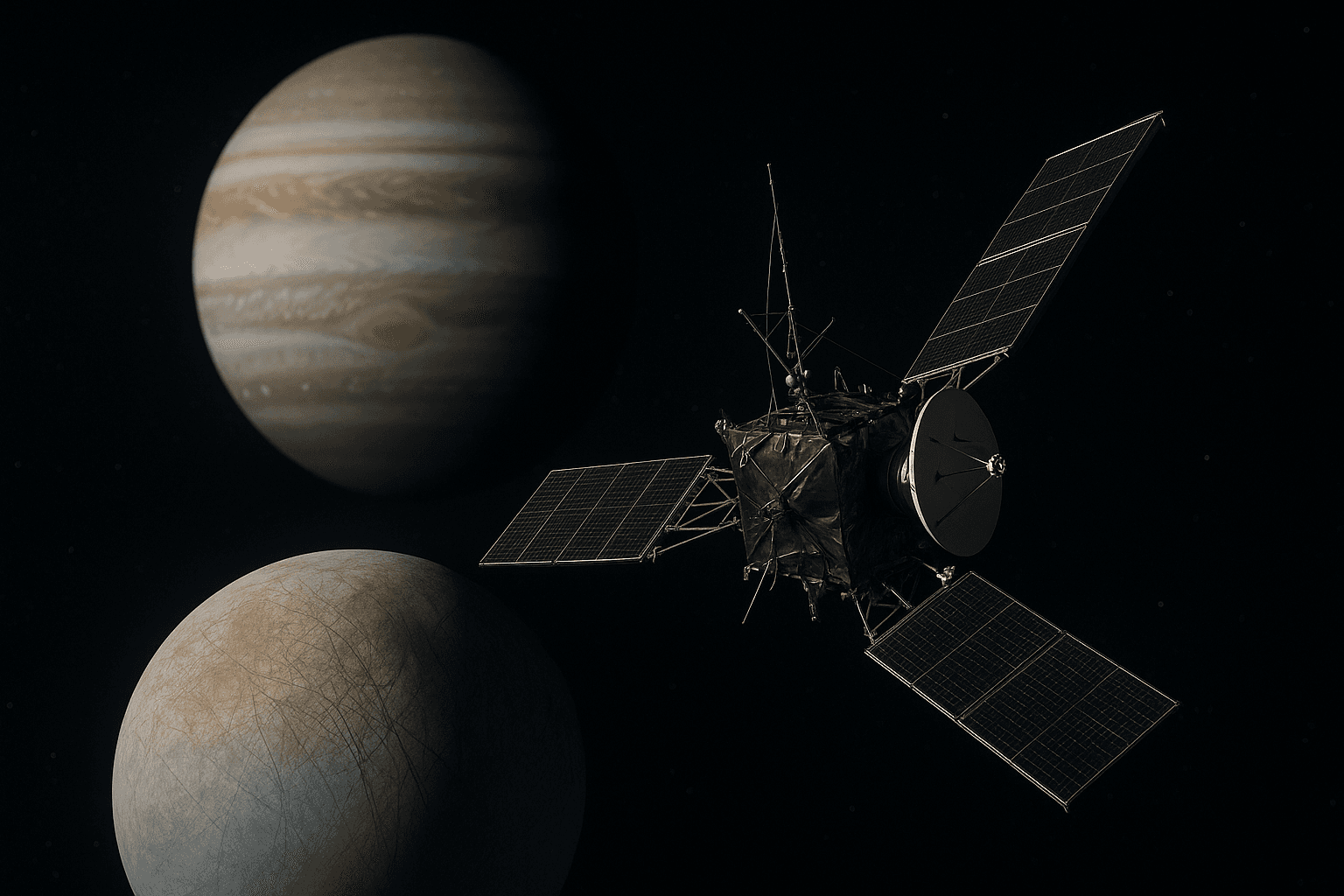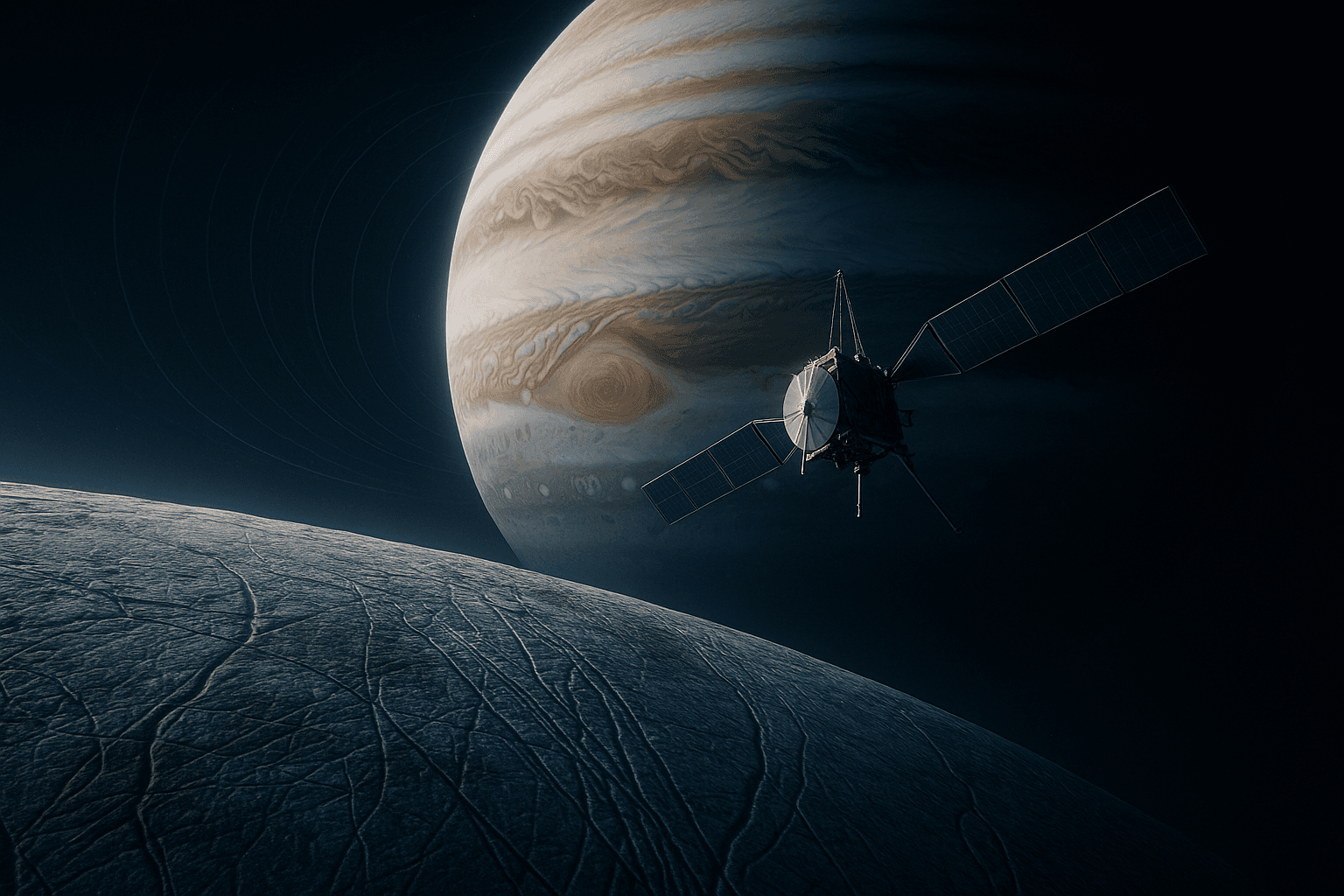




Europa Clipper Spots Magnetic Clues to Activity Beneath Europa’s Ice
Read the full article for context, quotes, and updates from the team.
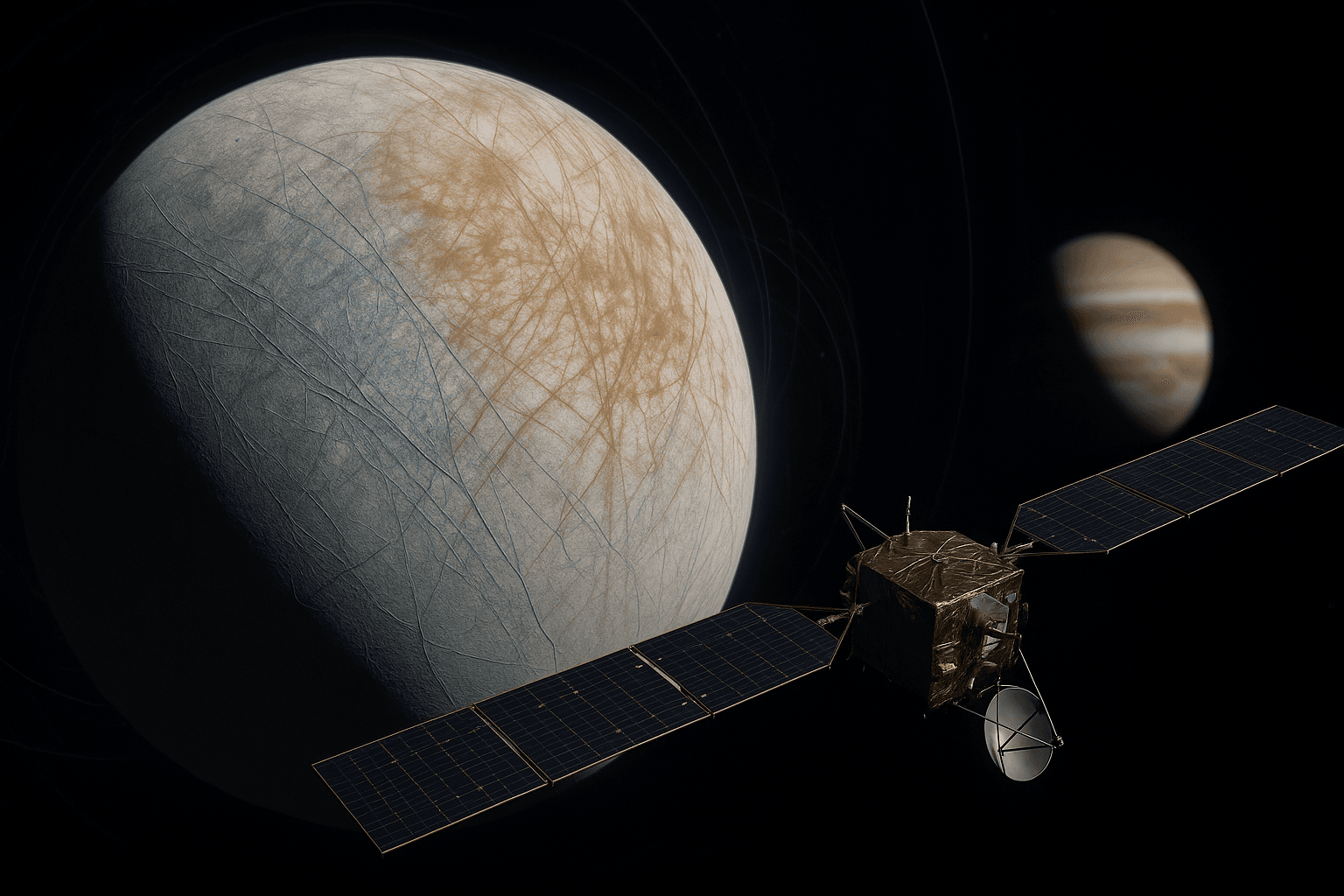
NASA’s Europa Clipper has returned its first scientific data from a recent flyby of Jupiter’s moon Europa, and the early results are drawing attention. Instruments aboard the spacecraft detected unexpected fluctuations in Europa’s magnetic field, patterns that scientists say may point to active processes beneath the moon’s icy crust.
Researchers believe the signatures could be linked to a global subsurface ocean interacting with Europa’s rocky interior. If confirmed, the data may suggest chemical exchanges between water and rock, a process that on Earth can help sustain environments capable of supporting life. While the findings are still preliminary, they add to a growing body of evidence that Europa is one of the most promising places in the solar system to search for habitability beyond Earth.
Launched earlier this year, Europa Clipper is designed to make repeated close passes of the moon, gathering measurements of its ice shell, ocean, and surface composition. Scientists will continue analyzing the incoming data to determine whether the magnetic anomalies reflect ocean dynamics, salinity variations, or other geophysical activity. For mission planners, the results strengthen the case for future exploration of Europa as a world where liquid water, energy, and chemistry may converge.