



Europa Clipper’s Historic Flyby Detects Magnetic Clues to a Hidden Ocean
Read the full article for context, quotes, and updates from the team.
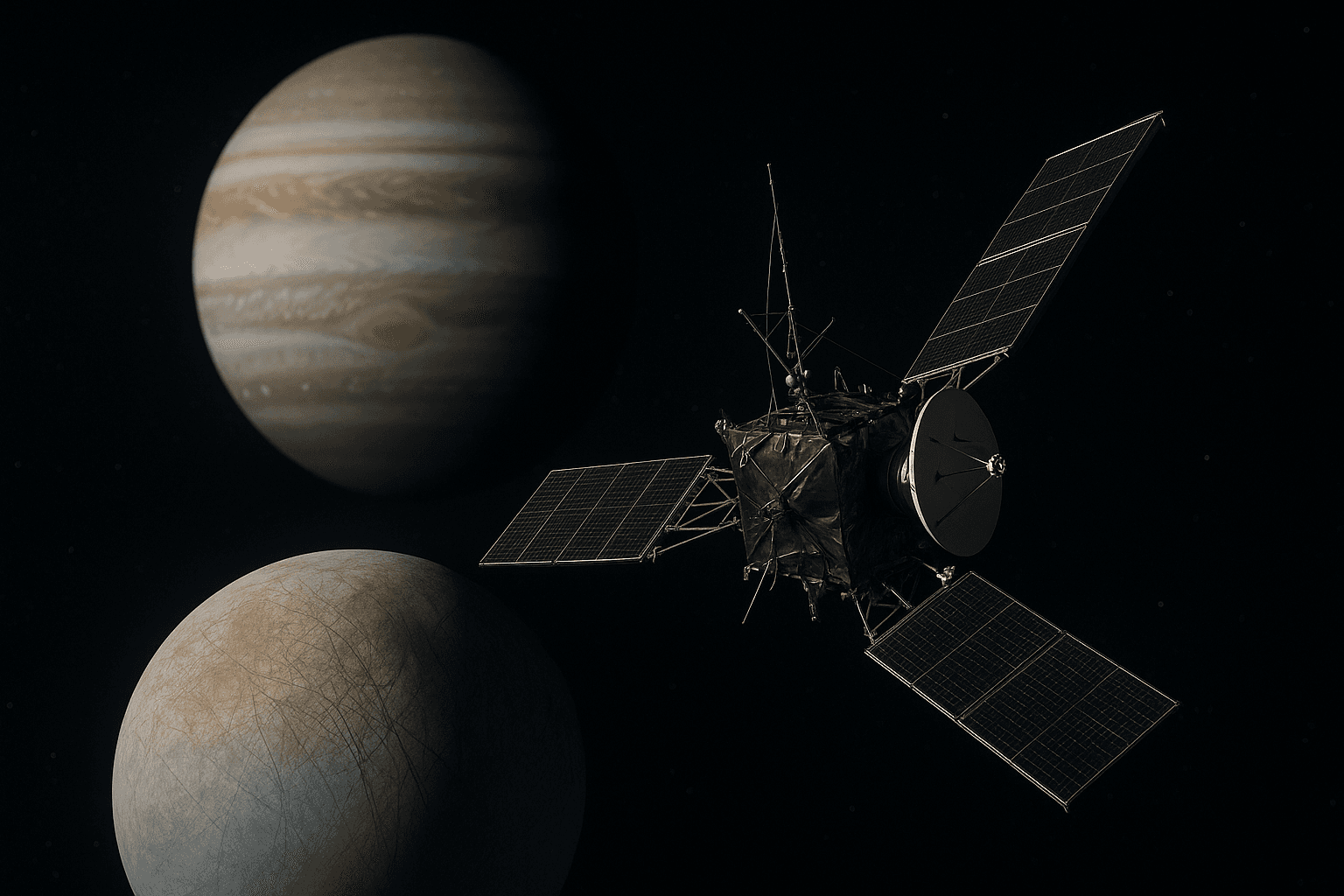
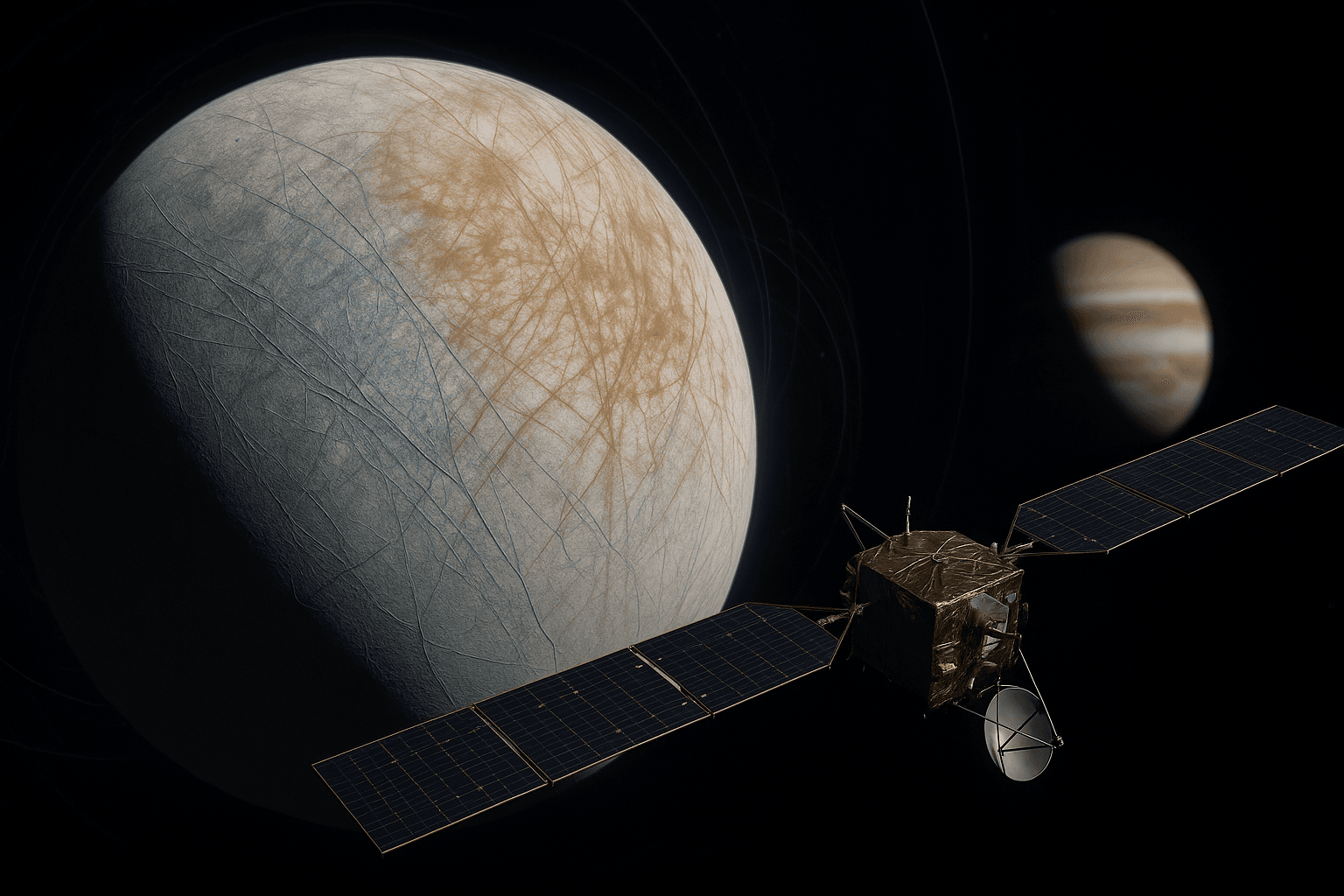
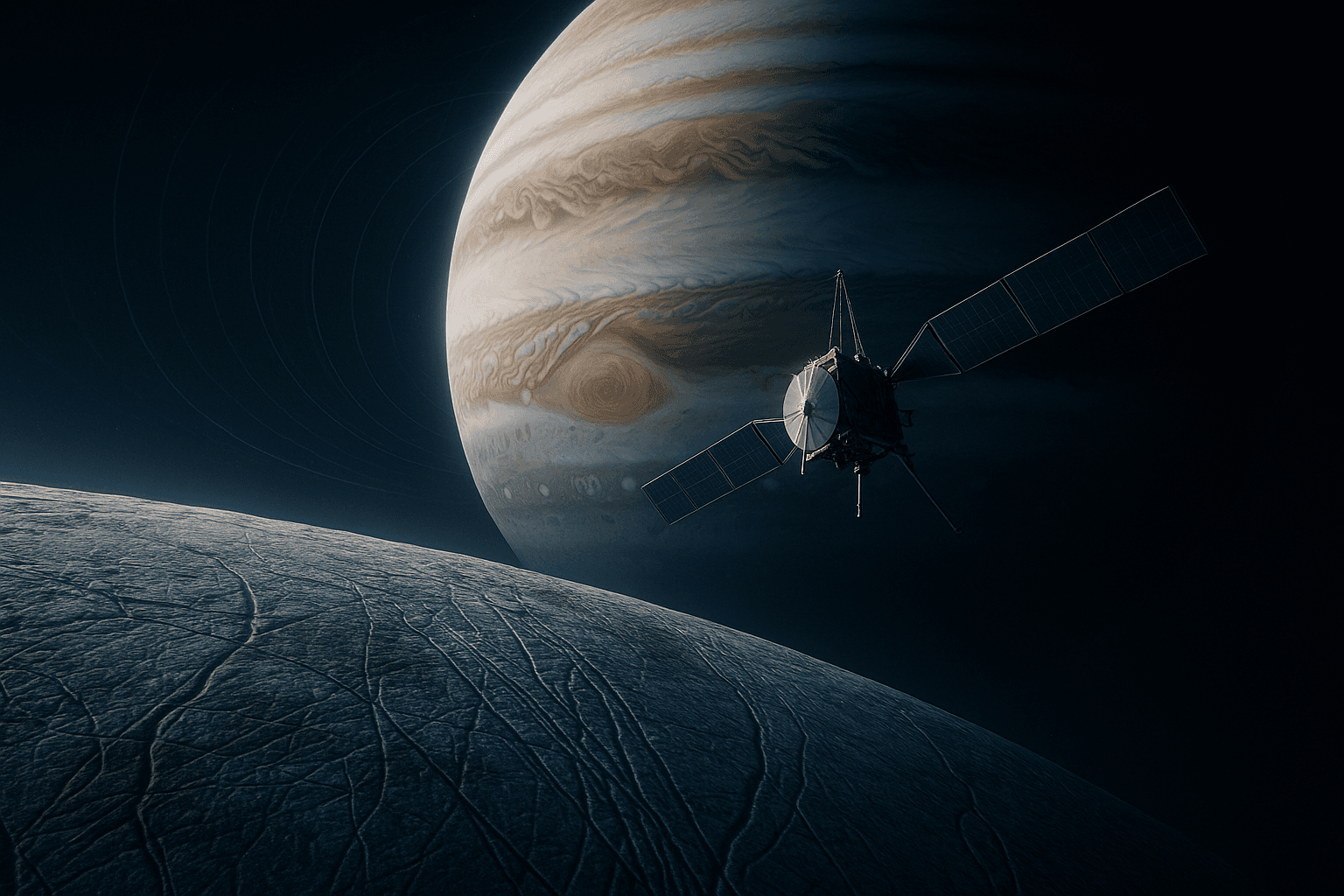
NASA’s Europa Clipper has completed its closest flyby of Jupiter’s icy moon Europa, delivering a major scientific milestone in the search for habitable worlds beyond Earth. During the encounter, the spacecraft measured subtle changes in Europa’s magnetic field, strengthening evidence that the moon likely harbors a global subsurface ocean beneath its frozen crust.
The flyby also provided valuable observations of the moon’s ice-covered surface, helping scientists refine their understanding of the crust’s thickness, structure, and potential interaction with the ocean below. Those measurements are central to evaluating Europa’s habitability, since liquid water, chemical energy, and stable conditions are key ingredients for life as we know it.
Researchers say the data collected during this historic pass will be analyzed in the coming months and years, with particular attention to signs of water plumes, fractures, and other geological activity that could reveal how material moves between the surface and the hidden ocean. The findings are expected to guide future observations and deepen understanding of one of the solar system’s most promising targets in the search for extraterrestrial life.